Sunday, August 31, 2008

Sunday word, 31 Aug 08

22d Sunday of the Year A (31Aug2008) Jer 20. 7-9; Ps 63; Rm 12. 1-2; Mt 16. 21-27
Homily of Fr. Paul Panaretos, S.J.
Feeling With Jesus

Summer 594 of the pre-Christian calendar the Judaeans were in their Babylonian exile. In the preceding Winter, as that same year began, a coup against the Babylonian king failed. However, it caused the Jews and others under Babylonian rule to hope for and support another one. The exiled King Zedekiah summoned ambassadors of surrounding lands to form a coalition to oust the Babylonian king. Recent government leaders have duped more than us to call such a violent ousting in our time a “regime change,” a deceptive euphemism.

A self-styled prophet/1/ gave a boost to Zedekiah by saying the exile would be over in two years. The words of the true prophet, Jeremiah, were not welcome because Jeremiah had announced before his words we just heard that things would get worse before they got better. Jeremiah once enjoyed his mission, but his mission and the exile caused him great pain:
You duped me, O LORD, and I let myself be duped; you were too strong for me, and you triumphed. All the day I am an object of laughter; everyone mocks me. Whenever I speak, I must cry out, violence and outrage is my message; The word of the LORD has brought me derision and reproach all the day.
Nevertheless, Jeremiah kept faith, hard for us to do at times, too. Jeremiah kept faith in God’s ancient promise. In their exile, Jeremiah and faithful people with prophetic hearts kept alive and clung to God’s ancient promise:
...even while [my people] are in their enemies’ land, I will not reject or spurn them, lest, by wiping them out, I make void my covenant with them; for I, the Lord, am their God. I will remember them because of the covenant I made with their ancestors, whom I brought out of the land of Egypt under the very eyes of the Gentiles, that I, the LORD, might be their God.”/2/
The bible tells the story of the regime of God’s covenant. It also recounts that Israel and Judah did not keep faith over the centuries with God’s covenant, which they had entered. When it suited them or when it seemed in their own interests or practical or politic they ignored the covenant, forsaking its regime, its pattern of God’s fidelity to them, for regimes of this leader or that way of living.

Jesus, like Jeremiah, was compelled to speak a word that filled him with dread as much as it filled Peter and others to hear it: he must go to Jerusalem and suffer greatly from the elders, the chief priests, and the scribes, and be killed and on the third day be raised.

Is it because I know those final words, that Jesus was raised from death, that I do not fill with sympathy for Jesus and do not shudder with him and for him when I hear him speak of his suffering, his exile from honor as well as from human life? Peter’s horror, when Jesus warned of his passion and death, reminds us that it’s easier to accept the messiahship of Jesus when it involves glory and eternal life than when it includes denial, renunciation and suffering.

Yet, Peter was an ardent believer even before his faith was fully formed. Denial, renunciation and suffering formed the faith that he and the apostles handed on to us. The pattern of Jesus’ life, including both suffering and glory, is the regime we Catholics try to adopt as we serve, evangelize and worship with our lives.

If we set out to change anything, it isn’t the pattern of Jesus’ life, death and resurrection. We seek to refashion, renew and transform our lives in order to pattern them on both Jesus’ alertness to the word of God active in him and Jesus’ willingness to embody it, speak it and live it.

In your daily 15 minutes with Jesus this week, pause and remember the Trinity has created you in the divine image and to become divine because Jesus became human with us. Ask Peter to present you to Jesus. Consider one way Jesus’ mission attracts you and one way it challenges or even frightens you, and speak to Jesus about each. Praise Jesus for choosing to work in the power of his Spirit through you. Close by saying slowly the Lord’s Prayer, which Jesus gave us to help us pattern our lives on his life in its entirety in order to save our lives and the lives of others.

____________
1. Hananiah was his name, and Jeremiah 28. 11-15 records their exchange about the exile’s end: within two years I will break the yoke of Nebuchadnezzar, king of Babylon, from off the neck of all the nations (verse 11).
2. Leviticus 26.44-45.
____________________________________________
Wiki-images of Jeremiah and of Jesus speaking to his apostles are in the public domain.

Sunday, August 24, 2008

Sunday word, 24 Aug 2008

21st Sunday of the Year A (24Aug2008) Is 22. 19-23; Ps 138; Rm 11. 33-36; Mt 16. 13-20
Homily of Fr. Paul Panaretos, S.J.
Scissors, Paper, Rock
That names a game of chance between two people, which I learned as a child. Many of us know it. At the count of three players drop their forearms level with the floor and make one of three configurations with their hands: two fingers out and apart equal scissors; palm open facing the floor is paper; and hand made into a fist is rock.

Scissors cuts paper, and when players choose those two configurations, the scissors-player wins the round. Rock breaks scissors and when players choose those two configurations, the rock-player wins the round. Paper covers rock, and when players choose those two configurations, the paper-player wins the round.

I was mystified as a child that paper beat rock. My first impression was that rock’s solidity would smash flimsy paper. I didn’t think according to the game’s logic. Paper covers rock, hiding it, therefore winning, despite rock’s hefty, solid character.

The logic of that rule is a way into our Christian faith, which this weekend’s scriptures highlights prominently. Giving voice to God’s desire for God’s people, Isaiah used the image of a peg: I will fix [my servant] like a peg in a sure spot. Faith is both a surety and a security. Isaiah also used the image of a key: I will place the key of the House of David on [my servant’s] shoulder; when he opens, no one shall shut when he shuts, no one shall open, words Jesus would vary and make his. Faith is a key for our lives, opening onto true meaning and giving our lives true purpose.

Faith is no inanimate object, though, like peg, key, scissors, paper or rock. Jesus’ question to his disciples was not a quiz. Who do you say that I am? showed Jesus’ desire for his disciples in every age to know him more intimately: to know him for who Jesus is.

Peter’s response to Jesus, that he was God’s Son and Messiah-Savior of the world, personified what we call apostolic faith. Our Christian faith is a gift, handed to us and every generation by the witness of the apostles. Plus, our Christian faith is a divine gift, God’s continuous self-revelation.

Our faith does not cover events to blot them out or hide painful events, which painfully cut the fabric of our lives. As relationship, faith keeps us connected with God in Jesus by their Spirit despite events that would rip us apart from God, from each other or from ourselves.

The relationship, which faith is, not chance. It is God’s gift, which involves our choice. Faith transforms mastery over the palace of God’s creation entrusted to us into care. Faith transforms authority into genuine service so that each person and our whole world may grow more alive. Our choices to cultivate and deepen our faith have effects not only of a personal kind; our faith and how we live it transform our world.

In your daily 15 minutes with Jesus this week, pause in the presence of the Trinity, feeling their creative love for you and resting securely in it. Ask Peter, so much like us in our limitations as well as our desire to know Jesus, to present you to Jesus, so that you may converse with Jesus. Praise Jesus for all Jesus has done and is doing in your life. Speak to Jesus your desire to know him better, and ask him for the grace to help you know him better. Close by saying slowly the Lord’s Prayer, which Jesus gave us to stay in relationship with his Father and to live our faith by lives of care, genuine service, resting securely in our every deepening felt-knowledge of Jesus, our Messiah-Savior.
____________________________________________
Wiki-image by Giovanni Dall'Orto of Jesus as Savior of the world is used according to Creative Commons Attribution ShareAlike 2.5 license.

Friday, August 22, 2008

Can Religion Help? Because. . .

. . .it's not the problem in the Russia-Georgia crisis

In his weekly column published online today Mr. John L. Allen Jr. considers:.
For once in this volatile part of the world, religion does not appear to be a driving force in the conflict.

Hence the obvious, if largely unasked, question: If religion isn't the problem, can it be part of the solution?

...Both Popes John Paul II and Benedict XVI have placed a "preferential option" for the Orthodox at the heart of their ecumenical hopes, which means that the fate of the Orthodox inevitably affects the Catholic future.

The clash between Russia and Georgia over South Ossetia is not akin to Russia's difficulties in Chechnya, or to the conflict between Armenia and Azerbaijan over Nagorno-Karabakh, or to tensions between Serbia and Kosovo, because the animosities in Ossetia do not break down along Christian/Muslim lines. ...In the Ossetian conflict, all parties are Orthodox Christians.

In fact, this is the first instance since World War II in which one majority Orthodox nation has gone to war against another. Both Alexy II, Patriarch of Moscow and All Russia, and Ilia II, Catholicos-Patriarch of All Georgia, have cited the Orthodox-on-Orthodox nature of the violence as especially tragic [emphasis added].
Thanks to Mr. Allen people now know that both leaders have pointed to the same religious denomination of the parties involved. This post is worth reading.
____________________________________________
Wiki-map of the embattled region is used according to the GFDL. One click on the map enlarges it.

Wednesday, August 20, 2008

No Automatic Excommunication. . .

. . .for priest who concelebrated at a woman's ordination

Many think Fr. Bourgeois was automatically excommunicated but was not. The closing of this article is also telling.

Tuesday, August 19, 2008

New Liturgical Text Approved (post contains useful links)

In May 2001 the Vatican published a document, Authentic Liturgy, with the subtitle “FOR THE RIGHT IMPLEMENTATION OF THE CONSTITUTION ON THE SACRED LITURGY OF THE SECOND VATICAN COUNCIL” [quoting the Decree on the Liturgy, art. 36, of the Second Vatican Council). This was the fifth instruction by the Vatican in order that vernacular translations precisely transmit the primary theology contained in the ritual prayers for the celebrations of the sacraments.

The work of translating afresh with the purposes of this latest instruction in mind began soon after. John L. Allen Jr. reported early in 2004 of progress, difficulties and criticisms of the enterprise.

In their June 2006 meeting the United States Catholic bishops at last approved the translations of the constant parts of the mass to be used in the Latin-rite dioceses of this country.
The Catholic News Service published a fine summary article in late July this year.

In a letter dated 4 August 2008 the Chairman of the Bishops’ Committee on Divine Worship informed all members of the church that the Vatican had approved the bishops' translations of the third edition of the Roman Missal.

Electronic postscripts to that same letter contain: the Vatican letter accompanying its approval; one called "complete text" of the mass formularies (it only contains four Eucharistic prayers, not the other eucharistic prayers for Reconciliation and those for use with children); the
newly translated four eucharistic prayers in separate documents. All are PDF documents and quickly download.
____________________________________________
Wiki-image by Andreas Püttmann is used under the Creative Commons Attribution ShareAlike 2.0 Germany license.

Monday, August 18, 2008

How Q & A Sessions with the Pope Work. . .

. . .plus, a summary of a most recent one with priests in the north of Italy.


Mostly pastors with an opportunity to ask Pope Benedict questions, he was both candid, and regarding the environment he
minced no words in condemning what he termed the "brutal consumption of creation," and he called for an urgent renewal of the theology of creation.
Mr. John L. Allen's summary of this encounter is, as usual, crisp and full of background.
__________________________________________________________
Wiki-image of a scene of that region is in the public domain.

Sunday, August 17, 2008

Sunday word, 17 Aug 2008

20th Sunday of the Year A (17Aug2008) Is 1, 6-7; PS 67; Rm 11. 13-15, 29-32; Mt 115. 21-28
Homily of Fr. Paul Panaretos, S.J.
Priorities

From birth and into our toddler years our worlds are small. The circle of life is home, parents, siblings if we are not the first child, and anyone who happens to live with family or visits it regularly. Our circle of life expands as we play outdoors and begin school. In high school and college we encounter people with stories and experiences both different and similar to our own; plus, we have opportunities to enlarge our worlds still more by travel and service.

This sketch of personal development--from a small circle of life to a wider one--helps us appreciate the development of God’s people. In its infancy it focused on God liberating it from slavery. The people were isolated in their formative, desert wanderings from Egypt to Canaan. They began to encounter other people with different beliefs and religious practice: in shorthand, others devoted themselves to many deities, but Israel was called to devote themselves to the One God alone. Antagonistic: not always faithful to the One God and viewing others with suspicion at best marked their more developed years and relations with others.

Eventually they lost their freedom again and tasted long and bitter exiles from it. The entire series of exiles of different portions of God’s people lasted 195 years. At the end of the exile Isaiah announced that not only did God desire God’s people again to be close to God, God desired to be close to all people. God desired a prominent place in the circle of life of all individuals! That surely astonished the Chosen People: all who...hold to my covenant...I will bring to my holy mountain [and] my house shall be called a house of prayer for all peoples.

The prelude to this universal salvation had a priority: Observe what is right, do what is just. God’s people had a role in God’s salvation: observing what is right and doing God’s justice prepared for God’s desire: for my salvation is about to come, my justice, about to be revealed.


So astonishing was this to the Chosen People that we heard in the gospel the disciples of Jesus tried to dismiss a non-Jewish woman from Jesus and with her her plea for help and healing. Even Jesus seems to share his disciples’ instinct by his curious phrase, “I was sent only to the lost sheep of the house of Israel.” His human instinct gave way to God’s priority when Jesus saw only God’s healing power could satisfy her great faith.

God’s priority persists in our time of different circumstances. The diocesan initiative, Vibrant Parish Life, has consequences for everyone. Our parish cluster of St. Dominic and Gesu embodies God’s priority of salvation, worship and growth in faith, hope and love.

In your 15 minutes with Jesus this week, pause in the love the Trinity has for you for creating you is the Trinity’s priority. Ask the courageous Canaanite woman to present you to Jesus. Praise Jesus by name and implore Jesus for what you need. Ask Jesus to make your heart more generous so that you can engage our Gesu-St. Dominic parish cluster. Close by saying slowly the Lord’s Prayer which is Jesus’ words given to us to grow in courage, wisdom and to make Christian love our priority.
__________________________________________________________
Wiki-image of Marsa Alam by Marc Ryckaert is used according to the Creative Commons Attribution 3.0 Unported license. Wiki-image of Jesus and the Canaanite woman is in the public domain.

Saturday, August 16, 2008

Health Care, Vatican Style

Little waiting time, 75 cents; 2% of monthly salary contributed to health-care fund; and

according to Vatican budget figures published in July, that amounts to about 7.3 percent of the total figure the Vatican spends on salaries, pensions and benefits [in 2007].
This CNS story also featured a "whistling monsignor."

_______________________________________________________________
Wiki-image of a caduceus by Luis GarcĆ­a is used according to Creative Commons Attribution ShareAlike 2.5 license.

Friday, August 15, 2008

Friday word, 15 Aug 2008

Solemnity of Mary's Assumption (15Aug2008) Rv 11.19a, 12.1-6a,10ab; Ps 45; 1Co 15. 20-27; Lk 1. 39-56
Homily of Rev. Paul D. Panaretos, S.J.
Virgin Mary and Grammar of Faith

Our Catholic faith seeks to know the truth. In its search for truth the grammar of our faith can best be described as both-and rather than either-or. The both-and of faith often frustrates us. We may use its both-and grammar--
  • divine & human;
  • one divine nature & three persons;
  • Almighty Creator & Loving Father;
  • Son of God & Son of Mary;
  • Mother of God & Mother of Jesus;
  • made holy by God’s Spirit & in need of ongoing reform;
  • prayer & action;
  • religion & science;
  • creation & evolution;
  • faith & reason--
yet only using it does not resolve the tensions between the poles of issues and slices of reality.

The gospel on this day that we honor Mary as the first human to enjoy the destiny God desires for all people features both-and. In fact, the selection used at this mass, which we have come to designate as the Visitation, immediately follows her Annunciation, God’s announcement
that Mary would be the mother of God: The holy Spirit will come upon you, and the power of the Most High will overshadow you. Therefore the child to be born will be called holy, the Son of God./1/

Mary’s encounter with the holy in that moment was nothing less than arresting. Numerous artistic renditions of Mary’s encounter evoke timelessness in time, and they still the mayhem of the mundane. You and I may remain in awe of Mary’s let it be done to me as you say./2/ Mary did not remain in it at all; she set out and traveled to the hill country in haste to a town of Judah, where she entered the house of Zechariah and greeted Elizabeth.

Mary modeled for us both-and: she roused herself from timelessness and inserted herself in the present; she was overwhelmed by awe and acted in deed and word to see what God had done already in her kinswoman and to attend to her needs. Her movement from home to home and the simplicity of her words of praise remind us that as awesome and all-powerful our God is, God is not distant nor inaccessible. In addition to God’s magnificence, God also abides in human hearts and homes and in the care and concern we offer each other and those most in need.

Mary enacted her willingness to be slave of her Lord by putting herself at the disposal of Elizabeth. Both the woman who served and the woman who received caring attention praised God. While Mary did not at that moment give birth to her Lord, she brought him to life by her tender care showered on Elizabeth. By an angel God announced Mary would mother the Most High into the world; and to Elizabeth Mary already gave bodily expression to the lowliness--the mercy--of the Most High.

Before God walked as Jesus, both divine and human, Mary conceived by God’s Spirit and gave him a different sort of birth by her own compassionate actions. Mary models for us our present share in the reality of the kingdom her Son has prepared for us. Present & future is yet another both-and of our grammar of faith. Present and future calls us to live and act our future destiny as we struggle in our present, which so often refuses to exalt the lowliness of Mary’s Son, our Brother and God. Our world desperately needs us to live that truth, which we know: the lowliness of our Most High Savior and brother.
______________
1. Luke 1.35.
2. Luke 1.38.
____________________________________________
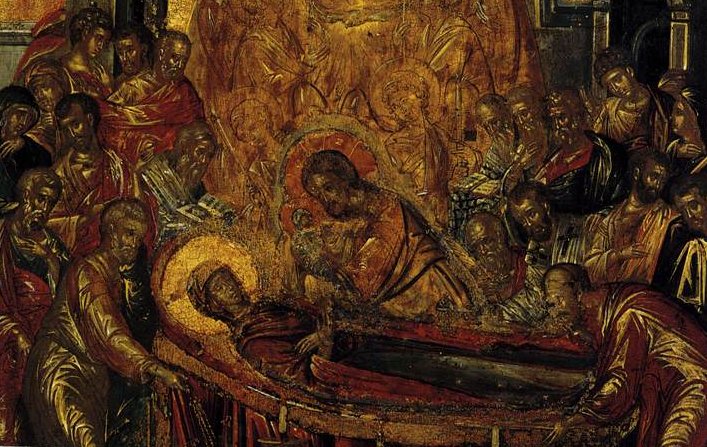
Wiki-images of Broedelam's diptych of Annunciation and Visitation and El Greco's Dormition are in the public domain.

Monday, August 11, 2008

Remembering Pope Paul VI

Pope Paul VI died in August 40 years ago. As the map indicates, Pope Paul traveled extensively. Mr. John L. Allen Jr. wrote in his weekly online column last Friday that Pope Paul "was among the most consequential, and, in many ways, most admirable Catholic personalities of the 20th century."

Mr. Allen also recalled the current pope's remark about his predecessor, who guided the church through the Second Vatican Council and beyond:
"Bit by bit as our view of the past expands and our understanding deepens, the merit of Paul VI in presiding over the council, leading it happily to its conclusion, and then governing the turbulent post-conciliar phase, appears ever greater -- indeed, I would say, almost superhuman."
Mr. Allen's entire weekly online column sheds light on Pope Benedict's remark and more about Pope Paul, who died 06 August 1978.
____________________________________________
Wiki-image of the map of Pope Paul's travels is used according to the GFDL.

Sunday, August 10, 2008

Sunday word, 10 Aug 2008

19th Sunday of the Year A (10Aug2008) 1Kg 19. 9a,11-13a; Ps 85; Rm 9. 1-5; Mt 14. 22-33
Homily of Fr. Paul Panaretos, S.J.
Tones of Voice

In the Gospel of Matthew Jesus used boats for preaching and for transportation. Earlier in the gospel as Jesus began speaking in parables to crowds gathered with him on the shore, Jesus got into a boat on the sea and sat down. And the whole crowd was beside the sea on land./1/ When he finished, his disciples took [Jesus] with them in the boat just as he was. ...A violent squall came up and waves were breaking over the boat, so that it was already filling up. Jesus was...asleep. They woke him and said to him, “Teacher, do you not care that we are perishing?”/2/ Notice their tone of voice.

Later, leaving another lakeside town in a boat, another violent storm befell them so that the boat was being swamped by waves...again Jesus was asleep. The disciples...woke him, saying, “Lord, save us! We are perishing!”/3/ Notice their tone of voice.

Now we heard Jesus and his disciples were in yet another boat in another storm in which Jesus saved Peter. When the two of them returned to the boat, the disciples did Jesus homage, saying, “Truly, you are the Son of God!”/4/

The three responses of the disciples are not identical, which makes them worth our attention.
“Teacher, do you not care that we are perishing?” “Lord, save us! We are perishing!” “Truly, you are the Son of God!”

It isn’t merely their difference as it is to what their difference points, namely the disciples’ increasing appreciation of Jesus and his identity.

“Teacher, do you not care that we are perishing?”
“Lord, save us! We are perishing!”
“Truly, you are the Son of God!”

Each response followed a crisis in their lives and having been with Jesus a bit longer. A development in their understanding deepened their recognition of Jesus and appreciation of him. The move was from Teacher to Lord to God’s son. Their tone of speaking is more revealing and instructive for us.

They reproached Jesus harshly the first time:
“Teacher, do you not care that we are perishing?”

The second time they acknowledged Jesus as more than a teacher and implored his help:
“Lord, save us! We are perishing!”

The third time was a moment of worship.
“Truly, you are the Son of God!”

The deepening appreciation of the disciples for Jesus and for his identity is not a quaint historical fact, my friends. It is one more witness that Jesus is with us, too, and commits himself to us in the present at each moment: in the stormy times of our lives as well as times when all seems to go smoothly for us.

The disciples’ ways of addressing Jesus and their tone of voice witness to their deepening intimacy with Jesus: Teacher; Lord; Son of God. In stormy, difficult, uncertain and heart-breaking moments intimacy often registers as reliance on one who is committed to us. After we weather those moments with a person committed to us, we want to cultivate deeper intimacy and renew our commitment. Our life of faith involves cultivating our intimacy with Jesus and renewing our commitment to him through personal prayer, public worship and service.

In your daily 15 minutes with Jesus this week, pause and rest yourself in the presence of the Trinity. Ask his disciples to present you to Jesus in order to gain a deeper felt knowledge of Jesus and his commitment to you. Consider who Jesus is for you. A way to begin is to notice how you address Jesus: is Jesus your savior; your redeemer; your creator; your companion; your Lord; your Teacher; your friend; or, do you call on God instead of Jesus? Praise Jesus and desire to know him better. Close your time by saying slowing the Lord’s Prayer. Praying Jesus’ words with awareness gives us his attitude, and the more attentive we are to the attitude of Jesus, the more we rely on Jesus and the more we live as his disciples, growing more intimate and faithful in each present moment.

____________
Matthew 4.1.
Matthew 4.36-38.
Matthew 8. 24-25.
Matthew 14.33.
____________________________________________
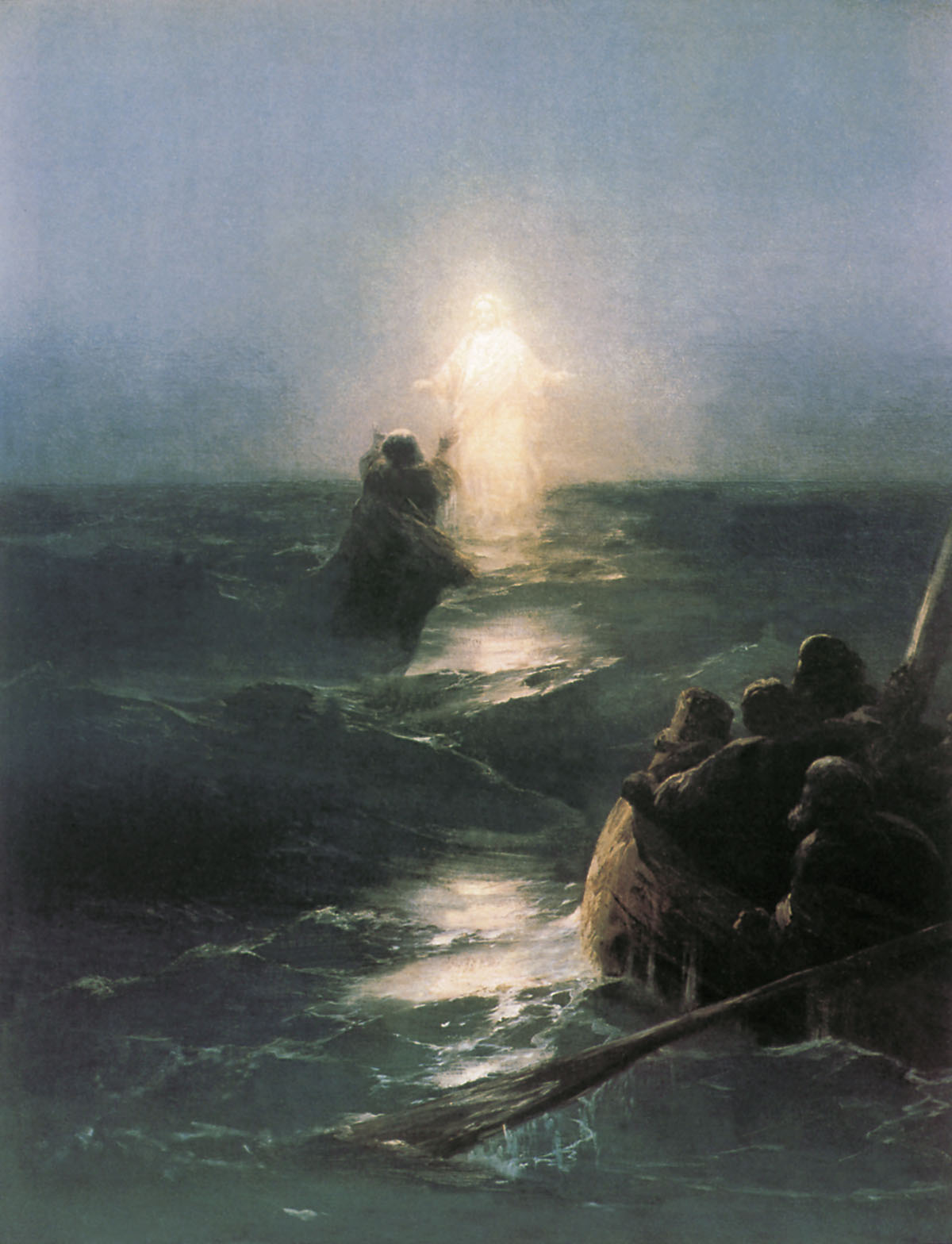
Wiki-images of Jesus walking on water and of a cloud over water are in the public domain.

Monday, August 04, 2008

Reporting on a Papal Vacation Spot

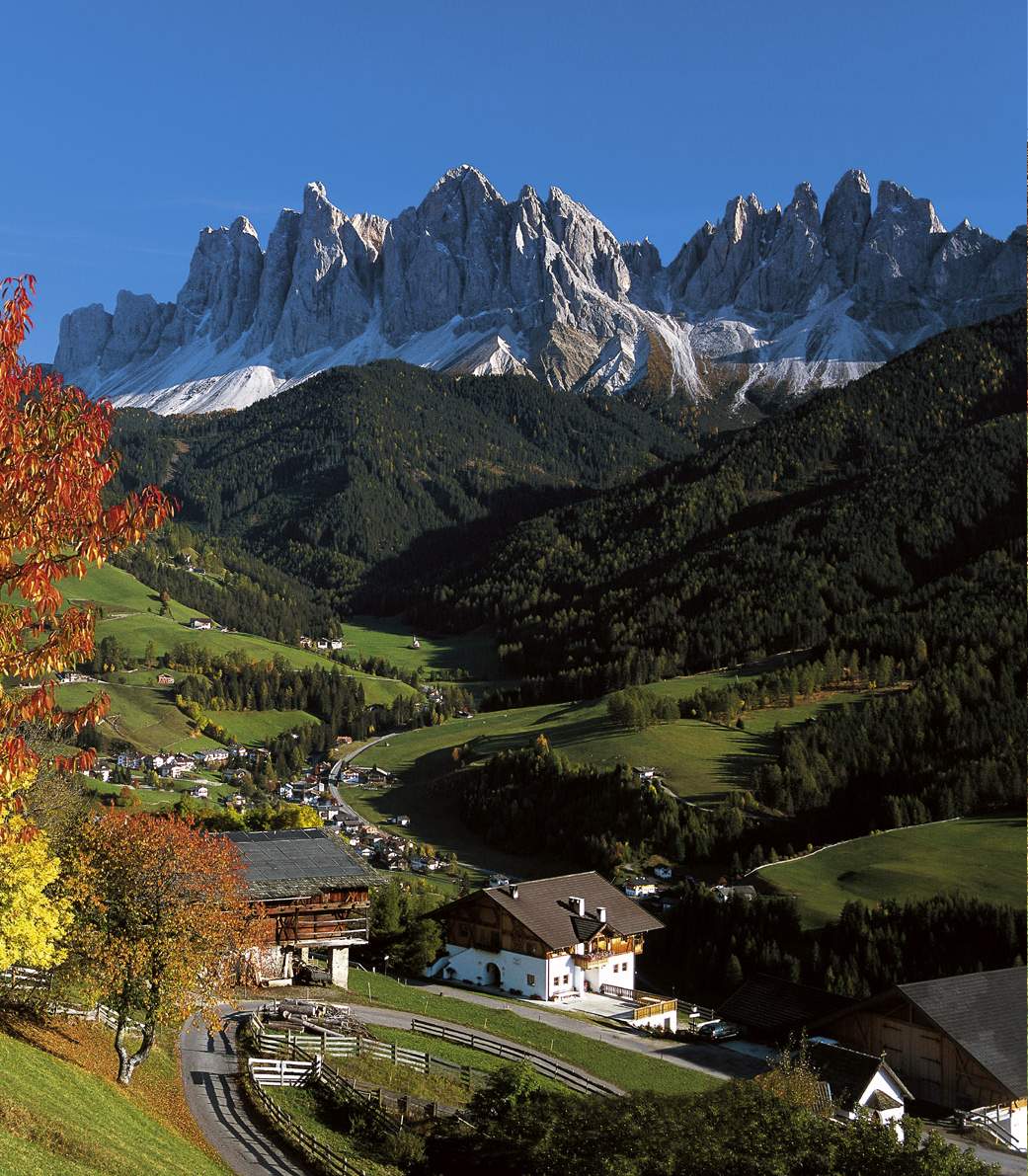
Few people may recall the title, The Ratzinger Report, now over two decades old. Mr. John L. Allen Jr., in his weekly online essay reported that the place that continues to be Pope Benedict's vacation spot
was the setting for a defining moment in Joseph Ratzinger's life and career. It was in his seminary apartment, overlooking the garden, where Ratzinger granted an incendiary interview to Italian Catholic journalist Vittorio Messori over three days in August 1984. Extracts were published in late 1984 by the magazine Jesus, immediately causing a global sensation. . . .
Like most sensations of this sort, it gave rise to perduring impressions and stereotypes of the man who became Pope Benedict XVI. Mr. Allen lists several in his online essay.
__________________________________________________________
Wiki-image of Brixen is used according to the GFDL.

Sunday, August 03, 2008

Sunday word, 03 Aug 2008

18th Sunday of the Year A (03 Aug 2008) Is 55. 1-3; Ps 145; Rm 8. 35,37-39; Mt 14. 13-21
Homily of Fr. Paul Panaretos, S.J.
Holding On to Jesus’ Faith


The gospel’s opening words are my cue to reflect with you today: When Jesus heard of the death of John the Baptist, he withdrew in a boat to a deserted place by himself. Earlier in the gospel Matthew presented a confused John, something the Baptizer never had been in the First Gospel. Jesus responded to John’s confusion before Herod killed the Baptizer. That made Jesus the next prophet Herod would fear and want to kill, which may well be why Jesus withdrew in a boat to a deserted place by himself.

In a different way, the kingdom of heaven Jesus proclaimed confuses me, too. As we heard in the past weeks Jesus’ many parables about the kingdom it is intimate and also embraces everyone under the sun; it demands personal decision, and the most valuable data by which to decide are Jesus, his words and his faith. Jesus’ faith shapes our own faith, which affords us confidence that God’s life is emerging among us without us observing it.

The kingdom of heaven also involves judgment: weeds and wheat, the wheat gathered, the weeds rejected; last the power, the action of God in the kingdom is hidden, subtle, registering in ways we cannot readily notice: the kingdom of heaven is like yeast that a woman took and mixed with three measures of wheat flour until the whole batch was leavened./1/

Who of us doesn’t admit to being confused? Of course, John the Baptizer was confused for a different reason. John came preaching “hell fire and brimstone,” to use a phrase familiar to us, to prepare the Messiah’s way; and Jesus came offering comfort and rest to those who didn’t have it. No wonder the more John heard of Jesus and his ways, John grew confused: when John heard in prison about the deeds of the Messiah, he sent word by his disciples and said to him, “Are you he who is to come, or shall we look for another?”

John in prison; Jesus healing, raising the dead and preaching the good news: Jesus was more than suspicious that his ministry threatened Herod as well as the religious professionals of his day. John beheaded; Jesus withdrew in a boat to a deserted place by himself. Why?

Time to consider what direction to take; time to know that only one prophetic voice announcing the good news of the kingdom was left. In his own confusion, anxiety and fear and suddenly no longer alone, Jesus continued to announce the kingdom by deeds more than by words: his heart was moved with pity for the crowds, and he cured their sick and fed them until all ate and were satisfied. Jesus continued doing what he came to do, he kept faith and would keep it even when he was alone again in a garden, which often had been a refuge for him, alone facing his own death.

When that moment came Jesus knew that his disciples, whom he formed and who observed Jesus, would carry on what he began so that you and I would continue to hear about the kingdom; hear about Jesus’ faith; and desire to make his faith our own.

My faith is meager, yet I hold on to it because in doing so I embrace Jesus and Jesus embraces me. Holding on to faith means continuing to do what we have been doing as friends of Jesus. Continuing to act as friends of Jesus means to grow--all of us children, women and men--to feel compassion for others and strain at times to practice it. Holding on to faith keeps us within the orbit of the kingdom Jesus announced, and miraculously makes us agents of the kingdom, who sustain others although we may never know it.

In your daily 15 minutes with Jesus this week place yourself in the presence of the Trinity and become aware they created you for a purpose. Ask the disciples and the hungry crowds to present you to Jesus. Praise Jesus for his faith. Speak to Jesus in your own words about your confusion and your need for strength to hold on to Jesus’ faith. Close by saying slowly our Lord’s Prayer, which helps us to hold on each time we ask to be nourished to be effective witnesses in deed of the kingdom Jesus proclaimed. That brief request has extensive consequences for us and beyond us for the sake of the world.


_____________
1. Matthew 13.33 from Sunday’s gospel two weeks ago.
____________________________________________
Wiki-image of Feeding the Mulititude by Wlliam Hole is in the public domain.
Wednesday, July 30, 2008

Before the Feast of St. Igantius of Loyola. . .

. . .an essay linking two ways of considering the saint; how he would have responded to the most recent Jesuit General Congregation 35; and peering toward the future has been offered by Father Ron Darwen, S.J., of the British Province.
Father Darwen's contributes to the online British journal, Thinking Faith.

Will the Real Ignatius Please Stand Up? is a fine way to prepare for tomorrow's feast.


________________________________________________________________
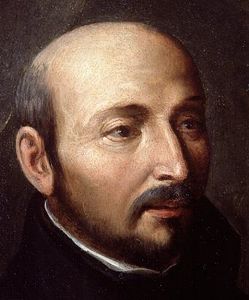
Wiki-image of St. Ignatius of Loyola is in the public domain.

Friday, July 25, 2008

Pope in Australia

Mr. John L. Allen Jr. reviews Pope Benedict's first World Youth Day in Australia.

This blogger is still on vacation.

Tuesday, July 15, 2008

On Vacation in. . .

Cohasset, Massachusetts, until the end of July. [The photo is by Panoramio.com user ragutis.]

A Look at Catholicism in Canada

This look is the fruit of an interview by Mr. John L. Allen Jr. with Italian Archbishop Luigi Ventura, the current Apostolic Nuncio of Canada.

Before the interview one Mr. Allen briefly set things into context:
the construction of a vibrant Catholic sub-culture, more inclined to push back against Canada's prevailing secular consensus.

At the level of senior leadership, the transformation has been remarkably rapid. Of Canada's 18 archdioceses, 12 are now led by bishops appointed since Italian Archbishop Luigi Ventura, the current Apostolic Nuncio, arrived in 2001. Seven of those new bishops were appointed or installed in 2007 alone. (The real number is actually eight, since Archbishop Michael Miller was also named coadjutor in Vancouver that year, and should take over in relatively short order.) The impact has been especially noticeable among the country's English-speaking bishops, with additional appointments in Quebec likely in the next few years.

This column Mr. Allen posted on the last Friday in May 2008.


Monday, July 14, 2008

New Roman Appointment by Pope Benedict

In his weekly column, Mr. John L. Allen Jr. wrote that
the most sensitive jobs in the Holy See under Benedict XVI are generally going to "affirmative orthodoxy" personalities. In the end, I suspect this will be remembered as a defining feature of Benedict's papacy -- his intriguing way of blending the bitter with the sweet, of combining doctrinal clarity with personal dolcezza.
His most recent appointment filled the vacancy of the top doctrinal Vatican position. The pope name Jesuit Fr. Luis Ladaria, a Spaniard, as secretary of the Congregation for the Doctrine of the Faith.

In his column Mr. Allen shares
a sampling of what I heard about Ladaria from various sources, some of them fellow Jesuits, some fellow theologians, and some Vatican personnel who've had dealings with Ladaria. The comments span the spectrum of theological positions, cultures, and languages.

Sunday, July 13, 2008

Sunday word, 13 Jul 2008

15th Sunday of the Year A (13Jul2008) Is 55. 10-11; Ps 65; Rm 8. 18-23; Mt 13. 1-23
Homily of Fr. Paul Panaretos, S.J.
Decision, Growth, Choice

Today’s gospel is the beginning of a chapter in which Jesus used parables to teach his disciples--and us--about God’s power to transform and to renew people and all creation. It may help us to ponder more deeply if we consider the question, What is a parable?

A parable is a brief, succinct story, in prose or verse, with a moral or religious lesson. It differs from a fable in which animals, plants, lifeless objects and forces of nature are actors--think of Aesop’s fables--while parables generally feature human actors. The actor in Jesus’ parable today is human, a sower of seed.

A parable is simple in design. With realism and familiarity, it sketches a setting--today, a plot of land; describes an action--someone scattering seed; and shows the results--some seed grew, some did not. A parable often involves a person facing a difficult moral choice. Jesus spoke in parables to direct attention to him and his way of living. Jesus always demands our choice.

A contemporary theologian repeated an important point when I heard her several years ago: “Parables are stories about ordinary men and women who find in the midst of their everyday lives surprising things happening. [Parables] are not about ‘giants of the faith’ who have religious visions.”/1/ Indeed! Parables are about people like us, people choosing Jesus repeatedly and entrusting our lives to his gracious power, power we can’t explain.

Immediately before the verses we heard as our first reading, Isaiah, long before Jesus, had announced for God that God’s ways are not human’s ways/2/. We heard Isaiah offer a clue to the mysterious nature of divine power. Working in patterns unseen and without our scientific understanding, like the pattern of rain-evaporation-condensation-rain, God’s word gives us life and saves us, achieving the end for which I sent it. Life is God’s goal.

When it comes to the way God achieves God’s goal of real life, I feel the helpful proverb, “God writes with crooked lines,” limps. Surely God writes upside down and backward!

The dying and rising of Jesus, which is the source of real life and offers real life to us at each moment, shocks us when we’re honest. Jesus prepared us by teaching in parables to accept him, our crucified Messiah, as the parable of God and God’s life. Those who have ears, let them hear is not about human acoustics only; Jesus’ words closing his parable invite us to accept Jesus with and by our lives.

This parable of Jesus by which he began teaching his disciples teaches us with its elements of decision, growth and choice: of decision--the sower sowed seed despite the consequences; of growth--successful and frustrated; and choice--Those who have ears, let them hear. Like the first hearers of Jesus’ parable, we, also, are to choose to ponder and explore how Jesus moves in our lives, how Jesus transforms them and the ways we respond.

Our lives, in the parable’s language, are soil. Alone we may be unable to change it from hard and shallow. Jesus graces us to make our lives deep, rich soil. Keeping hearts and minds focused on Jesus, allows us to make the calculated risks of responding in faith with our fragile lives, which God in Jesus transforms by the power of their Holy Spirit.

In your 15 minutes with Jesus this week first pause to rest in the creative, loving, fruitful and nourishing love of the Trinity. Ask the crowds of heaven to present you to Jesus. Praise and thank Jesus for the “surprising things” Jesus has done or is doing in and with your life. Become of aware of Jesus addressing you, which may register as Jesus inviting you to keep choosing him; Jesus reassuring your faith-response to him; or Jesus allowing something new to emerge on the horizon of your life. Close by saying slowly the Lord’s Prayer. Jesus’ words allow us daily to ask concretely for him to nourish us with his desires for us and to encourage us to cultivate his desires in and with our lives.


__________________
/1/ Sallie McFague TeSelle, “Parable, Metaphor, and Theology,” Journal of the American Academy of Religion 42.4 (December 1974:630-645). She spoke at a Convocation at The Divinity School, Yale University, some years ago, and I noted her remark emphasized the ordinariness of the actors above the ordinariness of the circumstances; the latter is mentioned more often about parables than the former.

/2/ Isaiah 55.8-9.
______________________________________________________
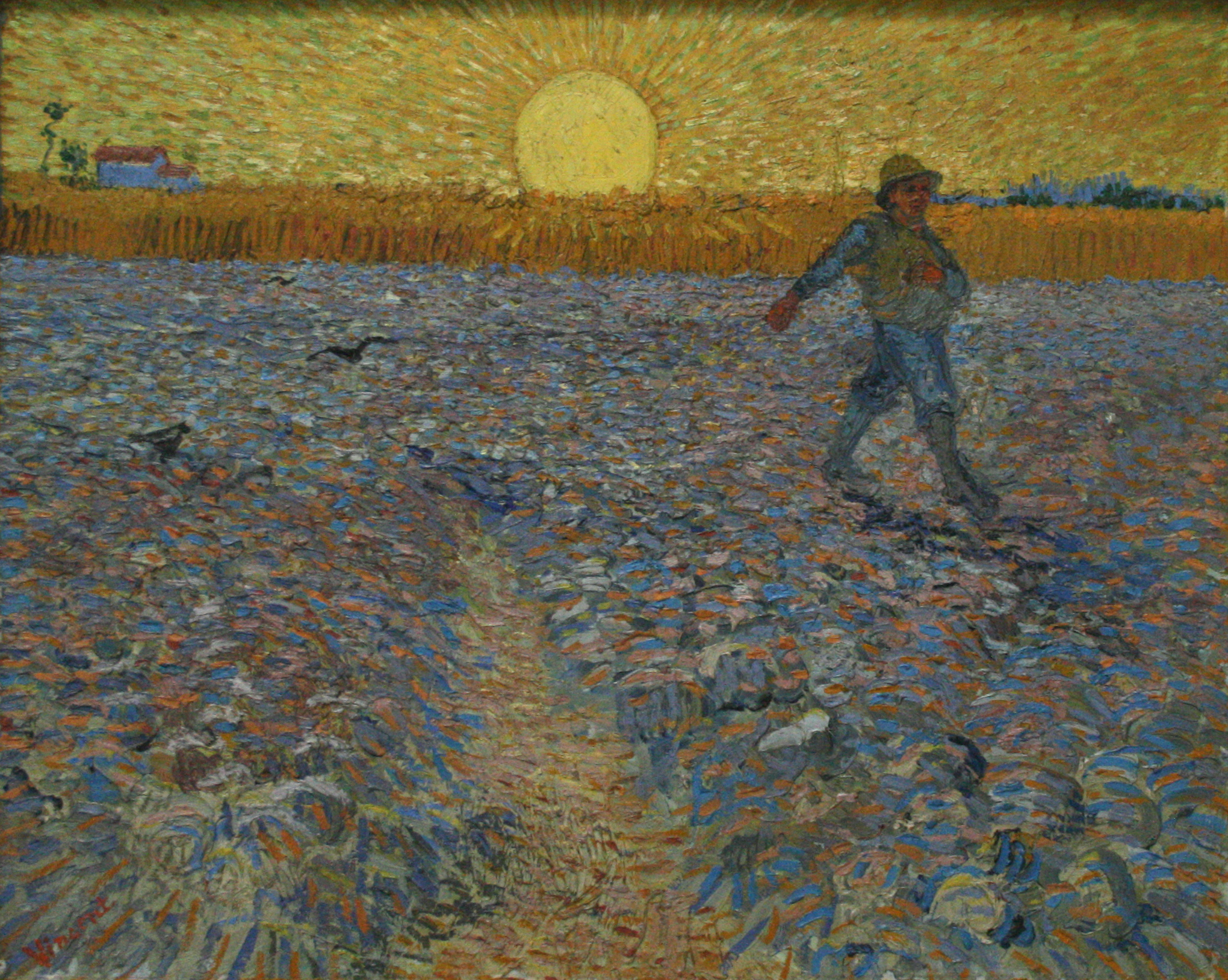
Wiki-image of Van Gogh's The Sower is in the public domain. Wiki-image of rain on grass is used according to GFDL.

Sunday, July 06, 2008

Sunday word, 06 Jul 2008

14th Sunday of the Year A (06Jul2008) Zech 9. 9-10; Ps 145; Rm 8. 9,11-13; Mt 11. 25-30
Homily of Fr. Paul Panaretos, S.J.
Freedom Tour

Jesus has been sung as gentle, meek, mild and loving down through the ages. Today’s gospel points to those qualities, which Jesus embodied. The first reading recalled those qualities were within the heart of God long before God in Jesus walked with us. Take a tour of torah with me and see.

Torah is that Hebrew word I try to help people appreciate because it has everything to do with Jesus and his mission portrayed by Matthew’s gospel. Torah is rich in meanings. Torah is text: it refers to the first five books of the Old Testament, the Books of Moses. Moses was God’s mouthpiece, who established God’s covenant with the people God liberated from slavery to be uniquely God’s own. An outstanding feature of that covenant was that God was a merciful and gracious God, slow to anger and rich in kindness and fidelity./1/ By covenant God demanded these very qualities of the people God liberated. Spending one’s life trying to embody those divine qualities makes a person uniquely God’s own.

Torah
also means “commandment.” God offered people ways to embody true mercy, patience, kindness and fidelity. Torah is not trapped in its text but comes alive as people embody it day to day. The many commandments of the relationship with God called Judaism may seem frivolous or even meaningless to us. Each commandment offered a way to live the covenant with God; to be godly; and to draw others to God. Torah is not trapped between the covers of a bible. A Jewish friend once told me, “Judaism is not a religion, it’s a way of life.” Torah is a way of living.

The scribes and Pharisees became overly focused on the commands found in the text of torah, and they forgot their purpose: to live God’s covenant by practicing true mercy, patience, kindness and fidelity. They didn’t see torah’s commands as a pattern of freedom but became enslaved by them and sought to enslave others, too. Yes, the scribes and the Pharisees [had] taken their seat on the chair of Moses. It would have been better if they just sat, but they acted; so Jesus warned, “do and observe all things whatsoever they tell you, but do not follow their example. For they preach but they do not practice. They tie up heavy burdens (hard to carry) and lay them on people's shoulders, but they will not lift a finger to move them./2/ A new, human bondage Jesus transformed into a redeeming bond because Jesus personified torah. To appreciate torah better appreciates Jesus. To encounter Jesus, who personified torah, is to encounter the desires of God. Jesus is the destination of this tour: from text to covenant-action to person, who models for us how to live.

Because Jesus was gentle and meek, Jesus personified membership in the realm of the merciful and gracious God. Jesus revealed the desires of God just as torah did. Jesus freed people from the hardships imposed by scribes and Pharisees by offering an easy yoke. Torah was the first “yoke of the kingdom of God.”/3/ Jesus replaced it by fulfilling it and revealing it, so that we might learn from the one who personifies God’s desires, God’s heart and God’s covenant.

Down through the ages, as people lost connection with God’s heart, many saw Jesus as a milksop, not the messiah; as misguided, not the new Moses. Take your tour, a tour of yourself and of the ways Jesus desires to free you; to guide you to truly real life; to reconnect you with himself, his Father and other people; and to allow others to meet Jesus through you.

In your daily 15 minutes with Jesus this week, pause and tarry with the Trinity, who create, redeem and sustain you. Ask Mary and the saints to present you to Jesus and meet him as if for the first time. Praise and thank Jesus for and redeeming you. Ask Jesus to reveal to you your greatest need. I offer examples to jump-start your prayer:
Is your inmost self starved for quiet? Ask Jesus to anoint you with his peace. Do you desire everything or unnecessary things? Ask Jesus to reveal to you what will increase your desire for his life for you. Do you allow fleeting things to shape you? Learn from Jesus his timeless gift he offers you to transform you and make you his disciple.
Close by saying slowly that prayer Jesus taught us, which binds us closer to him not with chains but with a pattern of freedom--his freedom, faith’s freedom, in order to walk with him and learn him.
_____________
/1/ Exodus 34.6.
/2/ Matthew 23.2-4.
/3/ Moshe Weinfeld, Normative and Sectarian Judaism in the Second Temple Period. New York: Continuum International Publishing Group, pp. 34-35.

_______________________
I am indebted to my teacher of New Testament, Luke Timothy Johnson, who taught me about torah and helped me meet Jesus, who personified it. He made his course available to a wider audience when he published it as The Writings of the New Testament: An Interpretation. Minneapolis: Fortress Press, 1986, rev. 1999.
____________________________________________
Wiki-images of a page from a manuscript of Matthew's gospel (the genealogy of Jesus) and of a torah scroll are in the public domain.