Showing posts with label Sundayword. Show all posts

Sunday, March 22, 2020

Sunday word, 22 Mar 20

Homily of Fr. Paul Panaretos, S.J., blogged during Coronavirus
Presence and Attitude

Ours are sobering days. Physical distance limits social contact and interaction. Concern is personal as well for others. Fear lurks close behind concern, and fear can close doors that caution allows us to open. The door of self-restraint leads us to make better choices about what not to do and what to do.
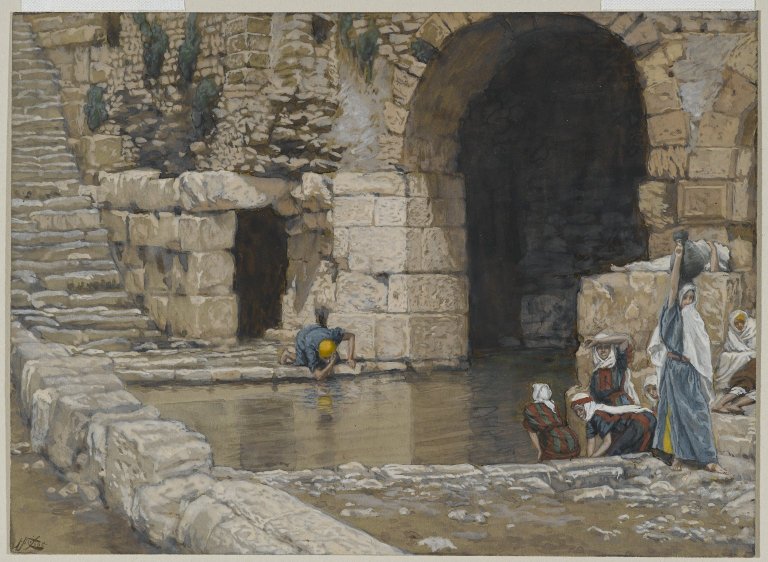
In these unprecedented days—unprecedented for us who experience them—are we aware of a Presence close to us, upholding us, working new things in us? These critical times have changed our routines, yet they do not change the goal of Christian living: risen Christ Jesus. Our crisis can help us deepen our friendly union with him: how we recognize Jesus in our present experience; ways Jesus has enlightened us in the past that may help us in our markedly different circumstances; ways Jesus is clearing  our inward sight and freeing our hearts.

The encounter the man blind from birth had with Jesus allows me to notice more clearly Jesus’ attitude and St. Paul’s conviction about it: we have his attitude.1 We often think of Jesus’ attitude as expressed in action: gentle self-giving, and that is correct. Jesus’ focused trust on God allowed made his self-giving possible. The man born blind came to enjoy this trust when Jesus gave him sight. Two moments from the encounter: his language and his experience.

The man used the language Jesus spoke, soon to him, before to the woman of Samaria2 and later at Jesus’ arrest and trial3: I am. People of biblical faith had long noted it echoes God’s name God gave Moses: tell the Israelites [enslaved in Egypt] that I AM sent me to you.4 God was clearly concerned for the suffering.  In today’s gospel encounter Jesus showed that God’s concern continues. Neighbours were uncertain if the man had been the blind beggar. He replied I am (the man). The man had a presence, a value he had not had before. His attitude had become like that of Jesus.

After neighbours the religious authorities interrogated him; he braved them. The religious authorities had created a climate of fear. They had questioned the man’s parents. They were afraid of the authorities’ publicly known verdict: expulsion from the synagogue…[of] anyone [who] acknowledged Jesus as the Christ. When the authorities interrogated their son their verdict did not intimidate him. He expressed himself matter of factly about who Jesus was: He is a prophet.

Jesus’ language and Jesus’ attitude: both deepened an insight: healed by Jesus causes us to be like Jesus. Healed by Jesus does not cause us to mouth Jesus’ words in an empty fashion. Baptism into Jesus—our healing from world-oriented living to spirit-led godly living—causes us to act like Jesus, our healing saviour: with greater courage, feeling and generosity for and with others.

When so many must forego eucharist that sustains our baptisms into Christ, we need to draw courageously on Christ really present in other ways: close to us; upholding us; working new things in us; communicating to us via hope, faith and love. Perhaps the absence of being in a gathered faith community that nourishes itself with the eucharist opens us to modes of divine presence we could not know.

In your daily 15 minutes with Jesus this week, 
  • Rest in our triune God
  • Ask the man blind from birth to present you to Jesus
  • Chat with Jesus: praise him for dying and rising for us; thank him for baptizing us with his Spirit to be like him
  • Ask Jesus for grace to sense his presence abiding with us in our days empty of their routine
  • Close saying slowly the Lord’s Prayer. Jesus gave it to us to grow more like him, alive with his healing Spirit, more trusting in God and filled with hope in everyone’s value.
Link to this homily’s Spiritual Exercise
____________
  1. Philippians 2.5; 1Corinthians 2.16.
  2. John 4.26, last Sunday’s gospel; followed by: 6.35, 41, 48, 51; 8.12, 24, 28, 42, 58; 10.7, 9, 11, 14; 11.25; 12.32; 13.19; 14.2, 6; 15.1, 5; 17.24; 18.5-6, 8.
  3. Arrest, 18.5-6, 8; trial, Mark 14.62; Luke 22.70.
  4. Exodus 3.14.
____________
Wiki-image Blind man washes in pool at Siloam PD-US; Pool of Siloam PD-Release

Sunday, February 16, 2020

Sunday word, 16 Feb 20

6th Sunday of the Year (16 Feb 2020)
Homily of Fr. Paul Panaretos, S.J., Close of Spiritual Exercises
“Deepest Loves”
Jesus reformed torah to be more humane. For Jesus interior states are more godlike than visible actions. Wednesday we heard Jesus: from within, from the heart of a person, come evils [that] defile one.1 Today Jesus invites “to high holiness that we have…not seen or heard about.”2 We personally have received from our triune God that same invitation—as each of us needed to hear it.

The late Jesuit John Kavanaugh revealed he had received it from the same Spiritual Exercises. He noted that
The Sermon on the Mount…is an excavation into our deepest loves, so that seeing what we love most, we will finally be given our heart’s desire. But it is a harrowing trip down into the mines of our motivation.3
Christ Jesus who announced his reformed torah constantly accompanies us. We neither excavate nor journey alone. Before we part let each of us share the singular grace we received from making these Spiritual Exercises.
___________
  1. Mark 7.21-23.
  2. “The Revolution Jesus Announced,” The Word Embodied.
  3. Ibid.
___________
Wiki-images: Sermon of the Beatitudes. PD-US

Sunday, January 26, 2020

Sunday word, 26 Jan 20

3rd Sunday of the Year (26 Jan 2020)
Homily of Fr. Paul Panaretos, S.J., Full Spiritual Exercises
New Possibilities
Early last autumn Pope Francis gave new focus to the 3rd Sunday of the Year; he declared it “Sunday of the Word of God…devoted to the cele-ration, study and dissemination of the word of God.”1 Francis phrased his description well: 

A day devoted to the Bible should not be seen as a yearly event but rather a year-long event, for we urgently need to grow in our knowledge and love of the Scriptures and of the risen Lord, who continues to speak his word and to break bread in the community of believers.2

You have retreated to be with God. Scripture is the privileged doorway by which God communicates to us, and we contemplate God’s self-communication. In Ignatian praying time with scripture regularly is a life-changing event. The effect can be a sea-change; to stay with the maritime metaphor: often Ignatian praying is our daily course-correction, drawing us nearer to our triune God, who is both our Goal and our Beloved.

Praying as course-correction alerts us to the journey that each disciple’s life is. Journeys always involve preparation and frequent monitoring. The scriptures alert us to new possibilities, self-awareness and growing unity. Growing  familiarity with the word offers us new awareness about God that John and Jesus offered, namely, God is near us tenderly.

After John’s successful ministry was forcibly stopped—he had been arrested—Jesus came into his ministry and realized he needed to leave home to minister effectively. Galilee was a good, strategic choice. Once the territories named had been attached to a foreign realm; by Jesus’ time the seaward road bustled with trade and Gentiles as well as Jewish residents. Also Galilean Jews were very observant; Galilee  was the “heart and soul of Jewish learning from the first and second century onwards;”3 Jewish Galileans were the “most religious Jews in the world in the time of Jesus”;4 they were more open to change,5 important because Jesus began as John did: Metanoia yourselves; Change your hearts; Reorient your lives! New awareness and metanoia mean greater fidelity to God not less.

The method of Jesus’ ministry from the first was gathering. Jesus gathered others by his speech and more by his deeds. His gathering was healing, joining, unifying. Near the sea Jesus gathered fisherman as his associates. They knew how to gather fish, Jesus would empower them to gather humans; not to confine but to impart healing forgiveness as well as his life—and this for everyone in every age.

Paul’s letter to the Corinthians reminds us that early in the Jesus-movement some felt it was not enough to belong to Christ crucified. The cross was a shameful instrument of torture and death; no one would link it with divine care; better to associate oneself with an eloquent leader. We are not so different: we wear a cross with pride and are hard-pressed to appreciate its scandal, let alone how God works toward the good with everything. Our societies lure us with eloquence to set ourselves apart with every new-and-improved product or to be defined by our societies.

Jesus did not merely talk, Jesus acted. He invites us to notice him acting in us and for us. As we notice, we feel Jesus incorporate us anew into his Body, his world, his living creation; and we fall more in love with our “risen Lord, who continues to speak his word and to break bread in the community of believers.”

                          Link to this homily’s Spiritual Exercise

___________
  1. His letter, “INSTITUTING the SUNDAY of the WORD OF GOD,” 3.
  2. Instituting, 8.
  3. L. Michael White, Galilee: Portrait of Jesus’ World.
  4. Ray Vander Laan, Rabbi and Talmidim.
  5. Eric Meyers, Galilee: Portrait of Jesus’ World.
___________

Sunday, November 10, 2019

Sunday word, 10 Nov 19

32nd Sunday of the Year C (10 Nov 2019)
Homily of Fr. Paul Panaretos, S.J.
Alive to God
Like people of every age we read history through our culture and our norms. A result is that we tame the scriptures and much of the ancient, Middle-Eastern culture of Jesus. A cultural historian put it well: “The Middle-Eastern culture of Jesus was a rough-and-tumble world. Modern-day ‘negative campaigning’ and sharp political debates are tame in contrast.”1 Jesus’ debate with the Sadducees was more “rough-and-tumble” than hearing it may suggest.

All Jews did not believe alike. Sadducees believed only the first five books of scripture, not in the prophetic or other writings. Because resurrection from the dead was not stated in the five books of Moses they didn’t believe it. It developed a century before Jesus.We heard a Maccabean martyr testify to God’s fidelity: You accursed fiend, you are depriving us of this present life, but the King of the world will raise us up to live again forever. It is for his laws that we are dying. Note the insult on the martyr’s lips.

Insults were common; they asserted one’s standing against others. Better to show a command of language rather than shriek in pain. Even the king and his attendants marveled at the young man’s courage, because he regarded his sufferings as nothing. Insults were also common among the learned. In debates with Pharisees and scribes Jesus called them hypocrites.2 Hypocrite meant actor as Jesus and his contemporaries used it. The religious professionals only acted a role; they were not attuned with God’s heart.

Sadducees conflicted with Pharisees on many fronts; one was the resurrection from the dead. When Sadducees bated Jesus over it he insulted grown men by rehearsing the facts of life: procreation is necessary for mortal humans, but life with God means absolutely new, indestructible life. Nor did Sadducees believe in angels, so Jesus aimed at their disbelief: not only are those raised from the dead like angels; they are the children of God, “a favorite Old Testament name for angels…since they share in the resurrection, a life-giving act of God.”3

Jesus also insulted the Sadducees’ priestly ability to interpret. He quoted scripture they believed.  Moses called God the God of Abraham and the God of Isaac and the God of Jacob. Our logic is not theirs; their logic was this: one would shame the living God by joining dead ones to God. The living God no part with death. With that logic Jesus  rebutted that Moses, in whom the Sadducees believed, would have shamed God if he joined dead ones to God. Meaningful for us is that in a way unknown to humans yet very real Abraham , Isaac and  Jacob are alive to God.

In our time and culture Jesus is not encouraging us to insult. Jesus encourages us to let our images of God be alive in ways we experience is real yet beyond us at the same time. How might that register in us? The responsorial psalm suggests confidence in God present with me and for me. I call upon you, for you will answer me, O God…and upon waking I shall be content in your presence. This is not magical or immature; it is to live the faith of Jesus, the Source of our faith.

Give Jesus 15 minutes each day this week.
  • Rest in the presence our triune God.
  • Ask Mary and your patron saint to present you to Jesus.
  • Thank  Jesus for dying and rising for us; thank him for the everlasting encouragement he offers us by Holy Spirit to make him present by how we live.
  • Ask for grace to live more attuned to the Spirit to help us walk with the endurance of Christ.
  • Close saying slowly the prayer Jesus taught us. Christian endurance allows us to make alive his words, on earth as it is in heaven.
___________
  1. John J. Pilch, The Cultural World of Jesus, Sunday by Sunday, Cycle C (Collegeville, MN: The Liturgical Press, 1997), pp. 161-163. A shorter form may be viewed at The Sunday Website.
  2. The word is especially concentrated in Matthew 6-7; 23. Also Luke 6.42; 12.56; 13.15; Mark 7.6.  
  3. Pilch.
___________

Sunday, November 03, 2019

Sunday word, 03 Nov 19

31st Sunday of the Year C (03 Nov 2019)
Homily of Fr. Paul Panaretos, S.J., Spiritual Exercises
Contradiction
Your retreats close today. Some have retreated from October 2nd to today. Others end their retreats of 8 days or fewer. Our triune God has met all of us as we needed: that may be clear to you. God’s graciousness may dawn more clearly after you are home: at least that has happened for me now and again. Before you go I want you to consider with me the world you have experienced and can take with you.

Retreat affords us the opportunity to disengage from our usual milieux and their routines and engage our triune God more directly. Our retreats free us to access God more readily—even on our return home. Early rabbis commented on Psalm 145; their encouraging comment  can assist our access: “‘Everyone who repeats the [praise] of David three times a day may be sure [one] is a child of the world to come.’”1

If we consider the entire psalm’s actions by humans and by the Eternal One we can begin to appreciate that ancient assurance:
It refers to exalting, worshipping, praising, lauding, murmuring, talking, proclaiming, pouring forth, resounding, confessing, and speaking….[Actions we can do anywhere, anytime.] It refers to [the Eternal’s] greatness, mighty acts, majesty, glory, splendor, wondrous acts, might, awesome acts, reign and rule. …goodness, faithfulness, grace, compassion, long-temperedness, commit-ment and trustworthiness. It describes [the Eternal’s] upholding, lifting up, giving, opening the hand, filling, being near, listening, delivering, watching.2
Little wonder James “Mays suggests Psalm 145 is the overture to the final movement of the psalter, a sort of prelude to the final “‘Ode to Joy.’”3

The Book of Wisdom echoed the psalm: God, you love all things that are and loathe nothing that you have made. We can do likewise. Consider Zacchaeus. Jesus not only confirmed Zacchaeus as a descendant of Abraham—an expression one was not only of God but was compassionate like God. His compassion stirred Zacchaeus to break with isolating himself: he was seeking to see who Jesus was. Zacchaeus did not want an eyeful of Jesus; he wanted truly to know Jesus, to converse with him. Jesus met his desire and beckoned him. Personally interacting with Jesus swelled Zacchaeus’ compassion to give generously to others.

Compassion contradicts isolation. Compassion stirred Jesus’ guts.4 Compassion is the guts of Christian community. Christian compassion flows from the eucharist. In it Francis recently reminded, “we enter into communion with Jesus, and from this communion with Jesus we reach a communion with our brothers and sisters.”5 Communion embraces compassion.

One way to deepen this communion, to refresh it, to remain in its orbit is savouring. Savouring “repeats the [praise] of David”; it also lets us re-experience its fruit given us. Savour how each of us is like Zacchaeus. His break with isolation began before he climbed a sycamore; yours began before you came on retreat. Zacchaeus climbed down the sycamore with his life forever changed. Your return home can mean the same: keep desiring to know Jesus; chat with him daily; and you will proclaim compassion with your newfound self.
___________
  1. Quoted by Ben Witherington III, Psalms Old and New, Accordance electronic ed. (Minneapolis: Fortress Press, 2017), 303.
  2. Witherington III, 303-304.
  3. Witherington III, 303.
  4. The Greek verb, to have compassion, is to experience one’s guts (heart, lungs, liver and the like) stirred; one’s inmost self is moved.
  5. His 2019-21 August General Audience focused on Christian community.
___________
Picture of Burning Bush, IJC, Guelph, ON, by Paul Panaretos; Wiki-image Zacchaeus in a sycamore PD-US