Tuesday, November 18, 2008

Tuesday word, 18 Nov 08

33d Tuesday (18 Nov 2008) Rv 3. 1-6, 14-22; Ps 15; Lk 19. 1-10
Homily of Fr. Paul Panaretos, S.J.

Before We Are Aware

The Book of Revelation sought to comfort people persecuted for their faith. It used a style of writing, which predated 1st-century Christians. Its style of writing isn’t easily or readily appreciated now mostly because of its convention of portraying humans as animals and its intricate use of numbers. Animals and numbers are not its point, despite what people down through time thought, and some think today. The opening words constantly remind that Jesus is the point: the revelation of Jesus Christ. Not only does the final book of the bible reveal about Jesus; Jesus reveals himself!

As it opens, the risen Lord Jesus spoke to several church communities about their strengths and weaknesses. Those of the church of Laodicea are faulted for their lukewarm faith-relationship with Jesus. Jesus, however, is faithful and true to them. His desire to rekindle their relationship is cast in personal terms at a meal--always a sacred moment in ancient times:
If anyone hears my voice and opens the door, then I will enter his house and dine with him, and he with me. Jesus, in our eucharistic celebration, nourishes us before we are aware!
The gospel underscored Jesus’ desire. The familiar parable of Zacchaeus may be so familiar that we miss that Jesus was already doing what Zacchaeus desired: Zacchaeus was seeking to see who Jesus was. Jesus told the crowd that he, “the Son of Man, has come to seek and to save what was lost.”

Appearances can deceive us but not Jesus. Being a tax-agent, and a chief tax-collector at that, suggested corruption. Yet Zacchaeus was an honest and generous man, which Jesus knew, calling him a descendant of Abraham.

Today--on Jesus’ lips it meant more than 24 hours; it meant God’s season fidelity--today Jesus beckons us to deepen our relationship with him, promising to do his part each moment. He is fulfilling his promise before we are aware.
____________________________________________
Wiki-image of Jesus calling Zacchaeus is in the public domain.

Sunday, November 16, 2008

Sunday word, 16 Nov 2008

33d Sunday of the Year A
Prv 31. 10-13,19-20,30-31; Ps 128; 1Thl 5. 1-6,8; Mt 25. 14-30
Homily of Fr. Paul Panaretos, S.J.
Our Primary Colors
The way they make it sound scares you half to death.” Some conversations never fade into the background. My mother wasn’t talking about the return of our Lord Jesus. Jesus described his second coming like a thief in the night to emphasize that no one knew when; and like labor pains upon a pregnant woman to emphasize his return is inevitable. St. Paul handed on this teaching of Jesus to the Thessalonians and to his other churches.

When she said, “The way they make it sound scares you half to death,” mom spoke about the Homeland Security alerts, which have faded to the background. Those alerts, you recall, had their colors: green for Low; blue for Guarded; yellow for Elevated; orange for High; and red for Severe. My mother wasn’t alone. AOL had an online vote after an alert at that time: “Do these warnings do more harm than good? yes, they create too much panic; No, we need to know.”

In its own words: “The Department of Homeland Security would translate analysis into action in the shortest possible time,” actions for the safety of the largest numbers of citizens.

Those alerts urged our vigilance with language, not just colors. One I recall used dire language: “Sources suggest al-Qaida may favor spectacular attacks [with] High symbolic value, mass casualties, severe damage to the U.S. economy and maximum psychological trauma.”

That and other security alerts told us to be vigilant, but did they tell us how? The alerts warned something may happen yet remained vague. Remembering them helped me notice that Jesus was not vague; h was very concrete.

Nearing Jerusalem where he would be crucified at the end of his ministry, Jesus encouraged his disciples to remain vigilant. They had been seeking the Messiah, but none expected theirs to be a crucified Messiah. Jesus had particular reason to encourage vigilance and to nourish fragile hope.

From the first covenant with Abraham, God desired people and their active love. God’s desire for us was so fiercely passionate that God died for us in Jesus. People need to hear that good news. From that first covenant and its numerous renewals urged by prophets and sages from Noah to Jesus, vigilance remained one of its most important textures.

Vigilant service marked covenant love with God. God desires we put to use our skills in daily living as the parable of the three servants put in charge of their absent master’s estate made clear. Faithful use of one’s gifts paves the way to participation in the fullness of the life of the kingdom of heaven.

Covenant-people, however, do not live for themselves, extolled the sage. Concerned with her family and their household, the ideal wife reaches out her hands to the poor, and extends her arms to the needy. The Psalmist sang husbands, too, walk in the [the Lord’s] ways, the Lord, who is especially concerned for the outcast, the downtrodden and the poor. Children learn concerned love from their parents.

Our covenant-vigilance, urged by prophets, sages, faithful folks and, above all, Jesus, is in no way vague. St. Paul transformed an image of security from his own time: let us be watchful, putting on the breastplate of faith and the love and the helmet that is hope for salvation. Faith, hope and love remain the primary colors of covenant vigilance. Faith, hope and love allow us to serve Jesus by our care for others. Faith, hope and love shape our Christian lives in specific, concrete ways.

In your daily 15 minutes with Jesus this week, become aware of the Trinitys faithfully keeping you alive at each moment. Ask St. Paul to present you to Jesus. Speak with Jesus in your words about how you are alert to Jesus and to living his gospel. Ask Jesus for the grace to walk in his ways more readily and desire to do so. Close, saying slowly the Lord’s Prayer, which guides us to practice our faith, love and hope ever more concretely each day.


____________________________________________
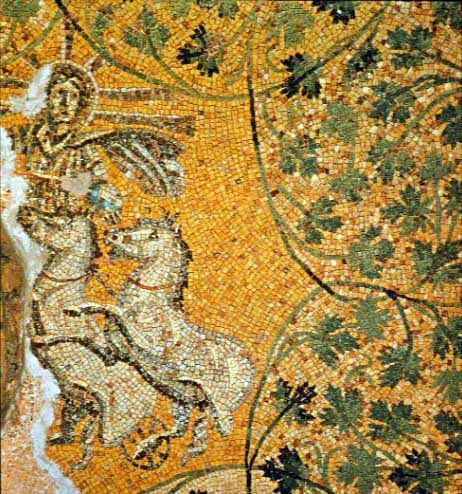
Wiki-image of Christ as the Sun is in the public domain. Wiki-image of a Memorial in Rotterdam by Danja Vasiliev is used according to the Creative Commons Attribution ShareAlike 2.0 license.

Saturday, November 15, 2008

Saturday word, 15 Nov 2008

Commemoration of All the Faithful Departed of the Order of Carmel
Rm 14. 7-9,10c-12; Ps 22; Mt 25. 31-46
Homily of Fr. Paul Panaretos, S.J.
Our Safety

It has been an ancient practice of the church to pray for the deceased. The church prays “for all in Christian and catholic fellowship departed, even without mentioning...their names, under a general commemoration.”/1/ Each mass allows the church, at once locally and universally, to solicit for all the dead: Grant them, O Lord, we pray, and all who sleep in Christ, a place of refreshment, light and peace./2/

We pray for them to enjoy divine refreshment. Yet we cannot know everyone to whom God offers that gift because our expectations cannot match God’s desires. The familiar parable of the son of man coming in his glory makes that clear. Both those on his right and on his left were surprised by the ways they attended and failed to attend the son of man! In life and death, in making our faith alive and in snubbing it, God always surprises us.

Our vocation is to place ourselves into the heart of our Creator and Redeemer. God will still surprise humans, especially with God’s merciful love. Placing ourselves into the heart of our Creator and Redeemer is safety for all who have been claimed by the name of Jesus. That is the tenor of St. Paul’s Letter to the Romans: we are to live in and for the Lord. As we heard St. Paul summarize: whether we live or die, we are the Lord’s.

The Carmelite souls, who lived hidden lives in prayer, found that to be their most conducive way to live in and for the Lord. They continue to pray for us. We pray for them so that they might continue to be surprised by the way the divine refreshment, light and peace continues to unfold for them.

____________
1. St. Augustine, On the Care To Be Had for the Dead, 6.
2. Eucharistic Prayer I. Each Eucharistic Prayer remembers the faithful departed with different wording.
______________________________________________________
Wiki-image of Sagina subulata by Jerzy Opioła is used according to the Creative Commons Attribution ShareAlike 3.0 license
.

Wednesday, November 12, 2008

Tense Situation Far From Resolution

Can a tidy resolution exist in the spheres of faith and politics? Today's portion of the annual November meeting of the United States Conference of Catholic Bishops [USCCB] meeting demonstrated that faith addresses politics on many fronts.

Mr. John L. Allen Jr. summarized that portion of the bishops' meeting. One bishop's intervention reminded them that each of them needs both to pastor and to teach.
“A prophecy of denunciation quickly wears thin,” said Bishop Blase Cupich of Rapid Coity, South Dakota. “We need a prophecy of solidarity with the communities we serve and the nation we live in, which needs healing. We must be, and be seen to be, caring pastors as well as faithful teachers.”
Bishop Cupich echoed the sentiment of Pope Benedict, when he had earlier visited Spain two years ago. Some of its governments policies are neuralgic to the teaching of the Catholic Church (same-sex marriages; liberalized divorce laws; battles over catechetical training in schools). As Mr. Allen reported then
Benedict also resisted the temptation to "go negative," ducking invitations to specifically excoriate Zapatero's policies. Asked by reporters on the papal plane about the gay marriage law, for example, Benedict said he didn't want to start off with negative things, but preferred to focus on the many healthy and happy families "which give us hope for the future," before going on to restate that marriage is based on an indissoluble bond between a man and a woman.
"Hope for the future" is to Pope Benedict--with his incisive mind and gracious, pastoral heart--a necessary aim without sacrificing Catholic teaching.

Sunday, November 09, 2008

Sunday word, 09 Nov 2008

Dedication of St. John Lateran (09 Nov 2008)
Ez 47.1-2,8-9,12; Ps 46; 1Co 3.9-11,16-17; Jn 2. 13-22
Homily of Fr. Paul Panaretos, S.J.
Reborn Holy

The liturgical year has a simple structure. It revolves around our feast of feasts, Jesus' dying, death and resurrection. We celebrate it solemnly over three days, from the night of Holy Thursday and move through Good Friday, Holy Saturday into Easter. We tarry for 50 days more to soak in this mystery and unite more with our Messiah Jesus. The rest of the year unfolds aspects of Jesus’ paschal presence with us. Each Sunday is a little Easter when we rededicate ourselves to our Risen Lord.

Twelve feasts, when they fall on the Lord’s Day, replace the Sunday liturgy because they help us tap into the mystery of Jesus present with us. This year we’ve celebrated four of them: Ss. Peter and Paul (in June); the Exaltation of the Cross (in September); All Souls (last week); and now the Dedication of the Lateran Basilica, the Cathedral church of the Archdiocese of Rome, named St. John, who was the patron of the monks who served it.

Each diocese has its principal church, where the bishop of the diocese presides. St. John Lateran is the Pope’s church, in the same way that St. John the Evangelist in Cleveland is Bishop Lennon’s church. St. John Lateran is the cathedral of cathedrals, dedicated in 324 in Rome, then the emerging center of Christianity.

Because a cathedral is a building, it isn’t greater than than those who assemble in it. Our parish church is a building; it serves as an extension of the cathedral of this diocese and is in communion with the Lateran basilica, the cathedral of cathedrals.

The word “church” signifies people as the Body of Christ before it signifies a building. We are connected with Jesus, our Messiah, Teacher and Model. No one is born Christian.
Baptism makes us Christian. After baptism unites us to Jesus’ death and resurrection, we gather around his table to nourish and sustain our baptisms, which made us God’s building, the temple of [our Messiah’s] body.

Because many of us have no memory of our baptism, we easily forget its consequences of holy living: living and witnessing God’s desires with our lives. Even those who remember being baptized are challenged daily by the world’s desires. It was always so.

The baptistry in the Lateran basilica bears an early 5th-Century inscription which reminded those, who went under its waters for the first time and ever after, what being reborn holy means:
Here is born in Spirit-soaked fertility
a brood destined for another City,
begotten by God’s blowing
and borne upon this torrent
by the Church, their virgin mother.
Reborn in these depths they reach for heaven’s realm,
the born-but-once unknown by felicity.
This spring is life that floods the world,
the wounds of Christ its awesome source.
Sinner, sink beneath this sacred surf
that swallows age and spits up youth.
Sinner, here scour sin away down to innocence,
for they know no enmity who are by
one font, one Spirit, one faith made one.
Sinner, shudder not at sin’s kind and number,
for those born here are holy.*
Do we “reach for heaven’s realm?” Or are we flab on our Christ’s Body? Do we tap into the “wounds of Christ?” Or do we insulate ourselves from his suffering today? Do we obsess and “shudder” about sin? Or do we put ourselves into Jesus’ care? The Dedication of the Lateran Basilica is far less an occasion to focus on a building. It’s another opportunity to rededicate ourselves to Jesus; to know with keener clarity that we are his body until he returns in glory.

In your daily 15 minutes with Jesus this week, consider the thrice-holy name in which you were baptized, Father, Son, Holy Spirit. Ask the saints whose names you bear to present you to Jesus. Speak with Jesus about how you feel his Spirit has “begotten by God’s blowing” your new, Christian life. Desire to be more aware of your baptism and the Christian vocation it offers you each day. Close by saying slowly the Lord’s Prayer; slowly, in order to appreciate how each thing you do as a Christian is for the sake of the world.
________________
* perhaps composed by Pope St. Leo the Great (+461).

______________________________________________________
Wiki-image of facade of the Basilica of St. John Lateran by Ern is used according to the Creative Commons Attribution ShareAlike 2.0 license. Wiki-image of the entrance to the Lateran Baptistry by Anthony Majanlahti is used according to the Creative Commons Attribution ShareAlike 2.5 license.

Thursday, November 06, 2008

Papal Prayers and Congratulations

Pope Benedict communicated to President-elect Obama prayers and blessings to
support you and the people of the United States in your efforts, together with all men and women of good will, to build a world of peace, solidarity and justice.
Zenit reported this on 05 November, the day after his election.

On the same day Francis Cardinal George, President of the U.S. Conference of Catholic Bishops, sent a message of congratulations to President-elect Barack Obama on the occasion of his win in the presidential election Tuesday.

Wednesday, November 05, 2008

Wednesday word, 05 Nov 2008

John Pfordresher funeral (05 Nov 2008)
Wis 3. 1-9; Ps 23; 1Jn 5.1-5; Jn 14. 1-6

Homily of Rev. Paul D. Panaretos, S.J.

Warmth. Life and Mystery


On behalf of Gesu Parish and personally, I extend our prayers and heartfelt sympathy to you, Mary, at the death of your dear husband of 55 years. In expressing our condolences to you, Jeanne, Betsy, Anne, Kate and Ray, I thank you for the ways you supported your Mom and Dad in these long months of his baffling illness. Their many moments bear bittersweet memories for you. I encourage you not to lose them because affection and remembering are intimately connected. Your children grieve, too. It will be hard for you not have your Grandpa in the same way you did; but that does not mean that you will not experience his presence in real and new ways.

You are not alone in your grief. Gesu Parish, the Catholic church and the artists’ guild bid farewell to one of ours and theirs of many years. I offer a few words to console and strengthen us in our grief; to help you appreciate God’s astounding compassion by noticing Jesus’ victorious dying and rising were present in your husband, father, grandpa and in you as well./1/

As a spouse Jack was honored to make one life with you, Mary. As a parent Jack was deeply proud of you, his children and grandchildren. Honor and parental pride are not things; they are qualities of the human spirit to which each of us gives particular shape. Honor and parental pride are two colors on the palette of many spirit-colors, and Jack painted with them in his way. God’s astounding compassion is, after all, an art of the highest order, and people are called to exercise their share of God’s compassion.

Exercising compassion makes us more humane, and it humanizes others. Exercising compassion also divinizes us, it awakens us to the divine image in which each person is created. Jack’s passion for justice was the fruit of God’s compassion for him. Living at once as human and divine is an art. Art surpasses skills and technique: spouses know that; parents know that; children know that; siblings know that; grandchildren know that; people of faith know that. All of us need reminders that we know that. Enter the artist to do that sublime act of charity for us! I offer an example.

My eyes turn often to one of Jack’s watercolors in the parish office parlor. It’s an 8-inch by 6-inch watercolor of a view of Gesu from the Miramar sidewalk; at the viewer’s back is Fairmount Circle. The trees are bare, and snow covers the lawn and evergreens the way icing tops a cake. But the scene is by no means stark or cold. Jack painted the sky his eyes captured as a spectrum of color, which breathes his depiction of his parish with warmth, life and mystery. “Now that’s a water color sky”--to give voice to Jack’s words.

Visual knowledge is a different form of knowing than musical knowing, literary knowing or mathematical knowing. Jack’s visual artistry helps me appreciate what is always in front of my eyes so that I begin to see that nothing is ordinary. That is the charity Jack bestows on me daily. That is the charity with which he loved you his family and loved into you. His charity allows many to see extraordinarily.

In our history of faith visual artists have helped believers in every age to appreciate faith’s warmth, life and mystery, especially as they depicted scenes from the life of Jesus, Mary and the saints. Indeed, churches existed before museums, and churches were tabernacles of grace-incarnate before museums were repositories of beauty. At the end of the 6th Century, Pope Saint Gregory the Great wrote the Bishop of Marseilles: “Painting is employed in churches so that those who cannot read or write may at least read on the walls what they cannot decipher on the page.”/2/

The “page,” of course, may be a leaf of a book, the canvas Jack so often chose, or the score on which composers graph the colors of the sounds they hear before we do. The paramount page is none other than we humans. Souls, as scripture uses the word, means our selves. What we overlook or are unable to see, God is aware. God sees sparks although we see only stubble.

Jack knew that in his bones, which made you, his family, his prized “pages” on which he painted and who painted him. His art of living his faith allowed him to live and breathe as begotten by God. Our sorrow is a child of being separated from him; though separated from you and me, Jack is not lost but hidden for a time until Jesus raise[s] him on the last day and reunites us with him.
This in-between time--separated yet not lost but hidden for a time--is hard to bear. Absent-presence is our Catholic faith's irony. Jack’s keen sense of irony, allowed him to grasp our Catholic irony. It helped Jack persevere in his incapacitating illness. We knew his moods in the past months the way one knew his moods throughout his life, but they did not overtake his faith, his modesty, his patience, his dignity or his humor.

About Jack’s humor: Anne revealed to me that Jack would intentionally and consistently mispronounce names of teachers, composers or neighbors and then laugh when he was corrected. How I wished to have been a fly on the wall when he mispronounced my name!

Jack’s compassion, his sense of the right way to be in the world, his talents all shaped you, his family, and many of us. Jack gave human shape to the words from the First Letter of John: God’s children are being revealed. Christians, God’s children, are strong and gentle, loving and confident, devoted to the end. Those are marks of Jesus’ faith. Jack lived Jesus’ faith, and Jesus assures that Jack will be victorious in death. He encourages your patient endurance without him until Jesus reunites you and us with Jack for ever!

___________________
1. Cf. Order of Christian Funerals 27.
2.
Epistulae, IX, 209, cited by Pope John Paul II in his Letter to Artists, Easter, 1999, note 7.
____________________________________________
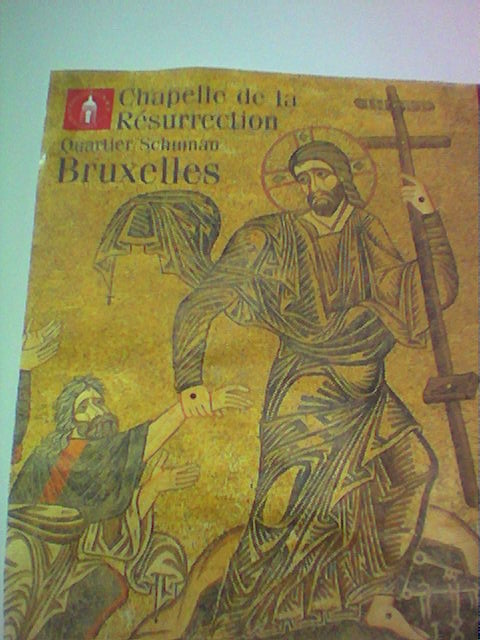
Wiki-images of a sky over Monmartre and of the Resurrection Chapel in Brussels are used according to the GFDL.

Monday, November 03, 2008

Monday word, 03 Nov 2008

31st Monday of the Year (03Nov2008) Phil 2. 1-4; Ps 131; Lk 14. 12-14
Homily of Rev. Paul D. Panaretos, S.J.

We Have Our Model


As Jesus moved toward Jerusalem and his death and resurrection, Luke’s gospel recalls that numerous people encountered Jesus along his way. Jesus formed them, shaped them according to his mission. His words in today’s, compact gospel scene are less about remuneration and more about prestige: do not invite your friends...[kin]...or your wealthy neighbors, in case they may invite you back and you have repayment. The Pharisees liked money--who doesn’t?--but they were more enamored with prestige, their standing in the eyes of others.

Such self-concern infects with an all-absorbing anxiety; and all-absorbing anxiety prevents peace of mind. Peace of mind, which flows from the peace of God, St. Paul encourages in his letter to his beloved Philippians. In practice, Christians welcome God’s peace into their lives by allowing the communion with Jesus and one another to shape their living.

We heard St. Paul state this principle of Christian living in a few, short lines. Our tendencies to desire prestige-- whatever sort--tempt us to hear each looking out not for his own interests, but also everyone for those of others as an add-on when its convenient. We know St. Paul meant to consider others’ interests even more than our own because we are to humbly regard others as more important than []ourselves.

Jesus is the model, and Jesus did nothing out of convenience. Did it tax Jesus? Absolutely--to death. But God’s peace, which none of us can understand, abided with him, and more, raised him from death to live absolutely anew. Jesus models our destiny, too, as well as how to live our Christian communion and fellowship today.

Sunday, November 02, 2008

Sunday word, 02 Nov 2008

Commemoration of All the Faithful Departed (02 Nov 2008)
Dn 12. 1-3; Ps 23; Col 3. 12-17; Jn 12. 23-28
Homily of Fr. Paul Panaretos, S.J.
Practice and Affection

Each October 21st comes and goes, and I feel something before I recognize it. Some years its texture is somber; other years it registers as weighty; sometimes I feel an ache; this year it wanted my attention. Every year I am aware sometime during October 21st of a peace, which is bittersweet. On that day in 2001 I presided and preached at the funeral of my father. As I feel his absence from my life the way he was, I also feel his presence to me in a new, more real way. His absent-presence, if I may join those words, shaped my reflection with you today according to the contours of practice and affection.

It has been an ancient practice of the church to pray for the deceased. The church prays “for all in Christian and catholic fellowship departed, even without mentioning...their names, under a general commemoration.”/1/ Each mass allows the church, at once locally and universally, to solicit for all the dead: Grant them, O Lord, we pray, and all who sleep in Christ, a place of refreshment, light and peace./2/

In the 11th Century a French monastery set aside the day after remembering all the saints to commemorate all the faithful departed. Its custom became universal church-practice. The saints are the patrons of those who have died. That ancient belief of ours is the reason our cemeteries contain memorials to saints, bear the names of saints (St. Joseph, St. John, St. Mary as well as All Saints and All Souls are in our diocese) or the names of events in Jesus’ passion, death and resurrection (Calvary, Holy Cross, Resurrection are cemeteries in our diocese). At each funeral we especially commit the deceased to the angels and the martyrs:
May the angels lead you into Paradise.
May the martyrs come to greet you on the way.
May they lead you home to the holy city,
to the new and eternal Jerusalem.
When St. Augustine, in the 5th Century, replied to a bishop who wrote him, asking about care for the dead--something which, for many reasons, could not be presumed--St. Augustine frequently mentioned affection, the affection of the living for their loved ones and friends./3/ It is of great significance, St. Augustine replied,
where a person [inters] the body of his dead, while he [prays] for his spirit unto God, because both the affection preceding chose a spot which was holy, and after the body is there...the recalling to mind of that holy spot renews and increases the affection which had preceded./4/
Affection and remembering are intimately connected. Our affection chooses and our remembering increases our affection.

Commemorating All the Faithful Departed is not only about our affection for and remembering our dead. It’s about the Trinity’s affection for us and remembering us. When the Trinity remembers us their remembering exceeds our memory because the Trinity creates us moment by moment as they remember us.

So that would be less abstract, Jesus showed great affection for his disciples in every age by giving them his body and blood to nourish us on our pilgrim way through life/5/ and to strengthen our identities as created in the divine image and redeemed to be saints.

Our share in his eucharist recreates us; keeps us intimately connected with Jesus and one another, living and deceased, and increases our affection for Jesus and one another, living and deceased.

Affection stirs in me each October 21st. My father was my best teacher. I knew that while he was present to me in earthly life. While he is present to me in his new and more real way he teaches me in ways he could not before. As angles and martyrs welcome him, he connects me more closely with them and you.

In your 15 minutes with Jesus this week, pause to feel the Trinity loving you into being and holding you in being. Ask your patron saint and someone you’ve known, who has gone ahead of you, to present you to Jesus. Speak with your Creator and Redeemer about the ways your affection chooses Jesus and Jesus’ affection chooses you. Ask for the grace to choose him more single-heartedly. Close by saying slowly the Lord’s Prayer, which makes us more aware of his Father’s affection for us and renews our desire to incarnate that affection by how we practice the church’s faith--Jesus’ faith--in our daily lives.


____________
1. St. Augustine, On the Care To Be Had for the Dead, 6.
2. Eucharistic Prayer I. Each Eucharistic Prayer remembers the faithful departed with different wording.
3. Ibid., Sixteen times in its 23 sections: Sections 5; 6 (3 times); 7 (4 times); 9 (3 times); 10; 11 (2 times); 22 (2 times).
4. On the Care To Be Had for the Dead, 7.
5. Prayer after Communion, Rite of Christian Funerals.
____________________________________________
Wiki-image by Merkurion of a church on All Soul's Day is used according to the GFDL.

Tuesday, October 28, 2008

What Happened at the Synod of Bishops Just Concluded?

The interventions by the bishops were not "electric." However, the bishops did not move forward regarding scripture--the synod's focus this year--and not backward, as some feared. Mr. John L. Allen Jr. summarized today that the bishops
in broad strokes the bishops steered a middle course between two possible extremes: secular skepticism and fundamentalist literalism. They endorsed the use of historical-critical methods of study, while also calling for a distinctly “theological” and “spiritual” reading of the Bible.
They also endorsed the laity in a surprising way with one of their proposals to Pope Benedict. (That proposal follows logically from something Pope Paul VI had done after the Second Vatican Council.)

Monday, October 27, 2008

New Way To Pray--at the Computer

St. Ignatius of Loyola would be pleased. The proponent of "seeking and finding God in all things" today would use the Internet to help people to pray. Loyola Press and its companion websites offer a catechetical website called Finding God. One of its features is its 3-Minute Retreat.

The sample linked above was yesterday's retreat. One can register at Finding God then receive an attractively produced, daily retreat in one's e-mailbox. Three minutes may not sustain Christians, but it is enough time to reorient them in a busy world.
________________________________________________________________
Wiki-image of a laptop in use by Avatar, who has given permission for its use.

Sunday, October 26, 2008

Sunday word, 26 Oct 2008

30th Sunday of the Year A (26 Oct 2008)
Ex 22. 20-26; Ps 18; 1Th 1. 5c-10; Mt 22. 34-40
Homily of Fr. Paul Panaretos, S.J.
More Sensitive and More Versatile


Today’s three scripture selections focus us on serv[ing] the living and true God. What does serv[ing] the living and true God include? Let me offer four ways which that service includes.

It involves, first, initial conversion, encountering God in a way that moves me to arrange my life with God as singularly important. St. Paul, along with his contemporaries, described that with the words, turn[ing] to God from idols.

Idols are not necessarily exotic. We exalt many things too highly. We often do not realize when we arrange our lives around power, prestige, possessions or performance, to name a few. When we make such things the center of our universes, we bow before our idols.

Second, serv[ing] the living and true God is not divorced from daily living. That is spiritualistic. Serv[ing] the living and true God is in and of Jesus’ Spirit. To live according to Jesus’ Spirit means the shape of my living imitates Jesus and his living--loving God as completely as I can and loving others with the respect and care I desire.

Imitation was not aping. One learned how to be in the world by learning from and following models. Two fruits of ancient imitation were sensitivity and versatility./1/ Recalling their own enslavement helped the people of Israel to treat those on the margins with compassion. Being compassionate to widows and orphans--the phrase included any and all people at risk--was a positive command: you shall not molest or oppress...or wrong. Sensitive people sought to exercise compassion in situations for which no positive command existed.

Third, we do not exercise compassion on our own nor do we take the initiative to encounter God in our first conversion. We are powerless to do either of those on our own. As the Psalmist sang, I love you, Lord, my strength! We made those words our own in our responsorial psalm. Relying on God’s strength to help us shape our Christian identities, is crucial wherever we are and in all we do.

Last, keeping alive and fresh our initial conversion in daily living and cooperating with God’s grace gives our Christian living a particular purpose: to expect [God’s] Son from heaven, Jesus whom he raised from the dead.

The texture of expecting Jesus’ return is not fearfully watching over our shoulders. Witness is its texture! The ways we exercise Christian compassion as well as the ways we receive it are the most powerful ways all of us evangelize. Our witness to the living Risen Lord Jesus is crucial. As Pope Paul VI
said...to a group of lay people, “Modern man listens more willingly to witnesses than to teachers, and if he does listen to teachers, it is because they are witnesses."/2/
What Jesus revealed by fulfilling God’s desire, enshrined in the commandments, the prophets and God’s relationship with humans, is that the vocation of us all is to witness to gospel values above all others. Jesus is our model, from whom to learn greater sensitivity. Plus, we enjoy many sainted people, who show us how to live the gospel daily with greater versatility to both awaken people to their first encounters with God and deepen our ongoing conversion to God in Jesus by their Spirit.

In your daily 15 minutes with Jesus this week, allow yourself to rest in the love with which the Trinity creates you at each moment. Ask St. Paul to present you to Jesus. Speak with Jesus about how your life gives witness to him and to his gospel. Ask Jesus for his strong grace in order to grow more sensitive to others and more willing to respond to them. Close your time with Jesus by saying slowly the prayer he taught us. The Lord’s Prayer is our key to fulfilling his twin commandments by which we honor God in our Christian concern for all people.


___________
1. “The genius of Roman rhetoric resides in the use of imitation throughout the school course to create sensitivity to language and versatility in its use.” Donovan J. Ochs, “Roman Rhetoric,” in Encyclopedia of Rhetoric and Composition: Communication from Ancient Times to the Information Age, Ed., Theresa Enos, p. 643. The way people communicated extended to the whole of life.

2. Pope Paul VI, Address to the Members of the Consilium de Laicis (2 October 1974), He incorporated his words in his Apostolic Exhortation, Proclamation of the Gospel, 41. The occasion was the 10th anniversary of the closing of Second Vatican Council.

________________________________________________________________
Wiki-image by Merlin of a torah scroll and its jad are used according to the Creative Commons Attribution 2.5 license .

Monday, October 20, 2008

Monday word, 20 Oct 2008

29th Monday (20Oct2008)
Eph 2. 1-10; Ps 100; Lk 12. 13-21
Homily of Rev. Paul D. Panaretos, S.J.
Staying with Experience

I realize that when you and I hear about cosmic forces our minds tend to think of outer space or of the behavior of matter and energy on the atomic level. Our knowledge and experience does not help us appreciate what the first Christians grasped. They and their contemporaries felt strongly grasped by cosmic forces and in bondage to their effects.

St. Paul’s phrase, the ruler of the power of the air, is one expression of cosmic forces--another we find in this letter is principalities and powers./1/ People felt and knew themselves in bondage to these forces. Christians experienced a freedom from this bondage, which registered one way as being dead in []our transgressions and sins, able only to follow[] the wishes of the flesh and the impulses.

Their freedom was salvation. Being saved was not a future condition but very present, in which they felt certain of their new identity in Jesus and free to proclaim it in deed and word. Dark forces sought to lure them in many directions, one impulse was greed. Salvation--freedom in the dead-and-risen Messiah Jesus--was their wealth, not possessions or power or prestige.

Being saved enlightened their minds so that they could live according to the Spirit of Jesus rather than the wishes of the flesh and the impulses, that is, whatever was contrary to Jesus’ Spirit of freedom and of communion.

One important clue this offers us is this: God in Jesus by their Spirit worked their freedom in and through the experience of the first Christians. To live and to be rich in what matters to God begins and continues for us in our experience, too.

Parents know from experience what psychologists help us understand: impulse control is crucial in life. St. Paul reminds us how God in Jesus by their Spirit control all things for good, inviting us to share the gift of true freedom, for our lives now and as well as for ever.
________________
1. Ephesians 3.10. Paul used the collective, powers, again in the same letter; three times in Romans; twice in his letter to the Colossians (a letter with great overlap to Ephesians); and once in his letter to Titus.

____________________________________________
Wiki-image is used according to the GFDL.

Synthesis of the Synod

The Internet has allowed instant communication from the Synod (like the Jesuit's 35th General Congregation at the beginning of this year).

Basilian Father Thomas Rosica (the Vatican's English-language press attache for the 2008 world Synod of Bishops) communicated that
I have always had great respect and admiration for Cardinal Marc Ouellet, the archbishop of Quebec and the relator-general of this world Synod of Bishops on the Word of God. What he did today in the Aula, in the presence of the entire assembly and Benedict XVI, was a real “tour de force” that left many people spellbound.
Access his summary for his description of the intervention.

John L. Allen Jr. offered last Friday his description of where things stand thus far:
As the Oct. 5-26 Synod of Bishops on the Bible moves into its "sausage-grinding" phase, working on propositions that will be submitted to the pope and a concluding message to the world, it already seems possible to anticipate several of its conclusions, at least at a fairly high level of magnification. . . .

I'll give a quick summary of the proceedings so far, first looking at areas of general agreement and then three tensions that, at this stage, remain unresolved.
Mr. Allen listed areas of "General Agreement" and "Tensions." Tensions fell under three categories: 1) Lay Ministers of the Word; 2) The Historical-Critical Method; and 3) Inerrancy of the Bible. His summary concludes with excerpts of his interviews with some bishops at the synod about some of the topics in his summary and about others.
_________________________________________________
Wiki-image of a bible and rose is in the public domain.

Sunday, October 19, 2008

Sunday word, 19 Oct 2008

29th Sunday of the Year A (19 Oct 2008)
Is 45. 1-4,6; Ps 96; 1Th 1. 1-5b; Mt 22. 15-21
Homily of Fr. Paul Panaretos, S.J.
Making Our Faith, Hope and Love More Concrete

Some things don’t change. Opponents become unlikely allies when circumstances suit them. Opponents even staunchly support each other. An opponent, more accurately, a conqueror of the Persian empire, where the Jews already had been in exile, became their liberator and God’s agent: For the sake of...my servant, of Israel, my chosen one, I have called you by your name, giving you a title, though you knew me not.

Cyrus was in the right place at the right time. People did not underestimate the ramifications of that moment. None other than the Lord brought it about. God’s chosen servant, the entire people Israel, caught something we miss.

Greek was the language spoken in the ancient Mediterranean world. The Hebrew Scriptures had been translated into Greek so that God’s word could circulate far, and so more people could appreciate it. Lord in Greek is Kyrios (we know it in Kyrie eleison). Greek does not have a letter C, which means that Kyrus was their liberator’s name. That similarity deepened appreciation that the Lord worked through everyone--even a government leader, who didn’t acknowledge the only Lord.

Moving forward five centuries to Jesus’ time, the tension among Jews between being ruled by the Lord or by a man who considered him-self supreme--Caesar--had grown razor sharp. Members of two opposing groups allied themselves against Jesus. The Pharisees represented the Jewish people under Rome’s oppressive thumb. The Herodians, the party of Herod, sided with Rome in order to enjoy power. Herod was a heretic, who only wanted power. He had only the power Rome gave him, and Rome made him puppet-king of the Jews.

Malice made these enemies allies, specifically their hatred for Jesus. Their insincere question was not about taxes but about power, authority and allegiance. Jesus shrewdly asked for the coin used to pay the Roman tax. If a Pharisee had offered the coin, he’d have been a heretic for holding it. If a Herodian had offered the coin, the Pharisees would have been guilty for associating with Herod’s own; their association with them meant the Pharisees distanced themselves from the Lord, what they preached no one ought to do.

Because the issue is about recognizing God’s authority and about allegiance to God or denying God, these verses do not offer church-state solutions. The episode is about God’s loving control of history and our share as God’s stewards in each present moment. It's about recognizing God as the source of all; that all things are gifts.

October reminds us of two gifts from God: life and mission. This month deepens our awareness about life as given by God not by anyone else. October also calls each Catholic to participate in the church’s universal mission, namely, to make visible in more concrete ways our work of faith and labor of love and endurance in hope of our Lord Jesus.

Gesu offers one more way to do that by inaugurating the Gonzaga Society. Its mission complements other avenues of Christian service. Named after Jesuit St. Aloysius Gonzaga, who helped those in Rome no one else would help, the Gonzaga Society seeks to help people who “slip through the cracks” in our community. Members of the Gonzaga Society give people, who cannot drive, rides to church and to the doctor. They offer respite to those who are 24-7 caregivers at home. They sit with those who are dying, and they accompany survivors in their grief. Doing those things brings people nearer to Jesus. They are tributes of a priceless kind we offer as friends of Jesus.

In your daily 15 minutes with Jesus this week, allow the Trinity’s creative love of you give you new awareness of your partnership with them. Ask St. Aloysius to present you to Jesus. Speak to Jesus about your partnership with him; how you champion life and the church’s mission. Desire strongly to practice in more concrete ways your work of faith and labor of love and endurance in hope of our Lord Jesus. Close by saying slowly the Lord’s Prayer. Those who say it regularly and with passion grow more united with our Creator and Redeemer, who empowers us with his Spirit to practice more concretely our faith, hope and love with and for others.

____________________________________________
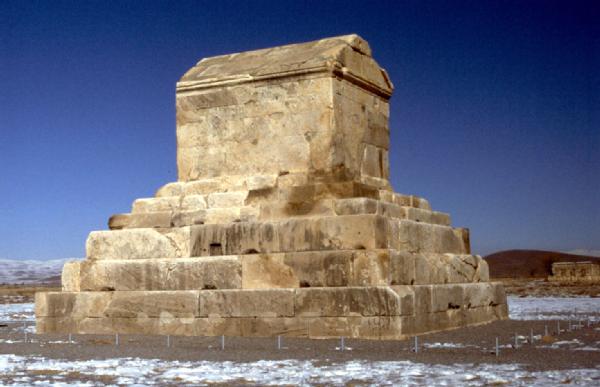
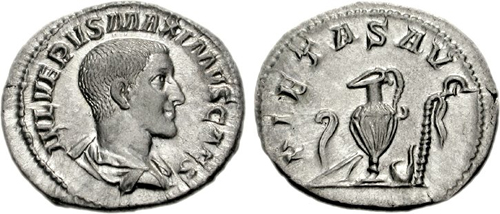
Wiki-image of the mausoleum of Cyrus is used freely by its author's permission. Wiki-image of Roman coins is used under the GFDL.

Saturday, October 18, 2008

Saturday word, 18 Oct 2008

St. Luke, Evangelist (18Oct2008)
2Tm 4. 10-17b; Ps 145; Lk 10. 1-9
Homily of Rev. Paul D. Panaretos, S.J.
Our Embassy

St. Luke, as you know, wrote a two-part gospel. Part One we name his gospel, his portrait of Jesus. We name Part Two, his Acts of the Apostles, Luke’s portrait of the infant church. Recalling him today the church directs our attention to Jesus and his compassion as well as recalling the only information in Paul’s letters, which indicated a relationship between him and Luke.

Jesus’ compassion we can identify by turning to our experience. However, our experience is alien to the ancient metaphor of harvesting. Does that mean that this gospel passage is so time-bound that it cannot speak to us? It need not be time-bound, and here’s why.

Scripture comfortably heaps images atop each other. Harvest is named but two others are described by Jesus: shepherding (I send you as lambs in the midst of wolves) and messengers (say to [those I send you], ‘The Kingdom of God is at hand for you’ ).

Jesus is the model messenger as well as shepherd and harvester. Jesus was sent by God, who was the master of the harvest, to proclaim God’s kingdom.

St. Luke’s feast reminds us that all Christians are to act with the master of the harvest; we are to allow ourselves be sent by Jesus as his ambassadors to our world. Our embassy is not an office to which people come. The Catholic embassy is our way of living by which we extend Jesus’ work, empowered by Jesus to invite others to the Kingdom of God to which we already have been welcomed. We invite by our manner of living.

That calls for perseverance as well as moving lightly through life. Becoming enamored of the present world, to use Paul’s language, is to cease to focus ourselves on Jesus’ mission he gives us and not to persevere. Because St. Luke abided with St. Paul--Luke is the only one with me--he is a worthy intercessor to help us persevere, to encounter Jesus and others in new ways and to discover anew how Jesus makes us conduits of his Holy Spirit.
____________________________________________
Wiki-image of St. Luke is in the public domain.

Friday, October 17, 2008

Gazing Action

Lectio divina has arisen repeatedly in the Synod devoted to God's word. [A summary list of topics thus far has been formulated as 19 questions.]

In addition to quietly reading a passage from scripture, lectio divina aims to help a person personally engage the passage. The engagement is not limited to the intellect; it seeks to

"Auxiliary Bishop Santiago Silva Retamales of Valparaiso, Chile, made a concrete presentation of this type of prayer that lasted some 20 minutes." The summary of his presentation listed seven points and described the fruit of five years of praying with scripture this way in his diocese.

Reading, rereading in a meditative way leads to
contemplation, aided by silence or music. What is important, the bishop said, is that "Jesus takes hold of me, looks at me and I at him, an exchange of gazes."
The outcome of this engagement with Jesus through the divine word is action--a concrete way Jesus, through his word, guides and graces individuals to put into practice in their daily lives.

Tuesday, October 14, 2008

Picture of Persecution Today

In the secular and democratic nation of India Christians are suffering persecution in no single area. Orissa, an east-central state, has seen it yet again; Karnataka, the state in which the city of Bangalore is located, saw persecution of Christians for the first time--to name only two states.

The Indian Prime Minister “himself. . .has recognized that this is a ‘national disgrace’ for India, an evident contradiction of the great values of non-violence, tolerance and respect, which the religions of this great country have cultivated for centuries.” [Source: Zenit]

A recent article in the New York Times depicted what is happening in an accurate fashion, according to an Indian Jesuit priest, who teaches theology in his country and is currently studying in the United States.

The perpetrators of this religious persecution offer all sorts of justifications. The fact that it happens at all urgently calls people to ponder the meanings of secular and democracy.

More information with a timeline of recent events are at People for Peace in India.
__________________________________________________________
Wiki-image of India States and Union Territories map by Planemad is used under the Creative Commons Attribution ShareAlike 3.o Unported license.

Monday, October 13, 2008

Disarming With "a Human Approach"

The Vatican has a permanent observer at the United Nations. Last week, Archbishop Celestino Migliore, addressed the 63rd U.N. General Assembly about the still pressing need for nations to disarm. He called for "a human approach" to it because each human being
is the ultimate aim of all public policies, arms regulation, disarmament and non-proliferation must have an interdisciplinary or, more importantly, a human approach.Without considering the social, economical, psychological and ethical impact of armaments, policies on disarmament and non-proliferation become a game of armed truce between States.
Archbishop Migliore, near the conclusion of his address noted the "enhanced complexity of the arms trade," cited two resolutions made by the General Assembly and linked "disarmament"
with more general problems, such as the reform of this Organisation, the procedural and structural reform of the Conference on Disarmament, the tendency of overlapping the civil and military economies and the scarce coherence of the policies adopted in the strategic sectors.
Humans need coherence. Without it individuals, families, societies, cultures and the entire globe suffer.

Sunday, October 12, 2008

Sunday word, 12 Oct 2008

28th Sunday of the Year A (12 Oct 2008)
Is 25. 6-10a; Ps 23; Phil 4. 12-14,19-20; Mt 22. 1-14
Homily of Fr. Paul Panaretos, S.J.
Starting Point

Connotations are the starting points of meaning for us.


  • Take the word "meal," and we usually think first of good nourishment. Farmers may think first of feed for fowl, and bakers may think first of corn meal to dust baking sheets.
  • Take the word banquet, and we may think of more than nourishment, such as too much to eat or, a dinner in conjunction with a gala.
  • Take the word death, and we may think of a particular point in time when life ceases in a living being.
Pausing to consider meanings which come first to us is important because scriptural language, which is Mediterranean language, exceeds the connotations usual to us. Sometimes scriptural connotations clash with our expected meanings. Scriptural connotations always burst human meanings. Scriptural language and images are the vocabulary of worship. Two examples: Jesus took bread, gave thanks, said the blessing, broke the bread and gave it;/1/ and a priest’s greeting at mass quotes St. Paul: Grace to you and peace from God our Father and the Lord Jesus Christ!/2/

Our readings exemplify the differences between scripture’s connotations and our understanding. Isaiah announced God’s desire of life with an image of a feast of choicest things. The image surpasses good nourishment and points to God’s total restoration of humans and their original blessing: the reproach of his people [God] will remove from the whole earth. In the words of the Twenty-third Psalm, which we echoed, God’s companionship with us allows us to move through the dark valley of death--in scripture no single point in time.

In the Mediterranean world life without honor was--and is for many today--unthinkable. Life without honor was no life at all. The phrase, “to die a thousand deaths,” helps us appreciate that the death God would destroy...forever was no single moment in time. God would destroy every force inimical to humans.

This process of God restoring our original blessing was accepted by the people to whom Isaiah announced God’s desire. "This is the Lord for whom we looked; let us rejoice and be glad that he has saved us!"

Jesus’ parable contrasts people who accept with people who reject God’s invitation. Rejecting God’s invitation to allow God to begin to restore us now and to completely restore us when the kingdom dawns is always a temptation we face. If any of us think that temptation does not affect us, the end of the parable warns us to be on guard.

Those who accepted the invitation, coming in from the main roads and streets, followed wedding banquet conventions and came in proper attire--all but one. Not putting on a guest’s wedding garment, that is, not acting in character as disciples and friends of Jesus, is that temptation we face often. For us Christians actions are so important. Actions flow from the inner-self, to paraphrase Jesus, and our actions above all, as Jesus will remind us as the liturgical year closes next month, guarantees our place in the kingdom-banquet.

That’s why the parable’s king ordered his servants to fill his hall with both the bad and good alike. If that shocks us, then the hymn we sing in God’s voice at communion should shock us no less: “O come and sit at my table where saints and sinners are friends.”/3/

In your daily 15 minutes with Jesus this week, calm yourself in the inviting love of the Trinity. Jesus seeks you through word and sacrament; accept his invitation to welcome you and restore you. Speak to Jesus about how you reject him and how you accept him. Resolve to act in ways in harmony with his gospel. Close by saying slowly the Lord’s Prayer, our guide for Christian action for both new and veteran Catholics.
____________
1. St. Paul and the Evangelists grouped these actions of Jesus together.
2. 1 Corinthians 1.3.
3. Dan Schutte, “Table of Plenty,” #312, verse 1, ©1992, Daniel L. Schutte, OCP Publications,
Breaking Bread, 2007.
____________________________________________
Wiki-image of cornucopia of fruits and vegetables is used according to the GFDL. Wiki-image of Russian icon of Paradise is in the public domain.