Saturday, November 16, 2013

Persecution Fallout

Persecution of Christians is a fact backed by sad statistics as well as ground-level stories. Sad though it is, persecution of Christians is “potentially a boon to ecumenical relations. All denominations today have their martyrs, and all are more or less equally at risk.” So noted Mr. John L. Allen Jr. in his All Things Catholic post yesterday. Mr. Allen also touched on strengthening the role of women in the church; the pope’s visit to the seat of the Italian government; and a scandal too bizarre to “make up.”
_______________________________________________
Wiki-image by Geobia of Palazzo Quirinale CC BY-SA 3.0.

Friday, November 15, 2013

Claimed by God

Opinions about commitment in the modern world abound: it is a victim of a throwaway society; few give themselves to it; most are wary of it; it is old-fashioned; it does not satisfy; and more. Perhaps people rush commitment to soon. Does something precede making a religious commitment? In an essay by Anna Nussbaum Keating allowing God to claim people seems prior.

The ways men and women make God’s claim of them tangible for themselves varies. One of those ways is tattoos. Many moderns react viscerally to them. Ms. Keating recalled an eighth-century church council had decided that “a Christian bearing a tattoo ‘for the sake of God’ was deemed worthy of praise.”
_______________________________________________

Thursday, November 14, 2013

Demoralized

One view of a Washington, D.C., that has “lost its way.” One consequence is that the common good suffers. The “common good” is a tenet of Catholic Social Teaching. Author John Carr is no stranger to the social tradition of the Catholic Church.
_________________________________
Wiki-image of Friendship stamp PD  U.S.

Tuesday, November 12, 2013

Helping Those Affected by Haiyan/Yolanda

The former USAID Director Andrew Natsios explained on the NewsHour last night that cash donations to a number of agencies are the most helpful way to help those affected by Typhoon Haiyan (called Yolanda by Filipinos). 

One way to help:  Contributions to the Philippine Jesuit Foundation are tax-deductible to the extent allowed by law. The  (PJF) is a charitable organization under section 501(c)3 of the US Internal Revenue Code. The PJF “is the only official fundraising organization in the United States for Jesuits and Jesuit works in the Philippines.”
______________________________________

Sunday, November 10, 2013

Sunday word, 10 Nov 13

Accept Jesus
32nd Sunday of the Year C (10Nov2013)
Homily of Fr. Paul Panaretos, S.J.
We get used to things. We easily grow accustomed and often less mindful of things in our lives. Take running water. It’s rare that we don’t have it. So it is with electricity. Both are virtual constants, and it’s easy not to be mindful that others are not as blessed. At a point in my Jesuit formation I lived in Sri Lanka. Our house enjoyed running water and electricity. We also endured several interruptions of both.

During monsoon months rains poured straight down for entire nights—enough to water all the world. Mudslides were one result. They brought down poles and their electric lines. Water pumps ceased. At other times that didn’t bring Noah to mind power was not interrupted, yet we lost running water. It was too much to understand. Instead I grew more sensitive to water and electricity as limited commodities and more grateful for them both.

We get used to words and expressions, too. Frequently hearing them dulls us to their meanings. Love and hate are convenient examples. Our casual use of them empties them of their meanings. Other words buzz but make little impact when we hear or say them. Buzzwords seem the fate Christian vocabulary. Today’s scripture selections seek to rescue one: resurrection.

Resurrection is not resuscitation. Resuscitated people, in scripture and in our lives, return to life, which death tried to claim too soon. Resuscitation is temporary; resurrection is not. Resurrection is absolutely new, astonishingly new life: divine life. If death discontinues human life, resurrection more than continues human life. Resurrection is God’s life given us. Now we enjoy it partially; one day we’ll enjoy it fully.

The first Christians had no grasp on resurrection. Resurrection grasped them, they were caught up by it. It was the atmosphere they breathed, the transforming life they lived. Before it was experienced resurrection was a hope, one not every Jew shared. It was a late doctrine and a contested one as we heard in the gospel: Some Sadducees, those who deny that there is a resurrection, came forward and questioned Jesus. Who were they?

Sadducees traced their origins to high-priestly families. They ran the temple and were wealthy landowners. They were a Jewish sect about half as old as the Pharisees. They held only the written scriptures, not the Pharisees’ oral tradition of interpreting them. The hope in resurrection was a belief of the Pharisees. It grew after intense persecutions Jews suffered long before Jesus. The Second Book of Maccabees sought to give faith-meaning to resurrection.

We share three convictions our first reading announced:
  • God will raise us up to live again forever;
  • our glorified bodies will be whole, no matter how we may have suffered; and 
  • for those who defy God there will be no resurrection to this divine, unlimited life.
Can we understand that? Of course, not! Does our faith encourage us to believe and hope in resurrection? Of course! Yet for many reasons—not a mindful use of the word resurrection for starters—our imaginations narrow like Sadducees, who mocked life of the children of God. They limited it to human descent and birth. We enjoy an antidote to narrow religious imaginations, our sacramental life. Our sacramental life expands our imaginations.

Our sacramental life is neither a head trip nor a postgraduate theology class. Our sacramental life accesses all our senses: we see fire; taste wine; smell aromas; feel oil; hear words and song. Sacraments expand and make more supple our religious imaginations and sensibility. That’s why fire, water, oil, bread, wine, colors, music, song, touch, processions, aromas, kneeling, standing, signing and other gestures surround us. Words play a lesser role in liturgy’s grand symphony of the senses.

One lesson for us may be this: accept Jesus rather than ridicule him. Jesus lives among us by his resurrection. When we ridicule resurrection, we ridicule Jesus, who lives with us that way and invites us to share his risen life: in part now; and completely when Jesus returns in glory. We know much, yet some-things cannot be known. Resurrection is one. Jesus shares it with us. Sacramental living joins us with him. Sacramental living is a sure way we enjoy what we cannot know. We enjoy it because Jesus shares his life with us.

In your daily 15 minutes with Jesus this week
  • Pause to feel the Trinity accompanying you. 
  • Ask Mary and the saints to present you to Jesus.
  • Chat with him about his life; praise him for it; feel it within you and all ’round you.
  • Ask Jesus for grace to see with his vision; to hear with his attention; to notice and savor all our Creator fashioned and fashions for us.Thank Jesus for all your gifts, especially his promised life in you.
  • Close slowly saying the Lord’s Prayer. It aligns us more with Jesus’ attitude; it makes us more humane; it broadens our Christian imagination and deepens our religious sensibilities. It frees us to walk by faith and not by sight.1 Those qualities make us lively disciples, who accept Jesus and help others accept him as risen Lord.

Link to this homily’s Spiritual Exercise


_____________
  1. 1. A mid-19th Century hymn. The 20th Century saw the tune SHANTI used with it.

________________________________________________________________

Saturday, November 09, 2013

Prayers for Victims and Survivors

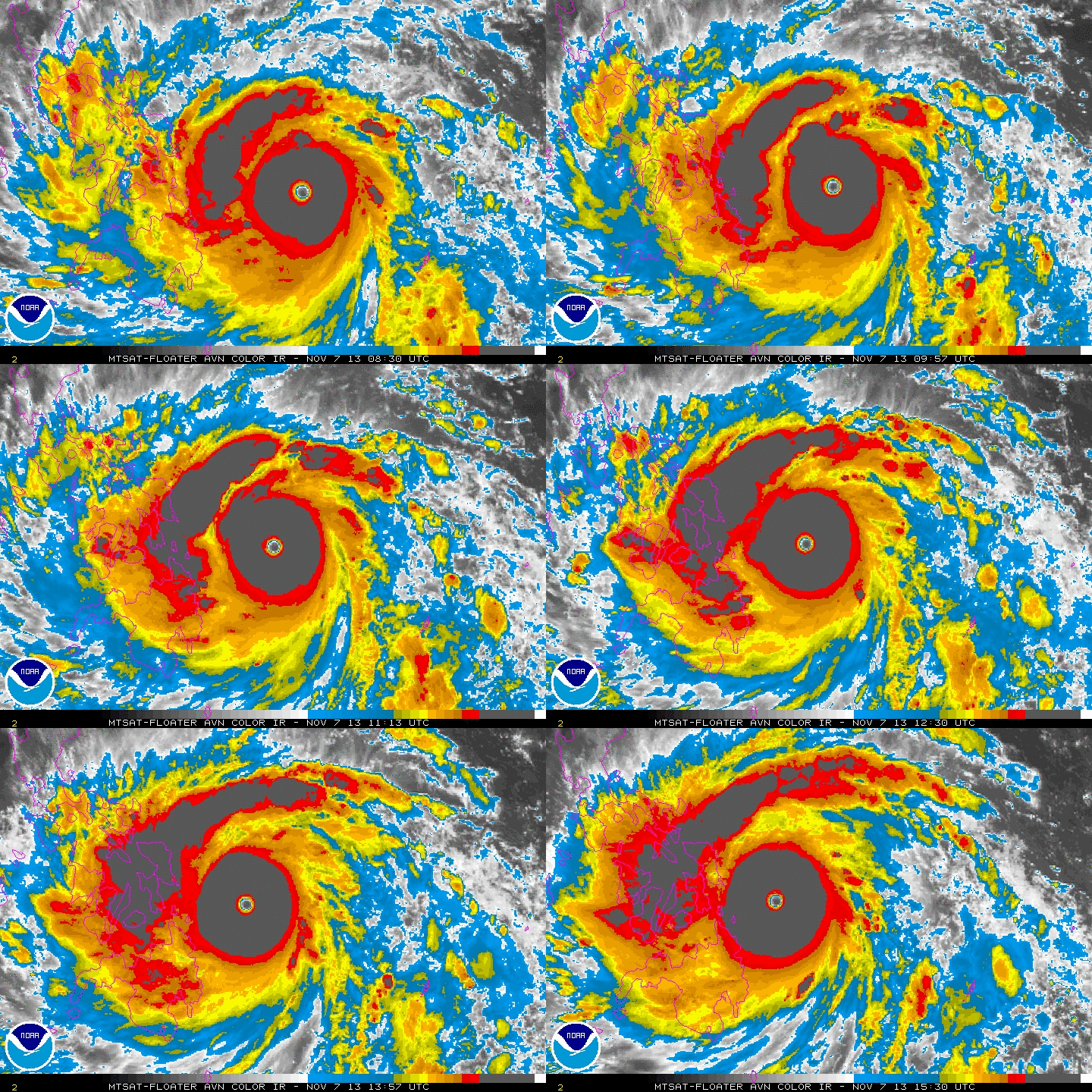
Billed as super typhoon category 5 Haiyan has devastated areas. CNN’s slide-show warns views of graphic images. Earlier Pope Francis “expressed his closeness to the people of the Philippines and has assured them of his prayers.” He tweeted to the world: “I ask all of you to join me in prayer for the victims of Typhoon Haiyan / Yolanda especially those in the beloved islands of the Philippines.”
______________________________________
Wiki-image of Typhoon Haiyan public domain.

Friday, November 08, 2013

Not Usual News-Grabbers

Vatican synods are important in the life of the church. However, the world outside the church, many inside and the media that make stories have not found synods attractive stories— until Pope Francis. Mr. John L. Allen Jr. reported that in today’s All Things Catholic as well as informing about synods and the upcoming one.
____________________________________________

Wednesday, November 06, 2013

Startling Stats

Jesuit Fr. Peter Hosking recently saw the documentary “Girl Rising.” He reported some statistics it offered.
33 million: the number of “fewer girls than boys in primary school”; 
66 million: the number of “girls out of school globally”; 
$5.5 billion: how much India’s GDP would rise if it enrolled “1% more girls in secondary school.”
They begin his reflection on using education well: “Our achievements are not so much about personal success but how we contribute to the community.”
____________________________________________
Wiki-image of Binghamton U. lecture hall public domain.

Tuesday, November 05, 2013

For the Month of Souls

One of the pope’s phrases continues to fascinate. A past homily of “Marc Vilarassau, a Catalan Jesuit, ...expands on Luke 13:22-30: hard sayings of Jesus about how the religious establishment is missing out on salvation and finds the gate too narrow” and  “shows something of what [the pope] meant.”
____________________________________________
Wiki-image of Dorothy’s Soup Kitchen public domain.

Sunday, November 03, 2013

Sunday word, 03 Nov 2013

Alive in Two Cultures
31st Sunday of the Year C (03Nov2013)
Homily of Fr. Paul Panaretos, S.J.
Cultures differ. Though we know that, we seldom think how much culture shapes us. A culture is a set of patterns of human activity with certain symbol-codes. They give meaning to human actions. Cultures encourage some actions and discourage others. 

Cultural patterns get deeply imprinted. So deep we rarely give them thought. Take greeting some one in our culture. We are quick to extend a hand to another, who takes it just as quickly. The phrase, “they gave their hands in greeting,” conjures up an action about which we have no doubt. In a word the action is? Yes, a handshake.

Not every culture greets the way we do. With hands folded the Japanese bow to one another, and the junior person bows more deeply to the senior in age or rank. During my month in Japan its symbolic gesture of greeting never came immediately; I automatically offered my hand. It became an instinctive twitch to offer it, reminding me I indeed belonged to my culture.

In the 1970s and 80s I visited Greece several times. In Greece extending a hand in greeting wasn’t done on first meeting. When our cultural imprinting moved me to extend my hand in greeting, a Greek would look at it and at me with uncertainty. No Greek, though, failed to converse and help me, sometimes going out of the way. Clasping hands, though, was reserved for friends.

You have experienced cultural differences. In our pluralistic society differences are easily accepted. That was not so in Jesus’ culture. Eating together is an example. In his culture eating joined people and held them in relationship spiritually. It did not only satisfy hunger or pass time. Eating was no casual affair. It expressed friendship. Jesus readily ate with everyone. Everyone included people his culture considered ungodly at best or even opposed to God at worst. His readiness to eat with sinners put Jesus in conflict with the religious professionals of his day.

Friendship in Jesus’ day was taken most seriously. Friends were other selves.1 That most ancient phrase suggests friendship was spiritually deep. It was not for benefit.2 Table fellowship was as serious an undertaking as sex. People didn’t eat with just anyone! Eating symbolized union with another with whom you shared your soul, your heart, your mind. God fearing people did not eat with tax collectors. They sinned against God’s people because they colluded with the Roman colonizers and oppressors of God’s people and theirs. “Tax collectors” is a symbol-code for sinners in gospel culture. Religious culture shaped community actions to do and avoid; it expressed a community’s faithfulness and faithlessness.3

God always welcomed faithless people into God’s covenant. God desires reconciliation with people. God had revealed through Moses ritual ways of restoring right relationship with God and with others. Many obsessed over the rituals with a disastrous a result: they lost any feeling for God’s heart.

Others streamed to Jesus. Many of them felt they were not in right relationship with God and desired to reconcile. Zacchaeus, a chief tax collector, was one of them. His encounter with Jesus opens our eyes to God’s desire: in Jesus God sought people to reconcile them! God takes this initiative perhaps more often than people.

Jesus extended this divine initiative in his culture, notably staying at their houses and sharing their meals. Those human actions of familiarity, reserved for friends, Jesus transformed into divine searching and experiences of divine generosity.

Coming to our Lord’s table and sharing in his Eucharist reminds us our risen Lord welcomes all. His Eucharist is the sacrament of unity.4 Sharing his Eucharist empowers us to embody the divine desire to reconcile and welcome all. Nourished by his body and blood we grow more worthy of our divine calling as living witnesses of God’s heart. Put another way: we transform the culture in which we live by the culture of our dead and risen Messiah. We are sealed with the sign of his death and united with him in his resurrection5 not just for personal salvation but for our world.

Ease into your 15 minutes with Jesus this week.
  • Rest yourself in the invitation the Trinity extends each moment to you: “We love you as you are and invite you to grow more confident as the stewards of all we have created.”
  • Ask Zacchaeus, who longed to see who Jesus was, help you notice Jesus inviting you.
  • Chat with Jesus: praise him for working through you to extend his generosity to others; ask him to help you feel more deeply his forgiveness.
  • Consider one way you can extend his generosity to another and resolve to put it in action.
  • Close saying slowly the Lord’s Prayer. It re-imprints within us our Christian culture each time we pray it.

Link to this homily’s Spiritual Exercise


_____________
  1. Found in Aristotle (the book of ethics he wrote for his son, Nichomacos). Aristotle used imagery already enshrined in his culture.  
  2. Aristotle, Eudemian Ethics, Book 7.1244b
  3. Scripture contains the cultural patterns of a people, a time and a place far removed from ours. Joseph V. Crockett has written: "Scripture is taught so that persons may become formed and transformed into faithful disciples of Jesus Christ. The aim is for learners to claim the life of Jesus as their own and to embrace an identity in the fullness of their lives. But the formative and transformative processes must not ignore the cultural context through which identity emerges or faith is expressed. Culture is the con-tainer of a community's experience and the agent of the community’s expressions of faithfulness and faithlessness." (His Teaching Scripture from an African-American Perspective. His book is out of print. Sojo.net/verse and voice made this quotation available.)
  4. St. Augustine recognized that. John Paul II echoed him during his catechesis entitled, “Eucharist is a sacrament of the Church’s unity” (8 November 2000).
  5. Romans 6.5-11.

________________________________________________________________
Wiki-image by Fingalo of Church of St. Demetrius interior CC BY 2.0 DE . Wiki-image of Zacchaeus in the Sycamore public domain in the U.S.

Saturday, November 02, 2013

Who Were They?

The second reading in the Roman Catholic Sunday lectionary for the concluding Weeks of the Year are from St. Paul’s Second Letter to the Thessalonians? Who were they? What occasioned Paul to write them? Jesuit Peter Edmonds responded to those questions this week at ThinkingFaith.
________________________________________________________
Wiki-image by Testus of holy water font in Thessaloniki CC BY-SA 3.0.