Tuesday, September 30, 2008

Ignatian Wikipedia


Here's a portal visited by people from about 100 countries with over 4,000 articles about things Ignatian. It uses Wikipedia software with freely licensed content to aid all constituencies of Jesuit institutions to understand better and to further their Catholic, Jesuit identity.
___________________________________________
Wiki-image of St. Ignatius by Dr. John Workman Jr. is used according to the GFDL 1.2.

Sunday, September 28, 2008

Sunday word, 28 Sep 2008

26th Sunday of the Year A (28 Sep 2008)
Ez 18. 25-28; Ps 25; Phil 2. 1-11; Mt 21. 28-32
Homily of Fr. Paul Panaretos, S.J.
Choosing Divine Life


The prophet Ezekiel preached a revolutionary message that marked an evolutionary change in a belief, which the people Israel had long held. God through Prophet Ezekiel challenged it: the word of the LORD came to me: Son of man, what is the meaning of this proverb that you recite in the land of Israel: “Fathers have eaten green grapes, thus their children's teeth are on edge?”/1/ People used this proverb to claim that they were being punished for their ancestors’ sins rather than for their own. God challenged that, and the prophet preached a message of personal responsibility, and he received resistance to his message: If my parents were godly, then I deserve their blessings even if I live in ungodly ways. If bad things befall good people, they get what they deserve because of their ancestors’ sins.

We can understand the selection we heard from the Book of Ezekiel as our first reading when we know that. Without knowing that, we can only wonder why people cried, “The Lord's way is not fair!”

The personal responsibility of our Jewish-Christian heritage has nothing to do with our national rugged individualism. Rugged individualism is a “belief that all individuals, or nearly all individuals, can succeed on their own and that government-help for people should be minimal.”/2/ In our Jewish-Christian heritage each of us is responsible to sanctify the world, that is, to impart by our actions traces of God’s presence. We don’t succeed on our own when we do that. We cooperate with God’s grace, we ally ourselves with God’s life, which God lavishes on us regardless of our circumstances.

Allying ourselves with the divine life pulsing within us is our choice. We can choose not to ally ourselves with divine life, not to cooperate with God’s grace. No one here hasn’t refused to cooperate with God’s grace at one time or another. All of us have made new choices to ally ourselves with God’s life and begin again.

Just as we are free not to cooperate with God’s grace, we are free to change our minds and ally ourselves with God’s life God always extends.

Jesus’ parable of the man [who] had two sons illustrates that. Entering the parable, the parent stands for God, and we are God’s children, who sometimes are one with God’s desires for us; sometimes are not; and at other times choose to reconcile ourselves with God and God’s desires.

Jesus’ parable also pointed to the destiny of Jesus and Israel, namely Jesus’ rejection by leaders and the transfer of God’s kingdom to others. The parable is transparent: the hearts of the chief priests and the elders of the people were hardened; and the tax collectors and the prostitutes--scripture-labels for all who reject God’s life and seek to live strictly on their terms--were truly repentant.

Some of us are here to remember and celebrate God’s life has redirected and completes ours. Some of us are here to reconcile yet again with our God and seek the same attitude that is also in Christ Jesus. Some of us are to let Jesus nourish and increase our resolve to follow him more closely. Some of us are here because strength in numbers exists in common worship: communal worship informs personal praying. All of us are here to rediscover how Jesus is inviting us to be his agents of the kingdom, making it more accessible to others.

Each sabbath we convene to remember Jesus has risen, rises in us and transforms us. Our transformation includes an always new and revolutionary attitude: welcoming God’s life to influence, redirect and guide our living moment by moment.

In your daily 15 minutes with Jesus this week, place yourselves in the company of the Trinity,
who create you in each moment and impart their life to you. Ask Mary and your patron saint to present you to Jesus. Speak to him and implore Jesus to refashion you to be like the parable’s son, who changed his mind. Praise Jesus for his attitude and desire the same attitude that is also his. Close your time with Jesus and slowly say the Lord’s Prayer, which Jesus gave us to help us to have his attitude daily and to live by his way.
__________
1. Ezekiel 18.2
2. Entry in Dictionary of Cultural Literacy, 3d Edition, 2002.
____________________________________________
Wiki-image of David imagining Jesus is in the public domain. Wiki-logo by Augustodj is used according to the Creative Commons Attirbution ShareAlike 3.0 Unported license.

Thursday, September 25, 2008

Secularism Has Healthy Form

The word, secularism, has the connotation in common usage, which suggests having no religious or spiritual basis. During his visit to France, though, Pope Benedict encouraged the French President that more than that connotation exists, saying, “I am firmly convinced that a new reflection on the true meaning and importance of laïcité is now necessary." [One can detect the root for the word laity in the French word which we render as secularism.]
“In fact, it is fundamental, on the one hand, to insist upon the distinction between the political realm and that of religion in order to preserve both the religious freedom of citizens and the responsibility of the state toward them,” the pope said during the encounter with Sarkozy and other officials of the French government.

“On the other hand, [it is important] to become more aware of the irreplaceable role of religion for the formation of consciences and the contribution which it can bring to – among other things – the creation of a basic ethical consensus within society,” the pope said.
Mr. John L. Allen Jr., in his weekly online essay examined the implications of these remarks.

In addition, his essay concludes with links to several moments of the trip in reverse chronology.
____________________________________________
Wiki-image of French President Nicolas Sarkozy by Aleph is used according to the Creative Commons Attribution ShareAlike 2.5 license.

Monday, September 22, 2008

Monday word, 22 Sep 2008

25th Monday of the Year (22 Sep 2008) Prv.3. 27-34; Ps 15; Lk 8. 16-18
Homily of Rev. Paul D. Panaretos, S.J.

Light Years

The Book of Proverbs alerts us to its purpose: to hand wisdom, ranging over a wide area of both human and divine activity, to the young prince: Hear, my son, your father's instruction, and reject not your mother's teaching. It closes with a king’s memory: The advice which his mother gave him./1/

St. James reminded us that we live according to our Messiah-king’s royal law./2/ The wisdom Jesus reveals also empowers us by his Spirit to make our lives hand wisdom on to one another.

Jesus' image of light, the light of a lamp to illuminate the way we follow him, is personal. We are no less than light for one another and for our world. Our lives make Jesus visible or they don’t. Making Jesus visible does not always happen instantly, like turning on a switch. Often it’s gradual.

Think of stars. Their light travels astronomical distances, and when it reaches us we see their past existence in our present vision. To measure such vast distances we use a time-related word, year, because miles and kilometers are no longer practical measures.

Light-year may not intuitively make much sense when we think of distance. In a similar way, we may not think how we individuals act affects our world let alone another person. Our national heritage of vast freedom may blind us to the effect we can have on a person; and the proportions of the world stage may decrease our confidence in affecting it.

Yet Jesus asks us to take him at his word. Our Living Light, Jesus, has transformed us. How we live him and his light allows others to recognize him, though it may take years. Our Christian living also sheds new light on Jesus and who he is for us each day.

__________
1. Proverbs 1.8 and 31.1.
2. James 2.8.
____________________________________________
Wiki-image of Star trails by Chad Miller is used according to the Creative Commons Attribution ShareAlike 2.0 license.

Sunday, September 21, 2008

Sunday word, 21 Sep 2008

25th Sunday of the Year A (21 Sep 2008)
Is 55. 6-9; Ps 145; Phil 1. 20c-24,27a; Mt 20. 1-16a
Homily of Fr. Paul Panaretos, S.J.
More Generous and Attentive

A shorthand way to summarize the scriptures before Jesus is this. They tell parallel stories: of God’s loving fidelity to people by means of God’s covenant; and people’s not-always-faithful response to God.

When things go well and when our lives are not interrupted by crises, people have an easier time of attending to God and God’s desires. However, when our lives are lacerated by pain or upended by unexpected happenings, attending to God and God’s desires is not as easy.

We can appreciate Isaiah’s words, Let the scoundrel forsake his way, and the wicked his thoughts, if we at least sympathize with those whom the prophet addressed. God’s people had been exiled and lived captive in a foreign land with alien deities. Their exile had grown long. Some may have grown accustomed to life in Babylon; some may have ignored Prophet Isaiah’s message. Others may have forsaken the covenant with the God of Abraham. In their grief still others may have found God’s desire of renewal after exile too difficult to believe: [God’s] thoughts are not [human] thoughts, to use Isaiah’s language.

In one way or other, God calling people through Isaiah’s language, suggests that some, if not many, exiles may have found other patrons for their lives and abandoned the Lord who had commanded Moses, “Speak to the whole Israelite community and tell them: Be holy, for I, the Lord your God, am holy.”/1/ To live in God’s image is to walk each moment with a sense of God as Giver and Patron of our lives.

The image of God by which we live and operate is crucial. The memory of Jesus of the early church knew this was a fact. It remembered that it in first-century Palestine-- and we in our 21st-century sophistication--could reject or accept Jesus’ description of God as a lavishly generous Mediterranean Patron. The early church--and we--could welcome a lavishly generous, patient and seeking-for-us God, or go through life straightjacketing ourselves with an image of God as an accounts-reckoning employer, trying with all our might to limit God to a contract of our making.

Isaiah’s words focus us on generosity of the landowner of Jesus’ parable. The landowner is God, and we are those in his parable’s marketplace, standing there. Not every contemporary Catholic is standing idle, yet my American upbringing moves me first to take stock of my efforts. God’s efforts are far more important than my most accomplished ones. If not our efforts, then what? God’s desire to intervene and come to our aid.

God does not change our circumstances as the prosperity preachers of today would have us believe. Rather, God accompanies us, even when we distance ourselves from God. When we do distance ourselves from God, God seeks us and desires to stand with us as we are. That is the image of God Jesus continues to offer us, the divine image Jesus invites us to allow to be our operative image of our God, who renews us and offers us what the world cannot give us.

In your 15 minutes with Jesus this week, pause and rest in the creative love with which the Trinity embraces you. Ask those who stood in the marketplace, waiting for someone to show interest in them, to present you to Jesus. Speak to Jesus as you are--whether confident or timid;
advantaged or bereft; closed-handed or open-handed--and name your greatest need. Praise Jesus for choosing to give his life for you and for modeling greater confidence in his Father and ours. Bring your prayer to a close by saying slowly the Lord’s Prayer, which each time we say it, helps us conduct []ourselves in a way worthy of the gospel of our crucified and risen Messiah, and transforms us into his more generous and attentive contemporary disciples.
_______________
1. Leviticus 19.2
____________________________________________
Wiki-image of Michelangelo's Isaiah is in the public domain.

Saturday, September 20, 2008

Saturday word, 20 Sep 2008

Sts. Andrew Kim Taegon, Paul Chong Hasang and Companions,Martyrs
(20Sep2008) 1Co.15. 35-37, 42-49; Ps 56; Lk 8. 4-15
Homily of Rev. Paul D. Panaretos, S.J.
That Pregnant Question

Fine nuances in Luke’s parable of the sower exist. Often they make more precise some of the figures expressed by his source. One difference, however, may be more akin to us sophisticated moderns. In Matthew and Mark, the disciples asked Jesus why he spoke in parables at all./1/ In Luke’s gospel the disciples asked what his parable might mean.

If we pause, we can recall we heard that question before in the gospel. It fell from the lips of Mary, when the angel greeted her to announce she would be the mother of God. Mary was utterly confused by the angel’s speech and wondered what the greeting might mean./2/ I call her wondering a pregnant question.

We often risk reducing the Mystery to something we might understand--two lovers never completely understand each other; on some levels they remain mysteries to each other. When we imitate the disciples and ask Jesus what he means--before asking a commentary or a footnote in our bibles--when we ask Jesus what he means for us, we begin to learn and live the mystery of his risen life in us.

Pope John Paul II canonized in 1984 the 100 Korean martyrs we remember today. Of them 92 were lay people. Speaking at that time the pope recalled the mystery that is growth from persecution:
The Korean Church is unique because it was founded entirely by lay people. This fledgling Church, so young and yet so strong in faith, withstood wave after wave of fierce persecution. Thus, in less than a century, it could boast of 10,000 martyrs. The death of these martyrs became the leaven of the Church and led to today’s splendid flowering of the Church in Korea. Even today their undying spirit sustains the Christians in the Church of silence in the north of this tragically divided land./3/
They lived the meaning of the mystery as St. Paul proclaimed in our hearing again: Just as we have borne the image of the earthly one, we shall also bear the image of the heavenly one. How our bodies and our lives bear the heavenly image now, even slightly, is the most pressing and pregnant question we Catholics can ask. We are wise to ask Jesus to join his Spirit to ours as we ponder how we may live the Mystery more effectively.

__________
1. Matthew 13.10 and Mark 4.10.
2. Luke 1.29.
3. Paragraph 3 of his homily in Seoul, 06 May 1984, original emphasis.
____________________________________________
Wiki-image of the Korean martyrs is in the public domain.

Friday, September 19, 2008

Both/And of Catholicism

"In Rome this week, a blow was struck for the sane middle on the most vexed issue in the modern relationship between faith and science: the theory of evolution."

Mr. John L. Allen Jr. included more in his weekly online essay. The lead story is about the announcement of
a major academic conference in March 2009, organized by the Jesuit-run Gregorian University in Rome and the University of Notre Dame in the United States, and co-sponsored by the Pontifical Council for Culture. The title is "Biological Evolution: Facts and Theories," to be held at the Gregorian in conjunction with the 150th anniversary of the Origin of Species.
Learn who was responsible for this by reading Mr. Allen's online essay.

Sunday, September 14, 2008

Sunday word, 14 Sep 2008

Triumph of the Cross (14Sep2008)
Nm 21. 4b-9; Ps 78; Phil 2. 6-11; Jn 3. 13-17

Homily of Fr. Paul Panaretos, S.J.
Most Beautiful Cross

Our responsorial psalm was a call for us to remember: Do not forget the works of the Lord! The Lord’s work we recall today is the cross, our badge, our insignia. When you hear me echo the psalm and call,
“Do not forget!” you shout, “We remember!” Very good!

After Jerusalem was destroyed two generations after Jesus rose from the dead, the place of his death and resurrection faded into the shadowy mists of time and memory. In the 4th Century Emperor Constantine and his mother had a deep desire to say in more than words,
“Do not forget!”

St. Helena went to Jerusalem in search of the places where Jesus lived and walked. In Jerusalem a temple to Aphrodite was atop the place of Jesus’ tomb. She said to herself,
“Do not forget!” // and had it torn down. Her son built the Basilica of the Holy Sepulcher over the tomb. As they dug, workers found three crosses. A memory has it: the one on which Jesus died was identified when its touch healed a dying woman. “Do not forget!” // ...Jesus heals us by transforming us.

People immediately venerated that cross. An eyewitness of a Good Friday celebration in that basilica recalled its wood was taken out of its silver chest and placed on a table together with the inscription Pilate ordered placed above Jesus. Then “all the people pass by one by one, all bowing themselves, they touch the Cross and the title, first with their foreheads and then with their eyes; then they kiss the Cross and pass through.”/1/ We do that, too, so that we,
“Do not forget!”

Our images and replicas of the holy cross are things of beauty. They lead our processions, and they shield our hearts. Yet the tree on which Jesus died for us had no beauty,
“Do not forget!” To the first Christians and to many others crosses appeared as things of horror. “Do not forget!” But appearance did not stop the first Christians from echoing Jesus, who spoke of the cross as his glory. “Do not forget!”

We make crosses beautiful and noble today because their sign no longer threatens us--although others in the world do not tolerate it, as we sadly know.
“Do not forget!” Yet nothing is more beautiful than the cross we trace on our own bodies. When we trace the cross on ourselves, we allow God in Jesus by their Spirit to transform us. “Do not forget!” We are crucified with our Messiah, as St. Paul reminded us./2/ “Do not forget!” We still live our human lives, but it is a life of faith in the Son of God, who loved us and gave himself for us./3/ “Do not forget!”

Our life of faith is no theory; it is not abstract.
“Do not forget!” Our life of faith affects the world! “Do not forget!” Our life of faith is for the sake of the world! “Do not forget!” Our life of faith changes the world beginning with how we choose to live in it! “Do not forget!”

In your daily 15 minutes with Jesus this week, pause in the light of the Trinity, who decided from their eternity that the Second Person would become one of us in order to enlighten us and save us. Ask St. Paul, St. Helena and your patron saint to welcome you into the bright shadow of Jesus’ cross so you may remember with your heart and feel more deeply Jesus’ dying and rising for you.
“Do not forget!” Praise Jesus for giving his life so that we might have eternal life. Close by saying slowly the Lord’s Prayer, which Jesus gave us so would remember his works and do them by the power of his Spirit. “Do not forget!”


_____________
1. The Pilgrimage of Etheria. M.L. McClure and C. L. Feltoe, ed. and trans. London: SPCK, 1919, pp 74-75.
2. Galatians 2.19.
3. Galatians 2.20--I rendered it plural for this homily.
____________________________________________
Wiki-image of the Triumph of the Cross is in the public domain.

Wednesday, September 10, 2008

Wednesday word, 10 Sep 2008

23d Wednesday (10Sep2008) 1Co.7. 25-31; Ps 45; Lk 6. 20-26
Homily of Rev. Paul D. Panaretos, S.J.
As Though Not

Luke moved his gospel along by means of speeches and soliloquies. Zachary, Mary, Simeon Jesus and others gave voice to God’s way of upsetting the measures of the world to reveal God’s consolation of Israel made new, which Mary sang in her Magnificat early in the gospel./1/

Jesus revealed that consolation of God in his words of blessing on the poor and hungry of the world. Jesus called hearers of his word not to a spiritualistic attitude but to be attentive to God’s new way.

Human life hurls ambiguities at us with an exhausting consistency. Their consistency distracts us from God’s consolation. How are we to respond? St. Paul reminded the Corinthians that no simple solutions existed, which they preferred--as do many of us. No better treatment exists than Paul’s response to sexual relations./2/

The Corinthians had distorted the gospel Paul preached to them. They interpreted it by slogans:
All of us have knowledge/3/; food for the stomach, the stomach for food/4/; and, it is better not to [have relations with] a woman./5/ Paul began with their slogans but disagreed with there simplistic meaning. Yes, God is doing a new thing in the world, but we are in the world and cannot flee from it.

To live by a slogan is to consider one thing as ultimate and to discount everything else. St. Paul’s words, the world in its present form is passing away, means that no transitory thing is ultimate, only God is ultimate.

From both words and example of Jesus as well as counsel from people filled with the Spirit of Jesus, like Paul, our Christian vocation is to use the world "as though not." Because the world in its present form is passing away, ours is not to abuse it--the New American translation renders his words not use it fully. We abuse the world when we treat it as ultimate. Christians do not treat it as ultimate; instead we remember by our actions that God is ultimate, God who is doing a new thing in us and for our sake.

__________
1. Luke 1.46-55. Simeon was...awaiting the consolation of Israel, and the holy Spirit was upon him (Luke 2.25).
2. The verses today close Chapter 7. Reading the entire chapter makes St. Paul’s response more accessible.
3. 1Corinthians 8.1.
4. 1Corinthians 6.13.
5. 1Corinthians 7.1.
______________________________________________________
Wiki-image by AJ Alfieri-Crispin
of the Apostle Paul is used according to Creative Commons Attribution and ShareAlike 2.0.

Sunday, September 07, 2008

Sunday word, 07 Sep 2008

23d Sunday of the Year A (07Sep2008)
Ezk 33. 7-9; Ps 95; Rm 13. 8-10; Mt 18. 15-20
Homily of Fr. Paul Panaretos, S.J.
Need and Fruit


When it is our turn to watch--for someone or something--if you are like me, you probably feel responsibility. It may be lighthearted as in a game such as Capture the Flag. It may be formal as in babysitting or loving as in taking care of younger brothers and sisters. It may be serious as in a roadway flagman letting traffic flow alternately on a one-way road along which workers are aloft on power-lines. However we are vigilant, responsibility describes us.

Prophet Ezekiel was aware that God had given him the responsibility, the mission, to watch for the house of Israel. Ezekiel was responsible to announce to them what would deepen their love and quicken their response to the God of the covenant. If the prophet announced and warned and others paid no attention, God would call them to account. If the prophet shirked his responsibility, God would hold the prophet accountable for the people’s failing.

This mission of the prophet gave believers in the God of Abraham new insight into personal responsibility. It helped them to appreciate their vocation as God’s people was prophetic, to attract and lead others to God.

Jesus sharpened this prophetic focus. He formed and sent his disciples to continue his work of announcing the reign of God, which continues dawning in our world. Jesus deepened and personalized this responsibility: Jesus established the norm of negotiations and reconciliations to be personal before they became communal or bureaucratic.
If [a member of the community] sins against you, go and discuss the fault between the two of you. If [the person] listens to you, you have won over your brother [or sister].
Jesus had earlier in his ministry said that reconciliation was a matter of the heart before it was bureaucratic.
Therefore, if you bring your gift to the altar, and there recall that your brother [or sister in faith] has anything against you, leave your gift there at the altar, go first and be reconciled with your brother [or sister in faith], and then come and offer your gift./1/
The purpose of pointing out a fault was and is to lead people more deeply into the heart of Jesus and of his community of faith, the church. That includes the one who is doing the pointing! If entering more deeply into the heart of Jesus is not the result, then it is something other than Christian reconciliation.

Jesus embraced this teaching to and for the church with another: where two or three are gathered together in my name, there am I in the midst of them. Together, his first and second teaching bookend his words about our mission of reconciliation. I call the first bookend the need for reconciliation; I call the second the fruit of reconciliation. The prophetic goal of both is to live more deeply in the heart of Jesus and as the heart of Jesus for the sake of our world. That is each Christian’s prophetic responsibility, one that is both crucial and a joy.

In your daily 15 minutes with Jesus this week, pause in the presence of the Trinity, aware of the Trinity creating you in reconciling love. Ask the disciples listening to Jesus to welcome you in their circle so that you may hear Jesus clearly. Praise Jesus for teaching you. Speak to Jesus in your own words about how you have been reconciled or about how you reconcile. Hold nothing back from Jesus as speak to him. Then, close by saying slowly the Lord’s Prayer. It keeps us vigilant and prophetic as it reminds us that God forgives us as we forgive others.

Link to the spiritual exercise for this homily.
____________
1. Matthew 5.23-24.
____________________________________________
Wiki-images of Ezekiel and of Christ, the Teacher, are in the public domain.

Saturday, September 06, 2008

About the Pope's Visit to France

Pope Benedict has a lot going for him among people in the U.S. However, he is one thing that the U.S. is not these days, pro-French. In the words of Mr. John L. Allen Jr. in his Friday online weekly column, All Things Catholic, "He's far too pro-French."

The pope has his sights on and beyond France:
Benedict XVI will encourage these signs of life, and not simply because France has a rich Catholic tradition. A revitalized French church could also be a key point of reference for Francophone
Catholicism around the world, especially in Africa. The Democratic Republic of the Congo, for example, is destined to be one of the Catholic powerhouses of the 21st century. By 2050, it will be the fifth largest Catholic country in the world, at 97 million Catholics, behind only Brazil, Mexico, the Philippines, and the United States. Other sizeable French-speaking Catholic populations are found in Burundi, Madagascar, Haiti, Rwanda, Vietnam and Cameroon, in addition to Belgium to Quebec.
Read Mr. Allen's column and learn what "signs of life" Pope Benedict "will encourage" on his visit to France later this month.
____________________________________________
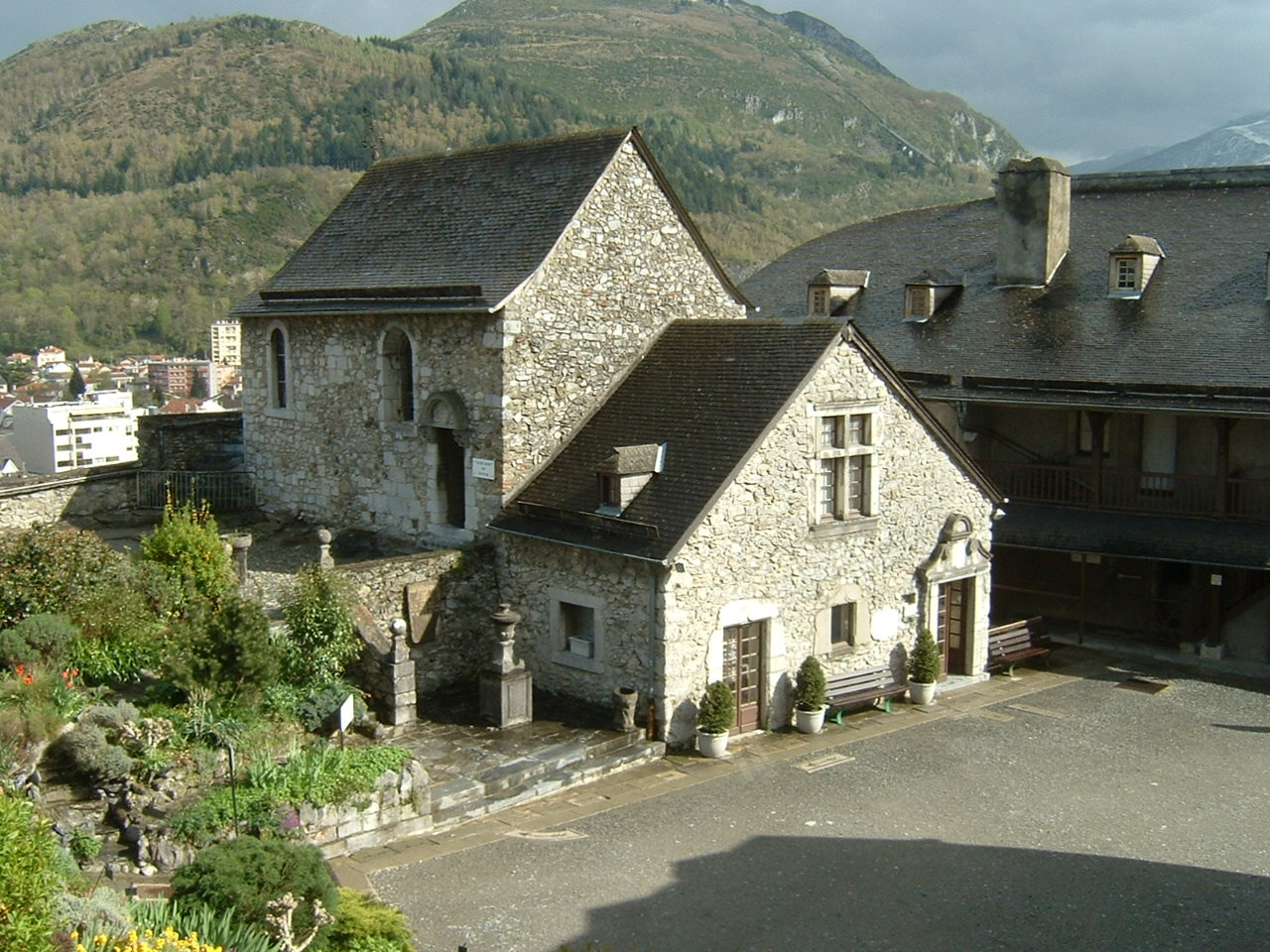
Wiki-image of Our Lady's Chapel, Lourdes, is used according to the GFDL.

Wednesday, September 03, 2008

Vatican newspaper article challenges 'brain death' notion. . .

. . .but it did not create new church teaching

Serious thoughts deserve respectful interest. Serious as they may be, not all thoughts preempt or create new church teaching. A recent example is the article in L’Osservatore Romano about the moment of death as reviewed by Mr. John L. Allen Jr.
Vatican spokesperson Fr. Federico Lombardi was quick to say that while the L’Osservatore article was “interesting” and should be taken seriously, it does not create new church teaching.
This is a good way to read many serious thoughts about many things.

Tuesday, September 02, 2008

Violence Against Christians in India

Islamic radicalism takes center stage. Vigilance is necessary. However, it is not the only extremism. Hindu extremism continues to assert itself with dire consequences as recent events in India have demonstrated.

Mr. John L. Allen Jr. examined Hindu extremism in his column at the end of last week.

Sunday, August 31, 2008

Sunday word, 31 Aug 08

22d Sunday of the Year A (31Aug2008) Jer 20. 7-9; Ps 63; Rm 12. 1-2; Mt 16. 21-27
Homily of Fr. Paul Panaretos, S.J.
Feeling With Jesus

Summer 594 of the pre-Christian calendar the Judaeans were in their Babylonian exile. In the preceding Winter, as that same year began, a coup against the Babylonian king failed. However, it caused the Jews and others under Babylonian rule to hope for and support another one. The exiled King Zedekiah summoned ambassadors of surrounding lands to form a coalition to oust the Babylonian king. Recent government leaders have duped more than us to call such a violent ousting in our time a “regime change,” a deceptive euphemism.

A self-styled prophet/1/ gave a boost to Zedekiah by saying the exile would be over in two years. The words of the true prophet, Jeremiah, were not welcome because Jeremiah had announced before his words we just heard that things would get worse before they got better. Jeremiah once enjoyed his mission, but his mission and the exile caused him great pain:
You duped me, O LORD, and I let myself be duped; you were too strong for me, and you triumphed. All the day I am an object of laughter; everyone mocks me. Whenever I speak, I must cry out, violence and outrage is my message; The word of the LORD has brought me derision and reproach all the day.
Nevertheless, Jeremiah kept faith, hard for us to do at times, too. Jeremiah kept faith in God’s ancient promise. In their exile, Jeremiah and faithful people with prophetic hearts kept alive and clung to God’s ancient promise:
...even while [my people] are in their enemies’ land, I will not reject or spurn them, lest, by wiping them out, I make void my covenant with them; for I, the Lord, am their God. I will remember them because of the covenant I made with their ancestors, whom I brought out of the land of Egypt under the very eyes of the Gentiles, that I, the LORD, might be their God.”/2/
The bible tells the story of the regime of God’s covenant. It also recounts that Israel and Judah did not keep faith over the centuries with God’s covenant, which they had entered. When it suited them or when it seemed in their own interests or practical or politic they ignored the covenant, forsaking its regime, its pattern of God’s fidelity to them, for regimes of this leader or that way of living.

Jesus, like Jeremiah, was compelled to speak a word that filled him with dread as much as it filled Peter and others to hear it: he must go to Jerusalem and suffer greatly from the elders, the chief priests, and the scribes, and be killed and on the third day be raised.

Is it because I know those final words, that Jesus was raised from death, that I do not fill with sympathy for Jesus and do not shudder with him and for him when I hear him speak of his suffering, his exile from honor as well as from human life? Peter’s horror, when Jesus warned of his passion and death, reminds us that it’s easier to accept the messiahship of Jesus when it involves glory and eternal life than when it includes denial, renunciation and suffering.

Yet, Peter was an ardent believer even before his faith was fully formed. Denial, renunciation and suffering formed the faith that he and the apostles handed on to us. The pattern of Jesus’ life, including both suffering and glory, is the regime we Catholics try to adopt as we serve, evangelize and worship with our lives.

If we set out to change anything, it isn’t the pattern of Jesus’ life, death and resurrection. We seek to refashion, renew and transform our lives in order to pattern them on both Jesus’ alertness to the word of God active in him and Jesus’ willingness to embody it, speak it and live it.

In your daily 15 minutes with Jesus this week, pause and remember the Trinity has created you in the divine image and to become divine because Jesus became human with us. Ask Peter to present you to Jesus. Consider one way Jesus’ mission attracts you and one way it challenges or even frightens you, and speak to Jesus about each. Praise Jesus for choosing to work in the power of his Spirit through you. Close by saying slowly the Lord’s Prayer, which Jesus gave us to help us pattern our lives on his life in its entirety in order to save our lives and the lives of others.

____________
1. Hananiah was his name, and Jeremiah 28. 11-15 records their exchange about the exile’s end: within two years I will break the yoke of Nebuchadnezzar, king of Babylon, from off the neck of all the nations (verse 11).
2. Leviticus 26.44-45.
____________________________________________
Wiki-images of Jeremiah and of Jesus speaking to his apostles are in the public domain.

Sunday, August 24, 2008

Sunday word, 24 Aug 2008

21st Sunday of the Year A (24Aug2008) Is 22. 19-23; Ps 138; Rm 11. 33-36; Mt 16. 13-20
Homily of Fr. Paul Panaretos, S.J.
Scissors, Paper, Rock
That names a game of chance between two people, which I learned as a child. Many of us know it. At the count of three players drop their forearms level with the floor and make one of three configurations with their hands: two fingers out and apart equal scissors; palm open facing the floor is paper; and hand made into a fist is rock.

Scissors cuts paper, and when players choose those two configurations, the scissors-player wins the round. Rock breaks scissors and when players choose those two configurations, the rock-player wins the round. Paper covers rock, and when players choose those two configurations, the paper-player wins the round.

I was mystified as a child that paper beat rock. My first impression was that rock’s solidity would smash flimsy paper. I didn’t think according to the game’s logic. Paper covers rock, hiding it, therefore winning, despite rock’s hefty, solid character.

The logic of that rule is a way into our Christian faith, which this weekend’s scriptures highlights prominently. Giving voice to God’s desire for God’s people, Isaiah used the image of a peg: I will fix [my servant] like a peg in a sure spot. Faith is both a surety and a security. Isaiah also used the image of a key: I will place the key of the House of David on [my servant’s] shoulder; when he opens, no one shall shut when he shuts, no one shall open, words Jesus would vary and make his. Faith is a key for our lives, opening onto true meaning and giving our lives true purpose.

Faith is no inanimate object, though, like peg, key, scissors, paper or rock. Jesus’ question to his disciples was not a quiz. Who do you say that I am? showed Jesus’ desire for his disciples in every age to know him more intimately: to know him for who Jesus is.

Peter’s response to Jesus, that he was God’s Son and Messiah-Savior of the world, personified what we call apostolic faith. Our Christian faith is a gift, handed to us and every generation by the witness of the apostles. Plus, our Christian faith is a divine gift, God’s continuous self-revelation.

Our faith does not cover events to blot them out or hide painful events, which painfully cut the fabric of our lives. As relationship, faith keeps us connected with God in Jesus by their Spirit despite events that would rip us apart from God, from each other or from ourselves.

The relationship, which faith is, not chance. It is God’s gift, which involves our choice. Faith transforms mastery over the palace of God’s creation entrusted to us into care. Faith transforms authority into genuine service so that each person and our whole world may grow more alive. Our choices to cultivate and deepen our faith have effects not only of a personal kind; our faith and how we live it transform our world.

In your daily 15 minutes with Jesus this week, pause in the presence of the Trinity, feeling their creative love for you and resting securely in it. Ask Peter, so much like us in our limitations as well as our desire to know Jesus, to present you to Jesus, so that you may converse with Jesus. Praise Jesus for all Jesus has done and is doing in your life. Speak to Jesus your desire to know him better, and ask him for the grace to help you know him better. Close by saying slowly the Lord’s Prayer, which Jesus gave us to stay in relationship with his Father and to live our faith by lives of care, genuine service, resting securely in our every deepening felt-knowledge of Jesus, our Messiah-Savior.
____________________________________________
Wiki-image by Giovanni Dall'Orto of Jesus as Savior of the world is used according to Creative Commons Attribution ShareAlike 2.5 license.

Friday, August 22, 2008

Can Religion Help? Because. . .

. . .it's not the problem in the Russia-Georgia crisis

In his weekly column published online today Mr. John L. Allen Jr. considers:.
For once in this volatile part of the world, religion does not appear to be a driving force in the conflict.

Hence the obvious, if largely unasked, question: If religion isn't the problem, can it be part of the solution?

...Both Popes John Paul II and Benedict XVI have placed a "preferential option" for the Orthodox at the heart of their ecumenical hopes, which means that the fate of the Orthodox inevitably affects the Catholic future.

The clash between Russia and Georgia over South Ossetia is not akin to Russia's difficulties in Chechnya, or to the conflict between Armenia and Azerbaijan over Nagorno-Karabakh, or to tensions between Serbia and Kosovo, because the animosities in Ossetia do not break down along Christian/Muslim lines. ...In the Ossetian conflict, all parties are Orthodox Christians.

In fact, this is the first instance since World War II in which one majority Orthodox nation has gone to war against another. Both Alexy II, Patriarch of Moscow and All Russia, and Ilia II, Catholicos-Patriarch of All Georgia, have cited the Orthodox-on-Orthodox nature of the violence as especially tragic [emphasis added].
Thanks to Mr. Allen people now know that both leaders have pointed to the same religious denomination of the parties involved. This post is worth reading.
____________________________________________
Wiki-map of the embattled region is used according to the GFDL. One click on the map enlarges it.

Wednesday, August 20, 2008

No Automatic Excommunication. . .

. . .for priest who concelebrated at a woman's ordination

Many think Fr. Bourgeois was automatically excommunicated but was not. The closing of this article is also telling.

Tuesday, August 19, 2008

New Liturgical Text Approved (post contains useful links)

In May 2001 the Vatican published a document, Authentic Liturgy, with the subtitle “FOR THE RIGHT IMPLEMENTATION OF THE CONSTITUTION ON THE SACRED LITURGY OF THE SECOND VATICAN COUNCIL” [quoting the Decree on the Liturgy, art. 36, of the Second Vatican Council). This was the fifth instruction by the Vatican in order that vernacular translations precisely transmit the primary theology contained in the ritual prayers for the celebrations of the sacraments.

The work of translating afresh with the purposes of this latest instruction in mind began soon after. John L. Allen Jr. reported early in 2004 of progress, difficulties and criticisms of the enterprise.

In their June 2006 meeting the United States Catholic bishops at last approved the translations of the constant parts of the mass to be used in the Latin-rite dioceses of this country.
The Catholic News Service published a fine summary article in late July this year.

In a letter dated 4 August 2008 the Chairman of the Bishops’ Committee on Divine Worship informed all members of the church that the Vatican had approved the bishops' translations of the third edition of the Roman Missal.

Electronic postscripts to that same letter contain: the Vatican letter accompanying its approval; one called "complete text" of the mass formularies (it only contains four Eucharistic prayers, not the other eucharistic prayers for Reconciliation and those for use with children); the
newly translated four eucharistic prayers in separate documents. All are PDF documents and quickly download.
____________________________________________
Wiki-image by Andreas Püttmann is used under the Creative Commons Attribution ShareAlike 2.0 Germany license.

Monday, August 18, 2008

How Q & A Sessions with the Pope Work. . .

. . .plus, a summary of a most recent one with priests in the north of Italy.


Mostly pastors with an opportunity to ask Pope Benedict questions, he was both candid, and regarding the environment he
minced no words in condemning what he termed the "brutal consumption of creation," and he called for an urgent renewal of the theology of creation.
Mr. John L. Allen's summary of this encounter is, as usual, crisp and full of background.
__________________________________________________________
Wiki-image of a scene of that region is in the public domain.

Sunday, August 17, 2008

Sunday word, 17 Aug 2008

20th Sunday of the Year A (17Aug2008) Is 1, 6-7; PS 67; Rm 11. 13-15, 29-32; Mt 115. 21-28
Homily of Fr. Paul Panaretos, S.J.
Priorities

From birth and into our toddler years our worlds are small. The circle of life is home, parents, siblings if we are not the first child, and anyone who happens to live with family or visits it regularly. Our circle of life expands as we play outdoors and begin school. In high school and college we encounter people with stories and experiences both different and similar to our own; plus, we have opportunities to enlarge our worlds still more by travel and service.

This sketch of personal development--from a small circle of life to a wider one--helps us appreciate the development of God’s people. In its infancy it focused on God liberating it from slavery. The people were isolated in their formative, desert wanderings from Egypt to Canaan. They began to encounter other people with different beliefs and religious practice: in shorthand, others devoted themselves to many deities, but Israel was called to devote themselves to the One God alone. Antagonistic: not always faithful to the One God and viewing others with suspicion at best marked their more developed years and relations with others.

Eventually they lost their freedom again and tasted long and bitter exiles from it. The entire series of exiles of different portions of God’s people lasted 195 years. At the end of the exile Isaiah announced that not only did God desire God’s people again to be close to God, God desired to be close to all people. God desired a prominent place in the circle of life of all individuals! That surely astonished the Chosen People: all who...hold to my covenant...I will bring to my holy mountain [and] my house shall be called a house of prayer for all peoples.

The prelude to this universal salvation had a priority: Observe what is right, do what is just. God’s people had a role in God’s salvation: observing what is right and doing God’s justice prepared for God’s desire: for my salvation is about to come, my justice, about to be revealed.


So astonishing was this to the Chosen People that we heard in the gospel the disciples of Jesus tried to dismiss a non-Jewish woman from Jesus and with her her plea for help and healing. Even Jesus seems to share his disciples’ instinct by his curious phrase, “I was sent only to the lost sheep of the house of Israel.” His human instinct gave way to God’s priority when Jesus saw only God’s healing power could satisfy her great faith.

God’s priority persists in our time of different circumstances. The diocesan initiative, Vibrant Parish Life, has consequences for everyone. Our parish cluster of St. Dominic and Gesu embodies God’s priority of salvation, worship and growth in faith, hope and love.

In your 15 minutes with Jesus this week, pause in the love the Trinity has for you for creating you is the Trinity’s priority. Ask the courageous Canaanite woman to present you to Jesus. Praise Jesus by name and implore Jesus for what you need. Ask Jesus to make your heart more generous so that you can engage our Gesu-St. Dominic parish cluster. Close by saying slowly the Lord’s Prayer which is Jesus’ words given to us to grow in courage, wisdom and to make Christian love our priority.
__________________________________________________________
Wiki-image of Marsa Alam by Marc Ryckaert is used according to the Creative Commons Attribution 3.0 Unported license. Wiki-image of Jesus and the Canaanite woman is in the public domain.