Wednesday, January 23, 2008

Invitation To Pray With the Jesuits' General Congregation

Passing along this invitation to all interested in the success of the 35th General Congregation of the Society of Jesus.


Soyez là! Be there! ¡Contamos con vosotros! Unitevi a noi!

During the General Congregation, and especially during the

second part that started on January 21 that is dealing with the future

and the commitments of the Society of Jesus in the world,

all Jesuits, with their collaborators, benefactors and friends,

can join with the delegates through prayer.

Be there, in the virtual

Prayer Room

of the General Congregation

There are two ways:

A) Each day, you can find on the webpage www.sjweb.info/35/pray/ the prayers

that are being used by the members of the Congregation during their

meetings.These prayers can be used for personal or community prayer;

B) You can also send YOUR OWN prayers for the Congregation or for the Society

(in the language of your choice) to the following address:

prayerroom-GC35@sjcuria.org

The communication team will post a number of them on the site.

Thank you for your participation to the Congregation through prayer.

Wednesday word, 23 Jan 2008

2d Wednesday of the Year (23 Jan 2008) 1Sm 17. 32-33,37,40-51; Ps 144; Mk 3. 1-6
Homily of Fr. Paul Panaretos, S.J.
Welcoming the Mystery

The readings at daily mass from the First Book of Samuel highlight the important moments as the era of the kings of Israel emerged. The movement throughout the book, and indeed the whole bible, is “away from God-return to God.” Before they felt the threat of the Philistines, the people had moved away from God--long David. Samuel told the people, “If you wish with your whole heart to return to the Lord, put away your foreign gods and...devote yourselves to the Lord, and worship him alone. Then he will deliver you from the power of the Philistines.”
The people did that. They fasted...confessing, “We have sinned against the Lord.”/1/

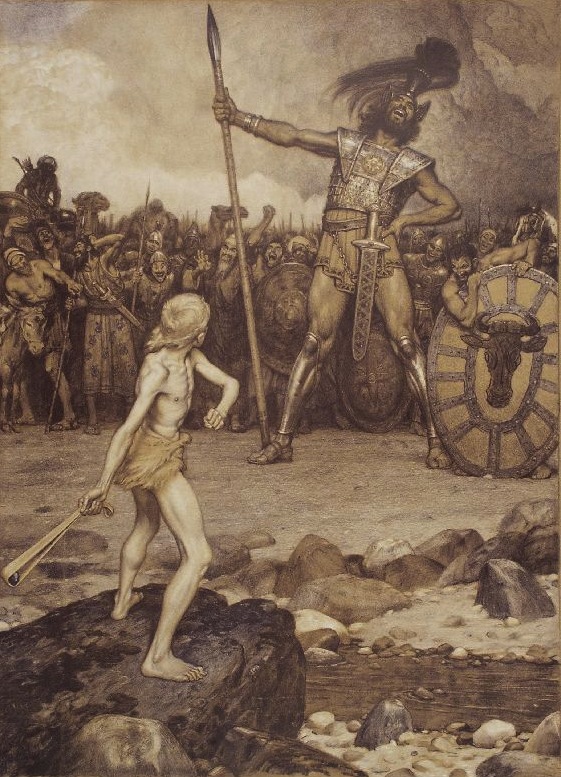
Saul moved away from God. He was weak and insignificant when God chose him as king. However, Saul relied more on his natural abilities than God. David, more weak and insignificant, relied on God. He remained weak, but he relied on God. Trusting in God David prevailed over Goliath as we heard. David prevailed over his other goliath, Saul, who, after David’s victory hunted David to kill him.

Not only was God present to David, David’s presence mediated God’s presence! As Son of David, Jesus mediated God’s presence in a greater and unparalleled way, which Mark’s gospel strongly communicates to us.

When you hear, “A reading from the Gospel of Mark,” and when you pray from it or study it, think two words: Stronger One. Jesus went into the realm of Satan to conquer Satan. The encounters with evil spirits, those who knew his identity--Son of God--show that. Along with his deeds, even Jesus’ words commanded attention. In some attention registered as awe, but in others it registered as hate, driving them to plot to put him to death because Jesus made a man whole on the sabbath.

Mystery shrouding the Stronger One many find repugnant. It makes almost all of us dizzy: the Stronger One, the Son of God, died. Jesus relied on God though he was sorely tempted to do otherwise. The mystery of Jesus, dead-and-risen, is our mystery. Jesus invites us to trust him and allow him to make us whole.
________________
/1/ 1Samuel 7. 3-6.
__________________________________________________________
Wiki-image of Osmar Schindler's David and Goliath is in the public domain.

Tuesday, January 22, 2008

Tuesday word, 22 Jan 2008

2d Tuesday of the Year (22 Jan 2008) 1Sm 16. 1-13; Ps 89; Mk 2. 23-28
Homily of Fr. Paul Panaretos, S.J.
Seeking the Shape of Holiness

The responsorial psalm between the scripture readings is like a hinge today. This 89th psalm extols David, who was anointed while still a youth to replace Saul. Saul’s lack of loyalty to God occasioned his rejection as king, and Saul apparently did not take it well. Samuel, who anointed Saul king, was grieving in his way, which made him reluctant to lead as God chose.
God: “How long will you grieve for Saul, whom I have rejected as king of Israel? Fill your horn with oil, and be on your way.

Samuel: “How can I go? Saul will hear of it & kill me.”
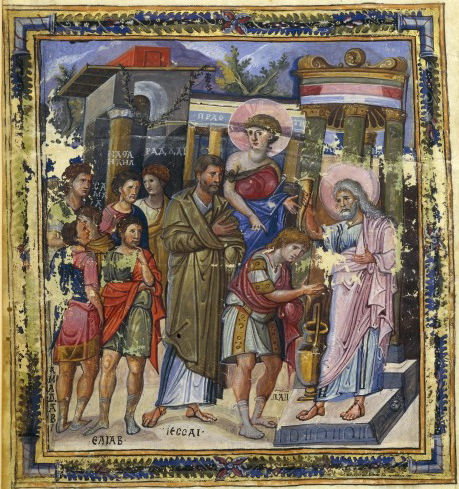
Samuel overcame his inertia and went to those God sent him. Samuel worried when none of Jesse’s sons appeared to be God’s anointed. Unlike Saul Samuel waited on God; we can almost hear Samuel’s thought echo within: “God’s chosen must be here!” Unexpectedly, he was.

David reshaped the role of king as we echoed God: “I have found David my servant!” David served the holiness of God. The whole people’s vocation was to be holy as God is holy./1/

The shape of holiness is difficult to name. The positive command be holy is more difficult to define than a negative command like do not kill. The Sabbath showed that.

The people were to keep holy the Sabbath./2/ Legislating that wasn’t easy or simple; the largest number of commands grew around the Sabbath. Many of them defined what actions were work. Because Sabbath meant God’s rest, much human activity distracted one from rest at best or violated rest at worst. The resulting Sabbath commands grew constraining, confining and restrictive, emphasizing human work more than God’s rest and humans' participation in it.

Constraint rather than freedom focused people more on themselves than on God. Jesus recalled David’s unlawful action. After his resurrection Jesus’ followers recalled David’s freedom and Jesus’ freedom to support people first of all. The balance is tricky but the norm is clear: Humans take priority over sabbath laws. We are not to serve it but enter its rest. That experience of God helps us grow more holy. Weak David needed God’s holiness; we weak Christians do, too. It’s why we were made.
________________
/1/ Leviticus 11. 45; 19.2; 20. 26; the last two verses begin and end the same section.
/2/ Exodus 20.8
_________________________________________________________
Wiki-image of the anointing of David is in the pubblic domain.

Monday, January 21, 2008

Monday word, 21 Jan 2008

St. Agnes, virgin & martyr (21 Jan 2008) 1Sm 15. 16-23; Ps 50; Mk 2. 18-22
Homily of Fr. Paul Panaretos, S.J.
A King’s Opposite

Until Lent begins we’ll move through the First Book of Samuel and into the Second at daily masses. Only two feasts and one memorial with their own readings will intervene. Our focus in the main will be on the beginning of the era of the kings of Israel. As we move through this phase of the history of God’s people, remember what I recalled last week:

Scriptures tell the story of people rejecting God and God’s desire, of which God never relents, to restore right relationships of people with God and with other people.We heard last week that the elders of the people demanded a king to judge them, like all the people around the Israelites. Why? The more they settled, the more they esteemed the values and ways of others, even more than those of God, who had liberated them from slavery in Egypt and formed them into a people. Scriptures recorded and interpreted what happened according to the memory of God, which their prophets and holy ones lived, and through them, kept alive for future generations.

People variously demonstrate their reliance on self rather than on God. Not entrusting themselves completely but withholding is one way. Attending and responding to God, describes religious obedience; another word is loyalty. Possessions clutched as if they were totally one’s property instead of held loosely and freely in trust frequently describe one’s reluctance to rely on God. In the narrative about Saul, the first king, taking ransom rejected God, even though Saul’s men sacrificed to God what they had confiscated. This helps us appreciate Samuel's words to Saul:
“Obedience is better than sacrifice,
and submission than the fat of rams.
For a sin like divination is rebellion,
and presumption is the crime of idolatry.
Because you have rejected the command of the Lord,
he, too, has rejected you as ruler.”
God sought a ruler after God’s own heart, to use the words of Samuel. This would be David, who would be the ruler all Israel would extol, never forgetting his shortcomings but remembering God’s mercy to him. David would be the ancestor of Jesus, the Son of David.

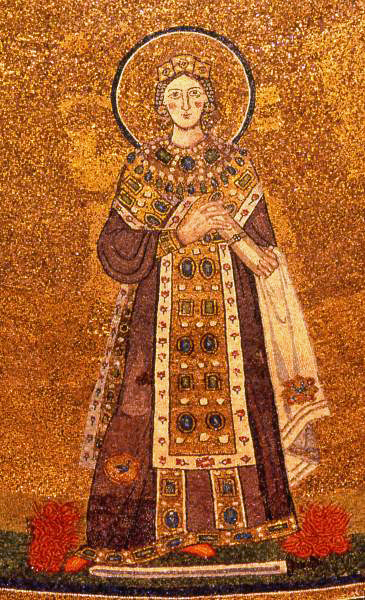
The saint the church remembers today was Saul’s opposite number. St. Agnes demonstrated a freedom with her life that caused awe in all who saw her put death. She wanted to be married to no one but her Messiah Jesus. This in the 3d century of the church when a father had power over all his children, and “at the age of twelve... not of legal age,” St. Ambrose reminded us./1/ Her gender and her youth did not permit her to give testimony, her faith testified to the most real, her faithful love of her risen Savior. Hers was a wholehearted acceptance, contrasting with a rejection of God in Jesus. St. Agnes inspires us to love Jesus more.

________________
/1/ From his description of the martyrdom of St. Agnes, found in the Liturgy of the Hours at the end of the Office of Readings this day.
_____________________________________________
Wiki-image of St. Agnes from the Roman basilica of St. Agnes is licensed under Creative Commons Attribution ShareAlike 2.0.

Sunday, January 20, 2008

Sunday word, 20 Jan 2008

2d Sunday of the Year A (20 Jan 2008) Is 49.3,5-6; Ps 40; 1Co 1. 1-3; Jn 1. 29-34
Homily of Fr. Paul Panaretos, S.J.
Our Sunday Program

Attend symphonies or sporting events, and we receive one; assemble for graduations or ordinations, and we receive one; award ceremonies and charitable galas, too: at those events and others we receive programs. The symphony program identifies the musicians and the instruments they play; they list the musical offerings, describe them, their composers and some events which occasioned them. Theater playbills offer something similar. The cry at Jacobs’ Field--can I still call it by that name?--or other venues calls, “Get your program! Can’t know the players without a program!”

When it comes to Catholic Sunday worship, the Lectionary is our program. This book contains the readings proclaimed at Sunday masses and Solemnities. Arranged in sets of three cycles, they offer us a richer fare of God’s word. The Lectionary begins with Advent-Christmas; then Lent-Easter; the Sundays of the Year; and finally other Solemnities.

The character, of course, is our Messiah, Jesus. The Lectionary boasts a supporting cast it would take too long to list. However, its players point to Jesus, supporting him or opposing him: prophets, sages, sinners and holy ones, weak humans, angels and evil spirits. Spirits, by the way, are residents outside and beyond history; spirits are real not imagined.

The birth of Messiah Jesus, which Christmas celebrates, led to his suffering and death and resurrection. Christmas, inviting us to ponder the incarnation of God within our world, closes with the Baptism of our Lord, the First Sunday of the liturgical Year. This Second Sunday of the Year continues to focus on the incarnation, preparing us to journey with Jesus yet again, proclaiming present the kingdom of heaven as he teaches, preaches and heals on his way to his death and resurrection.

Prophet Isaiah had sung of God’s Suffering Servant several times. Isaiah’s second song invited God’s faithful languishing in exile to take heart and be alert for the one whom God would send to be a saving light, not only for them, but all nations. God’s servant would be a person who was created expressly for that saving purpose, which the phrase formed me as his servant from the womb, communicates. Being a light to [all] nations so that [God’s] salvation may reach to the ends of the earth was not something added to Jesus’ “job description” as Messiah; it was his work in order to save the human race. It is Jesus!

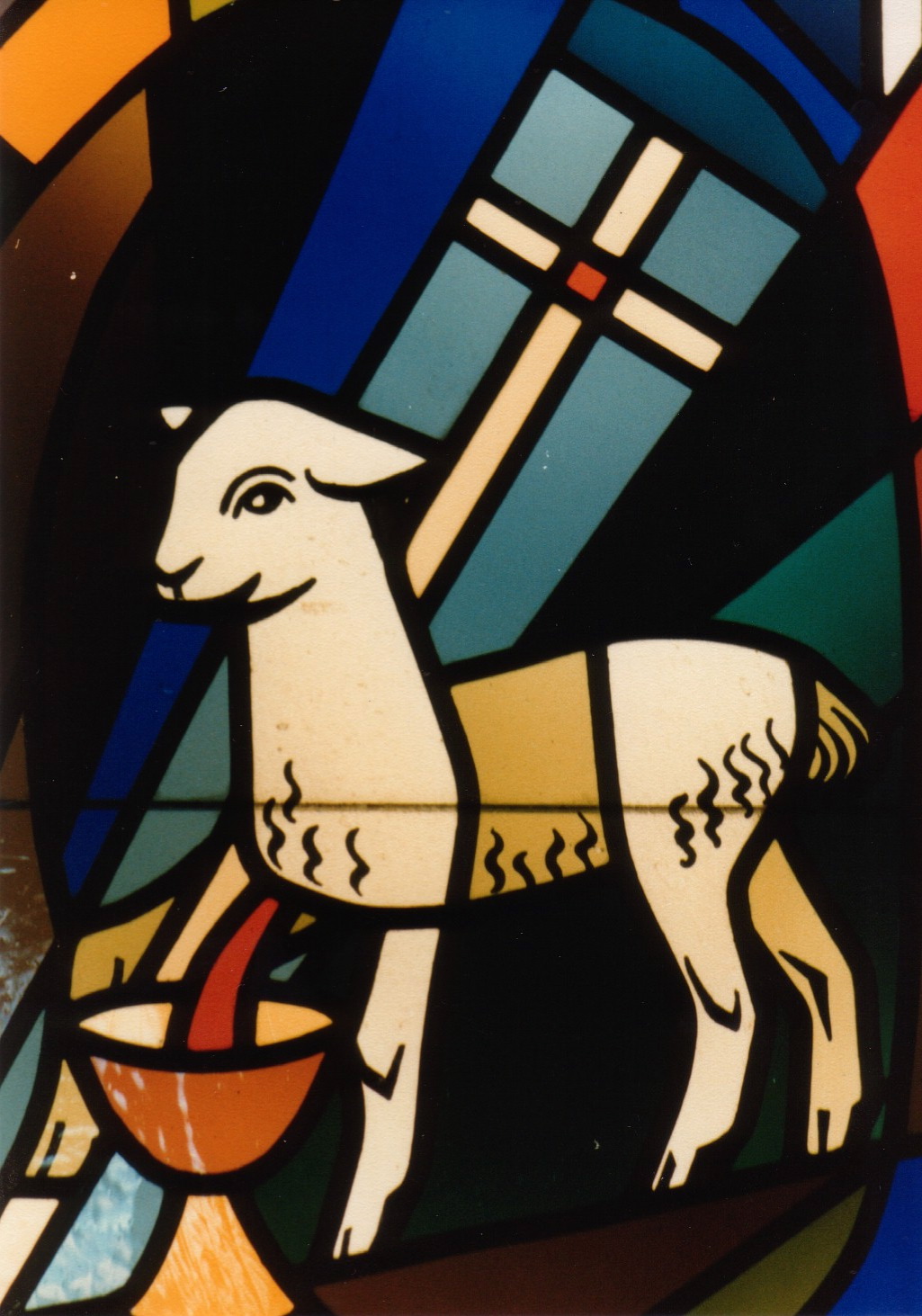
John the Baptizer, herald of the Messiah, proclaimed this servant as the Lamb of God. First fruits of harvests and of livestock were offered to God. Lambs were sacrificial offerings imploring forgiveness at the fall high holy days ending with Yom Kippur; and the unblemished lamb roasted whole and eaten by a family at the spring festival of Passover recalled how God spared and saved the Hebrews enslaved in Egypt. Jesus, anointed by the Spirit of God, takes away the sins of the world, not just one group.

Annually we insert ourselves into Jesus’ program of proclaiming, healing, inviting, teaching, dying and rising. Jesus’ program is nothing less than God’s salvation. As we move through the saving action of the Trinity entering Lent, leading to Easter and its season when it arrives, then resuming to move through a single gospel-portrait of Jesus, we benefit best by noticing each Sunday with whom in the cast of characters of the Lectionary we see ourselves: prophets, sages, sinners and holy ones, weak humans, angels and evil spirits. Then we invite Jesus to meet us as we are and transform us.

Begin your 15 minutes with Jesus this week by growing aware that you are in the presence of the Trinity, who create you a moment at a time. Then ask for the grace to stand with John the Baptizer and hear him name Jesus as the Lamb of God. In your own way, walk with Jesus and converse with him, asking him to enlighten you and make you more sensitive to his message, his action and his death and resurrection. Close by saying slowly the Lord’s Prayer, words which praise the light of God and petition for what we need most and how best to live our lives.
______________________________________________
Wiki-image of Rembrandt's Mother Reading a Lectionary is in the public domain.Rebecca Kennison's Lamb of God is Dual-licensed under GFDL and Creative Commons Attribution 2.5. .

Saturday, January 19, 2008

Society of Jesus Elects New General Superior

The first news with a photograph of Jesuit Fr. Adolfo Nicolas found by To Find Fruit.

To Find Fruit suspected an Asian Jesuit would be sought to lead the Society of Jesus, but it had no guess as to from which part of Asia.

Friday, January 18, 2008

Friday word, 18 Jan 2008

First Friday of the Year (18 Jan 2008) 1Sm 8. 4-7,10-22a; Ps 89; Mk 2. 1-12
Homily of Fr. Paul Panaretos, S.J.
Parallel Stories

The era of the judges came to its end and the era of kings began. It came from all the elders of the people, as we heard them entreat Samuel, “appoint a king over us, as other nations have, to judge us.”

Who formed the Hebrews into a people? God. Who liberated them from Egypt? God. Who guided them and provided for their needs? God. They help us appreciate what Samuel discerned God communicate to him, “It is not you they reject, they are rejecting me as their king.”

In a way people rejecting God is the story scriptures tell: As they have treated me constantly from the day I brought them up from Egypt to this day, deserting me and worshiping strange gods, so did they treat Samuel. The scriptures tell parallel story: God always longs for and desires to save us. The need to have a king blinded the people to their complaints against kings when they had them. It blinded them to God’s provident care for them.

The greater, indeed the more real, care God provides is always a challenge for us to keep before us. God’s passionate concern for us is not as easily available to us as are the daily drudgeries and the ways we seek and even find to assist us to cope with them. Yet, we know well that even the smoothest running household or business and the less complicated life do not guarantee us happiness and fulfillment.

When we are in right relationship with the others, the world and with God, we are truly happy, and we feel more alive. Jesus came to allow people to stand in right relationship again.
On our own we are unable to stand in right relationship with others, the world and God. The word sin summarizes our human inability. Sin also names powers inimical to humans and to God, powers which beguile us into thinking we can stand in right relationship on our own. Jesus is the Stronger One, who continues to exert his power to free us from sin and empower us to stand again in right relationship no matter how frequent our failings or present our weakness.
____________
/1/ Verse 8, omitted from the first reading.
__________________________________________________________
Wiki-image is in the public domain.

Wednesday, January 16, 2008

Wednesday word, 16 Jan 2008

First Wednesday of the Year (16 Jan 2008) 1Sm 3. 1-10,19-20; Ps 40; Mk 1. 29-39
Homily of Fr. Paul Panaretos, S.J.
Disposition

The reading from First Samuel is read at Sunday mass once in the 3-year cycle of Sunday scripture texts. On that Sunday it’s paired with a selection from the gospel of John, in which disciples follow Jesus out of curiosity as well as faith in John the Baptizer, who pointed out Jesus as the Lamb of God. Prophets make clear what our vision may miss.

During the time young Samuel was minister to the Lord under Eli, a revelation of the Lord was uncommon and vision infrequent. Nor was it the time of prophets, who pointed the way. This all-too-familiar reading reminds us that each person is responsible to be alert to how God communicates to a person and to respond.

This faith-alertness is religious obedience. Like Samuel we may not recognize God communicating right away. The reading, with its youngster and elder, in a relationship we may describe as an internship or apprenticeship, has an even more important dynamic: trust, because faith often collides with human experience.

The feeling of being chosen was so clear to young Samuel that he could only interpret it one way, by his experience: someone called him. Experience also told Samuel it could only have been Eli nearby.

Eli was not certain of things right away. Only later Eli understood that the Lord was calling the youth. So Eli said to Samuel, “Go to sleep, and if you are called, reply,‘Speak, Lord, for your servant is listening.’”

Faith is not limited to listening, although God can and does use the voice of others to communicate. Faithful attention is a disposition: we dispose ourselves to God, who creates us in love with a purpose. Our purpose is both communal and personal. We are all grafted on to our messiah, Jesus. Each of us has a unique role to play in the church. As our circumstances change so may our role in the church be reshaped. At each moment faith is about disposing ourselves so we may discover more clearly the purpose for which Jesus created us.
__________________________________________________________
Wiki-image is in the public domain.

Tuesday, January 15, 2008

Tuesday word, 15 Jan 2008

First Tuesday of the Year (15 Jan 2008) 1Sm 1. 9-20; Resp 1Sm 2; Mk 1. 21-28
Homily of Fr. Paul Panaretos, S.J.
Two Levels

Many people over the years have spoken to me about the shape of their prayer. One feature common to many is a reluctance not to pour[] out my troubles to the Lord. It takes courageous faith. I identify because I didn't pour; I used to bargain with God regarding my troubles, plus I would not ask God for favors for me.

I refrained because I feared God would let me down. God never had, but I feared it anyway. I didn’t have the courage, and I feared if I asked, God might let me down. Hannah needed no coaxing nor could any one keep her from pouring out [her] troubles to the Lord. She had faithful trust in her Lord. We need her example.

On one level courageous faith is personal: each of us shapes it and distorts it. On another level courageous faith vibrates through every atom of the universe. In other words: in addition to being personal, faith also functions on a cosmic scale. Today’s gospel selection showed us both.

Jesus began his life’s work, proclaiming the good news, the gospel of God, in deed as well as word. His sabbath synagogue-teaching demonstrated a clarity and power unmatched by his contemporaries or elders. The faithful welcomed and noted the power of his words. The religious leaders, however, were threatened.

Jesus’ healing deeds were even more powerful. In them Jesus confronted evil. The gospel presented us with his first healing, an exorcism. An unclean spirit, who kept a man in its grip, was also threatened--not by just another man but by the Holy One of God. On the level of history Jesus made clearer the desires of God. At the cosmic level an unclean spirit, a resident outside and beyond history, acknowledged Jesus as the Stronger One, who entered Satan’s realm and bound Satan.

Encountering Jesus as the Holy One of God, helps us appreciate both rejecting and accepting Jesus. The more we stand in the mystery of God’s Holy One, the more courageous our faith becomes to accept Jesus.
__________________________________________________________
Wiki-image of The Exorcism is in the public domain.

Monday, January 14, 2008

Monday word, 14 Jan 2008

First Monday of the Year (14 Jan 2008) 1Sm 1. 1-8; Ps 116; Mk 1. 14-20
Homily of Fr. Paul Panaretos, S.J.
A Look Ahead

Through the 24th of this month daily mass readings are taken from the First Book of Samuel and the Gospel of Mark. I offer a few remarks to help you focus and to help you appreciate to what these selections we will hear at mass point.

The two Books of Samuel revolve around three main people: Samuel, Saul and David. The two Books of Samuel rehearse a century of history of the people Israel, who began as nomads but over time ceased wandering and grew from an agricultural to a town-centered people.

Following the death of Joshua, who was the lieutenant of Moses, they began to settle and judges wielded authority. Of the 15 judges, Eli and Samuel were the final two. The first readings of the next 10 weekdays begin this transition from leadership by judges to leader-ship by kings in Israel. Judges were military leaders with administrative authority, who also exercised some priestly functions.

The consistent temptation for the people Israel was to be like their neighbors, that is, to allow themselves to be swayed by ways and values other than the ways and values of God.

The selections from Mark’s gospel will lead us through its first three chapters. Listen for three patterns. One is the power Jesus manifested in healings of different kinds. Second is the positive response of some Jesus called, which we heard today. The last pattern is the opposite of the second: others rejected Jesus. These patterns shape the gospel of Mark: the one who proclaimed the good news came to his Passion.

This shape--the life of the one who announced the kingdom moved to his Passion--is not easy for us to accept. Keep alert to the ways Jesus invites you and more alert to how you respond, accepting or rejecting Jesus’ initial invitation. Our first response to Jesus cues us to the grace we ought to ask Jesus so that we won’t give in to temptations to put Jesus at the edge of our lives. Cooperating with his graces graft us into his mystery and enrich us in the process.
__________________________________________________________
Wiki-image by Michal Maňas of Samuel Greeting Saul is used under the terms of Creative Commons Attribution ShareAlike 2.5 license.

Saturday, January 12, 2008

Saturday word, 12 Jan 2008

Saturday after Epiphany (12 Jan 2008) 1Jn 5. 14-21; Ps 149; Jn 3. 22-30
Homily of Fr. Paul Panaretos, S.J.
Practical, Practiced and Lived

No one can know precisely the world of the Letters of John. We do know that these three letters indicate conflict within one particular community, and their conflict led to division: some went out from us./1/

Acquainted as we are with current events involving conflict within groups, leading even to bloodshed, the community of the Letters of John demonstrated something rare: those who remained prayed for those who sinned, that is, separated themselves from the community. Plus--and this was the focus of the First Letter of John--the community members sought to renew and deepen their identity, their faithful dependence on God in Jesus by their Spirit.

People of all cultures focus on outsiders more than on themselves. We do. The First Letter of John focused not on those who went out but on themselves. This letter encouraged them to renew their identity in Jesus.

Christian identity involves more than correct doctrine, as important as right believing is. Christian identity is practical, practiced and lived.
Sin is the word in this letter which means not practicing and living one’s belief that God gives life.

The deadly sin means entrusting one’s life to one’s perfect striving rather God. When we do that we separate ourselves from the community even if we physically stand inside it. Families understand that, religious orders do, too, because we’ve all experienced bodily presence yet real absence. Father Francis, a Kenyan priest in his divided homeland recently summarized how Christian identity and life shape presence: “It is not enough to kneel and pray. We tell parishioners that whatever they do, they must do something that will affect peace somehow.”/2/

The gospel gave another image. In Jewish tradition in Jesus’ time, the best man--the friend of the bridegroom--planned the wedding. He was in synch with the groom and was more prominent or less prominent as needed. We are all friends of the Messiah. Growing more in synch with Jesus is each one’s vocation. That’s worth making a New Year’s resolution.

Resolutions very often have practical sides: doing more of this or less of that; becoming trimmer; more adept; more patient; and the like. Growing more in synch with our Messiah and living more deliberately his way pay off not only for us. Living our identity affects our world, which needs Christians to engage it, pray for it and actively seek its good.
_______________
/1/ 1John 2. 19.
/2/ http://www.csmonitor.com/2008/0103/p01s03-woaf.htm
_______________________________________________________________
Wiki-image is used under the GFDL.

Tuesday, January 08, 2008

Wednesday word, 09 Jan 2008

Wednesday after Epiphany (09 Jan 2008) 1Jn 4. 11-18; Ps 72; Mk 6. 45-52
Homily of Fr. Paul Panaretos, S.J.
Our “Real Function”

God loves us first; God’s love is sheer gift: that’s the conviction the First Letter of John offers us. It’s a conviction we can never hear too often. God’s gift and its effects have a consequence for our lives: Beloved, if God so loved us, we also must love one another.

Divine love surpasses the emotion we call by the same name. Divine love continues to create us. Jesus demonstrated that living in divine love, that is, living in harmony with God’s desires for us, recreates us, fashioning us more and more into our true selves, who we really are and how we are to be in the world.

Vincent Van Gogh, a minister before he was an artist, offered an image to help us appreciate that we have a true way of being in the world. He said this.

“There is the same difference in a person before and after he is in love, as there is in an unlighted lamp and one that is burning. The lamp was there and was a good lamp, but now it is shedding light (and this is its real function).”

The disciples grew to be those God had created, the first collaborators with God’s son, Jesus. They did not function that way until they had been with Jesus. Even when they saw him feeding the multitudes and walking on the sea, they were still in the dark, as Mark put it, their hearts were hardened. The more they abided with and in Jesus, the more open to Jesus’ Spirit they became.

God is with us in Jesus. How do we invite God in Jesus into our lives? Remaining in God does not mean being stuck or hiding. It means, abiding, dwelling in God. Christian love-life is mutual: welcoming God, who first loves us. We begin our side of this mutual love by pausing to notice how God is in our daily experiences.
__________________________________________________________
Wiki-image of Van Gogh's "Partial First Steps" is in the public domain.

Tuesday word, 08 Jan 2008

Tuesday after Epiphany (08 Jan 2008) 1Jn 4. 7-10; Ps 72; Mk 6. 34-44
Homily of Fr. Paul Panaretos, S.J.
God’s Rescuing Love

One of the gifts of the revised liturgical calendar of the Second Vatican Council is that the Christmas season is longer than 12 days. Now we can contemplate Jesus’ manifestation as God-with-us for another week. We close Christmas time with the Baptism of the Lord.

Just like our own birthdays remember but don’t reenact our births; and just like tracing on our bodies the sign of the cross with holy water and eating and drinking the eucharist remind us of our baptisms, which occured once and for all: so, too, does pondering the Incarnation remind us that God’s loved us first. We are not the children of God because of our striving; we are the children of God because of God’s loving gift. To use the encouraging words of the First Letter of John: In this is love: not that we have loved God, but that [God] loved us and sent [God’s] Son as expiation for our sins.

The Wise Men did not turn up their noses at the child of no-bodies from Nazareth. Their child filled them with awe! A star led them to know he would change the world. Later, people like St. Peter recognized Jesus as a prophet and a messiah when, among other things, he fed the multitudes. Words like Ezekiel’s echoed in Peter and others: As a shepherd tends his flock when he finds himself among his scattered sheep, so will I tend my sheep. I will rescue them from every place where they were scattered when it was cloudy and dark./1/

As we bask in the light of Epiphany, we may ponder, “How does Jesus desire to rescue and nourish me?” God’s self-gift in Jesus by the power of their Spirit desires to transform us in never-ending fashion. We begin by desiring God’s desire for us.
_______________
/1/ Ezekiel 34. 12.
_________________________________________________________
Wiki-image of the Epifania of Roland de Mois is in the public domain.

Monday, January 07, 2008

Monday word, 07 Jan 2008

George W. Lutjen funeral (07 Jan 2008) Sir 3. 2-6,12-14; Ps 23; Jn 6. 37-40
Homily of Fr. Paul Panaretos, S.J.
Help To Care for Your Souls and More

On behalf of Gesu Parish and personally, I extend our prayers and heartfelt sympathy to you, George, Peter and Christian, at the passing of your Dad. I extend them to you Ellen, Maryanne and Sandra because I learned that George was an interested but not an intrusive father-in-law.

Your children and their children grieve, too. Your PawPaw is not with you in the same way he was. Grief is slippery and elusive. I offer a few words to console and to strengthen you in your grief; to help you appreciate God’s astounding compassion by noticing that Jesus’ victorious dying and rising were present in the life of your father, father-in-law, grandfather and great-grandfather; and in you as well./1/

I am indebted to Maryanne, who painted a detailed portrait of a man who knew lofty highs and very deep lows during his life. My remarks turn around one image Maryanne offered me: George “was a silent observer [who] did not intrude on the family.”

What he, we, indeed all people, silently observe often touches humans at their core. We use the word “heart” to speak of our core. We mean more than the blood-pumping organ of our bodies. We Catholics know our core is more real than our heart, and we call our more-than-physical core, one’s “soul.” All people have souls, not only silent observers like George. Today, though, George is the focus of your memories, your hearts and our souls.

One who is in touch with one’s soul, like George, is drawn to care. You experienced his care: his interest, concern, love, desire for you to learn and to thrive. One thing I share lets me know the depth of his care: as George cared for his mother-in-law until her death, my mother cared for my father’s mother until her death.

A person in touch with his soul like George is also able to move about in the world. One may not want to travel or like the reason for it, but being in touch with his soul, George did not fear the world or refuse to engage it.

Recalling his age reminds us that George did not grow up as we have. People of George’s generation did not take travel for granted. God created the world, and being touch with our souls allows us, like George, to move within the world both to discover ourselves as well as our Creator.

Reading for people in touch with their souls--I know this from my father--is a rewarding pastime not something that passes the time. Plus, reading is a way we bring the world to us and take ourselves into the world and its issues, needs, its future and also our future.

A word about George’s soul and his future. Anyone who decided, as Maryanne told me, to let go of one’s independece for the care assisted-living offered, and who decided to hand over one’s car keys: that person is in touch with his soul! Before those moments when George revealed his decisions to you, George silently observed himself. Because he was in touch with his soul, that core of himself, he knew that his body, the robe of his soul, needed more assistance than he could offer.

Long before you knew your PawPaw, he had many silent conversations with his soul, enough that he was always on the threshhold of the Roman Catholic church. Sometimes people on the threshhold of the church know better than many of us the meaning of the Our Father and Hail Mary.

God was astoundingly present to George and George to God throughout his life. Your father, father-in-law, grandfather and great-grandfather imaged God, who routinely “silently observes us and does not intrude on” our decisions. That’s the reason Maryanne’s one image moved me. As bearer of God’s image that way, it’s no wonder that the care children afford to their parents God never forgets. Let no one scoff at kindess to a parent or to anyone as long as you live. Your kindness keeps you on the thresh-hold of God’s justice. Your father, father-in-law, grandfather and great-grandfather silently observes that with unmatched clarity. He’ll help you care even better for your souls for the sake of the world he engaged so keenly.
___________________
/1/ Cf. Order of Christian Funerals 27.
__________________________________________________________
Wiki-image .

Sunday, January 06, 2008

Epiphany word, 06 Jan 2008

Epiphany A (06Jan2008) Is 60. 1-6; Ps 72; Eph 3. 2-3a,5-6; Mt 2. 1-12
Homily of Fr. Paul Panaretos, S.J.
The “Seed of Selfhood”

Liturgies during Christmastime focus us on those with Jesus: Mary and Joseph, of course, and also shepherds and magi. The first visitors were those without status and high standing--the shepherds. One well-known carol flows from those humble folk, featuring another meek and mild child, a little drummer boy. On his visit he presented the infant Jesus with all he had, his signature possession, his drum. The little drummer boy gave what symbolized himself and his unique talent, of which he was a young, good steward.

Today’s solemnity of the Epiphany widens the circle of Jesus’ visitors to include people of lofty pedigree, the magi. Those sky-watching wise men were not Jews and came from afar, drawn, guided and led by a star. Even more important the magi represent us. I suggest two things for our contemplation and consideration: 1) that we see ourselves in them; and 2) how we might begin to be good stewards of ourselves in the new year.

The first, that we pause each day this week to contemplate the magi in order to see ourselves may be obvious. We aren’t Jews, but we inherit our Christianity through them and their worship and their ways of living. We also can say we enjoy some favorable status, or at least we have good standing in our church and in our society. What may seem less obvious is why we’ve come here, and why we come week in and week out during the year. Yes, some of us we were raised to do this. Others of us have returned to church or are recent or even new members of Christ’s body in the world. No matter who we may be, we are drawn here.

Someone, some event, even something we cannot put into words drew us. We’ve followed the attraction. Isaiah prophesied, they all gather and come...sons come from afar...and daughters in the arms of their nurses. The magi gave expression to this interior gravitational pull, which the Light of light lovingly, gently, patiently exerted for their good: "We saw [the new born king of the Jews’] star at its rising and have come to do him homage."

How are we like the magi, drawn, gathered into the presence of our King? What is our desire?--to do him homage? to ask him a favor? to converse with him? to start anew? to discover ourselves? to imitate his life more? to grow in love with and for others?

Pausing daily helps us name our deep desires. Our deep desires tell us about Jesus creating us each moment; they invite us to join him on his mission and how we might begin to be good stewards of ourselves this new year. Invite Jesus to help you care for your soul. “Soul” means one’s self. My 16th-Century spiritual father, St. Ignatius of Loyola, understood that. He made “care of souls” his focused concern, as we Jesuits do to this very day.

A contemporary, Quaker theologian, Parker Palmer, learned at a young age that the human soul is the “seed of selfhood”: “In my grandfather, I actually observed something I could once take only on faith: ‘We are born with a seed of selfhood that contains the spiritual DNA of our uniqueness--an encoded birthright knowledge of who we are, why we are here and how we are related to others. We may abandon that knowledge as the years go by, but it never abandons us.’”*

Jesus, creator of our souls, never abandons us! In your daily 15 minutes with Jesus this week, invite Jesus to sanctify your inmost self as you begin 2008. Allow the magi to help you praise the gravitational pull of Jesus, who draws you into his mystical body with real human flesh, needs, emotions, language and desires. Speak to Jesus in a way you find helps you: the Infant Jesus with his parents; the boy Jesus, growing and learning like you; the prophet; or the man on the cross. In the Light of light seek to know more clearly your unique offering for the good of others and the salvation of your soul. Force nothing, just be with Jesus. Close your 15 minutes by saying slowly the Lord’s Prayer, which connects us with the “spiritual DNA” of Jesus. His prayer is the “spiritual DNA” of all Christian worship and stewardship.
_______________
* quoted in Context, December 2004, Part A, pp. 6-7.
_________________________________________________________
Wiki-images of the Egan Nativity shepherds and the Visit of the Magi are in the public domain.

Tuesday, January 01, 2008

Happy New Language. . .

. . .in the New Year

Lake Superior State College surveys how people in the U.S. used English in the past year. Its 33d annual "List of Words Banished from the Queen's English for Mis-Use, Over-Use and General Uselessness" selected from nominated words sent from around the world.

The List was born on Dec. 31, 1975 when former LSSU Public Relations Director Bill Rabe and his colleagues sought "to banish overused words and phrases and issue a list on New Year's Day. Much to the delight of language enthusiasts everywhere, the list has stayed the course into a fourth decade." How many people resolve to spruce their English usage according to the insights of the List?

About perfect storm David Hollis of Hamilton, New York, said
Hands off book titles as cheap descriptors!
About decimate Dane of Flowery Branch, Georgia, observed,
The word is so overused and misused, people use it when they should be saying "annihilate." It's so bad that now there are two definitions, the real one and the one that has taken over like a weed.
The complete 2008 List is available at the university's website.
_______________________________________________________________
Wiki-image of Copper Harbor Lighthouse is in the public domain.

Sunday, December 30, 2007

Sunday word, 30 Dec 2007

Holy Family A (30 Dec 2007) Sir 3.2-7,12-14; Ps 128; Col 3. 12-17; Mt 2. 13-15,19-23
Homily of Fr. Paul Panaretos, S.J.
That Wordless Voice

The solemnity of the Holy Family doesn’t attempt to make known Jesus’ hidden life, that time between Jesus’ infancy, 12th birthday and his emergence in Galilee 18 years later announcing, “The kingdom of heaven is in your midst!” Today we ponder with wonder the Holy Family in order to appreciate more deeply the love and peace the Incarnation made concrete in human history and human living.

With our Christmas trees decorated and bright and having been here at the Lord’s crib and his table not long ago, we can more easily ponder with wonder the Incarnation, our word for the desire of the Three Divine Persons from their eternity that the Second Person should also become a human being in order to save the human race./1/ Like us Jesus was born in need of care and grew caring to learn to be with others in need.

Out of love for us and all humans and to help us restore peace nonviolently, the Word of God became human. God become flesh, Emmanuel, God-with-us, arrests our hearts. Our Catholic heritage invites us to savor often subtle moments when our hearts skip beats because of God’s deep desires for us.

The Book of Sirach reminds us of one moment, a concrete consequence of the Incarnation, namely, patience. At every age patience marks children’s true devotion to their parents. Take care of your [parents] when [they grow] old; grieve [them] not as long as [they] live[]. Even if [their] mind[s] fail, be considerate of [them]. Parents, who model patience with their children, school their children in true devotion at home. True devotion at home spills over into the rest of life.

Patient living isn’t spectacular, yet it’s the goal of Christian living. Patient living is forgiving one another...as the Lord has forgiven us, to use St. Paul’s phrasing. Christian patience is divine gift not our doing. We choose to cooperate with it or we don’t, which is why we need to see others model patience often.

Yet each of us can live lives of Christian patience because we are in Messiah Jesus. Our baptism gives us unrivaled access to him. In fact, St. Paul put his verses we heard today in the context of this consoling conviction: For you have died [and live] (= our baptism), and your life is hidden with Christ in God. If we talk about, pray for and ponder any “hidden life” then, it is our own life hidden with Christ in God about which we best converse, pray and ponder. Here “hidden” means Messiah Jesus safeguards our lives he was born to ransom for himself, his Father and their Holy Spirit. The Trinity will reveal to us our lives completely when Messiah Jesus returns in glory.

Until then patience marks Christ-like living. Patient living is quiet, often silent, but never empty. Nor is any family without its problems. Yet God works through everything for our good, which is why Pope Paul VI reminded us on his 1964 visit to Nazareth that each one’s imperfect family is “beautiful for the problems it poses and the rewards it brings.”/2/

As we close this calendar year we might pause in each of its final days to recall how God has worked for our good in all things, including our painful experiences. God does not cause our painful experiences, but God very actively works through them for our good in order to keep creating us in the divine image and likeness.

Pausing each of these final days to recall how God has worked for our good in all things helps us to be more “open to the [wordless] voice of God’s inner wisdom.”/3/

In your 15 minutes with Jesus this week compose yourself in the love the Trinity has for you. Ask the Holy Family to give you clearer vision of your life and your vocation. Pray for the grace to better appreciate their life at Nazareth, which has long been called the hidden life. Our lives-hidden-with-Christ-in-God doesn’t mean they are predictable, orderly, well arranged, always just right. Hidden with Christ Jesus means Christ Jesus safeguards our lives--even if appearances suggest the contrary to us. Close by saying slowly the Lord’s Prayer, which allows us to practice better the life of Jesus, who became flesh so that we could make his life more public!
_______________
/1/ St. Ignatius of Loyola, Spiritual Exercises 102.
/2/ From an address by Pope Paul VI, 5 January 1964, in the Liturgy of the Hours, vol. 1, pp. 426-428.
/3/ Ibid.
_________________________________________________________
Wiki-images, the Flight into Egypt and the Holy Family at home, are in the public domain.

Thursday, December 27, 2007

Homily of Patriarch of Jerusalem


Archbishop Michel Sabbah, patriarch of Jerusalem, delivered his 2007 Christmas homily in Bethlehem. The Zenit news service headlined its edition of the homily with a quotation of the Patriarch: "Human History Is Full of Wars, But It Is Also Full of God." Grace, not war, is the power less heeded.

Archbishop Sabbah also described the "universal vocation of this [Holy Land]":
Any exclusivism that pushes the other party aside or imposes occupation or any other type of submission on it is not in keeping with the vocation of this land. This land of God cannot be for some a land of life and for others a land of death, exclusion, occupation, or political imprisonment. All those whom God, the Lord of history, has gathered here must be able to find in this land life, dignity and security.
__________________________________________________
Wiki-image by Donatus of Archbishop Sabbah presiding at Midnight Mass is used under the terms of the Creative Commons Attribution-Share Alike 2.5 license.

Wednesday, December 26, 2007

Wednesday word, 26 Dec 2007

St. Stephen, first martyr (26 Dec 2007) Ac 6. 8-10;7. 54-59; Ps 31; Mt 10. 17-22
Homily of Fr. Paul Panaretos, S.J.
Making More Room

After we celebrate the birth of God on Christmas Day, we celebrate a significant death, that of Stephen, the first martyr after Jesus. Like Jesus Stephen gave clear witness to God and the ways of God. Like Jesus Stephen was falsely accused and unjustly condemned. Like Jesus Stephen trusted totally in God to whom he witnessed.

One might say that like Jesus Stephen witnessed from a position of powerlessness. Yes, if we mean human and worldly power. Yet, no, if we mean that Stephen, like Jesus, allowed God to empower him, which is what the phrase, filled with the Holy Spirit, means.

Christian power points to Jesus, points out Jesus, so that others may know Jesus better and so that some might encounter Jesus for the first time. Christian power is our witness to Jesus.

The selection from Matthew’s gospel under-scores that. In fact, giving witness to Jesus with our lives--moment by moment, well before the moment of death--is our vocation. Before he was handed over Jesus told his disciples others would hand [them] over. They would appear powerless, yet divine power would work through them: do not worry about how you are to speak or what you are to say. You will be given at that moment what you are to say. For it will not be you who speak but the Spirit of your Father speaking through you.

Jesus did not expect disciples to do more than give witness. Stephen was the first to give witness with his life. Jesus invites us to witness to him by how we live long before our deaths. Witness in death happens by the way a person lives, which allows Holy Spirit more room and trusts more in the Power, who is most real.
__________________________________________________________
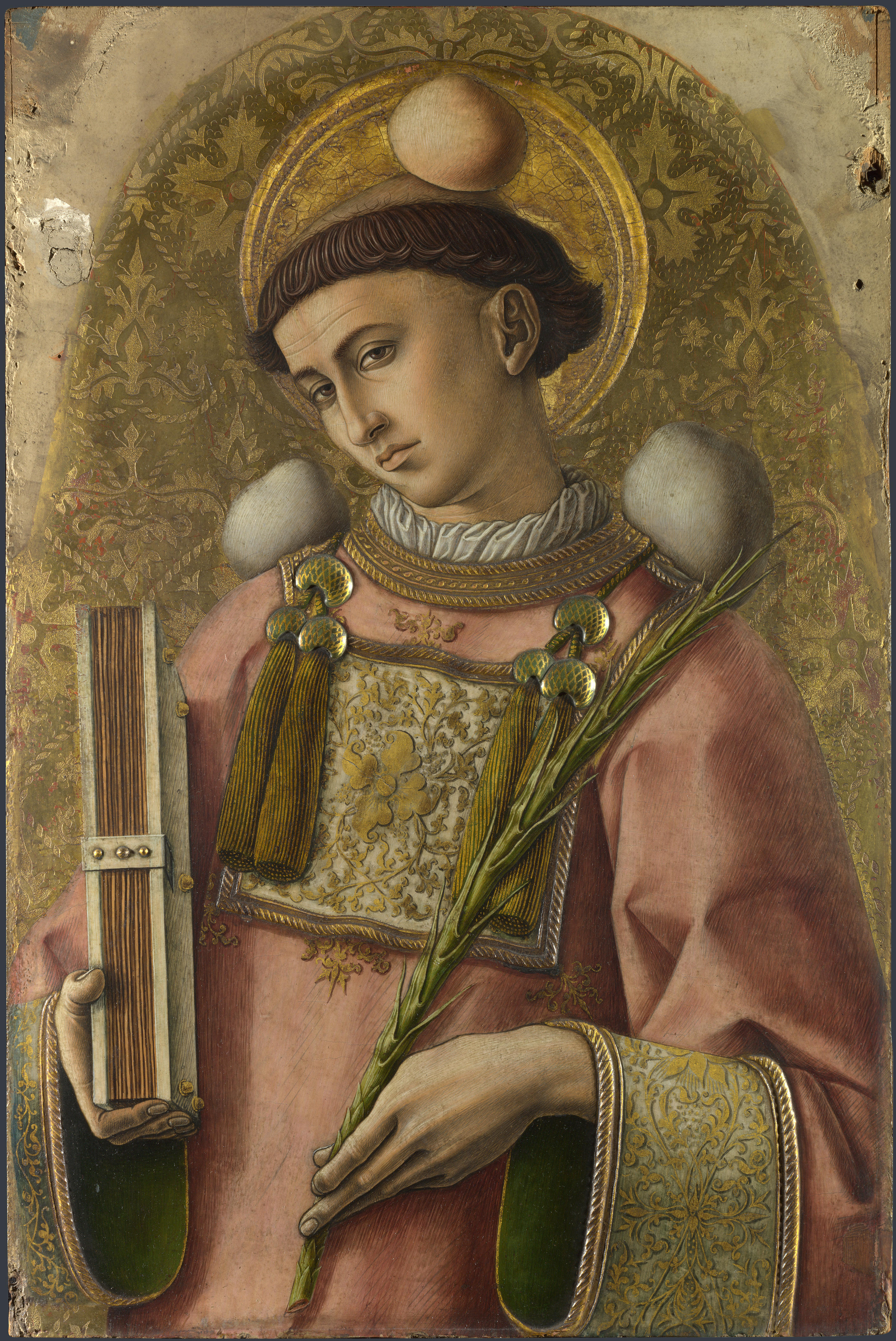
Wiki-image of St. Stephen is in the public domain.

Tuesday, December 25, 2007

Christmas word, 25 Dec 2007

Solemnity of the Incarnation A (25 Dec 2007) Is 9. 1-6; Ps 96; Ti 3. 4-7; Lk 2. 1-20
Homily of Fr. Paul Panaretos, S.J.
Greatest Gifts

Merry Christmas! Consider what we celebrate on this Solemnity of the Incarnation, which we call Christmas: our Creator entered human history as one of us! That’s beyond our imagining, and yet that is how our Creator responded to human desire for the divine. God often acts in ways we do not, cannot expect. Saint Gregory of Nyssa put it well: “O inexpressible mystery and unheard paradox: the Invisible is seen, the Intangible is touched, the eternal Word becomes accessible to our speech, the Timeless steps into time, the Son of God becomes the [human] Son of [Mary]!”

All wrapped in silence as the carol sings. Let’s sing the first verse of "Silent Night."

Silent night, holy night,
All is calm, all is bright
Round yon virgin mother and Child.
Holy Infant, so tender and mild,
Sleep in heavenly peace,
Sleep in heavenly peace.

We sang three qualities belonging to this silence: "holy"; "calm"; and "bright." Subsequent verses elaborate on the word "bright": One is glory, referring to heavenly, angelic light, which dawned on shepherds at night-time. Let’s sing the 2d verse.

Silent night, holy night,
Shepherds quake at the sight;
Glories stream from heaven afar,
Heavenly hosts sing Alleluia!
Christ the Savior is born,
Christ the Savior is born!

Another verse specifies heavenly glory as radiance, the “radiant beams” from the Infant’s face. Let’s sing that 3d verse.

Silent night, holy night,
Son of God, love’s pure light;
Radiant beams from Thy holy face
With the dawn of redeeming grace,
Jesus, Lord, at Thy birth,
Jesus, Lord, at Thy birth.

While it began in silence, the silent light brightening that silent night, the angels spoke but didn’t have the last word. The shepherds continued what angels began. Shepherds proclaimed the birth of Jesus, namely God who could be seen; touched; who became accessible to people as a person: When they saw this, they made known the message that had been told them about this child. All who heard it were amazed by what had been told them by the shepherds.

Like the shepherds we visit Bethlehem, too, and marvel in God’s human birth. Our lives, our vocations are to do as the shepherds: we are not to linger long at the manger; we leave to make known to others our Lord Jesus by how we choose, act and live. No gift can match God’s self-gift in Jesus by their Holy Spirit. God desires us to be shepherd-like in making Jesus known. Making Jesus known by our very lives is the greatest gift each of us gives our world.
______________________________________________
Wiki-images: of Giorgione's Adoration in the public domain and made available under the terms of the GFDL; of the Annunciation to the Shepherds is in the public domain .

Monday, December 24, 2007

Becoming Divine

Pope Benedict noted Sunday that

Only one day separates the Fourth Sunday of Advent from holy Christmas. Tomorrow night we will gather to celebrate the great mystery of love that does not cease to stupify us. God became the Son of Man so that we could become sons of God.
Our distance from recovering our divine destiny is at once a lifetime and, because of the mystery of the Incarnation, which we name Christmas, no distance at all. The more we live this mystery of God-with-us, the more it
ignites in those who receive it a love of neighbor that moves our freedom to give as a gift that which has been freely received. Being reached by the presence of God, who draws near to us at Christmas, is an inestimable gift, a gift that is capable of making us live in the universal embrace of the friends of God, in that network of friendship with Christ that binds heaven and earth, that directs human freedom toward its fulfillment and that, if lived in its truth, flourishes in a gratuitous love and a concern for the good of all people.
The pope articulated well the reason why people pray for peace intensely this time each year.

Sunday, December 23, 2007

Sunday word, 23 Dec 2007

Advent Sunday4 A (23 Dec 2007) Is 7. 10-14; Ps 24; Rm 1. 1-7; Mt 1. 18-24
Homily of Fr. Paul Panaretos, S.J.
Made From Concentrate


“God bless your Advent! May it continue to unfold onto a bright and holy Christmas and a Happy New Year.” I have been signing Christmas cards and other correspondence with that greeting because Advent is a concentrated three-weeks-plus which flows into Christmas time and beyond. Advent is a concentrated season which commingles the sources of our identity and life as Christians. St. Paul expressed these sources in a compact sentence in greeting the Roman church he wrote before he arrived there. Paul introduced himself, as we heard, as set apart for the gospel of God...about his Son, descended from David according to the flesh, but established as Son of God in power according to the Spirit of holiness through resurrection from the dead, Jesus Christ our Lord.

Advent helps us prepare ourselves together for Jesus’ two advents. All of us are to be like expectant mothers, full of the life of our Messiah and eager to bear his life into our world while we expect him, our creator, redeemer and judge, to return to us--his next advent. Being and living in the world eagerly bearing our Messiah gives real sweetness to our annual celebration of his birth and life in the Holy Land--his first advent.

This final Advent Sunday focuses us more sharply on Jesus’ first advent. Its focus helps us remember that the prophets pointed to Jesus; that Prophet Isaiah prepared us to expect the Messiah’s marvelous birth not a marvelous life; and Gabriel reminded Joseph that the child Jesus he would raise as his son would save his people from their sins.

Even more marvelous, this savior would be God-with-us. Emmanuel, God-with-us, is the most concentrated, the most intense, the most real presence. God-with-us is also the most abiding presence we have. Not only did Matthew want us to hear that at the outset of his gospel: Jesus’ birth fulfilled the prophet’s words: they shall name him Emmanuel, which means “God is with Us”; Matthew wanted us to hear it at the close of his gospel. That closing bookend is worth a brief look. No doubt you’ll recognize Matthew’s closing verses. After Jesus died and rose he joined his disciples on the mountain in Galilee to which Jesus had ordered them. They worshiped him there...then Jesus said to them, “All power in heaven and on earth has been given to me. Therefore, go and make disciples of all peoples, baptizing them [and] teaching them to observe all I have commanded you. Behold, I am with you always....”/1/.

From the First Gospel’s opening to its close; from Joseph’s dreams to the Trinity’s dream-come-true; from Jesus' manger and on our mission, Jesus remains Emmanuel, God-with-us. How easy to hasten to the manger and worship the infant son of so marvelous a birth and remain there! Surely, we ought to go there to remind ourselves not only of our Messiah’s beginnings but of our Christian beginnings. We ought to contemplate Joseph who awoke--advent is all about waking up and being alert--and who did as the Lord commanded him. What did Joseph do? He embraced a wife, and more, he embraced a life he would never have imagined for himself. He welcomed, certainly against his own better judgment, what God dreamed and desired for him.

This final Advent Sunday invites us to prepare to visit the manger--but only to visit. Shepherds returned praising God after they visited. We can do no better. We are more properly Galilee mountain disciples with a mission, than Bethlehem bound. St. Francis of Assisi was aware of that and the concentrated nature of advent when he made the first Christmas crèche. Francis was well aware the wood of the manger did not disappear from Jesus’ life. At the appointed time it reappeared as the wood of the cross. We continue to live in the bright shadow of his cross and resurrection; as we do we enjoy access to his abiding presence.

His abiding presence, born anew, invites us to rediscover ourselves in each new thing he gives. New birth is our baptism; new power allows us to proclaim the gospel of Jesus with our lives; new patience allows us to continue to proclaim it and live it; new hope deepens our fidelity as apostles of Jesus' gospel; and new majesty is each one's share in the prophetic, priestly and royal roles of Jesus, who is with us always.

This brings me full circle to my greeting this year: “God bless your Advent! May it continue to unfold onto a bright and holy Christmas and a Happy New Year.” As we wrap the last gifts, hang the last ornaments and mail the last card, we do well to pause each day and ponder. In your daily 15 minutes with Jesus converse with him. Then consider in your voice: how much am I like Isaiah and announce the Lord’s promise? How much am I like St. Paul and glory in my unique relationship with Messiah Jesus, who sends me to continue his mission? How much am I like St. Joseph, seeking what the Lord desires of me, waking up to it and acting on it? Those questions and people unfold the concentrated quality of Advent. Close by slowly saying the Lord’s Prayer, which lead us to live the concentrated life of Advent’s hope.
___________________
/1/ Matthew 28.16-20.
________________________________________________________________
Wiki-image of advent wreath is in the public domain. Wiki-image of St. Joseph statue used under the terms of the GFDL.

Friday, December 21, 2007

Friday word, 21 Dec 2007

Advent Friday3 (21 Dec 2007) Sgs 2. 8-14; Ps 33; Lk 1. 39-45
Homily of Fr. Paul Panaretos, S.J.
How It Works

The reading from the Song of Songs is only offered at mass on this weekday and not on Sundays. No other selection from the Song of Songs is used in the usual cycles. It’s rare use alerted me to ponder it. This is what I noticed.

The first half of the title of a Christmas carol captures what I offer for your reflection: “Silent Night.” Silence describes many things, including the interior workings of humans. Our thoughts and emotions don’t make a sound, yet they affect us powerfully. Their silence moves us to articulate what we think and how we feel.

The silent way in which God became flesh for us--God with us--and the first proclamation of Jesus’ birth was given to people on the margin of society, shepherds. Shepherds did not own the sheep they tended; they watched and cared for the property of others. The first to hear the angelic message of Jesus’ resurrection were marginalized people, too: women had no legal standing in the first century world of the gospel.

Exultation begins in silent awe before human mouths voice it, before we sing to [the Lord] a new song, as our psalm urged us.

The Annunciation to Mary of Jesus’ birth was shrouded in silence. Artists’ renderings of it suggest that. Mary, even the angel, may have been more vocal than scripture suggests. It gives the kernel of the divine invitation to Mary and her acceptance. Silence played its part: Mary was troubled and wondered what the angel’s greeting meant. Wondered and troubled
both begin silently. Mary’s journey to Elizabeth probably gave her plenty of time to allow silent movements to affect her before they erupted in her song of praise. Elizabeth was not different.

Nor are we. Our vocal jubilation is a good thing, but it isn’t first. God’s silent moving within us, and our own awareness and responses are first silent. Our fast-paced, hectic and noisy world distract us from that which allows us to recognize God as our beloved and beautiful one who comes silently and who will come in glory.

Wednesday, December 19, 2007

Wednesday word, 19 Dec 2007

Advent Wednesday3 (19 Dec 2007) Jdg 13. 2-7,24-25a; Ps 71; Lk 1. 5-25
Homily of Fr. Paul Panaretos, S.J.
Vocations Reshaped


We are familiar with announcements. They give information: weddings and births deserve written announcements; others give information of different sorts. In Christianity announcements give more than information; they proclaim God and God’s desires for the sake of people. The proclamation parts of Christian annunciations involve more than the individuals receiving them.

Yesterday we heard Matthew recall Joseph’s annunciation, which proclaimed that Jesus would save his people from their sins. Luke recalled John the Baptizer would turn many of the children of Israel to the Lord their God. Even the annunciation of Samson’s birth proclaimed that he would begin the deliverance of Israel from the power of the Philistines. The God of Abraham, Isaac and Jacob can rightly be called the Deliverer, as King David called God, and quoted by St. Luke and St. Paul./1/ The Deliverer is the personal God of the scriptures.

Annunciations abound in the Old and New Testaments. They were always personal, that is, they happened to people. As they continued in the ancient world, a shift happened and we’ve heard it. I call it “from unnamed to named.”

Samson father was named: Manoah; but not his mother. Likewise John’s father was named: Zechariah; and so was his mother, Elizabeth. Likewise, the parents of Jesus, Joseph and Mary are mentioned in proclamations of his birth.

In pondering this shift “from unnamed to named,” I have felt more deeply convinced of God’s desire for a profoundly personal relationship with me, each of you and all people. Paradoxically the more personal God becomes, the more far-reaching a shaper of community God becomes in Jesus by their Spirit. By becoming enfleshed for us, Jesus reshaped human vocations in ways none of us may call private or undemanding. Our own annunciations --and each of us has one--welcome us to further deliver our world in the name of Jesus, empowered by his Spirit.
____________
/1/ 2Samuel 22.2; Psalms 18.2; 40.17; 70.5; 144.2 (the Psalms have traditionally been attributed to David); Acts 7.35; Romans 11.26.
_________________________________________________________
Wiki-image of the Tree of Jesse, of which Jesus is the flower, is in the public domain.

Tuesday, December 18, 2007

Tuesday word, 18 Dec 2007

Advent Tuesday3 (18 Dec 2007) Jer 23. 5-8; Ps 72; Mt 1. 18-25
Homily of Fr. Paul Panaretos, S.J.
Our Mission: Between Bookends

We’ve heard the phrase, the justice of God is tempered by God’s mercy. God’s justice, not comprehensible by humans and at the same time beyond human comprehension, is the attribute that makes the God of Abraham, Isaac and Jacob, sacred and “great Lord of might,” as today’s antiphon cries.

God’s justice was and is like no other because God remains close to us even when we distance our hearts and selves from God’s heart. Because God accompanied humans from the first, one prophet could call God Emmanuel, God-with-us. God with us took on a greater significance when God in Jesus let go of his divinity in order to join our humanity. God in our flesh is Emmanuel in a way that confounds human imagining! This blending of divinity and humanity in Jesus truly is our salvation. As Pope St. Leo the Great put, it “The Conqueror’s victory would have profited us nothing if the battle had been fought outside our human condition.”/1/

Let us pause in our human condition. Step into Joseph’s skin. Imagine hearing the angelic messenger announce to you, the child of your betrothed you are to name...Jesus, because he will save his people from their sins. If God were mighty, as Joseph surely believed, how great a Lord of might Joseph appreciated!

Joseph surely marveled, Why and how is it I? as did Mary. God’s choice of Joseph gave him a new vision of God’s justice, namely, making good God’s promises from the start. Joseph did as the angel of the Lord had commanded him, again and again not only this once. His godliness didn’t allow him to mope unworthily in a pitiable way. No. God’s justice became flesh in order to save all people. If we have any doubts, Jesus reassured disciples in every age saying at the close of Matthew’s gospel, “I am with you always.”/2/ It ended as it began: God with us.

This annunciation to Joseph suggests that an antidote to an unhealthy feeling of unworthiness is to consider the justice of God, who creates us each moment to be a more faithful disciple.
____________
/1/ Letter 31, excerpt in the Office of Readings, 17 December, Liturgy of the Hours, vol. 1, p. 321.
/2/ Matthew 28.20.
________________________________________________________
Wiki-tune of today's Advent antiphon (embedded above at "great Lord of might") is used under the terms of the GNU.

Monday, December 17, 2007

Monday word, 17 Dec 2007

Advent Monday3 (17 Dec 2007) Gn 49. 2,8-10; Ps 72; Mt 1. 1-17
Homily of Fr. Paul Panaretos, S.J.
Satisfying Suspicions


Synagogue worship focused on God’s revelation, and readings from torah, the Hebrew scriptures, were read in a regular sequence. Because the majority of Jews no longer understood Hebrew, the reader of the sacred text would translate it on the spot, making it clearer and connecting it with the contemporary hearers. These Aramaic translations were written, and we have several.

The reading we heard from Genesis, the beginning of Jacob’s farewell to and blessing of his 12 sons, remembered Judah. The Aramaic rendering of it focused on the “determined time the King Messiah [would] come,” reason for all the descendants of Jacob to “purify” themselves, that is, to make their ways of living correspond more closely to God’s heart.

Matthew began his gospel with Jesus’ genealogy, his lineage. Jesus is immediately identified as Messiah (the Christ in Greek), who is son of David and son of Abraham.
Being a descendant of Abraham connected Jesus with the whole people. But Matthew’s community needed more. They needed the prophetic credentials of Jesus as Messiah, and his relation to David, the king and the house God promised never to leave, satisfied the community for whom Matthew wrote his gospel.

Plus, Jesus’ parentage was suspect. Luke focused on Mary in his gospel, who crisply stated the problem: “How can this be?” Matthew focused on Joseph and his annunciations by angels and in dreams. Even before introducing Joseph’s annunciations, Matthew offered four female ancestors of Jesus: Tamar; Rahab; Ruth; and Bathsheba, the wife of Uriah. All were sexually suspect and outsiders to Israel, and God worked mightily through them.

God works mightily even now. Jesus’ genealogy suggests we consider how God works in our lives, choosing us as envoys of God’s son, our Messiah, who will come again.
______________________________________________
Wiki-image of Wisdom is in the public domain. Today the Church recalls the Messiah personified wisdom.

Sunday, December 16, 2007

God Bubbles

A recent site helps prayer and reflection by bringing people together. The Other6 (for the six days other than Sunday) allow people to mention "where [one] found God today" and "where [people] need to find God today."


The Other6 makes the internet serve personal spiritual needs by allowing one to articulate them to others doing the same. Visitors to it have already discovered they are not alone.

[Have computer speakers "on" for soothing and meditative assistance.]
__________________________________________________________
Wiki-image is in the public domain.