Showing posts with label Ritual. Show all posts

Saturday, April 25, 2020

Updating Earlier Post

The post, Situation Poses Questions, offered an Orthodox wondering about the absence of Eucharist. Director of Evangelization and Adult Formation Michael Bayer offered a Catholic perspective. Mr. Bayer recalled that Eucharistic hunger is the norm for many in the world. Our “hunger [for the Eucharist and the other sacraments] can sometimes reveal an unhealthy and uniquely American form of self-centered exceptionalism.” A grace in our hunger can be learning how “we are being renewed and reformed to be ever more the community of disciples that Jesus envisioned.”
___________________

Tuesday, April 21, 2020

Human Ritual Disrupted

Humans need to mourn the passing of significant people in their lives. Mourning well helps survivors negotiate the absence of those who were close to them. The pandemic has upended what “is critical to our emotional wellbeing. Could remote mourning be enough?” asks National Geographic environment writer, Craig Welch.


Wednesday, April 01, 2020

Faiths Share Quandary About Practice

CSM Staff writer Harry Bruinius posted a report that answered an editorial question that precedes it: “During the pandemic, what does it mean to come together and pray?” Religious leaders are responding creatively. Yet the innate human drive to gather, intensified in ritual gestures in hallowed places, leave many feeling empty and fully of questions. The results of prudent closure of worship spaces and physical distancing “have even presented profound theological conundrums.”

Update: In yesterday’s America Magazine Colleen Dulle considered in more detail the Roman Catholic perspective. Ms. Dulle opened with a first-person account of joining a livestream celebration of Sunday mass.
___________________
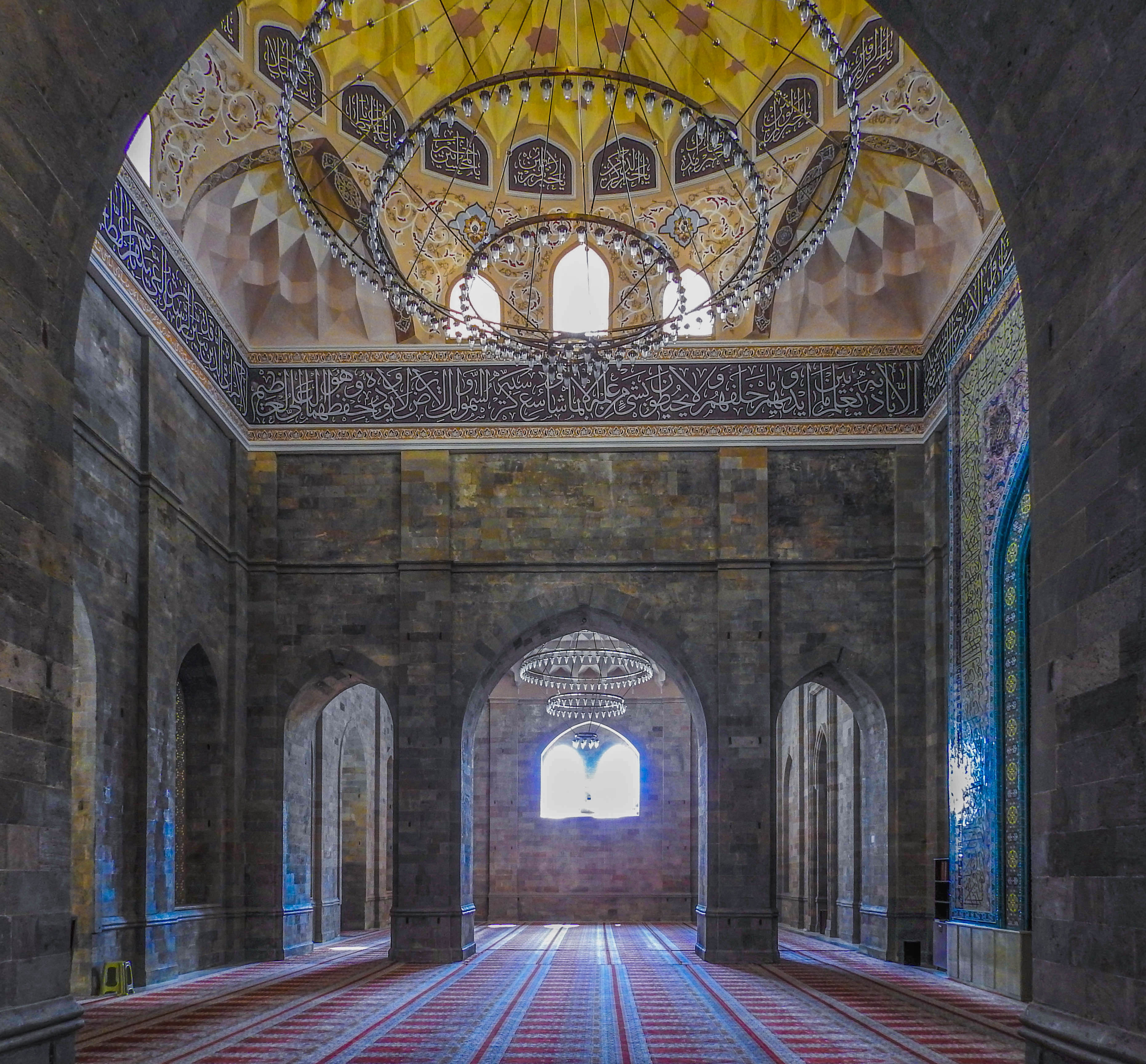
Wiki-image Cavernous interior,  Juma Mosque in Shemakha by “shankar s. | CC BY 2.0"

___________________
[This evening: Isolating Need Not Result in Loneliness]

Thursday, September 08, 2011

Missal After the Passage of Time

Thinking Faith: The Online Journal of the British Jesuits, offers broad and learned insight, reflection and educational articles as well as reviews (books and film). Writers examine the tradition of the church as well as our contemporary world to uncover God working in all things.

In the recent issue Frances Novillo "takes an extended look at the new translation [of the Roman Missal being implemented now through catechesis in parishes], placing it in its historical context, explaining the principles that informed the translators and reviewing the changes that have been made to the text."

Her first part reviews well the "historical context." Well known is the fact that
the changes to the words of the liturgy have generated strong reactions. The concerns raised demonstrate a commendable interest in the text. If these changes were received without comment, it would signify that what is said and heard at Mass is of no importance and that would be regrettable. Even the most vehement opponent of the new translation is witnessing powerfully to the importance of the Mass. However, is a particular word or phrase lost or found really the pearl of great price?
The author also noted that the document, which had set the principles of translation for the missal used since 1974 to the present, "recognises the necessary task of future translators, saying: ‘Above all, after sufficient experiment and passage of time, all translations will need review.'"

Another note well made is that the years of exposure to more scripture texts at mass can allow people to recognize scriptural allusions in the new translation. Of course, those allusions were in the Latin texts for the mass; the revised translations will allow English-speakers to hear them again.

Catholics in their 40s have known only the current missal. Catholics over 40 survived the steeper shift from Latin to vernacular. The elder Catholics can encourage younger Catholics that they, too, will survive and more.

Read Frances Novillo's first part of her essay for a good appreciation of the context of the latest edition of the Roman Missal. Continue with its second part for a look at her review of changes Catholics will be hearing soon---on the First Sunday of Advent.
__________________________________________________________
Image of cover of soon-to-be-released Roman Missal, 3d edition, at USCCB site.

Friday, April 01, 2011

Entering Sacred Story in Los Angeles

The three-day Religious Education Congress 2011 has ended. However, its effects abide in the 45,000 who participated.
“The congress plays to all your senses,” [Master Catechist] Jeff Flood said.
Sacramental faith does the same. Reading a review of the Congress invites all Catholics to continue entering the story of faith by opening every sense to be graced and to be transformed.

Monday, March 08, 2010

What Thomas Couldn't Know

Often people feel and know what is right. The reply to the questions of children, "That's how it's done"; or, "That's how my father taught me," captures how felt knowledge shapes us. Humans exercise critical thinking on felt knowledge, and all profit from exercising it frequently. Often critical thinking tests the helpfulness or the validity of an approach. After several tests offer confirmation, people allow themselves to be guided by what they intuit but cannot prove adequately to themselves or to others.

Thomas Aquinas reflected on creation and noted that humans are not the highest animals (Aristotle's definition of humans), but of an order exceeding animals, even while sharing much (limitations, bodies,
feelings, deterioration). Thomas relied on Sacred Scripture and the Tradition of the church rooted in scripture, and he asserted that humans are embodied spirits.

Recently, research
unavailable to Thomas--and for many centuries after him--has looked at ritual behavior and noted effects on the brain. The research "shows how intimately linked our bodies are with our souls." The research strongly suggests that our biology has has created and shaped the neural pathways to render these aspects of experience [liturgy and other ritual] useful and effective."

The conclusion of one review of the study points to the felt knowledge, which has held from ancient times, that liturgy and ritual are vital to human living.
Ritual and liturgy are powerful because they allow participants to taste, if only for a moment, the transcendent spiritual unity that all religions promise, Newberg and d’Aquili say. “One can see why so powerful a behavior has persisted through the ages and is likely to persist for some time to come.”