Showing posts with label ChristmasSeason2014. Show all posts

Sunday, January 11, 2015

Sunday word, 11 Jan 15

Our Mission: Christian Witness
The Baptism of the Lord B (11 Jan 2015)
Homily of Fr. Paul Panaretos, S.J.
As we train our minds and hearts on the Nativity of Jesus, we naturally focus on him as infant and child. Immense, immeasurable God beginning human life from infancy—as everyone does—boggles our minds. We rightly name the Incarnation and the Nativity of Jesus mysteries. By the word mystery the church does not mean a whodunnit. The word mystery speaks of God’s desire to become more available to and for people and our world.

Christian mystery is not locked into time. If it were, it would be long past. Jesus is no dead figure of the past. He lives among us by the power of his Spirit. The mysteries of his life continue to bless us with gracious power. The mysteries of Jesus’ life are his sacramental presence to us and for us.1

The Season of Christmas offers us several mysteries in which to lose ourselves, and not only the Nativity of Jesus. This season offers his Presentation in the Temple; his Epiphany; his escape from Herod’s murderous designs. As it closes the season invites us to savor his Baptism.

This pattern of our worship, of savoring many sides of his Incarnation, was born in the church’s early centuries. A bishop in Italy felt this pattern of worship reasonable. Of the Lord’s baptism he preached: 

Reason demands that this feast of the Lord’s baptism, which I think could be called the feast of his birthday, should follow soon after the Lord’s birthday, during the same season, even though many years intervened between the two events.2 

The mystery of Jesus’ baptism gave birth to his public ministry. The Baptizer announced that Jesus would baptize with Holy Spirit. Who could anoint with God’s spirit if God did not make it possible? At his baptism God identified Jesus as God’s beloved Son.

In the clarifying light of the mystery of his resurrection the church soon grasped that Jesus’ life and ministry was about power to bequeath Holy Spirit to everyone: God anointed Jesus of Nazareth with the Holy Spirit and power. He went about doing good and healing all those oppressed by the devil, for God was with him.

God’s son became human for us as Jesus of Nazareth. Risen from the dead Jesus continues to transform us and all who surrender their lives to him. The sacrament of our baptisms began of our transformation into Jesus’ divine nature. The mystery of Jesus’ Incarnation begins a personal mystery of each of us: baptism begins to make us faithful partakers in the divine nature by uniting [us] in a living union with [God’s] only Son, [our] Savior.3

Savoring the mystery of Jesus’ baptism allows us to know ourselves as our triune God knows us: as sons and daughters of God; as sisters and brothers of Jesus. It is good to ask to enjoy this graced self-knowledge more. Feeling this graced self-knowledge and getting energy from it fuels our Christian witness. Having anointed us with his spirit Jesus empowers us to communicate his spirit to others and anoint them with it by deed and word. We name our power our Christian witness.

The more we witness to Jesus the more we grow as our truer and more real selves: beloved of God, his Father and ours. Our truer and more real selves are portals of his presence as we seek to do good and bring forth justice in Jesus’ strong, loving and wise way. Beginning with baptism the sacraments transform and nourish us for our mission of Christian witness each day.

In your daily 15 minutes with Jesus this week
  • Rest in the love of our triune God.
  • Ask  John the Baptizer to present you to Jesus.
  • Stand on the bank of the Jordan with Jesus; then speak to him: marvel that he is the son of God born for us; tell him your desire to share his spirit.
  • Ask Jesus for grace to transform you more as his witness.
  • Close saying slowly the Lord’s Prayer. Jesus’ gave us his prayer to guide us daily to love God and to witness Jesus’ life-giving power to others.

Link to this homily’s Spiritual Exercise


__________
  1. Pope St. Leo, Sermon 74, quoted in the Catechism of the Catholic Church [CCC].
  2. Saint Maximus of Turin, From his Sermon on Epiphany.
  3. CCC #1129.
____________
Wiki-images: Baptism of Jesus PD-US; Jordan baptism site by אלה פאוסט CC BY 2.5

Sunday, January 04, 2015

Sunday word, 04 Jan 15

Privileged Ways To Pay Our Homage
Solemnity of the Epiphany B (04 Jan 2015)
Homily of Fr. Paul Panaretos, S.J.

We saw his star at its rising and have come to do him homage. I suggest the magi who spoke those words are models for us. Let’s compare them with the one who first heard them. The magi’s words greatly troubled Herod the king. In Middle East cultures honor was central. A troubled mind and heart of a ruler threatened a ruler’s honor because a troubled mind and heart disrupted a ruler’s poise. If Herod did not carry himself honorably, it would affect the people. It did: King Herod…was greatly troubled, and all Jerusalem with him.

Why was Herod troubled? He was King of Judea. He knew he had no newborn heir. So the arrival of wise men from distant nations who had come to worship the newborn king of Judea troubled the already wary king.

Herod was wary because he was a puppet king.1 The Roman emperor crowned him and let him rule. He was not Judaean at all. As a result Herod had no idea he ought to have modeled himself after King David. David shepherded his people, guiding and encouraging them to fulfill their destiny. Their destiny was God’s purpose for them: to witness by their lives so the world might know God and enjoy a relationship with God. Of Israel’s destiny of service Prophet Isaiah announced: Nations shall walk by your light…they all gather and come to you…proclaiming the praises of the Lord. Of it the Psalmist sang: All kings shall pay him homage, all nations shall serve Israel’s God.

Their witness was their side of the covenant. God pledged it first to Abraham.2 Jesus fulfilled the covenant so all nations are coheirs, members of the same body, and copartners in the promise in Christ Jesus through the gospel.

King Herod did not live the covenant; nor did he encourage those of his kingdom to live it. He wanted to cling to the power he had. The magi’s visit troubled him because it suggested a rival was near and would grow and take his power. To cling to power Herod summoned the magi secretly. Secrecy and honor did not harmonize in his culture. If people were seen to be honorable, others gave them honor. Honor was public; it was desired; and it was bestowed by others. Secrecy did not let people see another’s behavior so they could give honor.

The Wise Men felt the secrecy-honor disconnect when summoned by Herod. A heavenly light, available to any with vision, had set them on their journey to honor the newborn king of Judea. Nothing was more public than a light of heaven. Herod’s secrecy had no aroma of honor, let alone homage. On their journey they weighed Herod’s power-hungry request to return to him. Their dream not to return to him confirmed their choice to return home another way.

The Wise Men encourage us to consider the ways we notice Jesus present to us. The Wise Men encourage us to grow more alert to the ways Jesus accompanies us and leads us. The Wise Men encourage us to let ourselves be moved to honor our Savior Jesus on our life journeys. The two great love commands have pride of place among ways to honor Jesus: loving God with all we are; and loving others the way we desire to be loved. Our communal worship and personal prayer lovingly honor our triune God. Jesus warned doing that alone is empty show. We present true gifts at our altars of praise when we honor others and honor those in need with what help we can offer. To treat Jesus’ love commands as either-or options does not honor our Savior; to treat his two commands as either-or options does not allow our Savior to honor us as his disciples and friends. We honor Jesus by following him more closely. He is our Christian poise.

Our Christian poise, the way we carry ourselves as Jesus’ friends and disciples, gets rebalanced as we love others and care for them as we journey to God and honor God with our lives along our way.3

In your daily 15 minutes with Jesus this week
  • Rest in the love of our triune God.
  • Ask the magi to present you to Jesus.
  • Look on him tenderly and speak to him: marvel that God was born for us; that Jesus continues to guide us; that Jesus deepens our desire to be his disciples.
  • Ask Jesus for grace to welcome him as our Savior and to walk more closely his way.
  • Close saying slowly the Lord’s Prayer. Jesus’ gave us his prayer to guide us daily to love God wholeheartedly. We demonstrate our love for God when we shower others with the love and honor we desire to be showered on us.

Link to this homily’s Spiritual Exercise


__________
  1. See the Encyclopedia Brittanica entry, Herod.
  2. Genesis 18.18-19.
  3. This paraphrases St. Augustine’s Tractate 17.9 on John’s Gospel.
____________

Saturday, January 03, 2015

Jesus’ Human Heart


Before 2013 the Society of Jesus celebrated its name day on the Octave of Christmas. Since then it celebrates it two days later. To live up to the name, to shape his heart more like the heart of the Savior challenges each Jesuit. Jesuit Bill MacCurtain posted a brief reflection that many—not only Jesuits—enjoyed. His “The Human Heart of Jesus” is at one cosmic and down to earth.
___________________

Sunday, December 28, 2014

Sunday word, 28 Dec 14

Overflowing Lavishly
Holy Family Sunday B (28 Dec 2014)
Homily of Fr. Paul Panaretos, S.J.
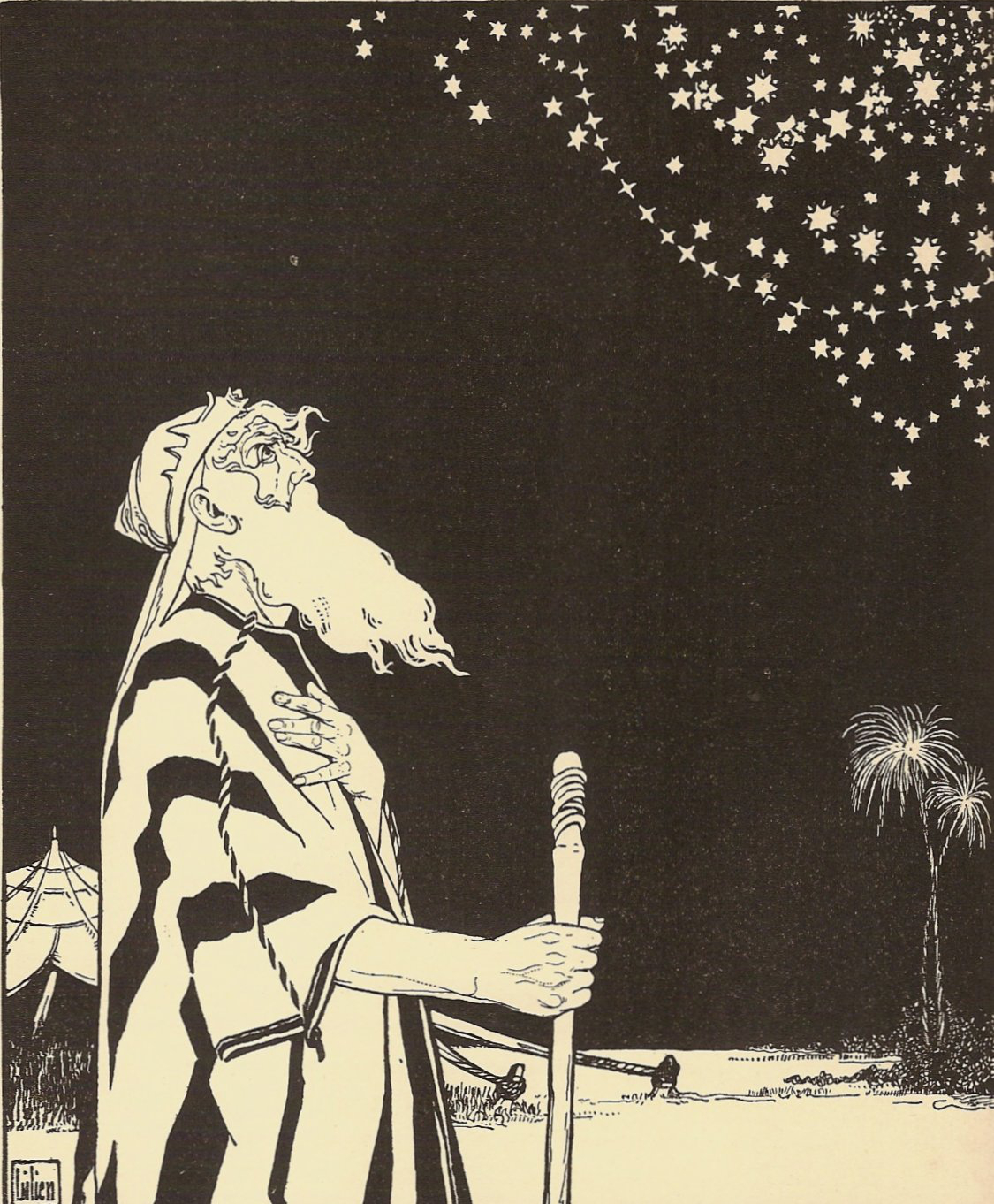
God’s life overflows. God’s life overflows within God. Our Catholic tradition appreciates God as a community—Father, Son, Holy Spirit. Long before the Christian appreciation of God as triune, God is always lavish. How lavish? Consider Abraham: one descendant for a childless couple was not enough: the Lord took Abram outside and said, not only will you have an heir, Abram, your descendants shall be as numerous as the stars in the sky. From the first self-introduction to the father of many nations God was lavish. Responding to God was lavish.

Two thousand years later when pilgrims arrived in Jerusalem in the days of King Herod they saw lavish buildings; they saw and heard artisans of all kinds busily constructing more. The Temple may have been the most impressive building. It teemed with people from the world over. Many of them formed God’s people.

Pilgrims to the Temple Mount fulfilled the words of the prophets: In the last days the mountain of the Lord’s temple will be…exalted above the hills, and peoples will stream to it.1 From his infancy Jesus was a pilgrim to Jerusalem many times. He had an ever-deepening felt-knowledge that he embodied the last days of God’s promise spoken by the prophets. In that graced, prophetic wisdom the child Jesus grew.

By his graced, prophetic wisdom Jesus repeatedly voiced God’s lavish, overflowing life in his teaching. By his graced, prophetic wisdom Jesus repeatedly modeled God’s lavish, overflowing life by his actions. Jesus gave his life so God’s lavish, overflowing life may be ours. God’s lavish, overflowing life raised Jesus from death and exalted him as Lord and Savior of all.

We are Jesus’ body,2 the people of God.3 Families are the building blocks of every people. For Christians the human family is a school of faith, hope and love. The family all of us have become is the church, Jesus’ body. The blood of our savior unites us. His life is his Spirit. With his Spirit pulsing in us our Catholic life is nothing less than the life of our savior. The life of our savior unites us so we may give voice in varied ways to God’s lavish, overflowing life. The life of our savior unites us so we may model God’s lavish, overflowing life by our actions of charity.

The life of the Holy Family attuned Jesus to living faith, hope and love. The life of the Holy Family was the first stages of Jesus’ life in which he grew and became strong, filled with wisdom…and the favor of God. His family and body don’t look quaintly at Jesus growing strong [filled] with wisdom…and the favor of God as though Jesus was a dead figure of long ago. Jesus is alive and present by his Spirit. We consider each stage of Jesus’ life as our goal. A French saint described our goal as our mission: to accomplish in ourselves the stages of Jesus’ life and his mysteries and often to beg him to perfect and realize them in us and in his whole Church.4

The church year gradually spreads before us the stages of Jesus’ life and his mysteries. Each of us may beg [Jesus] to perfect and realize them in us and in his whole Church. How to do that? Let ourselves inhabit and move about in aspects of his mysteries. The season of Christmas offers us nearly three weeks to enter the mystery of Jesus’ nativity: his sharing our human nature so we may share his divine nature. To ask Jesus to perfect and realize his [nativity] in us and in his whole Church not only considers God joining us; it empowers us to celebrate, model and share our triune God’s lavish, overflowing life. By God’s gracious favor Jesus’ body and family do what he first did for us.

In your daily 15 minutes with Jesus this week
  • Rest in the lavish love of our triune God.
  • Ask Mary to present you to her baby.
  • Take him in your arms and speak to him; marvel that God was born for you; that he experienced life as we were born and continue to grow in our lives.
  • Ask Jesus for grace to welcome him as our Savior; to have a felt-knowledge that his Spirit gives us life each moment.
  • Close saying slowly the Lord’s Prayer. Jesus’ words, on earth as…in heaven, point to the Word made flesh; his prayer urges us to let our lives speak in harmony with that very Word born for us.

Link to this homily’s Spiritual Exercise


__________
  1. Isaiah 2.2; Micah 4.1.
  2. Romans 12.5; 1Corinthians 12.27.
  3. 1Peter 2.10.
  4. St. John Eudes, quoted in the Liturgy of the Hours and the Catechism of the Catholic Church, ¶521.
____________