Showing posts with label Advent14. Show all posts

Sunday, December 21, 2014

Sunday word, 21 Dec 14

Witnesses Freed and Healed
Fourth Sunday of Advent B (21 Dec 2014)
Homily of Fr. Paul Panaretos, S.J.
Advent liturgies frequently sound healing, freeing and saving. One response echoed in the Liturgy of the Hours appeals, Come and set us free, Lord God…and we shall be saved. Another names God as the source of our healing, freeing and saving and desires God offer them to us: Lord, show us your mercy and love…And grant us your salvation.1 Mercy and love are not add ons to our triune God; mercy and love belong to God the way air and blood keep us alive. Divine mercy and love are words that try to express God’s gracious self to God’s people. Our language does what it can to describe God, and it always limps as it does.

We all have experienced our language limping to name our triune God as the most real. I often use dreaming as an example with children. I ask if they dream, and they quickly say they do. Do things happen, and do they do things in dreams they cannot do in waking life? I ask. Again they agree. Does not being able to do in waking life what they do in dreams mean that dreams are not real? No, our dreams are very real!

As we tell our dreams to others we pause, unable to de-scribe in words some parts. Often a person resumes saying, You know how it is in dreams, and listeners readily agree. Our triune God is no dream, yet our language limps to describe God. Fortunately God intervened personally for us. Our triune God decided in their eternity that the Second Person would become a human being in order to save the human race.2 God’s desire to intervene happened long before angel Gabriel visited Mary. One of those times we heard was for David.

Did you hear God laugh moments ago? David wanted to build a secure house for the ark of the Covenant where God’s presence dwelled. “Here I am living in a house of cedar, while the ark of God dwells in a tent!” Ha! God laughed: Would you build me a house to dwell in? David meant well. As God’s friend David desired to do for God in return for God’s favor. God desired and did for David what he could not do for himself: God established a living house, a dynasty for David: your dynasty and your kingdom shall endure forever before me.

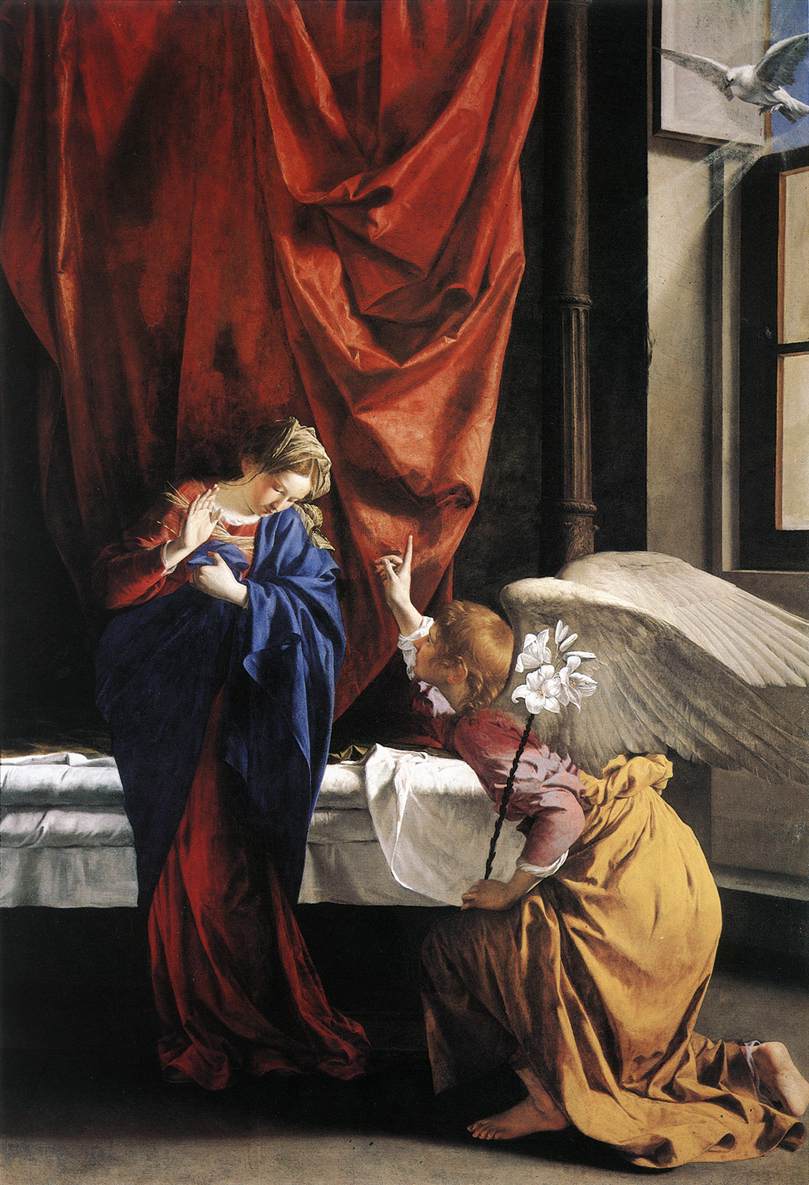
In the fullness of time3—scripture’s phrase for the moment—God’s mercy and love was born a son of David, Mary’s child. In him God’s mercy and love became human with us and for us: to heal, free and save us and all. Angel Gabriel told Mary, You shall name him Jesus. The name Jesus means God saves. When we are healed we are freed to live in new ways. When we are healed we experience being saved. Allow me to use an image to say a final thing.
When we are sick we may receive medicines. Medicines don’t cure us; they free the body to heal itself, to return to normal functions. That image limps when it comes to our most real healing, our interior and spiritual healing: we cannot heal ourselves. We receive interior, spiritual healing, the most real healing. Jesus is our divine physician. As we surrender to the care of our physicians, our surrender to Jesus offers us our most real healing and freedom. 

Surrender is not easy for anyone. It is possible though not easy. We learn to surrender. Models helps us; intercessors help us more, and we have Mary and the communion of saints to help us. Mary is intercessor and model par excellence. Her surrender to God’s desire to save us in Jesus began our salvation. It will continue until Jesus completes it when he returns in glory. Enter the scene of her surrender to God throughout these days before Christmas and after to grow more receptive to God’s desire: our freeing, healing and saving. God’s desire is not limited to the future. God frees, heals and saves us now so our lives may witness more clearly to Jesus our Savior.

In your daily 15 minutes with Jesus this week
  • Rest in the creative love of our triune God.
  • Ask Jesus to present you to his mother.
  • Enter her room and chat with her: ask her about being troubled at the angel’s greeting. Share your troubles with her. Then ask Mary to present you to her son.
  • Ask Jesus for grace to welcome him as our Savior. Praise him for saving you each moment.
  • Close saying slowly the Lord’s Prayer. Jesus gave it to us to free us and heal us so we may live more like him.

Link to this homily’s Spiritual Exercise


__________
  1. Both appear throughout Evening Prayer during Advent, most recently on 19 December and 21 December. 
  2. St. Ignatius of Loyola in his Spiritual Exercises [102].
  3. Galatians 4.4 and Ephesians 1.10.
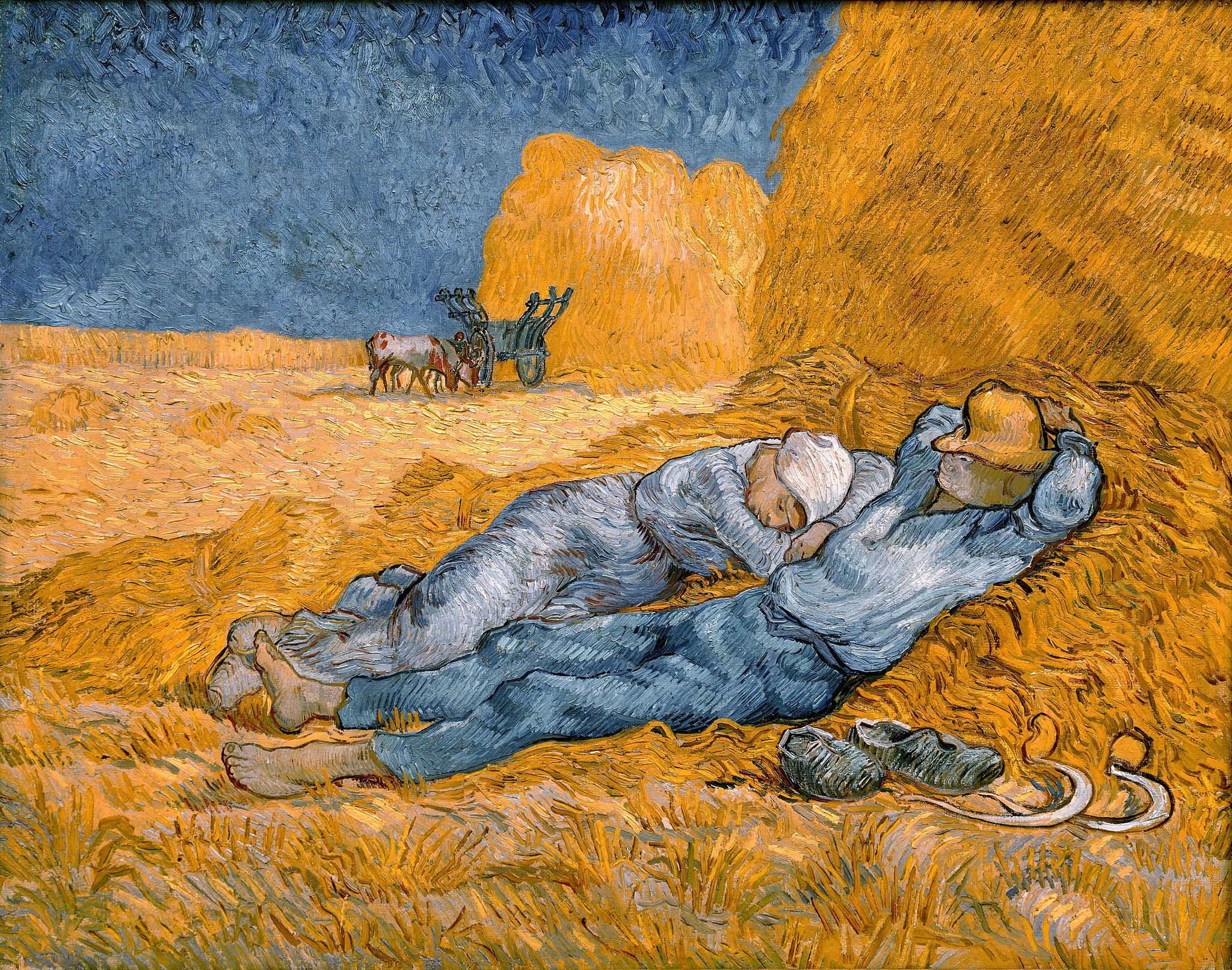
Wiki-images: King David Agnete by Agnete CC BY-SA 3.0;  Annuncation PD-US

Sunday, December 14, 2014

Sunday word, 14 Dec 14

Key to Locked Doors
Third Sunday of Advent B (14 Dec 2014)

Homily of Fr. Paul Panaretos, S.J.
Dietrich Bonhoeffer was a German Lutheran pastor and prominent theologian in pre-WWII Europe. He is better known for resisting the Nazis and dying as a result. Last summer I learned from a recent biography that Bonhoeffer was foremost a pastor.1 As with you and me, Pastor Bonhoeffer was all his dimensions. Throughout his life Advent may have been the church season most significant to him. Near the end of his young life he wrote a friend: “A prison cell is like our situation in Advent: one waits, hopes, does this or that—meaningless acts—but the door is locked and can only be opened from the outside. That is how I feel just now.”2

What are we to make of his image when today’s scriptures and mass prayers overflow with rejoicing and encourage us to rejoice? I have pondered that. Our Catholic both/and view of life—divine and human—emerged. Like Pastor Bonhoeffer, you and I are all our dimensions; we can delight even in difficult circumstances. We don’t delight in a difficult circumstance; we delight in help we receive or can give. We don’t delight in a difficult circumstance; we delight in another who is with us, even someone as helpless as us.

The words, “the door…can only be opened from the outside,” accurately image Advent. While we can take true and honest delight in much of ourselves, our sources of delight often are outside us: from what our senses take in; our minds and hearts appreciate; and relationships that sustain and strengthen our lives. Advent invites us to refresh our relationship with Jesus and the delight he alone gives. We yearn for Jesus’ return in glory; we recall his first Advent in our world, born a human like all humans. Jesus came from an outside, his divine life, into our humanity. That he came and will come again to bring us fully into his divine life is reason for rejoicing.

The manner of Jesus’ first Advent is also significant. He entered our humanity anonymously; he was born poor in difficult circumstances and a mangy setting. The prophetic modern monk, Thomas Merton, echoed “the outside” when he described the purpose of Jesus’ birth. Our Creator and Redeemer, he said “has come uninvited. But because he cannot be at home in [our world], because he is out of place in it, and yet he must be in it, his place is with those others who do not belong, who are rejected by power, because they are regarded as weak, those who are discredited, who are denied the status of persons, tortured, exterminated. With those for whom there is no room, Christ is present in this world.”3

You and I exercise some power; we have some strength; we enjoy good reputation and comfortable lives. Yet we are all limited. Jesus arrived for us, too. Our shared vocation witnesses to Jesus coming from outside to help us, forgive us and steady us to walk in the singular freedom Jesus offers. We may speak our witness. More often it is unspoken, even anonymous, testimony to the help, forgiveness and freedom we received from our Messiah.

Those served by our unspoken, even anonymous testimonies to Jesus rejoice in ways we may never know. When a person in recovery needs a meeting on Sunday and finds it at a church that makes space available, that one rejoices. When a person without resources to live receives some through a shelter, food bank or kitchen, that one rejoices. When someone bewildered by unfamiliar surroundings or distressed by life finds a person to listen patiently, that one rejoices. Often small actions reflect the light who is Christ Jesus more clearly than great ones. Bringing to mind how we rejoiced when a small action by another did a great thing for us is genuine prayer. It reminds us though we are unable to see Jesus, he is just outside; he is our Key who opens the door onto our true freedom.

In your daily 15 minutes with Jesus this week
  • Rest in the creative love of our triune God.
  • Ask John the Baptizer and your patron saint to present you to Jesus.
  • Chat with him: praise him for dying and rising for you. Thank him for being born human like you and for you.
  • Ask Jesus for grace to welcome him as your Savior, your Key who opens you to your true self and to serve his good news.
  • Close saying slowly the Lord’s Prayer. Jesus gave it to us to free us and to align ourselves with his good news each day. the creative love of our triune God.

Link to this homily’s Spiritual Exercise

__________
  1. Eric Metaxas subtitled his biography Pastor, Martyr, Prophet, Spy. 
  2. Dietrich Bonhoeffer’s Christmas Sermons. Kindle location 28.
  3. Quoted in Daily Dig for December 1.
____________

Sunday, December 07, 2014

Sunday word, 07 Dec 14

                                                              Window on Repentance
Second Sunday of Advent B (07 Dec 2014)
Homily of Fr. Paul Panaretos, S.J.
St. Ignatius of Loyola established the Society of Jesus. He is important for us Jesuits: in part because he is our founder; and in part because Jesuits identify with him in some ways. I consider St. Ignatius my spiritual father: how important he is to me. His ways of praying and of viewing the world fit me, and I try to make them mine. His conversion was rocky: his strong-willed disposition did not smooth its way; that is how I identify with him.

His conversion began while he recovered from a near-deadly battle injury. His conversion was not instantaneous; as for most people it was a process. A conversion-process purifies our human qualities; it does not erase them. Purifying our human qualities has a lot to do with the invitation by John the Baptizer to repent. St. Ignatius’ conversion lets us see how repentance purifies human qualities. Besides being strong-willed Ignatius was loyal; and he was excessively attached to achievements, including to live a new life.

Ignatius was strong-willed not ill-willed. He desired to re-fashion his life, and he resolved to do it as soon as he could leave his sickbed—and he did. Ignatius was loyal. During his months of recovery he transferred his loyalty to Jesus: Jesus was the delight and desire of Ignatius’ life. Ignatius accepted he had lived immoderately; he thought by his power alone he could refashion his life. On his sickbed he read about Jesus and the saints; “he used to say to himself: ‘Saint Dominic did this, so I have to do it too. Saint Francis did this, so I have to do it too.’”1

When he could walk again he left the family castle. He had decided to live the rest of his days in the Holy Land doing penance for his early life. His plan was interrupted. He had a reached town on his way and remained in it. He described his months there this way: “God [dealt] with him in the same way a schoolteacher deals with a child while instructing him.”2

Ever the achiever Ignatius fashioned his action-plan. It was rigorous. To stay with his schoolteacher-pupil image we may say Ignatius never entered the lesson God desired to offer him. Ignatius clung to achieving on his power his new life. He desired to live forgiven and free from his past; yet he thought he could earn forgiveness and freedom by a rigorous, austere, even harsh life.

That sort of earning-for-myself or self-saving challenged more Christians than St. Ignatius; it still does. I lean that way, a reason I identify with St. Ignatius. Yet Christian repentance is a mindset before it is an action: Christian repentance lets go attempts to save ourselves. Christian repentance allows God in Jesus by their Spirit to offer us what we cannot offer to or achieve by ourselves. The verb acknowledged in the gospel sentence,
People of the whole Judean countryside and all the inhabitants of Jerusalem…acknowledged their sins,
is no quick glance; they agreed fully—acknowledged—their lives did not align with God’s heart. Then they accepted God’s loving kindness and let it wash over them.

From of old God offered God’s loving kindness in a container of comfort: comfort my people…speak tenderly, act according to my care. Prophet Isaiah conveyed God’s good news to all Jerusalem so all in the city bear the same good news. God personally conveyed God’s good news of comfort and care in Jesus, God’s son and our savior.

As he revealed God’s good news Jesus demonstrated God’s might registers not as force but as forgiveness and freedom. When St. Ignatius stopped relying on his self-help program, as devout as it was, and accepted God’s loving kindness, his conversion turned a corner. Accepting God’s loving kindness the saint realized was a daily, even hourly, mindset. It is so for us. Advent bids us first let go of attempts to save ourselves; then welcome Jesus and his transforming power and stake our lives on him. To welcome Jesus and his transforming power opens the way to forgiveness and freedom. It also is our way to conduct[ ]ourselves in holiness and devotion.

In your daily 15 minutes with Jesus this week
  • Rest in the creative love of our triune God.
  • Ask St. Ignatius Loyola, John the Baptizer and your patron saint to present you to Jesus.
  • Chat with him: praise him for dying and rising for you. Thank him for saving you.
  • Ask Jesus for grace to welcome him as your Savior and to align yourself with his good news.
  • Close saying slowly the Lord’s Prayer. Jesus gave it to us to purify our humanity and to align ourselves with his good news each day.

Link to this homily’s Spiritual Exercise


__________
  1. A Pilgrims Journey: The Autobiography of Ignatius of Loyola. Translated by Fr. Joseph N. Tylenda, S.J., Ignatius Press. Kindle Edition, Kindle Locations 524-525.
  2. Ibid., Kindle Locations 888-889.
____________

Sunday, November 30, 2014

Sunday word, 30 Nov 14

Advent Living
First Sunday of Advent B (30 Nov 2014)
Homily of Fr. Paul Panaretos, S.J.
As boy I thought Advent was all about Christmas. Before Christmas I noticed we let go the Gloria in Advent and that purple was prominent in church. I noticed we did both in Lent; so I thought Advent was a Lent-like preparation for Christmas—only shorter. From its early years the church in Rome never celebrated Advent as a shorter Lent. But early Christians in what today is mostly France did; and customs for Lent found a home in their Advent—and of later generations.

Customs have strong staying power. Advent customs and practices that echoed Lent confused later generations of Catholics into our times. Lent is about
decoration: underline;">doing: we involve ourselves with prayer, fasting and almsgiving. Advent is about disposition: we seek to deepen our attitude of hopeful expectation in both the Second Coming of Jesus in glory and in his abiding presence with us each moment. About his presence we desire to take Jesus at his word: I am with you always until the end of the age.1 His Second Coming will be his glorious presence when he will make human bodies glorious and people divine like him.

Each present moment for us Catholics looks both to the past and to the future. We are future oriented; it’s our culture. We think of our futures; we plan ahead. The future rests in questions we ask and our concerns. We ask youngsters, “What do you want to be? What do you see yourself doing?” When we are grown and have been working our concern becomes when we will retire and that we will have enough resources. Our culture is future oriented.

Mediterranean cultures orient people to the present. The future does not grip them like us. The Spanish word mañana and the Italian word domani literally mean tomorrow. We hear tomorrow and think of the next 24 hours. Mediterranean cultures mean that, too; but often tomorrow points to no number of hours but an unspecific future. Perry Como popularized a movie1 song: “Forget Domani.”2 Some of its lyrics make the point of its culture:
“Let’s forget about domani,For domani never comes!Tomorrow,Forget tomorrow,Let’s live for now….”
The lyrics echo Jesus’ words to those of his culture: do not be anxious about tomorrow, for tomorrow will be anxious about itself. Sufficient for the day is its own trouble.3 The culture of the disciples gave them ears to hear that message of Jesus. The present-oriented disciples also needed Jesus’ reminder to be alert and ready for the future return of their Lord, the creator and redeemer of all things. Isaiah, like other prophets, had already sounded that. His message to us today contained return, come, meet us doing right; the Psalmist also pleaded, come…save us.

We future-oriented friends of Jesus need an alert, ready, watchful, hopeful disposition. Why? To match the faith we profess: Jesus will come again in glory.4 Advent is our opportunity to renew our Christian disposition with the en-tire church. Advent focuses us on the present and the future more than the past. About the future we are to welcome the return of One we know, love and serve. Given our anxious concern for the future, we may need to join to our Advent disposition Jesus’ wisdom do not be anxious about tomorrow. Anxiety is static in our souls; it does not help us expect the revelation of our Lord Jesus Christ or announce his presence and his return in glory with our lives.

In your daily 15 minutes with Jesus this week
  • Pause in the company of our triune God who creates and redeems us each moment.
  • Ask Mary and the saints to present you to Jesus.
  • Chat with him: praise him for dying and rising for you; thank him for accompanying you even when you are unaware of him.
  • Ask Jesus to grace you with a calm spirit and an alert, ready, watchful, hopeful disposition. in the company of our triune God giving you new birth each moment.
  • Close saying slowly the Lord’s Prayer. His words, thy kingdom come, are not about a place but God’s very life. God’s life is not distant; Jesus said, the kingdom of God is within you.5 Advent helps us live the truth of his words.

Link to this homily’s Spiritual Exercise

__________

  1. “The Yellow Rolls Royce” (1964)
  2. Its lyrics may be found at Metro Lyrics.
  3. Matthew 6.34.
  4. From the Nicene Creed.
  5. Luke 17.21.
____________
Wiki-images: Noon Rest From Work Vincent Van Gogh PD-US Pottery disc Oriel PD-Release