_____________________________________________________
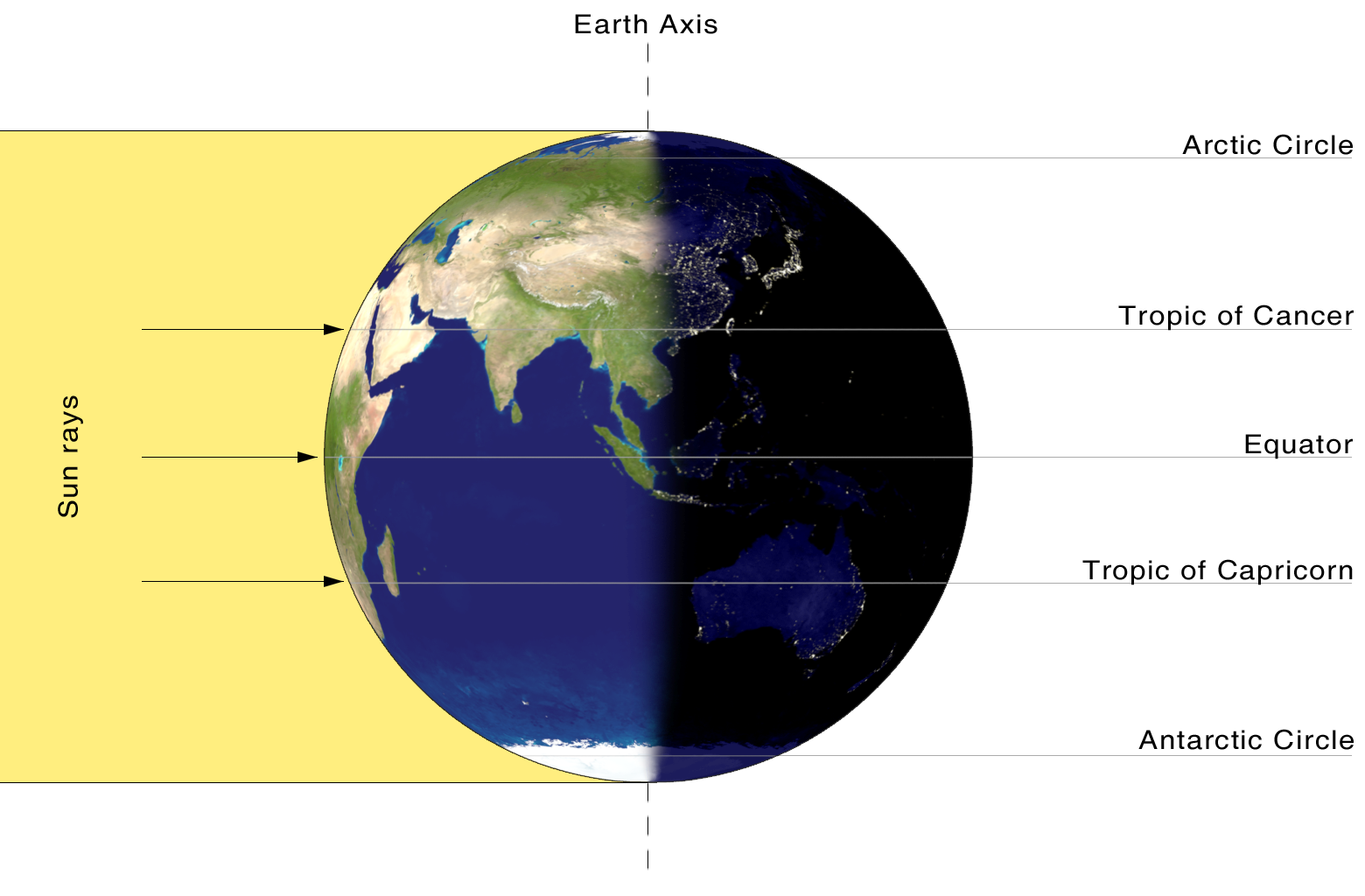
Wiki-image by Blueshade of the lighting during the equinox is used according to Creative Commons Attribution ShareAlike 2.0 license.
 Today we heard they misunderstood that God’s messiah came to serve all without distinction. John spoke on behalf of the disciples, whom Jesus sent to do his work of healing and evangelizing: “Teacher, we saw someone driving out demons in your name, and we tried to prevent him because he does not follow us.” We easily, too, make the distinction between us and them. It’s part of our human condition and always has been. It challenged Moses, early in the history of God’s people. So, when a young man quickly told Moses, that two men he did not appoint were prophesying in the camp,” Joshua...who from his youth had been Moses’ aide, said, “Moses, my lord, stop them,” Moses’ response speaks to us and our vocation today: Would that all the people of the Lord were prophets!
 Morals, as James, Jesus, indeed our Catholic tradition with its social teaching remind us, shapes our choices to do some things and not others. Jesus clothes our choosing with his Spirit, who makes us prophets, people whose deeds and lives give voice to Jesus here and now. Morals, not manners, make our actions authentic, give our actions authority. Authority as Jesus understood and practiced it and reflecting on Jesus and his gospel, the church understands that authority functions as service and ministry to all in need of God’s mercy. As Gesu Parish knows better and better, placing God’s mercy to us in service of others, shapes us as more faithful, prophetic servants of our Messiah’s mission.
 What Mary did next tells me that hers was not instantaneous understanding. She journeyed/2/ to minister to her cousin Elizabeth, also pregnant and more than unexpectedly because she had been barren all her life! What went on in Mary’s heart and mind as she journeyed to her cousin? As with us when we’re alone with our thoughts, we weigh and sift, we accept or deny, we rejoice or rue our decisions. When she reached Elizabeth Mary extolled, “My soul proclaims the greatness of the Lord!” and she did not know all that would unfold!
 We can expect Pope Benedict to continue to include the care creation in his remarks. "Indeed, the pronouncements on the protection of the environment, on the safeguarding of creation, are more frequent and -- we can say -- almost continuous," commented Jesuit Father Federico Lombardi, director of the Holy See's press office.
48. Today the subject of development is also closely related to the duties arising from our relationship to the natural environment. The environment is God's gift to everyone, and in our use of it we have a responsibility towards the poor, towards future generations and towards humanity as a whole. When nature, including the human being, is viewed as the result of mere chance or evolutionary determinism, our sense of responsibility wanes. In nature, the believer recognizes the wonderful result of God's creative activity, which we may use responsibly to satisfy our legitimate needs, material or otherwise, while respecting the intrinsic balance of creation. If this vision is lost, we end up either considering nature an untouchable taboo or, on the contrary, abusing it. Neither attitude is consonant with the Christian vision of nature as the fruit of God's creation.Given this "Christian vision of nature," Pope Benedict's "pronouncements on the protection of the environment, on the safeguarding of creation," will continue with frequency. Christian theology and catechesis, of course, grows out of Christian worship of lavishly generous and constantly creating Triune God.[Hear and watch Fr. E. J. Tyler read both paragraphs 48 and 49.]
 In gospel language giving the word and the promptings of Jesus’ Spirit center-stage for a dedicated amount of time rather than me and my needs involves humility and service. “Whoever wishes to be first shall be the last of all and the servant of all.” These words of Jesus were his teaching on the mystery of the cross. We know that; yet I think we fear learning what that may mean for us. Our fear is not my idea but inspired by the gospel. Consider the scene.
HotlyAfter listing several current facts, He offered his "four foundations of such a theology: the Imago Dei, crossing the problem-person divide; the Verbum Dei, crossing the divine-human divide; the Missio Dei, crossing the human-human divide; and the Visio Dei, crossing the country-Kingdom divide."debated, much has been written about the social, political, economic and cultural dimensions of immigration, but surprisingly very little has been written from a theological perspective, even less from the vantage point of immigrants themselves.
Yet the theme of migration is at the heart of the Judeo-Christian scriptures.
 The word rebuke, in Peter...began to rebuke Jesus, is the same word that described Jesus confronting the wind and sea, and moreover, the unclean spirits. After calling his first disciples to follow him, Jesus taught in a synagogue, where he healed a man with an unclean spirit: Jesus rebuked him, saying, “Quiet! Come out of him!” What followed next is even more vivid: when the unclean spirit had torn him, and cried with a loud voice, he came out of the man./2/
 Today the Catholic church bids farewell to one of hers. I offer a few words to console and strengthen you in your grief; to help you appreciate God’s astounding compassion by noticing Jesus’ victorious dying and rising were present in Anna Mae./1/
 Christian love is not an emotion, it’s an action with many aspects as St. Paul reminded us. Perhaps now is the time to remember that Christian love bears all things; believes all things; hopes all things; endures all things.
 St. Paul worked with his hands during his evangelizing ministry./2/ As he wrote on of his churches:
You know well that these very hands have served my needs and my companions. In every way I have shown you that by hard work...we must help the weak, and keep in mind the words of the Lord Jesus who himself said, “It is more blessed to give than to receive.”Manual labor and the "work of God," one of the names for liturgy, are not opposed and they do not exclude the other. Yet St. Paul said long before me that what any of us may work is to use time and created things well, that is, our work gives glory to the Worker of All, the Creator of the universe. The church has always asked us to consider if we use time and created things well, even if no paycheck accompanies our stewardship.
It is a significant event, even of ecumenical importance "that has as its theme this year 'air,' an indispensable element for life. ...His last sentence repeated his last sentence from his earlier Wednesday general audience.Greek Orthodox Patriarch Bartholomew I has been in the forefront of safeguarding the environment. People around the world are taking notice. The Worldwatch Institute, with its Vision for a Sustainable World, is spreading the word.
I call everyone to a greater commitment to the safeguarding of creation, gift of God.
 In other words, an individual appreciation of the natural realm together with a desire to ensure others can marvel at and enjoy the natural realm--"to protect it, to obtain benefits and cultivate it"--seek to fulfill each Christian's vocation. The Church, the pope reaffirmed, seeks to help all people profit from the gift of nature.
 Our notion of law may blind us to the difference of God’s law. The practical aspects of God’s law sought to draw and keep people close to God and to have that effect on others. Torah, God’s law, affected human hearts: For what great nation is there that has gods so close to it as the Lord, our God, is to us whenever we call upon him? That being so close is heart language, relational language, and relationship with God comes before, establishes, underpins, validates—use your word—all practical aspects of living God’s covenant.
Joan was fascinated with light as it revealed the mystery of God. When she died her Jesuit brother recalled that in his homily, mentioning Joan’s fascination with the image in our creed, “Light from light.”
Jesus referred to his cousin, John the Baptizer, the forerunner of Jesus, saying, He was a burning and shining lamp, and you were willing to rejoice for a while in his light.
Light points the way; it allows us to see and to read. Light affects us positively, which is why some of us are sad to see the hours of daylight gradually diminish as summer slips away.
Light also can blind, it can hurt our eyes, not to mention age our skin if we get overexposed to some of its wavelengths. Think of rousing and beginning to wake in a darkened room. Someone flips a switch and floods the room with light. What is our reaction? We cover our eyes, we squint open our eyes a little at a time as our eyes adjust to the light of day.
That image helps me appreciate the weak-willed Herod: When he heard [John] speak he was very much perplexed, yet he liked to listen to him. Herod’s spirit squinted, yet he liked the light of this burning, shining lamp. I wonder how many times after he put John in his prison that Herod went to hear him. Yes, he was afraid to kill John because the people admired him, but more than fear moved Herod’s heart. Such a movement, hard to name, might well be being taught by God.
I once wrote off Herod as a worthless villain. Yet even Herod was sensitive to John and his message and to Jesus and John’s message which Jesus continued: transform your lives!
Our Orthodox brothers and sisters fast today to recall the strict life John led. We might choose to fast from what keeps us from drawing nearer to the Light from light and living as the shining lamps Jesus said our vocations are--light for the sake of our world.
_________________________________________________________
Wiki-image .
Why is there a need for a new translation?The evolution and development of liturgical books has a long history. The key dates above are a slender sliver of that history within the Latin rite of the Roman Catholic Church. The unique quality of expression called "Roman" is economical use of language. Its economy is concise, noble and not given to abstract expression.
The Missale Romanum (Roman Missal), the ritual text for the celebration of the Mass, was promulgated by Pope Paul VI in 1970 as the definitive text of the reformed liturgy of the Second Vatican Council. That Latin text, the editio typica (typical edition), was translated into various languages for use around the world; the English edition was published in the United States in 1973. The Holy See issued a revised text, the editio typica altera, in 1975. Pope John Paul II promulgated the third edition (editio typica tertia) of the Missale Romanum during the Jubilee Year in 2000. Among other things, the third edition contains prayers for the celebration of recently canonized saints, additional prefaces for the Eucharistic Prayers, additional Masses and Prayers for Various Needs and Intentions, and some updated and revised rubrics (instructions) for the celebration of the Mass. ... (emphasis added)
Fast Facts About
Catholic Health Care
624 Catholic Hospitals
499 Catholic Long-Term Care Nursing Facilities
164 Home Health Agencies
41 Hospice Organizations
More facts
Source: Catholic Health Association
God speaks to us in many ways, including through the Sunday Scripture readings. The Sunday Connection provides useful background and activities to better understand the upcoming Sunday's Scripture readings, helping you to connect the Scripture to daily life in a meaningful way.Try it from here:

 What if we knew by personal experience the culture of the world of St. Paul, one in which the accepted order was women were less than men, not just paid less than them? (In those days women and children were property. Women played no legal role; no one would call them to give official testimony!) What if we all were eager to hear what this Saul-become-Paul, this Jew-become-Christian looked and sounded like, even what he had to say?
“Love our wives? What!” Or,And if we had been hanging around listening to Paul already while he was in town, then his words that diversity unites us in Christ Jesus would touch us deeply. The diversity of male and female helps each man and each woman know Jesus better as each one responds in love. A Canadian woman of our time observed, “Yet too many women still haven’t experienced this love, and too many men have missed the challenge.”
“This is new”; or,
“Hey, that makes them equal to us!”
 What if we took up that challenge more often? In our day and culture, we all move in different circles, interacting with people we know as well as people we don’t know. The many and varied people help us men and women—young and old, healthy and ailing, strong and defenseless—to discover the particular, personal ways God has created each of us to be in the world today. I affirm each one’s goodness and recall that God has great desires for you to reshape our world. I also ask you: what if you took your experiences today--all of them--and turned them over in your heart, not declaring, “See what I’ve done!” but take them out one by one in leisurely prayer, and ask, “How did I meet my Messiah Jesus today in my work; at home; at school; in the store; at the gym; on the street?”
Bishops Present Coming Missal ChangesWeb Site Aims to Familiarize Catholics With New Text
WASHINGTON, D.C., AUG. 21, 2009 (Zenit.org).- The U.S. bishops' conference launched a Web site that aims to educate Catholics about the changes in the Mass that are coming with the new Roman missal translation.
A press release from the conference announced today that this site includes background on the liturgical texts, sample wording from the newly translated missal, and answers to frequently asked questions.
The conference's Committee on Divine Worship expressed the hope that this will be a central resource for those responsible for implementing the text. ...
More to follow next week.


