Saturday, October 11, 2008

Not All Has Stopped During Financial Crisis

Catholic Charities informed through its weekly emailing list of important actions taken by Congress and the President.

ww logo

Special Edition

October 10, 2008
Volume 3 Number 29

Inside this issue:

  • Congress Approves Financial System Rescue Package
  • President Signs Child Welfare Bill
  • Congress Reauthorizes Runaway and Homeless Youth Act
  • House Approves McKinney Vento Legislation
  • Legislative Accomplishments of the 110th Congress

President Signs Financial System Rescue Package

On October 3, the President signed into law (P.L. 110-343) a rescue package (H.R 1424) for the nation's ailing financial and banking sectors. The legislation authorizes the Treasury Department to buy $700 billion in troubled assets. It also raises the FDIC deposit insurance limit for bank accounts from $100,000 to $250,000.

The financial rescue package includes a number of provisions originally included in senate-passed tax-extender bill (H.R. 6049) including:

  • Mental health parity legislation that would require insurers to cover mental health benefits equal to traditional medical benefits;
  • A reduction in the income eligibility threshold for the Child Tax Credit from $12,050 to $8,500
  • Tax relief to victims of natural disasters; and
  • Tax breaks for renewable energy.

The changes raised the total price of H.R. 1424 to almost $850 billion from $700 billion. However, these provisions were already being considered by Congress and were included because of limited time on the legislative calendar.

Catholic Charities USA sent a letter to the Senate Banking Committee and the House Financial Services Committee on September 24. For more background on the issue, please read a letter from the United States Conference of Catholic Bishops to the Congressional leadership on the nation's financial crisis.

For more information, please contact Kellyann McClain, Policy Analyst, kmcclain@catholiccharitiesusa.org.

President Signs Child Welfare Bill

On October 7, the President signed into law (P.L. 110-351) the "Fostering Connections to Success and Increasing Adoptions Act" (H.R.6893). The bipartisan legislation was widely supported by both the House and Senate. It provides a number of important improvements to the child welfare system including:

  • Supporting children aging out of foster care by providing an extension of federal foster care payment beyond age 18;
  • Extending federal foster care funds to tribal governments;
  • Increasing financial incentives for families who adopt children and providing additional support for adoption of children with special needs;
  • Providing grants to improve access to services for relative caregivers; and
  • Allowing access to federal training funds for private child welfare providers.

Catholic Charities USA applauds the leadership in the Senate and House for their hard work in crafting these important changes to the nation's child welfare system.

For more information, please contact Desmond Brown, Senior Director of Government Affairs, at dbrown@catholiccharitiesusa.org.

Congress Reauthorizes Runaway and Homeless Youth Act

On October 8, President Bush signed into law (P.L. 110-378) the "Runaway and Homeless Youth Act of 2008" (S. 2982). The measure reauthorizes the 1974 Runaway and Homeless Youth Act that was set to expire on September 30. The legislation reauthorizes programs that support state and local efforts to help homeless youth through street outreach, transitional care, and crisis intervention.

Several changes were made to S. 2982 to get Senator Tom Coburn (R-OK) to remove a legislative hold on the bill including: removing funding for a public awareness campaign, limiting extensions for how long participants could stay in transitional housing programs, and reducing the fiscal year 2009 funding level by $15 million. After those changes were made, the bill easily passed both the House and Senate.

For more information, please contact Joseph Devine, Policy Analyst, jdevine@catholiccharitiesusa.org.

House Approves McKinney Vento Legislation

On October 3, the U.S. House of Representatives approved legislation to reauthorize the "McKinney Vento Homeless Assistance Act" (H.R.7221) by a vote of 355-61. The measure authorizes $2.2 billion for FY 2009 to support programs that serve homeless individuals and families. This is a significant increase above FY 2008 funding of $1.6 billion. The measure also made a number of changes to the McKinney Vento program including:

  • An expansion in the definition of the homeless;
  • Additional flexibility for communities to address identified need;
  • Additional flexibility to provide supportive services; and
  • An expansion in protection for victims of domestic violence.

The changes to the definition of homeless in the final bill are not as broad as an earlier version of the legislation. While the earlier bill, the "Homeless Emergency Assistance and Rapid Transition to Housing (HEARTH) Act of 2008" (H.R. 840), outlined broader definition for the homeless, the changes in the final bill represent an attempt to compromise with a similar measure in the Senate. The Senate did not pass its version of the bill (S.1518) due to procedural maneuvers.

For more information, please contact Desmond Brown, Senior Director of Government Affairs, at dbrown@catholiccharitiesusa.org.

Legislative Accomplishments of the 110th Congress


At the start of the 110th Congress, Catholic Charities USA outlined a comprehensive legislative agenda as part of our Campaign to Reduce Poverty in America. While a number of these legislative proposals did not become law, it is important to note that we are making progress in some important areas. Both Congress and the Administration took important steps to target relief and strengthen programs that assist some of the most vulnerable among us. Some of the changes passed by Congress and signed into law include:

  • Legislation that increases the minimum wage to $7.25 over two years, signed into law by President Bush on May 25, 2007;
  • "The Second Chance Act" of 2007 (H.R. 1593) which addresses barriers to housing, employment, education, and health care that ex-offenders face when exiting the prison system;
  • The 2007 Farm Bill which provides $10 billion over ten years for the Nutrition Title: $7.8 billion for the Food Stamp Program, $1.26 billion for The Emergency Food Assistance program, and $1 billion for the Fresh Fruits and Vegetable program;
  • A supplemental spending bill (H.R. 2642) that expands veteran education benefits, extends unemployment insurance, places a moratorium on six harmful Medicaid regulations, provides disaster relief for the Midwest, and provides permanent supportive housing vouchers for the Gulf Coast region;
  • The "Medicare Improvements for Patients and Providers Act of 2008" (H.R. 6331) that blocks a 10.6 percent cut to Medicare payments;
  • The "Housing and Economic Recovery Act of 2008" (H.R. 3221) that includes an Administration-backed plan to help troubled mortgage financiers Fannie Mae and Freddie Mac, an expansion of the Federal Housing Administration (FHA) home loan program to help homeowners avoid foreclosure, the creation of a National Affordable Housing Trust Fund to address the lack of housing options for extremely low-income families, and four billion in Community Development Block Grants for communities to rehabilitate foreclosed properties;
  • The "SSI Extension for Elderly and Disable Refugees Act" (H.R. 2608) which provides a two-year extension of eligibility for the elderly and disabled refugees who have lost or will lose their SSI benefits due to the seven-year time limit set by the mid-1990's changes in the welfare law;
  • The "ADA Amendments Act of 2008" (S. 3406), a proposal that clarifies the "Americans with Disabilities Act of 1990" (ADA) to broaden the number of physical ailments covered under the ADA;
  • "Michelle's Law" (H.R. 2851), legislation that allows full-time college students over the age of 18 to maintain their parents' health insurance plans for up to one year if they take a certified medical leave of absence from school;
  • A continuing resolution that includes $5.1 billion in funding for the Low Income Home Energy Assistance Program (LIHEAP), doubling the FY2008 level, as well as $22.9 billion in disaster relief, and $200 million for Emergency Food and Shelter Fund, a $49 million increase over FY 2008; and
  • The "QI Program Supplemental Funding Act of 2008" (S. 3560) that authorizes $45 million in additional funds to assists certain low-income seniors in paying Medicare premiums.

Catholic Charities USA will continue to advocate in the 111th Congress for legislation that provides quality health care, affordable housing, adequate nutrition, and economic security to the more than 37 million people living in poverty in this country.

For more information, please contact Kellyann McClain, Policy Analyst, kmcclain@catholiccharitiesusa.org.

There will be no Washington Weekly until Congress resumes.


***
Washington Weekly is a publication of the Social Policy Department of Catholic Charities USA and is published regularly when Congress is in session.
Catholic Charities USA
Sixty-Six Canal Center Plaza, Suite 600, Alexandria, VA 22314
socialpolicy@catholiccharitiesusa.org
For information about advocacy, please contact Lucreda Cobbs at (703) 236-6243 or lcobbs@catholiccharitiesusa.org

Friday, October 10, 2008

Pope's Reflection at the Synod

Pope Benedict opened the Synod on the Word of God with a reflection about words and power.
Humanly speaking, the word, my human word, is almost nothing in reality, but a breath. As soon as it is pronounced, it disappears. It seems like nothing. But already the human word has incredible force. It is words that create history, it is words that form thoughts, the thoughts that create the word. It is the word that forms history, reality.

Even more, the Word of God is the foundation of everything, it is the true reality.
It is worth pondering in its entirety.

Tuesday, October 07, 2008

Which Month Is Mary's Month?

May answers the title-question. October is the month which contains the Memorial, Our Lady of the Rosary (07 October). The rosary and Mary are so closely related in popular piety, which explains why some mistakenly call October Mary's month.

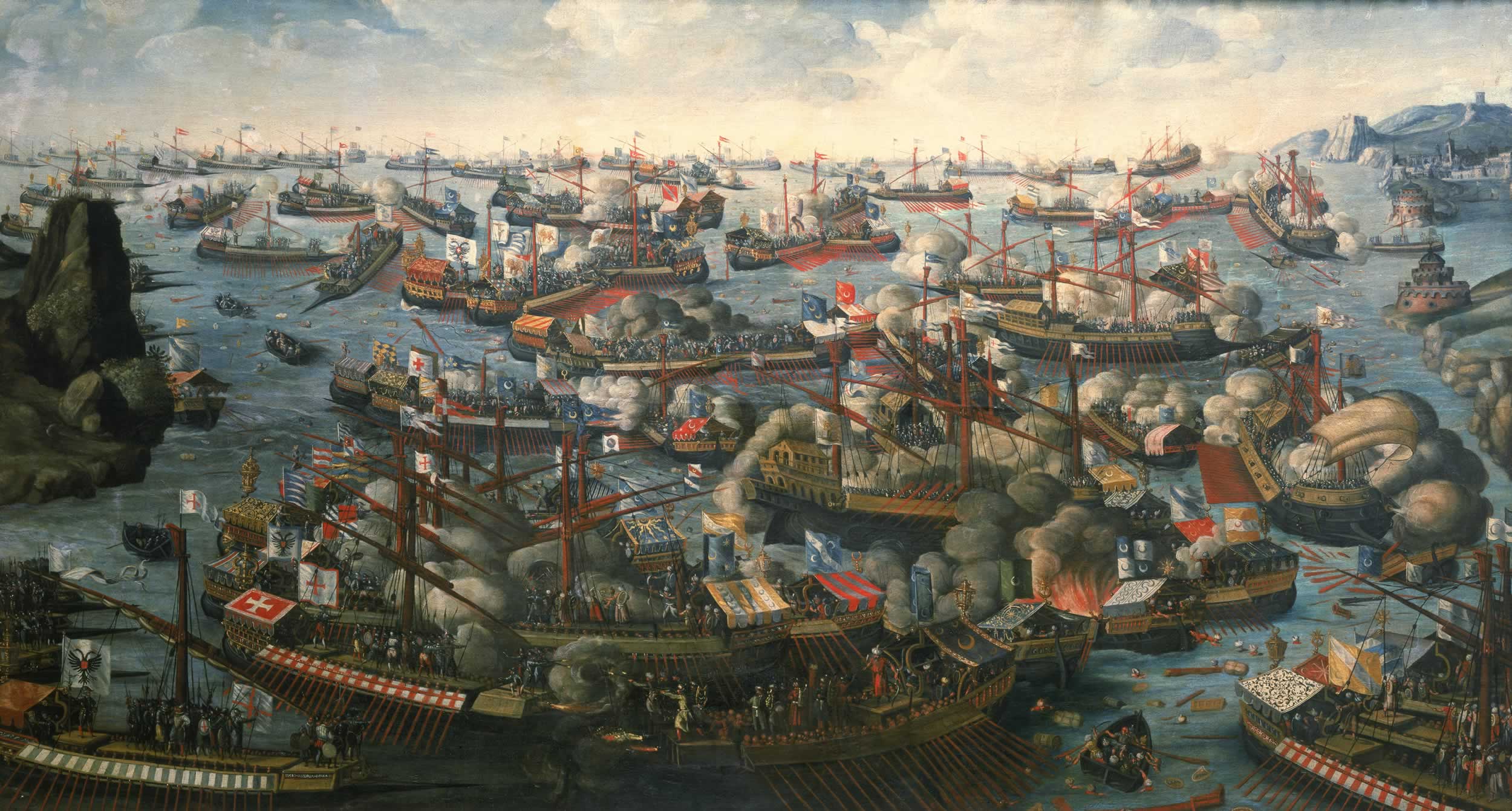
Pope St. Pius V in the year 1571 instituted the memorial to commemorate the miraculous victory of the Christian forces in the Battle of Lepanto on October 7, 1571. The pope emphasized the power of Mary's intercession as greater than the arms of war.

Entrusting self, work and evangelizing efforts to Mary's protection has become characteristic of the Church. In 2005 on the eve of an earlier Synod of Bishops, Pope Benedict did "entrust the work of the Synod to Mary." Before doing so he recalled the efforts his predecessor to revive praying the rosary:
This ancient prayer is having a providential revival, thanks also to the example and teaching of the beloved Pope John Paul II. I invite you to reread his Apostolic Letter Rosarium Virginis Mariae and to put into practice its directions on the personal, family and community levels.

We entrust the work of the Synod to Mary: may she lead the entire Church to an ever clearer knowledge of the proper mission of service to the Redeemer truly present in the Sacrament of the Eucharist. [Angelus, 2 October 2005]

The rosary is a prayer of protection in which we meditate on the mysteries of our Lord Jesus, turning them over in our hearts after the example of his Blessed Mother, who knew her son's incarnation, passion, resurrection and ascension in the most intimate ways.
________________________________________________

Wiki-image of a scene of the Battle of Lepanto is in the public domain.

Sunday, October 05, 2008

Sunday word, 05 Oct 2008

27th Sunday of the Year A (05 Oct 2008)
Is 5. 1-7; Ps 80; Phil 4. 6-9; Mt 21. 33-43
Homily of Fr. Paul Panaretos, S.J.
Tending or Possessing?

My high-school friend’s parents became wine-makers much to their surprise. It was no surprise that Mr. Paluzzi read about home-wine making; purchased supplies; set to work and successfully served delectable wine. Mrs. Paluzzi was not interested in the workings of making wine, but as far as enjoying a glass with dinner or at night with her husband or while reading a book, she was all for it!

When my parents picked up my friend and me from an outing and returned Daryll to his home, we visited. “Get ready for my Dad,” said Daryll, “he only talks about wine lately.” Mr. Paluzzi didn’t disappoint. His enlightening tour included a delicious selection of his efforts.

I learned dandelion wine was delicious; strawberry wine tasted too sweet; elderberries would be worth growing; and cantaloupe wine was superb. Mr. Paluzzi was thrilled, and Daryll lovingly endured it all yet again. Then: “It’s your turn, Mom.”

Mrs. Paluzzi took her cue. “You know why everyone loves the cantaloupe wine?” she asked us with an eye toward her smiling husband. “Angelo didn’t make it. I did.”

“You did!” exclaimed my father. “I thought you didn’t want any part of making wine.” “Well, she was that way,” Angelo answered. “When I kept getting all the accolades from our guests, she wanted in on the action. I told her no way. She makes her own wine now. Sometimes her wine outshines mine. More cantaloupe wine, by the way?” he grinned.

I haven’t sipped Paluzzi wine in years nor will I again. My classmate died of cancer a short while after graduation. His dad died a little later, and his mom had grown ill before I left the area. Yet, their story is fine vintage: being close to the process of making, what Mrs. Paluzzi had taken for granted, changed her outlook and vitalized her spirit. She gave her-self to the discipline of turning fruits into wine.

Mr & Mrs Paluzzi said they made their wines to see who made the better. Motivation in part. I think that wine as gift to refresh life and companionship began to exert its pull. In her way, Mrs. Paluzzi, like her husband in his, gave herself to the value of that gift.

We are less inclined to be astonished by the process of fruit fermenting into wine than our Jewish ancestors in faith and the first Christians who gave us Jesus’ good news. We may be nonplussed by Isaiah’s song of the vineyard and deaf to its echo in Jesus’ parable of the tenants. Something astonishing resides in Israel’s cherished self-identification as God’s vineyard, namely God’s perception of the enormous value of the house of Israel. So great a value that they saw each other as friends: Let me now sing of my friend, my friend’s song concerning his vineyard--our Creator-Friend’s song about us! God befriends us.

In the stresses and strains, the hopes and joys of life the relationship of God with us remains constant. God’s relationship is constant even when we produce sour grapes. Even then we, the new Israel, like the first people of the promise, are God’s cherished plant.

Jesus’ parable of the tenants is a window on our inconstant and fickle nature with God and humans. By his parable Jesus reminds us God is like the owner, who lovingly prepared his vineyard. God, too, is long-suffering, desiring only respect, hoping the limited and selfish tenants would respect my son.

Just as astonishing as the relationship God desires with us as we are is that the parable’s vineyard remained; the tenants came and went. Are we, tenants, fickle at best or greedy at worst, who come and go? Do we covet ownership? Or do we seek to be people who produce...fruit by tending our corners of the vineyard given us in trust?

In your daily 15 minutes with Jesus this week, ask the Trinity to allow you to see with their vision. Ask Mary and your patron saint to present you to Jesus. Speak to Jesus about the ways you exercise stewardship over people and things God has entrusted to you. Desire to be more attentive but not possessive; to be more confident in God’s providence and aware of freedom, yours and others. Close by saying slowing the Lord’s Prayer, which is our act of entrusting ourselves to God: in praise, in need and in our desire to grow more like Jesus, God’s son.
____________________________________________
Wiki-images of an airlock by Joshk and of a vineyard in autumn by HuttyMcPhoo are used according the Creative Commons Attribution ShareAlike 2.5 license.

Saturday, October 04, 2008

Synod on the Bible Begins Monday

Pope Paul VI gave the world's bishops a voice in the governance of the universal church through the medium of the synod. [Synod come from two Greek words meaning journeying together. The discussion and debate by bishops, one hopes, will contribute to the progress of allowing the Tradition to speak to new circmstances.]

On Monday the 22d synod convenes. It's name is “The Word of God in the Life and Mission of the Church.”

Mr. John L. Allen Jr. offered a preview in his weekly online column published yesterday. Synods are considered by some to be wasteful of time and money, "expensive talk shop with no actual authority." Mr. Allen correctly added that
it’s nonetheless a unique sounding board. For roughly the first week and a half, each participant will have a few minutes to deliver a message to the pope himself, and to the wider world, about the state of the church.

The synod is thus a unique gauge for taking the temperature, so to speak, of the global church.

The subject this time around is the Bible, with discussion likely to oscillate between lofty matters of theology and exegesis and more practical concerns about how to foster greater Biblical literacy and a deeper passion for scripture at the grass roots. Here we’ll take a brief look at each.

Mr. Allen considers in turn the "lofty matters" and the "practical and pastoral concerns."

Will this synod make a turn that will be one sided, that is, church, or will it acknowledge the power of the Word in a deeply divided world?

____________________________________________

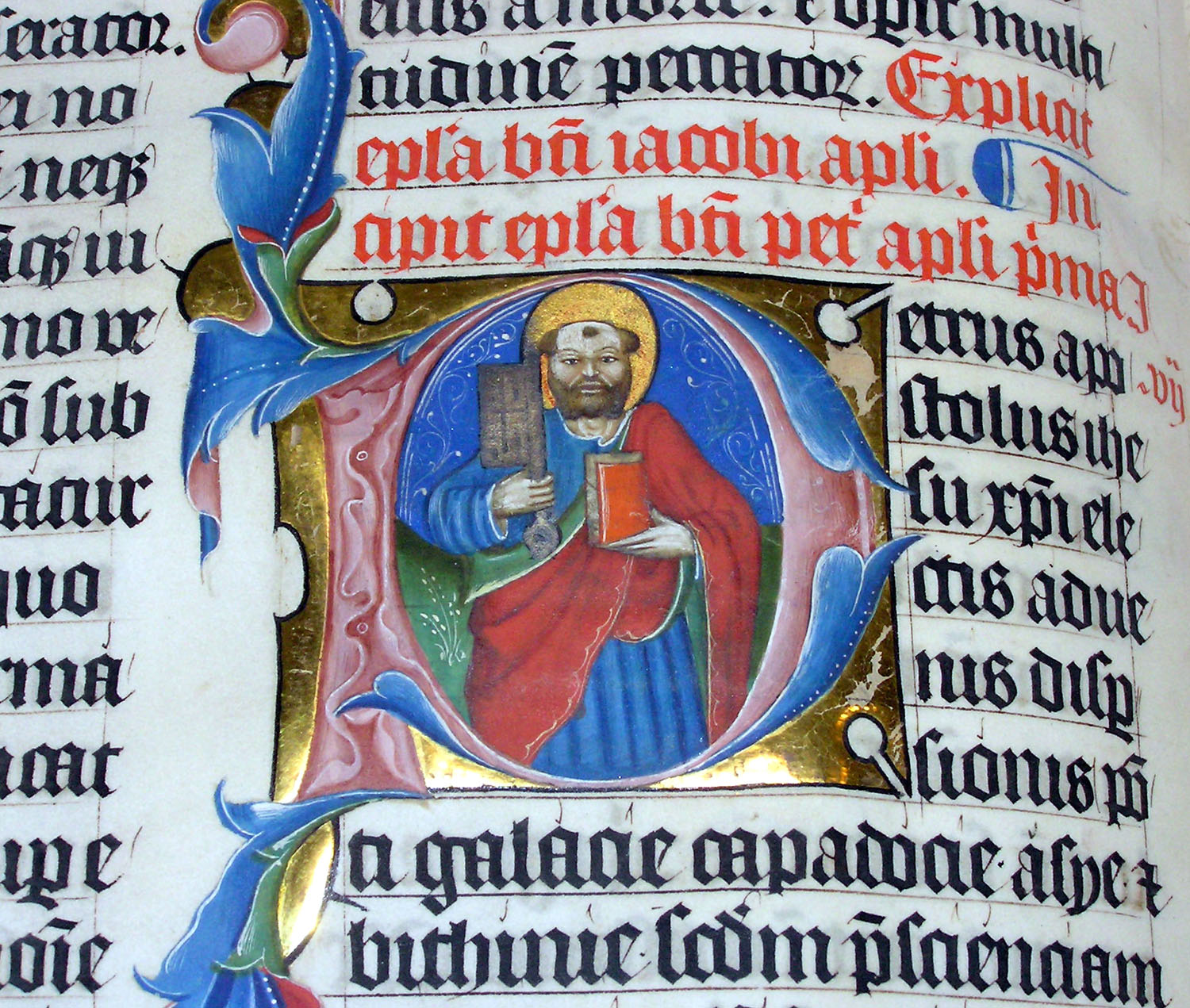
Wiki-image of an illuminated letter P is in the public domain.

Wednesday, October 01, 2008

Wednesday word, 01 Oct 2008

Teresa of the Child Jesus (01Oct2008) Jb.9. 1-12,14-16; Ps 88; Lk 9. 57-62
Homily of Rev. Paul D. Panaretos, S.J.
One Way of Operating

In Sri Lanka today is a solemnity, which I learned as a tertian. The youthful Sri Lankan church recalls its missionary roots. St. Teresa, who never left her Carmelite convent, was named patroness of all men and women missionaries by Pope Pius XI.

Growing up I easily understood why St. Francis
Xavier had been proclaimed in turn patron of mission lands east of the Cape of Good Hope--all missioners bound for Asia had to sail past the tip of the African continent--and later of the Propagation of the Faith. How did a Carmelite, who lived a cloistered life, join him?

Their fundamental principles of operating echoed each other. Francis’
spiritual principle had been: To “love those people to whom we are sent and to make ourselves loved by them.” [Thérèse’s] ...motto of her monastic life was: “To love Jesus and to make him loved.”/1/
Missionaries and even Pope John Paul II/2/ have reminded each Catholic that we are missionaries, too. Jesus invites us to follow him because Jesus loves us. Jesus sends his followers with the mission to continue his work. The first disciples did that by making Jesus known to others.

People attract others to Jesus by their love for Jesus. Your love and my love for Jesus infects others. Our love opens the hearts of others to the love Jesus has for them.

Our roles in the church as well as life differ. Our Catholic way of operating unites us: “To love Jesus and to make him loved.”
__________
1. http://www.ocd.pcn.net/mission/News16en.htm#_ftn5
2.
Redemptoris Missio, 2.

Updated JRS-USA Website

JRS/USA witnesses to the reality that God is present in human history, even in the most tragic experiences of persons driven from their homes by conflict, natural disaster, economic injustice, or violation of other human rights.
[Source: About Us link at home page]


St. Ignatius would use the Internet. Perhaps the most prolific letter writer of his day, St. Ignatius communicated, guided, begged and directed both Jesuits and their friends and benefactors with his written communications. The Jesuit Refugee Service-USA website affords us images of people with whom God is present in dire circumstances.

The updated website not only informs about displaced peoples around the globe. It also allows visitors to it to pray with refugees and to take action on their behalf.
____________________________________________
Wiki-image .

Tuesday, September 30, 2008

Ignatian Wikipedia


Here's a portal visited by people from about 100 countries with over 4,000 articles about things Ignatian. It uses Wikipedia software with freely licensed content to aid all constituencies of Jesuit institutions to understand better and to further their Catholic, Jesuit identity.
___________________________________________
Wiki-image of St. Ignatius by Dr. John Workman Jr. is used according to the GFDL 1.2.

Sunday, September 28, 2008

Sunday word, 28 Sep 2008

26th Sunday of the Year A (28 Sep 2008)
Ez 18. 25-28; Ps 25; Phil 2. 1-11; Mt 21. 28-32
Homily of Fr. Paul Panaretos, S.J.
Choosing Divine Life


The prophet Ezekiel preached a revolutionary message that marked an evolutionary change in a belief, which the people Israel had long held. God through Prophet Ezekiel challenged it: the word of the LORD came to me: Son of man, what is the meaning of this proverb that you recite in the land of Israel: “Fathers have eaten green grapes, thus their children's teeth are on edge?”/1/ People used this proverb to claim that they were being punished for their ancestors’ sins rather than for their own. God challenged that, and the prophet preached a message of personal responsibility, and he received resistance to his message: If my parents were godly, then I deserve their blessings even if I live in ungodly ways. If bad things befall good people, they get what they deserve because of their ancestors’ sins.

We can understand the selection we heard from the Book of Ezekiel as our first reading when we know that. Without knowing that, we can only wonder why people cried, “The Lord's way is not fair!”

The personal responsibility of our Jewish-Christian heritage has nothing to do with our national rugged individualism. Rugged individualism is a “belief that all individuals, or nearly all individuals, can succeed on their own and that government-help for people should be minimal.”/2/ In our Jewish-Christian heritage each of us is responsible to sanctify the world, that is, to impart by our actions traces of God’s presence. We don’t succeed on our own when we do that. We cooperate with God’s grace, we ally ourselves with God’s life, which God lavishes on us regardless of our circumstances.

Allying ourselves with the divine life pulsing within us is our choice. We can choose not to ally ourselves with divine life, not to cooperate with God’s grace. No one here hasn’t refused to cooperate with God’s grace at one time or another. All of us have made new choices to ally ourselves with God’s life and begin again.

Just as we are free not to cooperate with God’s grace, we are free to change our minds and ally ourselves with God’s life God always extends.

Jesus’ parable of the man [who] had two sons illustrates that. Entering the parable, the parent stands for God, and we are God’s children, who sometimes are one with God’s desires for us; sometimes are not; and at other times choose to reconcile ourselves with God and God’s desires.

Jesus’ parable also pointed to the destiny of Jesus and Israel, namely Jesus’ rejection by leaders and the transfer of God’s kingdom to others. The parable is transparent: the hearts of the chief priests and the elders of the people were hardened; and the tax collectors and the prostitutes--scripture-labels for all who reject God’s life and seek to live strictly on their terms--were truly repentant.

Some of us are here to remember and celebrate God’s life has redirected and completes ours. Some of us are here to reconcile yet again with our God and seek the same attitude that is also in Christ Jesus. Some of us are to let Jesus nourish and increase our resolve to follow him more closely. Some of us are here because strength in numbers exists in common worship: communal worship informs personal praying. All of us are here to rediscover how Jesus is inviting us to be his agents of the kingdom, making it more accessible to others.

Each sabbath we convene to remember Jesus has risen, rises in us and transforms us. Our transformation includes an always new and revolutionary attitude: welcoming God’s life to influence, redirect and guide our living moment by moment.

In your daily 15 minutes with Jesus this week, place yourselves in the company of the Trinity,
who create you in each moment and impart their life to you. Ask Mary and your patron saint to present you to Jesus. Speak to him and implore Jesus to refashion you to be like the parable’s son, who changed his mind. Praise Jesus for his attitude and desire the same attitude that is also his. Close your time with Jesus and slowly say the Lord’s Prayer, which Jesus gave us to help us to have his attitude daily and to live by his way.
__________
1. Ezekiel 18.2
2. Entry in Dictionary of Cultural Literacy, 3d Edition, 2002.
____________________________________________
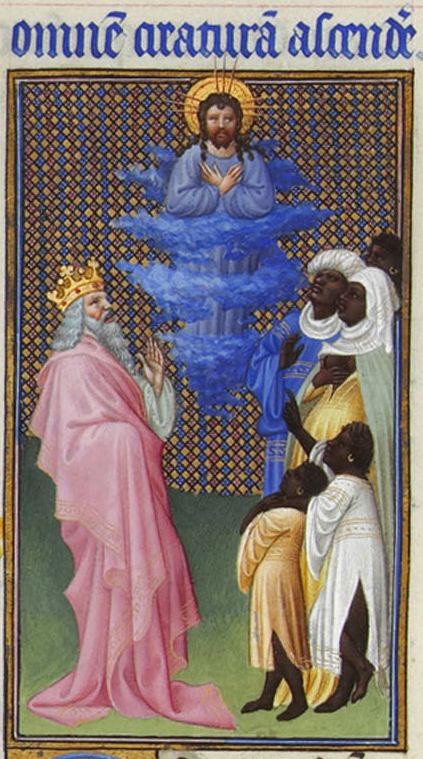
Wiki-image of David imagining Jesus is in the public domain. Wiki-logo by Augustodj is used according to the Creative Commons Attirbution ShareAlike 3.0 Unported license.

Thursday, September 25, 2008

Secularism Has Healthy Form

The word, secularism, has the connotation in common usage, which suggests having no religious or spiritual basis. During his visit to France, though, Pope Benedict encouraged the French President that more than that connotation exists, saying, “I am firmly convinced that a new reflection on the true meaning and importance of laïcité is now necessary." [One can detect the root for the word laity in the French word which we render as secularism.]
“In fact, it is fundamental, on the one hand, to insist upon the distinction between the political realm and that of religion in order to preserve both the religious freedom of citizens and the responsibility of the state toward them,” the pope said during the encounter with Sarkozy and other officials of the French government.

“On the other hand, [it is important] to become more aware of the irreplaceable role of religion for the formation of consciences and the contribution which it can bring to – among other things – the creation of a basic ethical consensus within society,” the pope said.
Mr. John L. Allen Jr., in his weekly online essay examined the implications of these remarks.

In addition, his essay concludes with links to several moments of the trip in reverse chronology.
____________________________________________
Wiki-image of French President Nicolas Sarkozy by Aleph is used according to the Creative Commons Attribution ShareAlike 2.5 license.

Monday, September 22, 2008

Monday word, 22 Sep 2008

25th Monday of the Year (22 Sep 2008) Prv.3. 27-34; Ps 15; Lk 8. 16-18
Homily of Rev. Paul D. Panaretos, S.J.

Light Years

The Book of Proverbs alerts us to its purpose: to hand wisdom, ranging over a wide area of both human and divine activity, to the young prince: Hear, my son, your father's instruction, and reject not your mother's teaching. It closes with a king’s memory: The advice which his mother gave him./1/

St. James reminded us that we live according to our Messiah-king’s royal law./2/ The wisdom Jesus reveals also empowers us by his Spirit to make our lives hand wisdom on to one another.

Jesus' image of light, the light of a lamp to illuminate the way we follow him, is personal. We are no less than light for one another and for our world. Our lives make Jesus visible or they don’t. Making Jesus visible does not always happen instantly, like turning on a switch. Often it’s gradual.

Think of stars. Their light travels astronomical distances, and when it reaches us we see their past existence in our present vision. To measure such vast distances we use a time-related word, year, because miles and kilometers are no longer practical measures.

Light-year may not intuitively make much sense when we think of distance. In a similar way, we may not think how we individuals act affects our world let alone another person. Our national heritage of vast freedom may blind us to the effect we can have on a person; and the proportions of the world stage may decrease our confidence in affecting it.

Yet Jesus asks us to take him at his word. Our Living Light, Jesus, has transformed us. How we live him and his light allows others to recognize him, though it may take years. Our Christian living also sheds new light on Jesus and who he is for us each day.

__________
1. Proverbs 1.8 and 31.1.
2. James 2.8.
____________________________________________
Wiki-image of Star trails by Chad Miller is used according to the Creative Commons Attribution ShareAlike 2.0 license.

Sunday, September 21, 2008

Sunday word, 21 Sep 2008

25th Sunday of the Year A (21 Sep 2008)
Is 55. 6-9; Ps 145; Phil 1. 20c-24,27a; Mt 20. 1-16a
Homily of Fr. Paul Panaretos, S.J.
More Generous and Attentive

A shorthand way to summarize the scriptures before Jesus is this. They tell parallel stories: of God’s loving fidelity to people by means of God’s covenant; and people’s not-always-faithful response to God.

When things go well and when our lives are not interrupted by crises, people have an easier time of attending to God and God’s desires. However, when our lives are lacerated by pain or upended by unexpected happenings, attending to God and God’s desires is not as easy.

We can appreciate Isaiah’s words, Let the scoundrel forsake his way, and the wicked his thoughts, if we at least sympathize with those whom the prophet addressed. God’s people had been exiled and lived captive in a foreign land with alien deities. Their exile had grown long. Some may have grown accustomed to life in Babylon; some may have ignored Prophet Isaiah’s message. Others may have forsaken the covenant with the God of Abraham. In their grief still others may have found God’s desire of renewal after exile too difficult to believe: [God’s] thoughts are not [human] thoughts, to use Isaiah’s language.

In one way or other, God calling people through Isaiah’s language, suggests that some, if not many, exiles may have found other patrons for their lives and abandoned the Lord who had commanded Moses, “Speak to the whole Israelite community and tell them: Be holy, for I, the Lord your God, am holy.”/1/ To live in God’s image is to walk each moment with a sense of God as Giver and Patron of our lives.

The image of God by which we live and operate is crucial. The memory of Jesus of the early church knew this was a fact. It remembered that it in first-century Palestine-- and we in our 21st-century sophistication--could reject or accept Jesus’ description of God as a lavishly generous Mediterranean Patron. The early church--and we--could welcome a lavishly generous, patient and seeking-for-us God, or go through life straightjacketing ourselves with an image of God as an accounts-reckoning employer, trying with all our might to limit God to a contract of our making.

Isaiah’s words focus us on generosity of the landowner of Jesus’ parable. The landowner is God, and we are those in his parable’s marketplace, standing there. Not every contemporary Catholic is standing idle, yet my American upbringing moves me first to take stock of my efforts. God’s efforts are far more important than my most accomplished ones. If not our efforts, then what? God’s desire to intervene and come to our aid.

God does not change our circumstances as the prosperity preachers of today would have us believe. Rather, God accompanies us, even when we distance ourselves from God. When we do distance ourselves from God, God seeks us and desires to stand with us as we are. That is the image of God Jesus continues to offer us, the divine image Jesus invites us to allow to be our operative image of our God, who renews us and offers us what the world cannot give us.

In your 15 minutes with Jesus this week, pause and rest in the creative love with which the Trinity embraces you. Ask those who stood in the marketplace, waiting for someone to show interest in them, to present you to Jesus. Speak to Jesus as you are--whether confident or timid;
advantaged or bereft; closed-handed or open-handed--and name your greatest need. Praise Jesus for choosing to give his life for you and for modeling greater confidence in his Father and ours. Bring your prayer to a close by saying slowly the Lord’s Prayer, which each time we say it, helps us conduct []ourselves in a way worthy of the gospel of our crucified and risen Messiah, and transforms us into his more generous and attentive contemporary disciples.
_______________
1. Leviticus 19.2
____________________________________________
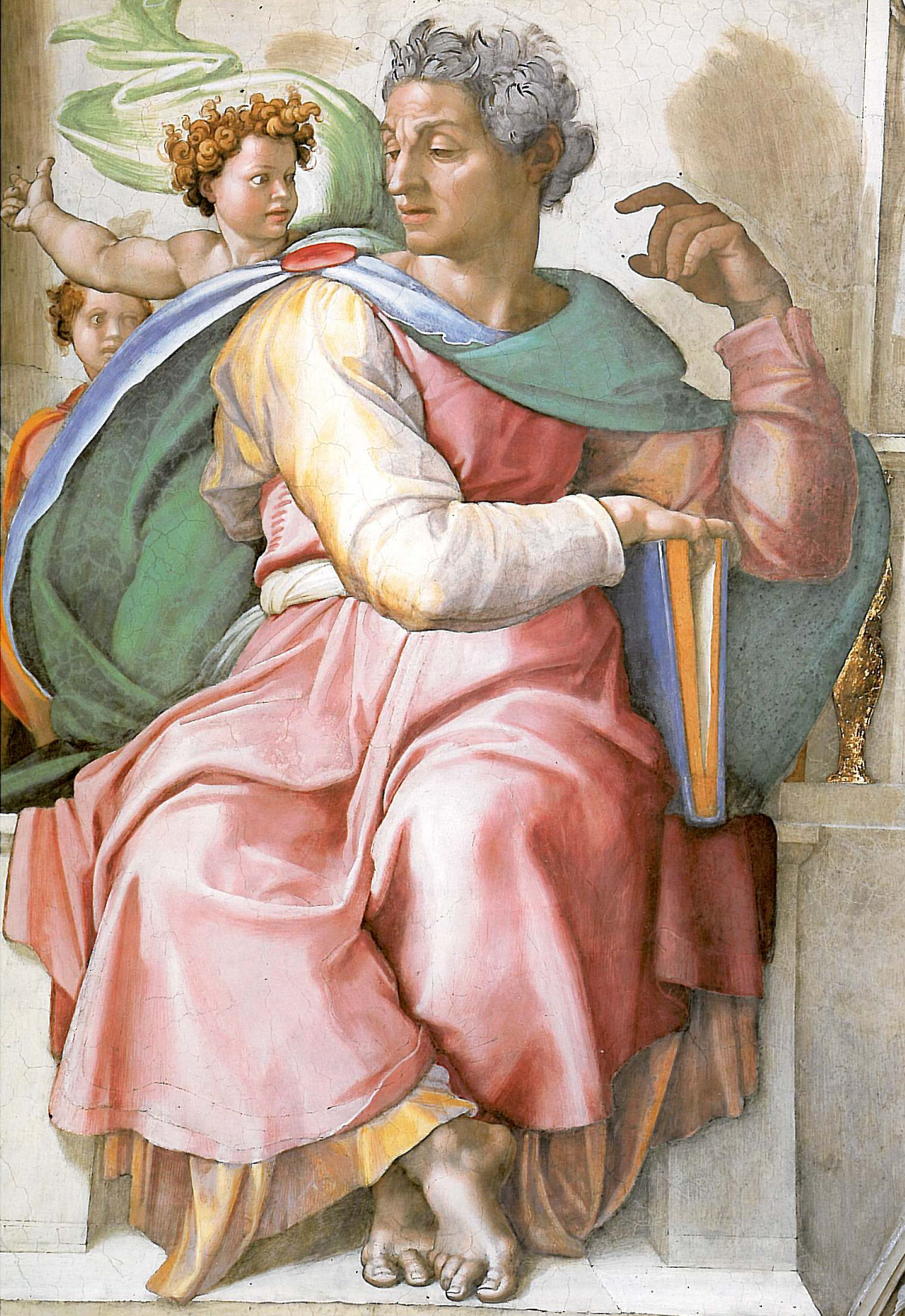
Wiki-image of Michelangelo's Isaiah is in the public domain.

Saturday, September 20, 2008

Saturday word, 20 Sep 2008

Sts. Andrew Kim Taegon, Paul Chong Hasang and Companions,Martyrs
(20Sep2008) 1Co.15. 35-37, 42-49; Ps 56; Lk 8. 4-15
Homily of Rev. Paul D. Panaretos, S.J.
That Pregnant Question

Fine nuances in Luke’s parable of the sower exist. Often they make more precise some of the figures expressed by his source. One difference, however, may be more akin to us sophisticated moderns. In Matthew and Mark, the disciples asked Jesus why he spoke in parables at all./1/ In Luke’s gospel the disciples asked what his parable might mean.

If we pause, we can recall we heard that question before in the gospel. It fell from the lips of Mary, when the angel greeted her to announce she would be the mother of God. Mary was utterly confused by the angel’s speech and wondered what the greeting might mean./2/ I call her wondering a pregnant question.

We often risk reducing the Mystery to something we might understand--two lovers never completely understand each other; on some levels they remain mysteries to each other. When we imitate the disciples and ask Jesus what he means--before asking a commentary or a footnote in our bibles--when we ask Jesus what he means for us, we begin to learn and live the mystery of his risen life in us.

Pope John Paul II canonized in 1984 the 100 Korean martyrs we remember today. Of them 92 were lay people. Speaking at that time the pope recalled the mystery that is growth from persecution:
The Korean Church is unique because it was founded entirely by lay people. This fledgling Church, so young and yet so strong in faith, withstood wave after wave of fierce persecution. Thus, in less than a century, it could boast of 10,000 martyrs. The death of these martyrs became the leaven of the Church and led to today’s splendid flowering of the Church in Korea. Even today their undying spirit sustains the Christians in the Church of silence in the north of this tragically divided land./3/
They lived the meaning of the mystery as St. Paul proclaimed in our hearing again: Just as we have borne the image of the earthly one, we shall also bear the image of the heavenly one. How our bodies and our lives bear the heavenly image now, even slightly, is the most pressing and pregnant question we Catholics can ask. We are wise to ask Jesus to join his Spirit to ours as we ponder how we may live the Mystery more effectively.

__________
1. Matthew 13.10 and Mark 4.10.
2. Luke 1.29.
3. Paragraph 3 of his homily in Seoul, 06 May 1984, original emphasis.
____________________________________________
Wiki-image of the Korean martyrs is in the public domain.

Friday, September 19, 2008

Both/And of Catholicism

"In Rome this week, a blow was struck for the sane middle on the most vexed issue in the modern relationship between faith and science: the theory of evolution."

Mr. John L. Allen Jr. included more in his weekly online essay. The lead story is about the announcement of
a major academic conference in March 2009, organized by the Jesuit-run Gregorian University in Rome and the University of Notre Dame in the United States, and co-sponsored by the Pontifical Council for Culture. The title is "Biological Evolution: Facts and Theories," to be held at the Gregorian in conjunction with the 150th anniversary of the Origin of Species.
Learn who was responsible for this by reading Mr. Allen's online essay.

Sunday, September 14, 2008

Sunday word, 14 Sep 2008

Triumph of the Cross (14Sep2008)
Nm 21. 4b-9; Ps 78; Phil 2. 6-11; Jn 3. 13-17

Homily of Fr. Paul Panaretos, S.J.
Most Beautiful Cross

Our responsorial psalm was a call for us to remember: Do not forget the works of the Lord! The Lord’s work we recall today is the cross, our badge, our insignia. When you hear me echo the psalm and call,
“Do not forget!” you shout, “We remember!” Very good!

After Jerusalem was destroyed two generations after Jesus rose from the dead, the place of his death and resurrection faded into the shadowy mists of time and memory. In the 4th Century Emperor Constantine and his mother had a deep desire to say in more than words,
“Do not forget!”

St. Helena went to Jerusalem in search of the places where Jesus lived and walked. In Jerusalem a temple to Aphrodite was atop the place of Jesus’ tomb. She said to herself,
“Do not forget!” // and had it torn down. Her son built the Basilica of the Holy Sepulcher over the tomb. As they dug, workers found three crosses. A memory has it: the one on which Jesus died was identified when its touch healed a dying woman. “Do not forget!” // ...Jesus heals us by transforming us.

People immediately venerated that cross. An eyewitness of a Good Friday celebration in that basilica recalled its wood was taken out of its silver chest and placed on a table together with the inscription Pilate ordered placed above Jesus. Then “all the people pass by one by one, all bowing themselves, they touch the Cross and the title, first with their foreheads and then with their eyes; then they kiss the Cross and pass through.”/1/ We do that, too, so that we,
“Do not forget!”

Our images and replicas of the holy cross are things of beauty. They lead our processions, and they shield our hearts. Yet the tree on which Jesus died for us had no beauty,
“Do not forget!” To the first Christians and to many others crosses appeared as things of horror. “Do not forget!” But appearance did not stop the first Christians from echoing Jesus, who spoke of the cross as his glory. “Do not forget!”

We make crosses beautiful and noble today because their sign no longer threatens us--although others in the world do not tolerate it, as we sadly know.
“Do not forget!” Yet nothing is more beautiful than the cross we trace on our own bodies. When we trace the cross on ourselves, we allow God in Jesus by their Spirit to transform us. “Do not forget!” We are crucified with our Messiah, as St. Paul reminded us./2/ “Do not forget!” We still live our human lives, but it is a life of faith in the Son of God, who loved us and gave himself for us./3/ “Do not forget!”

Our life of faith is no theory; it is not abstract.
“Do not forget!” Our life of faith affects the world! “Do not forget!” Our life of faith is for the sake of the world! “Do not forget!” Our life of faith changes the world beginning with how we choose to live in it! “Do not forget!”

In your daily 15 minutes with Jesus this week, pause in the light of the Trinity, who decided from their eternity that the Second Person would become one of us in order to enlighten us and save us. Ask St. Paul, St. Helena and your patron saint to welcome you into the bright shadow of Jesus’ cross so you may remember with your heart and feel more deeply Jesus’ dying and rising for you.
“Do not forget!” Praise Jesus for giving his life so that we might have eternal life. Close by saying slowly the Lord’s Prayer, which Jesus gave us so would remember his works and do them by the power of his Spirit. “Do not forget!”


_____________
1. The Pilgrimage of Etheria. M.L. McClure and C. L. Feltoe, ed. and trans. London: SPCK, 1919, pp 74-75.
2. Galatians 2.19.
3. Galatians 2.20--I rendered it plural for this homily.
____________________________________________
Wiki-image of the Triumph of the Cross is in the public domain.

Wednesday, September 10, 2008

Wednesday word, 10 Sep 2008

23d Wednesday (10Sep2008) 1Co.7. 25-31; Ps 45; Lk 6. 20-26
Homily of Rev. Paul D. Panaretos, S.J.
As Though Not

Luke moved his gospel along by means of speeches and soliloquies. Zachary, Mary, Simeon Jesus and others gave voice to God’s way of upsetting the measures of the world to reveal God’s consolation of Israel made new, which Mary sang in her Magnificat early in the gospel./1/

Jesus revealed that consolation of God in his words of blessing on the poor and hungry of the world. Jesus called hearers of his word not to a spiritualistic attitude but to be attentive to God’s new way.

Human life hurls ambiguities at us with an exhausting consistency. Their consistency distracts us from God’s consolation. How are we to respond? St. Paul reminded the Corinthians that no simple solutions existed, which they preferred--as do many of us. No better treatment exists than Paul’s response to sexual relations./2/

The Corinthians had distorted the gospel Paul preached to them. They interpreted it by slogans:
All of us have knowledge/3/; food for the stomach, the stomach for food/4/; and, it is better not to [have relations with] a woman./5/ Paul began with their slogans but disagreed with there simplistic meaning. Yes, God is doing a new thing in the world, but we are in the world and cannot flee from it.

To live by a slogan is to consider one thing as ultimate and to discount everything else. St. Paul’s words, the world in its present form is passing away, means that no transitory thing is ultimate, only God is ultimate.

From both words and example of Jesus as well as counsel from people filled with the Spirit of Jesus, like Paul, our Christian vocation is to use the world "as though not." Because the world in its present form is passing away, ours is not to abuse it--the New American translation renders his words not use it fully. We abuse the world when we treat it as ultimate. Christians do not treat it as ultimate; instead we remember by our actions that God is ultimate, God who is doing a new thing in us and for our sake.

__________
1. Luke 1.46-55. Simeon was...awaiting the consolation of Israel, and the holy Spirit was upon him (Luke 2.25).
2. The verses today close Chapter 7. Reading the entire chapter makes St. Paul’s response more accessible.
3. 1Corinthians 8.1.
4. 1Corinthians 6.13.
5. 1Corinthians 7.1.
______________________________________________________
Wiki-image by AJ Alfieri-Crispin
of the Apostle Paul is used according to Creative Commons Attribution and ShareAlike 2.0.

Sunday, September 07, 2008

Sunday word, 07 Sep 2008

23d Sunday of the Year A (07Sep2008)
Ezk 33. 7-9; Ps 95; Rm 13. 8-10; Mt 18. 15-20
Homily of Fr. Paul Panaretos, S.J.
Need and Fruit


When it is our turn to watch--for someone or something--if you are like me, you probably feel responsibility. It may be lighthearted as in a game such as Capture the Flag. It may be formal as in babysitting or loving as in taking care of younger brothers and sisters. It may be serious as in a roadway flagman letting traffic flow alternately on a one-way road along which workers are aloft on power-lines. However we are vigilant, responsibility describes us.

Prophet Ezekiel was aware that God had given him the responsibility, the mission, to watch for the house of Israel. Ezekiel was responsible to announce to them what would deepen their love and quicken their response to the God of the covenant. If the prophet announced and warned and others paid no attention, God would call them to account. If the prophet shirked his responsibility, God would hold the prophet accountable for the people’s failing.

This mission of the prophet gave believers in the God of Abraham new insight into personal responsibility. It helped them to appreciate their vocation as God’s people was prophetic, to attract and lead others to God.

Jesus sharpened this prophetic focus. He formed and sent his disciples to continue his work of announcing the reign of God, which continues dawning in our world. Jesus deepened and personalized this responsibility: Jesus established the norm of negotiations and reconciliations to be personal before they became communal or bureaucratic.
If [a member of the community] sins against you, go and discuss the fault between the two of you. If [the person] listens to you, you have won over your brother [or sister].
Jesus had earlier in his ministry said that reconciliation was a matter of the heart before it was bureaucratic.
Therefore, if you bring your gift to the altar, and there recall that your brother [or sister in faith] has anything against you, leave your gift there at the altar, go first and be reconciled with your brother [or sister in faith], and then come and offer your gift./1/
The purpose of pointing out a fault was and is to lead people more deeply into the heart of Jesus and of his community of faith, the church. That includes the one who is doing the pointing! If entering more deeply into the heart of Jesus is not the result, then it is something other than Christian reconciliation.

Jesus embraced this teaching to and for the church with another: where two or three are gathered together in my name, there am I in the midst of them. Together, his first and second teaching bookend his words about our mission of reconciliation. I call the first bookend the need for reconciliation; I call the second the fruit of reconciliation. The prophetic goal of both is to live more deeply in the heart of Jesus and as the heart of Jesus for the sake of our world. That is each Christian’s prophetic responsibility, one that is both crucial and a joy.

In your daily 15 minutes with Jesus this week, pause in the presence of the Trinity, aware of the Trinity creating you in reconciling love. Ask the disciples listening to Jesus to welcome you in their circle so that you may hear Jesus clearly. Praise Jesus for teaching you. Speak to Jesus in your own words about how you have been reconciled or about how you reconcile. Hold nothing back from Jesus as speak to him. Then, close by saying slowly the Lord’s Prayer. It keeps us vigilant and prophetic as it reminds us that God forgives us as we forgive others.

Link to the spiritual exercise for this homily.
____________
1. Matthew 5.23-24.
____________________________________________
Wiki-images of Ezekiel and of Christ, the Teacher, are in the public domain.

Saturday, September 06, 2008

About the Pope's Visit to France

Pope Benedict has a lot going for him among people in the U.S. However, he is one thing that the U.S. is not these days, pro-French. In the words of Mr. John L. Allen Jr. in his Friday online weekly column, All Things Catholic, "He's far too pro-French."

The pope has his sights on and beyond France:
Benedict XVI will encourage these signs of life, and not simply because France has a rich Catholic tradition. A revitalized French church could also be a key point of reference for Francophone
Catholicism around the world, especially in Africa. The Democratic Republic of the Congo, for example, is destined to be one of the Catholic powerhouses of the 21st century. By 2050, it will be the fifth largest Catholic country in the world, at 97 million Catholics, behind only Brazil, Mexico, the Philippines, and the United States. Other sizeable French-speaking Catholic populations are found in Burundi, Madagascar, Haiti, Rwanda, Vietnam and Cameroon, in addition to Belgium to Quebec.
Read Mr. Allen's column and learn what "signs of life" Pope Benedict "will encourage" on his visit to France later this month.
____________________________________________
Wiki-image of Our Lady's Chapel, Lourdes, is used according to the GFDL.

Wednesday, September 03, 2008

Vatican newspaper article challenges 'brain death' notion. . .

. . .but it did not create new church teaching

Serious thoughts deserve respectful interest. Serious as they may be, not all thoughts preempt or create new church teaching. A recent example is the article in L’Osservatore Romano about the moment of death as reviewed by Mr. John L. Allen Jr.
Vatican spokesperson Fr. Federico Lombardi was quick to say that while the L’Osservatore article was “interesting” and should be taken seriously, it does not create new church teaching.
This is a good way to read many serious thoughts about many things.

Tuesday, September 02, 2008

Violence Against Christians in India

Islamic radicalism takes center stage. Vigilance is necessary. However, it is not the only extremism. Hindu extremism continues to assert itself with dire consequences as recent events in India have demonstrated.

Mr. John L. Allen Jr. examined Hindu extremism in his column at the end of last week.