Showing posts with label Romans. Show all posts

Wednesday, October 30, 2019

Daily word, 30 Oct 19

30th Wednesday of the Year (30 Oct 2019)
Homily of Fr. Paul Panaretos, S.J., Full Spiritual Exercises
God’s Purpose
Now and again I imagine St. Ignatius of Loyola learning at the University of Paris. It was a flagship Catholic university with the best curriculum available. Ignatius knew that because he had studied in other universities with curricula that were not stellar. Paris allowed Ignatius to access his day’s finest resources.

As he accessed them and learned I imagine his days in Paris confirmed what the Trinity lovingly, patiently, gracefully had taught Ignatius before he entered university halls. The Trinity, Ignatius recounted, had given him “an elucidation so bright that all…things seemed new to him.”1 That enlightenment is a gift not the fruit of effort; and Ignatius welcomed us into a universe of gifts.

Sharing life with this generous God is our goal. Our triune God eternally desires it for us. It is St. Paul’s the good; even now God works with all things for it. Some scoff at that—and not only today; ancients did as well. Yet ancient, pious pagan philosophers defended this divine desire. St. Paul was not alone.2 I imagine Ignatius in Paris feeling confirmed by St. Paul’s words to Roman Christians he had yet to meet. Both Paul and Ignatius viewedthe big picture. Both experienced God working with them for good.

Paul had experienced Christ Jesus, the dead one raised to indestructible life, setting Paul apart for his unique life. Christians of Rome shared their experiences of Christ; Paul built on their shared experience: God works all things together toward the Good, the goal toward which each person and all creation moves. The Good in Ignatian language is “life with God forever”3—forever has begun with each present moment.

This long view does not include, as my teacher put it, “the incidental details of lost coins or school exams.”4 This long view cries, God is with us, for us no matter what! That is far from the distorted way some Christians read this: namely, God will make everything turn out right. We know and have experienced things do go awry, even terribly. Yet God is with and for us. What happens to us in our wounded world is not God’s purpose. God’s purpose unites us to God’s people, frees us to discover our true selves and gifts us with a share in God’s life forever.

How? someone asks. The primal one, Christ Jesus, purposefully set apart—what predestined means—purpose-fully set apart to heal creation, is the icon-image of healed humanity. The nearer we stay to Jesus, the more like him we allow ourselves to become, the more healed, freed we are, even when contrary to appearances. Keeping close to Jesus for our healing and wholeness in no way changes that his healing, wholeness are gift.5

About this Ss. Paul and Ignatius speak with one voice: God is on our side not because we earn God; sharing God’s life in part now, and eventually fully, is God’s gift. This divine gift is God’s mercy, God’s compassion; it is God lovingly desiring us. Nor is it reserved for a few because God lovingly creates without reserve. Or as Jesus expressed it: People will come from east and west, from north and south and will recline at [God’s banquet] table. —Imagine that!


___________
  1. Fr. Joseph N. Tylenda, S.J. A Pilgrims Journey (Kindle Locations 952-953). Ignatius Press. Kindle Edition.
  2. Epictetus, Of Providence. Boethius—bridge between ancient and medieval philosophies: “God, the Creator of all nature, directs and disposes all things for good” (Consolation of Philosophy, Book IV at paragraph 134.
  3. Spiritual Exercises, [23].
  4. Luke Timothy Johnson, Reading Romans: A Literary and Theological Commentary. Smyth & Helwys, 2o12, p. 141. Kindle Edition.
  5. Paul was emphatic in Romans 3.24, literally: are justified by [God's] grace as a gift....
___________
Wiki-images by Douglas James Butner Enlightening Sunset CC BY-SA 4.0; by Carole Raddato Mosaic floor portion CC BY-SA 2.0

Saturday, November 10, 2007

Saturday word, 10 Nov 2007

St. Leo the Great, Memorial (10 Nov 2007) Rm 16. 3-9,16,22-27; Ps 145; Lk 16. 9-15
Homily of Fr. Paul Panaretos, S.J.
Living Thanksgiving

Today ends the church’s weekday reading at mass St. Paul’s Letter to the Romans. Its continuous reading, with the exception of solmenities and feasts with their proper readings, allowed us to hear a healthy portion of St. Paul at his pastoral best. He summarized both his aware-ness of and his relationship with risen Jesus as his introduction to the members of the church at Rome, which he intended to visit after he completed his mission bearing some contribution for the poor among the holy ones in Jerusalem./1/ Other Gentiles churches with intimate relationships with St. Paul did this charity.

As he closed his letter, St. Paul commended Phoebe, a woman who was more than kind to him. Phoebe was a benefactor of his ministry./2/ Then, he named more in his large cast of coworkers in his Gospel and the proclamation of Jesus Christ. St. Paul was no lone-ranger! He confirms my own conviction I expressed earlier in this series: faith is deeply personal but it is never private.

St. Paul had encountered risen Jesus as Messiah and Lord. His personal awakening and commissioning by risen Jesus set him on this ministry to the Gentiles to make risen Jesus known as Messiah and Lord. He was for St. Paul the revelation of the mystery kept secret for long ages but now manifested through the prophetic writings. We heard these weeks how St. Paul combed the oracles of God in the Hebrew scriptures he knew intimately. St. Paul had begun his letter this way./3/ Even as he began he was clear that his vocation was responding to the command of the eternal God to make known to all nations to bring about the obedience of faith./4/

Faith was no concept to give assent for St. Paul. This attentiveness--obedience--was to Jesus’ own faith, the faith of Jesus./5/ To live faithfully means to replicate in our lives the pattern of Jesus: his attitude, his mind, his response to God, whom he called his dear Father. All creation reveals God to us. Indeed, creation is divine gift to help us make our return to God with thanksgiving, which is our way of living. St. Paul lived the faith, which Jesus first brought to life among us.


____________
/1/ Chapter 15. 28, 26, respectively.
/2/ Chapter 16. 1-2, which the Lectionary oddly omits.
/3/ Chapter 1.2.
/4/ See Chapter 1. 5-9.
/5/ Chapter 3. Also see my note /2/ on 03November earlier in this series.

The weekday Lectionary, presenting the Letter to the Romans at daily masses every other October and November, challenged me to clarify St. Paul and to inspire us contemporary Catholics to live Jesus’ faith more eloquently. I have labeled each homily with “Romans” to make them easy to revisit.
_________________________________________________________
Wiki-image of St. Leo meeting Attila is in the public domain.

Thursday, November 08, 2007

Thursday word, 08 Nov 2007

31st Thursday of the Year (08 Nov 2007) Rm 14. 7-12; Ps 27; Lk 15. 1-10
Homily of Fr. Paul Panaretos, S.J.
Giving Glory and Thanksgiving

For St. Paul Christian love is expressed in relation to our crucified and risen Messiah: As Christ is the goal of the law/torah,/1/ Christians replicating his living in their lives means Christian love is the fulfilling of the law/torah./2/ Our living is “for others,” even as our Messiah’s living, dying and rising was and is for us.

To help us make it more concrete, St. Paul offered an image of clothing oneself: put on the Lord Jesus Christ./3/ The implication of putting on our Messiah Jesus meant not assuming the arrogant, puffed-up ways which characterize idolatry and all sin. Their concrete results are quarreling division and jealousy./4/

The resurrection of Jesus gives us new birth to his absolutely new life. This conviction St. Paul had announced loudly and clearly in his letter. In him we have a new lease on living. In fact our Savior’s risen life affects the universe, or in St. Paul’s words, Jesus is Lord of both the dead and the living.

Because we put on the Lord Jesus Christ, we unite ourselves with him. We are the Lord’s in St. Paul’s brief, potent phrase.

We are in relationship with our Messiah because first he relates to us as we are. Our relationship with risen Jesus shapes our relationship with others. As Jesus was and is for us, we seek to be for others, so that whatever we do deepens our relationship with others and glorifies and gives thanks to God/5/ at each moment.

This part of St. Paul’s letter has universal application. It reminds us that we are related to one another because by grace we stand in relation to our crucified and risen Messiah. Our Christian vocation seeks to be in right relationship with our Messiah and with others.
____________
/1/ Chapter 10. 4.
/2/ Chapter 13. 10, in yesterday’s Lectionary selection.
/3/ Chapter 13.14.
/4/ Chapter 13.13 ends with these bad fruits of the works of darkness in 13.12.
/5/ Chapter 14.6.
_________________________________________________________
Wiki-image of St. Paul is in the public domain.

Wednesday, November 07, 2007

Wednesday word, 07 Nov 2007

31st Wednesday of the Year (07 Nov 2007) Rm 13. 8-10; Ps 112; Lk 14. 25-33
Homily of Fr. Paul Panaretos, S.J.
For Others

St. Paul shared with other moral teachers and religious leaders of his day a need to reassure his hearers that he was no renegade--among Jews and the Jewish- Christian movement mavericks were not uncommon. His mastery of torah, that is, all God’s oracles in the scriptures about the Messiah, which he combed and presented in his Letter to the Romans, showed he took God’s way of working seriously. Moreover, St. Paul aligned himself with Jesus and his teachings. St. Paul reminded his hearers that Jesus was in line with the commandments, and that the commandments sought to help people live in love.

St. Paul cited what Jesus himself cited in scripture, You shall love your neighbor as yourself./1/ St. Paul repeated/2/ his shorthand of the power of Christian love: love is the fulfilling of the law/torah. Earlier St. Paul had said that Christ is the goal of the law/torah./3/ Because we are one with our Messiah/4/, the more we have his attitude the closer to our goal we will be.

Christian love is more spacious than emotional love. Christian love is “for others.” It leads us beyond ourselves and calls us to respond freely as a daughter or son of God. Christians testify to the future of the world when God in Christ by their Spirit will deliver them from slavery to corruption and share in the glorious freedom of the children of God./5/.

The word corruption was opposed to genesis, origin or birth. God brought birth out of Jesus’ death, a birth to an absolutely new and imperishable life. Jesus freely gave his life. Christians seek to live his freedom, to replicate it in their lives. Love, which both enlarges our capacity for freedom and disposes us to live out of it, shapes our lives to be for others. “For others” is the superior norm by which Christians discern how to be in the world.

But I get ahead of St. Paul. Tomorrow we shall hear him say that and to accept others because God has accepted us together with God’s son.

____________
/1/ Leviticus 19. 18, which Jesus cited (Matthew 22. 39 and parallels).
/2/ Galatians 5. 14 was the first place.
/3/ Chapter 10. 4.
/4/ Chapter 12. 5, in yesterday’s Lectionary selection.
/5/ Chapter 8. 21.

______________________________________________
Wiki-image of torah scroll is in the public domain.

Tuesday, November 06, 2007

Tuesday word, 06 Nov 2007

31st Tuesday of the Year (06 Nov 2007) Rm 12. 5-16ab; Ps 131; Lk 14. 15-24
Homily of Fr. Paul Panaretos, S.J.
Personal and Communal

Throughout his Letter to the Romans, St. Paul functioned as a religious person not as a philosopher. He noted what God had done and discerned how God continued to act, indeed, create the world, through Jesus’ death and resurrection. God and God’s ways were central for St. Paul. A philosopher’s center of reference is self: my intelligence can grasp and critique all around me.

Noting God’s way and learning from it, esp. God’s justice, God’s mercy, God’s desire to save all,/1/ is not for dummies. It requires human intelligence which knows its limits: God ways surprise us. Welcoming God’s surprise, grace, respects God and ourselves. Indeed, religious service is possible by inner transformation/2/, which happens as we respond to Jesus’ invitation and align more with his attitude.

This life-project is at once personal and communal. As you’ve heard me encourage: faith is personal but never private.

St. Paul encouraged the church in Rome he intended to visit--and he encourages us hearing his letter--to exercise our gifts and discerning powers with and for the community, the Body of Christ. Just as one mind steers one human body, the mind and attitude of our Messiah, steers the community of whom we are individually parts of him and one another. Thus, serving one another with our gifts serves Jesus.

The list of practical encouragement which we heard--love sincerely, hold..what is good, be fervent, rejoice in hope, contribute, exercise hospitality, and bless--Paul crowned with do not be haughty but associate with the lowly. In his day that was a counter-cultural directive, and it probably is in our day. In his day such an attitude was disdained as not noble and free. Yet that was Jesus’ attitude and his way./3/ Jesus is the ultimately free person. St. Paul encourages us to adopt true, Christian, freedom. Our world is in great need for us to exercise not power but the most real freedom, Christian freedom.

____________
/1/ St. Paul devoted Chapter 9-11 to this. His conclusion, yesterday’s first reading, resumed God’s justice, mercy and desire to save all. This is God’s recreation of humans by Holy Spirit, who intercedes for us and prays in us and for us (Chapter 8. 26-28).
/2/ Chapter 12. 1-2, which the Lectionary oddly does not allow us to hear throughout the daily reading of Romans.
/3/ Philippians 2. 5-11 also sings of this attitude, which St. Paul expressed in compact form here.

______________________________________________
Wiki-image is in the public domain.

Saturday, November 03, 2007

Saturday word, 03 Nov 2007

30th Saturday of the Year (03 Nov 2007) Rm 11. 1-2,11-12,25-29; Ps 94; Lk 14. 1, 7-11
Homily of Fr. Paul Panaretos, S.J.
More Than Human Vision

At the beginning of his Letter to the Romans St. Paul announced that the good news is the power of salvation for all who have faith./1/ He was specific: the shape of faith is the faith of Jesus/2/, who called God his dear Father. Convinced, too, was St. Paul, that God shows no paritiality/3/ in saving faithful people.

St. Paul, trained in torah and the traditions of his people, was in a bind: has God rejected his people? He began to unfold the implications of both the universality of faith and the particular ways God works in human history, which in Paul’s moment meant for the Jew first then the Greek./4/

God has not rejected his people whom he foreknew, we heard him begin. How did St. Paul know that? He reread the promises to know more clearly how the messiah entered the world. The lectionary didn’t allow us hear some clues St. Paul found for the messiah and God’s fidelity.

To appreciate St. Paul’s objective, we need to hear that messiah was unique to Jews in the Mediterranean world of St. Paul. Loss and restoration and their hope in that pattern no one else shared. This hope plus his own personal encounter with risen Jesus led St. Paul to see with religious vision beyond individuals and beneath borders, namely, that Jews are Israel in part and when the full number of the Gentiles comes in...all Israel will be saved.

St. Paul continued to elaborate on the way God extended the gift of salvation in Jesus by their Spirit beginning through God’s beloved people--the Jews--extending salvation by means of faith to all. That has two implications for us now.

First, it means to be alert to God’s Holy Spirit praying in and for us and working for our good/5/, that is, our salvation. Second, it means asking Holy Spirit to grace our vision in order to see what human vision cannot. That is our vocation as faithful disciples of our Messiah.

____________
/1/ Chapter 1.16.
/2/ Chapter 3. Usually translated as
faith in Jesus. These translations here “fly in the face of grammatical and literary considerations [of the Greek language], and they entirely miss the direction of Paul’s argument” (Luke Timothy Johnson, Reading Romans: A Literary and Theological Commentary. NY: Crossroad, p. 59.) I have been following my teacher throughout this series.
/3/ Chapter 2.11.
/4/ Chapter 1.16.
/5/ Chapter 8. 26-28.

Wednesday, October 31, 2007

Wednesday word, 31 Oct 2007

St. Alphonsus Rodriguez, S.J. (30 Oct 2007) Rm 8. 26-30; Ps 13; Lk 13. 22-30
Homily of Fr. Paul Panaretos, S.J.
For Us and In Us

St. Paul named ways Holy Spirit, who dwells in [us],/1/ works. To summarize Chapter 8 and what Holy Spirit has accomplished:
•Holy Spirit raised Jesus from death, infusing new power to live for God in each disciple.
•Holy Spirit allows us to identify with risen Jesus, who suffered and died.
•Holy Spirit makes us heirs with our risen Lord so that we have equal standing in God’s heart.
•Holy Spirit enlarges our freedom to express in action God’s desire to save.
•Holy Spirit empowers us to endure afflictions with hope in divine glory, trusting in what we do not see.
We just heard one more Spirit-work: The Spirit comes to the aid of our weakness; for we do not know how to pray as we ought, but the Spirit himself intercedes with inexpressible groanings. If earlier we missed the intimacy among Jesus, his Father, their Spirit and us, St. Paul expressed that work of Holy Spirit is remarkably intimate and powerful! Holy Spirit is not only within us, Holy Spirit comes to the aid of our weakness and prays in us and for us.

The phrase inexpressible groanings causes me to marvel. I may think prayer is one-way, but Holy Spirit prays in and for us in ways which outstrip human communication or any way we may imagine.

The prayer of Holy Spirit in me and for me seeks my union with God and my share in divine life. The final sentence, those [God] predestined he also called; and those he called he also justified; and those he justified he also glorified, describes and defends God’s eternal purpose. No one can pin down God’s desire to bring all people and all things into the orbit of divine life. God is always desiring to bring all people and all things into God’s recreated, new, unending life. Holy Spirit is that personal power promised by Jesus and lavished by his Father to accomplish that within us at every moment.

____________
/1/ Chapter 8. 11
______________________________________________
Wiki-image of Holy Spirit window in St. Peter's Basilica is in the public domain.

Tuesday, October 30, 2007

Tuesday word, 30 Oct 2007

30th Tuesday (30 Oct 2007) Rm 8. 18-25; Ps 126; Lk 13. 18-21
Homily of Fr. Paul Panaretos, S.J.
“From All Sides”

The faith of Jesus/1/--note it is Jesus’ faith, his trusting, intimate relationship with God, whom he called his Abba/2/, unprecedented intimate address of the Holy One--the faith of Jesus St. Paul announced is the attitude open to God’s creative desire and the freedom to express God’s desire; to work God’s saving power, and to give his life so all humans might enjoy God’s life.

The faith of Jesus is Holy Spirit. Holy Spirit is the anointing of Jesus as Messiah. Holy Spirit adopts us as heirs, it unites us to Jesus as sharers in his suffering, his glory and divine life./3/ Intimacy is for us and not only for Jesus!

Think of baptism, the first time one is anointed with the oil named for Holy Spirit--chrism, from the Greek word for messiah. St. Gregory of Nyssa used physical closeness to point to divine intimacy:
anointing suggests...no distance exists between the Son and the Spirit...just as between the surface of the body and the anointing with oil...so the contact of the Son with the Spirit is immediate...Holy Spirit...com[es] from all sides to those who approach the Son in faith./4/
Contact with Holy Spirit allows risen Jesus to impart to us divine glory in this present time of sufferings and brokenness. We will experience it fully on that day when it will be revealed. Now we experience it in partial ways. Partial doesn’t mean glory isn’t real. Risen life of Jesus, with which his Spirit endows us, now registers as endurance and hope. Both these remember Abraham, so crucial for St. Paul.

Evidence contradicted reason: death--as infertility in Abraham’s case,/5/ or physical death in Jesus’ case/6/--couldn’t give life. Exercising our trust--enduring despite contrary evidence--produces hope, St. Paul said when he proclaimed Jesus’ life-giving death. Holy Spirit allows intimacy with the afflicted Jesus. Afflictions are new learning: enduring into hope./7/ Not only is glory born in us. Intimacy with Jesus and his pattern of living makes us midwives at the birth of glory in others. Both grace and our service encourage our hope.

____________
/1/ Chapter 3. 21-26, usually translated as faith in Jesus. These translations here “fly in the face of grammatical and literary considerations [of the Greek language], and they entirely miss the direction of Paul’s argument” (Luke Timothy Johnson, Reading Romans: A Literary and Theological Commentary. NY: Crossroad, p. 59.)

/2/ Immediately earlier in this Chapter 8 at verse 15.

/3/ See Catechism of the Catholic Church, #690.

/4/ On the Holy Spirit, 16; in Catechism, #690. In the Eastern Churches the whole body is chrismated, hence “Holy Spirit...com[es] from all sides.”

/5/ Chapter 4. 18-19.
/6/ Chapter 5. 1-10.
/7/ Again, Chapter 5. 1-5.
______________________________________________
Wiki-image of the Ambry of the Cathedral of the Assumption (Louisville, KY) contains Sacred Chrism, in addition to Oil of Catechumens and Oil of the Infirm. Image used according to the GNU Free Documentation license.

Monday, October 29, 2007

Monday word, 29 Oct 2007

30th Monday (29 Oct 2007) Rm 8. 12-17; Ps 68; Lk 13. 10-17
Homily of Fr. Paul Panaretos, S.J.
Standing With Jesus


After he the noted human condition is enslaved to sin, from which humans are unable to free themselves, St. Paul proclaimed God graciously freed humans from sin by the death and resurrection of Jesus. Risen Jesus, God’s son, endows others with divine life. How? By giving his Spirit to all who accept it. Holy Spirit is the operating principle of God’s liberating life, what we shorthandedly call grace. In Chapter 8 of his Letter to the Romans St. Paul described how grace works.

We begin to understand and appreciate his description when we remember that for St. Paul flesh and spirit are religious terms; they are not equivalent with our body parts or psychology. As a religious term, flesh is the attitude, which rejects God’s creative claim on us and God's desire to restore our original dignity. Sin is the child of this attitude, compulsive and not liberated. As a religious term, spirit is God’s life, which risen Jesus lavishes on humans. Spirit is power freeing us from fleshly fear. God canceled our debt to fleshly fear--our human condition--by making us heirs with God’s son.

Heirs inherit. Heirs have the place of the true, recognized children. "Blood may be thicker," but non-blood heirs have equal status. Holy Spirit gives us equal standing with Jesus in God’s heart and power to live our new life. St. Paul, we recall, wrote to real people, who were a real faith-community, to encourage them to live more powerfully Holy Spirit already given to them. Holy Spirit is Jesus’ own faith.

Faith, the relationship with God Jesus enjoyed, made Jesus free: free to express God’s desire; free to work God’s saving power, first with the children of Abraham--of which our gospel gave an example; free to give his life so all humans might enjoy God’s life. The way Jesus conversed with God showed his freedom: Abba! That Aramaic word is the familiar, intimate term by which Jewish children addressed their fathers. Daddy conveys its intimacy well. Intimacy embraces suffering. Holy Spirit allows us to identify with our crucified Messiah in this deepest way. About this work of Holy Spirit St. Paul will address us tomorrow.
______________________________________________
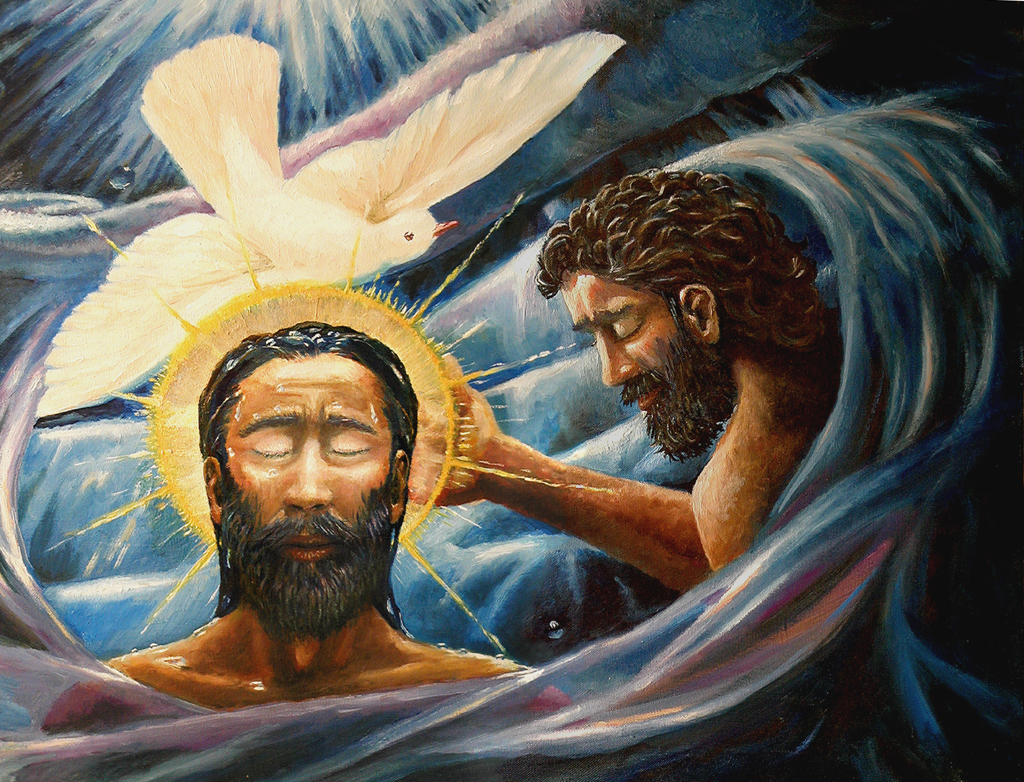
Davezelenka, the copyright holder of the Wiki-image of the Baptism of Christ, allows its use under the GNU Free Documentation license.

Friday, October 26, 2007

Saturday word, 27 Oct 2007

29th Saturday (27 Oct 2007) Rm 8. 1-11; Ps 24; Lk 13. 1-9
Homily of Fr. Paul Panaretos, S.J.
Power Who Gives Presence

When he spoke of the human condition, St. Paul noted we have no power to stand in right relationship with God--his word was peace, that is, shalom; St. Paul did not mean by peace the absence of war. God’s graciousness empowers us: by the grace of God and the gracious gift of the one man Jesus Christ does life overflow for the many./1/ How does grace work? Here in Chapter 8 of his Letter to the Romans St. Paul sang flowingly and compellingly that its operative principle is Holy Spirit. "Principle" is the way St. Paul used the word law in Chapter 8: the principle of the spirit of life in Christ Jesus.

Better than “principle” is energy or power, lest we think that Holy Spirit is an idea or other part of our mind. This working is intimate: you are in the spirit, if only the Spirit of God dwells in you; and, If the Spirit of the one who raised Jesus from the dead dwells in you, the one who raised Christ from the dead will give life to your mortal bodies also, through his Spirit that dwells in you./2/

This life is God’s living presence! Shalom, the covenant word, evoked in people being in right relationship with the living God present to them. The commandments prescribed what to do and not to do in order to stand/3/ in this relationship with God and with others. However, the commandments, indeed the whole of torah, God’s law, did not have the power to put us in right relationship with God. This God has done: by sending his own Son in the likeness of sinful flesh and for the sake of sin, he condemned sin in the flesh, so that the righteous decree of the law might be fulfilled in us, who live not ac-cording to the flesh but according to the spirit.

Flesh and spirit (like peace) are religious terms not body parts or our minds. As religious terms: flesh is opposed to being in relationship with God and allowing the Creator to lay claim to us; spirit is God’s gracious gift empowering us to be the individuals God created and grow more free to stand in relationship with God and others.


_________
/1/ Chapter 5. 15. Chapter 8 elaborates on his more tersely expressed convictions in Chapter 5.
/2/ Chapter 8. 9 & 11.
/3/ Chapter 5.1-2.

Wiki-image of statue representing Holy Spirit is used under the terms of the GNU Free Documentation license. .

Friday word, 26 Oct 2007

29th Friday (26 Oct 2007) Rm 7. 18-25a; Ps 119; Lk 12. 54-59
Homily of Fr. Paul Panaretos, S.J.
Legal Limitation


Important to remember is that St. Paul had an experience of the risen Jesus as Lord. Paul, the persecutor of the church, was not neurotic nor was he romantic or had struggles with sex or the commandments. He makes remarks in his letters that dash those misreadings. Rather, he was realistic and had an untroubled conscience, especially because he fulfilled the commandments--indeed, the whole law of God.

One tenet of the law of God stated that anyone who was hanged on a tree was a sinner/1/. Crucifixion was being hanged on the wood of a tree. So Jesus was a not only a failed messiah, he was a sinner, and people knew his infractions of the commandments in God’s law. St. Paul’s earlier persecution of those misguided followers of Jesus as messiah defended God’s law.

When he experienced Jesus as Messiah and Lord, St. Paul was in a dilemma. Either God’s law was absolute and Jesus was a sham, or God’s law did not fully channel God’s power, and God worked powerfully in Jesus.

The result of grappling with his experience taught St. Paul, who once took delight in the
law of God as something not only worthy to defend as ultimate but claimed to give life, that it was not ultimate because God raised Jesus from death to life so superabundant that it gives eternal life to others. Paul could only offer God thankful praise through Jesus Christ our Lord.

His first-person language about the inability to secure right relationship with God was St. Paul’s way of inviting us to consider if we try to secure relationship with God by fulfilling requirements or by trusting God’s loving grace. Slavishly ful-filling requirements so easily holds us captive. We loathe to trust faithully God’s graciousness, yet, it is power. Law, even God’s, only points.

We can appreciate St. Paul’s distinction between God’s law and God’s power in Jesus this way. A doctor diagnoses in me a vicious disease and give me a prescription. Which will help me? Neither! Only the medicine is the power to help me heal. God’s law prescribes, points out sin./2/ The resurrection-life of Jesus is power to overcome it, reason for true delight and to thank God in Jesus through their Spirit, whose role St. Paul will address until October ends.

_________
/1/ Deuteronomy 21. 23.
/2/ For this disease-diagnosis-prescription-medicine analogy, I am indebted to my teacher, Luke Timothy Johnson (his version is in Reading Romans, p. 111).
______________________________________________
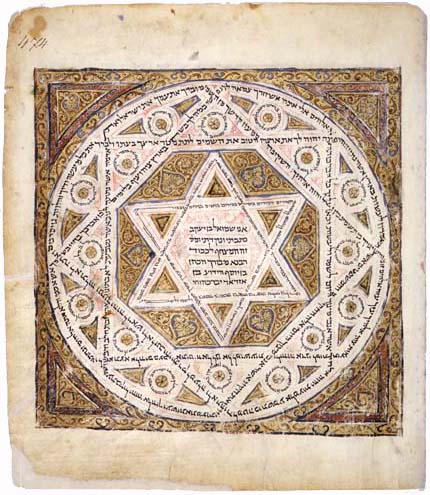
Wiki-image of manuscript page containing divine commands and blessings in the public domain.

Thursday, October 25, 2007

Thursday word, 25 Oct 2007

29th Thursday (25 Oct 2007) Rm 6. 19-23; Ps 1; Lk 12. 49-53
Homily of Fr. Paul Panaretos, S.J.
For the Sake of Our World

Thus far in his Letter to the Romans, St. Paul identified himself in his opening words as the slave of God./1/ Using an imaginary conversation partner to move forward his proclamation and earnestly advise the church at Rome, St. Paul emphasized: 1) sin is a real condition, which God, not humans, graciously overpowered by the death and resurrection of Jesus; 2) the faith of Jesus/2/ provides the pattern for those baptized into his new life; and 3) the grace of Jesus’ risen life transforms our freedom, empowering us to give our selves to life-giving, instead of death-dealing, allegiances.

St. Paul used language powerful in his day to describe allegiance--his word, obedience. It was his purpose: to bring about the obedience of faith, for the sake of [Jesus] name, among all the Gentiles/3/. It was slave-language, which doesn’t have the power for us as does allegiance. Powerful as it was--and if Paul were here and encouraged our allegiance--it did not correspond exactly to the mystery of God’s graciousness in Jesus for we heard him open today's selection, Brothers and sisters: I am speaking in human terms because of the weakness of your nature.

He only had human terms to communicate divine things, which empower and free us. He desired people to serve God because its effect, for sanctification. In that word we hear "sanctity" and "saint." They translate the Greek words St. Paul used, "holiness," "holy" and "holy one." Holy means set apart, different. Holiness defined God, who is set apart from all that is. Those who ally themselves with God are "in the world but not of it," to use a classic Catholic phrase, which we derive from Jesus’ prayer for us, his disciples./4/

Jews set themselves apart by not working one day a week--like the Creator--in a time when weekends did not exist. They made created things holy for their use by washings and blessings. They set aside corners of their fields and didn’t harvest them so that travelers and the poor could eat. They acted in their unusually different ways because of their allegiance to God. The practical effect of our allegiance to God is not difference for difference sake. We refuse to be of the world in order to allow the righteousness, which recreates us, to transform our world. You and I serve God for the sake of our world!
_________
/1/ Chapter 1. 1.
/2/ Esp. Chapter 3. 22. It is almost always translated faith in Jesus. Greek grammar and context prove St. Paul meant Jesus, not as object, but as subject: faith of Jesus. I follow my teacher, Luke Timothy Johnson, who I find most credible (his Reading Romans: A Literary and Theological Commentary [which I use to navigate my way through this letter]. New York: Crossroad Herder Book, 1997, pp. 58-61).
Even more, my prayer and my struggle to live my baptism, point both to the wisdom of the phrase, the faith of Jesus, and to its encouraging and transforming power. Without Luke Johnson’s observation my prayer and my struggle would be impoverished.
/3/ Chapters 1. 5 and 16. 26. St. Paul opened and closed his letter with his apostolic purpose.
/4/ John 17 contains Jesus' prayer for his disciples.
_________________________________________________________
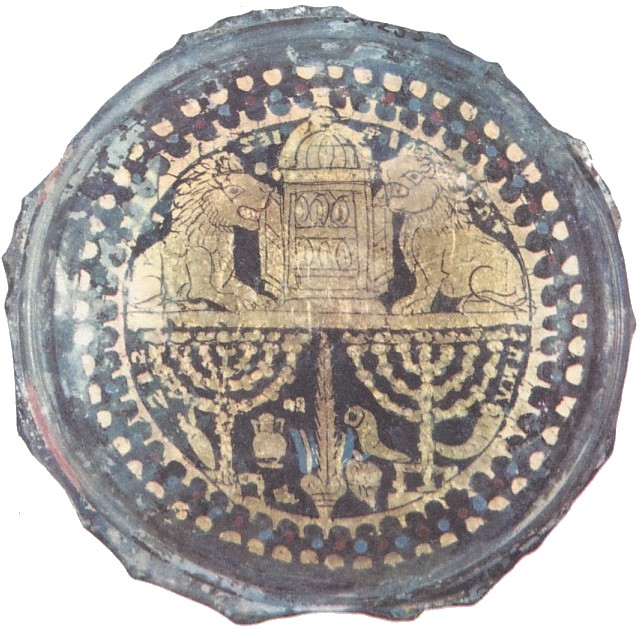
Wiki-image in the public domain of 2d-Century Jewish Ritual Objects visibly emphasized holiness.

Tuesday, October 23, 2007

Wednesday word, 24 Oct 2007

29th Wednesday (24 Oct 2007) Rm 6. 12-18; Ps 124; Lk 12. 39-48
Homily of Fr. Paul Panaretos, S.J.
Christian Freedom

The story which conveys the beginning of sin in the world involved deception: the tempter deceived the first humans. On the basis of his personal experience of the risen Jesus, St. Paul communicated that God responded to sin’s deception by God’s gracious act of raising Jesus from the dead. He concluded the heart of his Letter to the Romans that 1) Jesus’ resurrection undid sin’s deception unto death; and 2) that we have been given this power to new life: In conclusion, just as through one transgression condemnation came upon all, so through one righteous act acquittal and life came to all./1/ This was purely gracious gift with awesome effect.

Before St. Paul people had steeped themselves in this real gift of grace through baptism. It really participates in Jesus’ death and resurrection. It is effective, accomplishing what it symbolizes. The life-project of each of us is to translate our baptism into behavior and the way we live. For St. Paul this life-project was obedience, attentiveness to the pattern of our risen Lord and shaping our living after his pattern of living.

The grace of Jesus’ risen life transforms our freedom, empowering us not to use our bodies to sin as weapons for wickedness, but [to] present yourselves to God as raised from the dead to life and the parts of your bodies to God as weapons for righteousness.

When I sin I close myself to Jesus’ gift of new life; I live as though I never received it. My sinful act does not limit his gift and its power; I limit myself by refusing the gift. I hand over myself to what can not give me life. I’m a slave of my grasping compulsions and attachments. To pattern my living on the pattern of risen Jesus reorients my--and all human--choosing. This was freedom for St. Paul, not our notion of individual preference; it was serving what ennobles humans, helping us become as God created us. To paraphrase the Irish orator, Edmund Burke, Jesus’ resurrection of the dead is God’s “chastity of honor...which ennobled whatever it touched, and under which vice itself lost..its evil”/2/ I want to give myself to God’s honor and become as God creates me. St. Paul invites us, Choose our allegiances carefully!

_________
/1/ Chapter 5. 19, near the end of yesterday’s reading.
/2/ Answers.com used his sentence to illustrate the usage of the word, ennoble.

_______________________________________________
Wiki-image of the symbol of Christ, the Beginning and the End is used according to the GNU Free Documentation license.

Tuesday word, 23 Oct 2007

29th Tuesday (23 Oct 2007) Rm 5. 12,15b,17-19,20b-21; Ps 40; Lk 12. 8-12
Homily of Fr. Paul Panaretos, S.J.
In a Different Key


The lectionary rushes us at the heart of St. Paul’s Letter to the Romans, about in whom and how God worked God’s righteousness by faith: in Jesus by his resurrection from the dead. The lectionary didn’t allow us to hear St. Paul emphasize how real is God’s graciousness in Jesus. It skipped to his description of the grand character of God’s gift: we stand in God’s life.

We do well to recall God’s gift in and through Jesus is real; it’s on no wish list. Here and now we have peace with God through our Lord Jesus Christ, through whom we have gained access (by faith) to this grace in which we stand./1/ By peace St. Paul did not mean the absence of war. The word he used translated the Hebrew shalom. Shalom conjured the covenant; it is being in right relationship with God and others. We stand in right relationship with God because Jesus returned it to us. Access to God is not our doing; risen Jesus gives us access.

The grandness of God’s gift in Jesus we can begin to appreciate from experience. Not only are we unable to give this gift of life to our-selves, at times we don’t even want to! That’s the effect of sin. Magnify that by count-less people; yet God reached all in their disinterest! Death and life played key roles.

For St. Paul creation and resurrection are different keys of God’s song. That helps us make sense of that dense verse, through one man [Adam], sin entered the world, and through sin, death, and thus death came to all. God sang into existence the first and representative human, Adam. Recall what God told the first humans if they ate the fruit of the tree in the center of the garden? "On the day you eat of it you shall die."/2/ That is how St. Paul connected sin and death.

In a different key, God called out of death Jesus to absolutely new life. Jesus’ freely chosen death liberated us from Adam’s death-dealing transgression. We trust Jesus’ resurrection because it is our liberation, or put another way, because Jesus’ resurrection connects us with the divine song of life, which we now sing in a different key; one day we will sing in the same key as the Trinity sing it in their eternity.

_________
/1/ Chapter 5. 1-2.
/2/ Genesis 2.17.
____________________________________________
Wiki-image of the Triumph of the Cross is used under the Creative Commons Attribution-Share Alike 2.5 Generic license.


Monday, October 22, 2007

Monday word, 22 Oct 2007

29th Monday (22 Oct 2007) Rm 4. 20-25; Resp. Luke 1. 69ff; Lk 12. 13-21
Homily of Fr. Paul Panaretos, S.J.
Model of Faithful Obedience

I continue my series of reflections on the Letter to the Romans in order to make more accessible for you its treasure of faithful obedience./1/ This relationship with God allows us to give God glory as God and give [God] thanks,/2/ which those who refuse to recognize God do not do. Such a one is an idolater, to use Paul’s language.

Using an imaginary conversation partner to move his proclamation forward, St. Paul offers the prime opposite, our ancestor in faithful obedience, Abraham. He did not refuse to enter into a relationship with God: Abraham did not doubt God’s promise in unbelief; rather, he was empowered by faith and gave glory to God and was fully convinced that what God had promised he was also able to do. This sentence overflows with action-implications for us: namely, trust; hope; and believe.

St. Paul had noted that Genesis remarked that before Abraham was circumcised he was declared righteous because of his faithful attentiveness to God not because of any of his accomplishments--in Paul’s language, his works.

In St. Paul’s day Judaism extolled Abraham because of his works. Implied in accomplishments are claims they allow us to make. St. Paul corrected the view his contemporaries had of Abraham by reminding people that nothing anyone does obliges God or puts a claim on God. Though not obliges, God promised Abraham life.

Abraham’s faith is the model for us because he was fully convinced God would fulfill God’s promise. Abraham trusted the promise contrary to experience: his age, as good as dead, and Sarah’s dead womb/3/ Abraham’s faith empowered him to trust and to hope. The promise of life out of death--the birth of Isaac to barren Sarah--shaped Abraham’s faith. It pointed to Christian faith, which is shaped by Jesus’ resurrection from the dead and trust in it.

Appearances confound us, too, and often. For us, who believe in the one who raised Jesus our Lord from the dead, faith is also a relationship of trust, hope and attentiveness. Abraham models how to live by faith as the relationship God desires us to cultivate. Trust and hope feed and empower our faith, too.

_________
/1/ Paul’s phrase functions as bookends of his letter: to bring about the obedience of faith (1.5 and 16.26) was his
apostolic purpose.
/2/ Chapter 1. 21.
/3/ Chapter 4. 19, the verse preceding today’s reading.
_____________________________________________
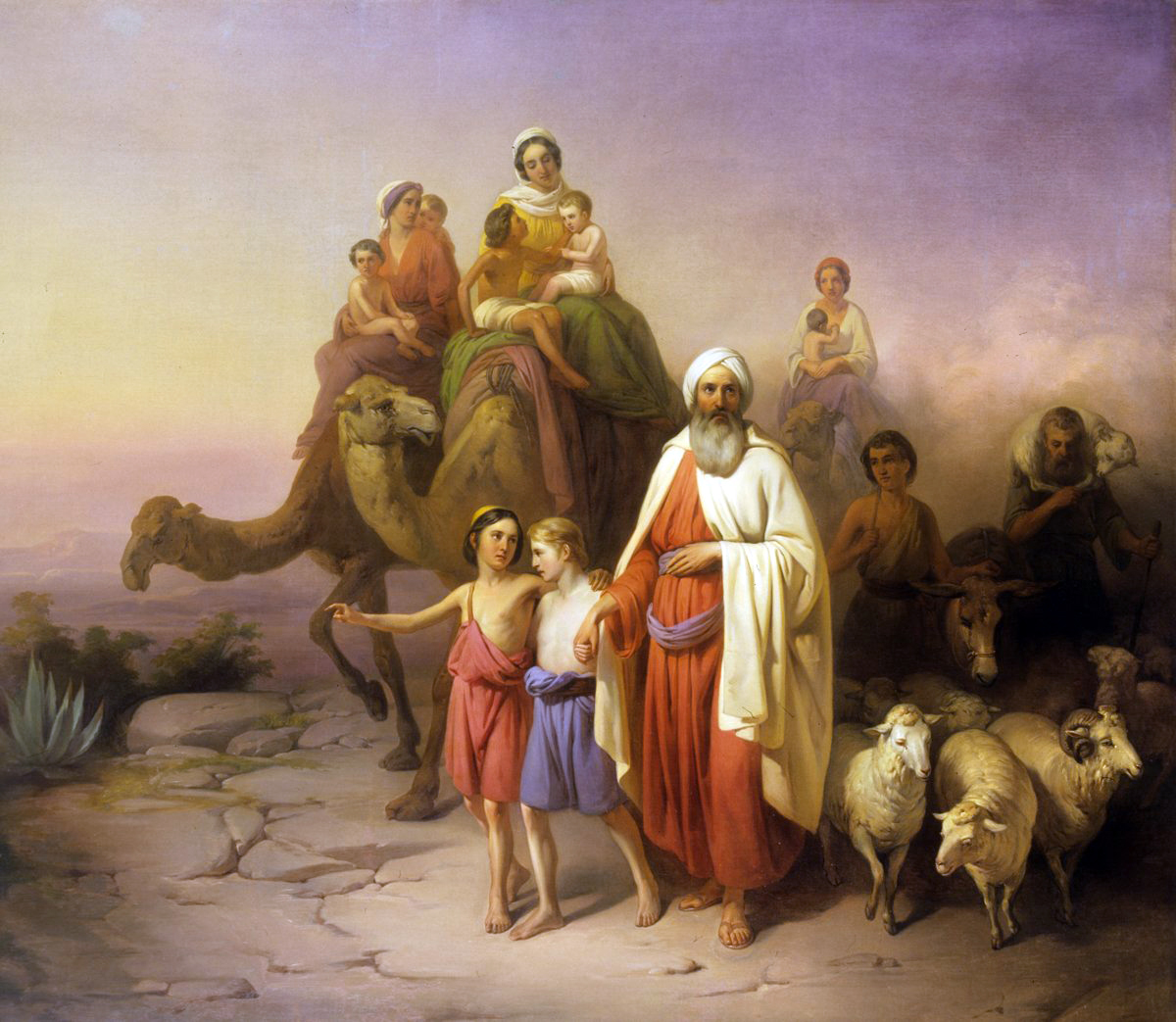
Wiki-image is in the public domain.

Friday, October 19, 2007

Friday word, 19 Oct 2007

North American Martyrs, Memorial (19 Oct 2007) Rm 4. 1-11; Ps 32; Mt 16. 21,-24-28
Homily of Fr. Paul Panaretos, S.J.

Shape of Our Efforts


St. Paul’s Letter to the Romans extolled Jesus because Jesus reveals God’s mercy, patience and desire to save, namely welcoming people and acting mercifully. Jesus invites us to join him in his saving mission. When Pope John Paul II visited the North American Martyrs shrine in Midland, Ontario,/1/ he likened these apostles to the Hurons to the Apostle Paul because they, too, “gave up their lives for the sake of the Gospel.”/2/

From France to New France, as eastern Canada was called, Jean de Brébeuf, Isaac Jogues, Gabriel Lalemant, Antoine Daniel, Charles Garnier and Noël Chabanel, on fire with the loving zeal, came to proclaim the Gospel of Jesus Christ. With those priests came two lay brothers, René Goupil and Jean de la Lande. They were as courageous as the priests and showed great compassion and care for the natives. The North American Martyrs modeled Ignatian collaboration, which we seek anew.

A blessedness was theirs because they believed God. Their belief was not merely intellectual exercise. Their belief was deeply felt, it was a relationship with God, like that of Abraham, our first ancestor in faith. The relationship with God the North American Martyrs had was visible in their action on behalf of the gospel, their testimony in deed as well as word to our Messiah Jesus.

Abraham could not appeal to satisfying the law of Moses because it did not yet exist. St. Paul’s phrases, his works, and Abraham’s reason to boast, point meant that Abraham might have boasted in himself, something he did not do; likewise, the North American Martyrs. Their accomplishments, including giving their lives for the gospel, were not their works solely. We might say their energy was graced. Faith gives works a specific shape, martyrdom, in the sense that even our slightest effort can witness to God’s mercy, patience and desire to save.

_________
/1/ 15 September 1984. See his homily for the occasion given at Midland, Ontario.
/2/ Ibid.
______________________________________________
Wiki-image of the garden at St. Marie shrine is in the public domain.

Wednesday, October 17, 2007

Wednesday word, 17 Oct 2007

St. Ignatius of Antioch, Memorial (17 Oct 2007) Rm 2.1-11; Ps 62; Lk 11. 42-46
Homily of Fr. Paul Panaretos, S.J.
Real and Powerful


St. Paul encouraged the church in Rome, to which he wrote before his visit, to keep in relationship with God, who worked salvation in Jesus by their Spirit. Not to do that rejects God and God’s salvation. Salvation is no private affair because, as St. Paul used the word, salvation means becoming part of God’s people.

Salvation is for us in ways Paul announced. First, God is merciful precisely because God know humans in all our frailty. To us God offers priceless kindness, forbearance and patience. God is no hanging judge. God is a loyal creator, and God saves because God knows sin and how to rescue us from it through Jesus.

St. Paul maintained no anger in God. Instead, making his point with an imaginary conversation partner, you are storing up wrath for yourself...by your stubbornness and impenitent heart. Paul, who once murdered Christians, knew this firsthand, as he said in an earlier letter, I am the least of the apostles, not fit to be called an apostle, because I persecuted the church of God./1/ God’s mercy made him an apostle!

A social and behavioral implication of this is clear: do not judge. If a person seeks glory, honor, and immortality--in other words, lives a godly life--others will experience that search through that person’s perseverance in good works. Christian good works are not swayed by flattery, bribes or corruption. They are impartial. They participate in God’s life because no partiality exists in God.

This may sound trite, at best, or pious, at worst. I appreciated how distinctly divine it is when I learned that this word partiality did not exist in Greek before the New Testament. The human ideal of not being corrupted was projected onto God, the merciful, loving, loyal creator of all. That, too, has social and behavioral implications for friends of our Messiah Jesus.

If Jesus reveals God’s mercy, patience and desire to save, and if Jesus invites us join him, then, welcoming people and acting mercifully participate in divine life. They truly signify that we welcome becoming part of God’s people--salvation. Plus, they show others God’s mercy is very real and powerful to change lives.

_________
/1/ 1Corinthians 15. 9.
______________________________________________
Wiki-image of St. Ignatius of Antioch is in the public domain.

Tuesday, October 16, 2007

Tuesday word, 16 Oct 2007

Tuesday, 28th Week (16 Oct 2007) Rm 1.16-25; Ps 19; Lk 11. 37-41
Homily of Fr. Paul Panaretos, S.J.
We Are Saved Together


St. Paul desired to spread the word about Jesus everywhere Gentiles lived. Rome, even Spain, attracted him. His Letter to the Romans, addressed to the Christians there, sought to shape a communal way of being. His purpose was moral exhortation and encouragement.

Paul opened with his core conviction: God, the Creator, worked salvation for all in Jesus. His style of writing the Romans worked through this conviction by contrasts. We just heard Paul’s first contrast: if God works salvation--and he wanted to encourage believers to live by that--next he rehearsed sin’s power to enslave humans. Today’s selection announced that, the opposite of God’s saving power.

Salvation as Paul used it in his Letter to the Romans means becoming God’s people, and enjoying the life of risen Jesus in part now and fully when he returns in glory. Salvation is no private affair.

Paul recognized that humans can willfully reject God’s salvation: hence, his phrase about those who choose to live enslaved to sin, the opposite of faith: they have no excuse.

The related phrase, which puzzles most of us, the wrath of God, always stood as a symbol for the retribution, which results from rejecting God. As a sullen child angrily reacts to parental love, so for one, who rejects God, even divine mercy may register as “anger.”

Rejection of God, in all manners of ways, is idolatry. Idolatry rejects being a part of God’s people. As the Letter of the Romans unfolds during the daily masses into the first ten days of November, be alert to what St. Paul meant by salvation, becoming part of God’s people, and idolatry, rejecting God’s life as mediated by the church. The faith of Jesus is the pattern for how we welcome salvation and how we resist idolatry.
______________________________________________
Wiki-image of salvation personified is in the public domain.