Thursday, January 08, 2009

Thursday word, 08 Jan 2009

Epiphany Thursday (08 Jan 2009) 1Jn 4. 19-5. 4; Ps 72; Jn 4. 14-22a
Homily of Fr. Paul Panaretos, S.J.
Scripture to Life

Judaism used scripture to appreciate scripture. It used scripture to understand better a puzzling scripture passage and thus appreciate it more. The Church inherited that. Considering Risen Jesus allowed Christians to appreciate afresh passages of the Scriptures, realizing they pointed to their risen Savior.

After the Church recognized some Christian writings as scripture, the practice of using scripture to interpret scripture continued. The practice isn’t as common as it was. It can help us appreciate our lives as well as scripture. I begin with today’s first reading.

Celebrating mass daily as you do, you have been hearing the First Letter of John announce these days the conviction that love flows from God, that love is God; and yesterday we heard the Christian consequence of that conviction, namely, we are to love others because God has loved us in becoming one with us in our flesh.

Before it was a church divided--lacerated by leaving and intolerance as the First Letter of John strongly implies--action and conviction, action and faith, went hand in hand. Such harmony between action and conviction revealed Jesus to the members and to the world.

After it was divided the word liar best described the dissonance between action and faith. A strong word for a desperate circumstance. Even today lying hides the truth and only reveals--usually afterward--people who fear truth.

Read with Jesus’ inaugural address, the selection from the First Letter of John helps us appreciate that to fulfill on the lips of Jesus--the scripture of liberating us for the kingdom he proclaimed and embodied has been fulfilled in your hearing--also connotes to reveal. Jesus revealed the kingdom in person!

The Christmas season, and the drama of the first Christmas cast, remind us that we, too, reveal Jesus to each other and the world. We fulfill our roles the more united are our action and faith-conviction. Jesus’ homily in Nazareth was his life. Our world counts on us to grow more like the one who was born for us and calls us to be born anew. New birth for us means union in daily living of action and faith, allowing our faith to reshape our actions for the sake of others and the world. Union of faith and action also helps us better appreciate our lives.
__________________________________________________________
Wiki-image of part of a scroll of the Book of Isaiah is in the public domain.

Sunday, January 04, 2009

Sunday word, 04 Jan 2009

Epiphany of the Lord (04 Jan 2009)
Is 60. 1-6; Ps 72; Eph 3. 8. 2-3a,5-6; Mt 2. 1-12
Homily of Fr. Paul Panaretos, S.J.
Moving On Target

I served two parishes with the custom of moving statues remembering the Wise Men closer to the manger throughout Christmastime, closer and closer as Epiphany drew near.

I jested then that sometimes more care was taken to move the statues closer to Jesus than to move ourselves closer to Jesus in our daily lives. I learned I was not the first to think that. A Danish philosopher considered it long before. He contrasted the scribes and the Wise Men. The scribes had access to torah, God’s self-communication with Israel, and the Wise Men had the light of a star and its rumor of an infant monarch. The scribes stayed put, but the Wise Men moved. Before the Wise Men traveled, their hearts were in motion.

The scribes “did not accompany the Wise Men to seek him.” That always puzzled me. The philosopher noted that this puzzle diagnoses our spiritual health.
...we may be able to explain every article of our faith, yet remain spiritually motionless. The power that moved heaven and earth leaves us completely unmoved.
What a contrast! The three kings had only a rumor to go by. But it spurred them to set out on a long, hard journey. The scribes, meanwhile, were much better informed, much better versed. They had sat and studied the scriptures for years, like so many dons. But it didn’t make any difference. Who had the more truth? Those who followed a rumor, or those who remained sitting, satisfied with all their knowledge?/1/
Do we treat our faith as a rumor or as whimsy? Do we treat our faith as an abstract thing or a theory? Faith is much more. Faith is relationship: our relationship with Jesus, God in the flesh, with us dead and risen, and through him with others: dead; and living; and to come.

Faith links us with our God made flesh. Sometimes our link is freeing so we can be apostolic in our actions and example. At other times our faith-link places us in Jesus’ heart when we need protection, compassion and felt knowledge of Jesus loving us.

Whether our faith-relationship frees and moves us to be apostolic agents of Jesus’ gospel, or whether our faith-relationship reassures us of Jesus’ love, protection and care, or whatever way our faith-relationship unites us to Jesus as his evangelizers today, most important for our spiritual health and vitality is to keep spiritually agile and to resist being “spiritually motionless.”

Beginning 2009 is a good time to resolve to grow more spiritually agile and more alert to the motions within us: motions not in harmony with Jesus’ gospel; and motions in harmony with Jesus’ gospel. Our motions produce actions, and our actions become habits.

Several people alert to interior movements, to spiritual motions, people who use Ignatian spirituality to help them grow more alert and spiritually agile have created a website to help anyone grow on target with one’s habits.

My Habits on Target is the name of the site. Some of you know of it already because I featured it on my blog on New Year’s Day. I have made it a link on my blog to make it easy for you to visit and to grow more alert to how your relationship with Jesus calls you to move with the “power that moved heaven and earth,” God become one with us in Jesus by their Spirit so that we may become one again with God.

In your daily 15 minutes with Jesus this week, pause and bask in the love with which the Trinity embraces you. Ask the Wise Men to present you to Jesus so that you may ask Jesus to free you from what holds you back from moving closer to Jesus in word and deed. Resolve to grow more agile in spirit this year. Thank Jesus for the ways Jesus chooses you to be his agent in the world and for the countless ways Jesus protected you in the past year. Look forward to your relationship to grow in 2009 and say the Lord’s Prayer. Jesus gave us his prayer as our compass to find him in others.
__________
1. Søren Kierkegaard, Provocations.
____________________________________________
Wiki-image of a star cluster and of the Wise Men are in the public domain.

Thursday, January 01, 2009

People who use their computer to do the Examen of Consciousness can now use their computer and identity new habits to put into practice as well as monitor them.

The site, created by lay people, originated in Poland and may be viewed in English as well as Polish. It's name is My Habits On Target. One needs to register, then activate the link included in the email sent in seconds.

Happy praying in 2009! Happy New Year and Good New Habits to all!

Wednesday, December 31, 2008

Zimbabwe at Year's End

Zambia is a neighbor of Zimbabwe, the cholera-ridden and starving African country. It is a victim of its President Mugabe.

Jesuit Father Peter Henriot, Director of the Jesuit Centre for Theological Reflection in Lusaka, Zambia, reflected earlier this month on the relationship between Zimbabwe and Zambia, as well as the impact that the current crisis is having and will continue to have on the region.

Fr. Henriot concluded his reflection with three questions. He called them his "shouts." He had met some Zambians at a meeting in South Africa, and they asked him,
"Put Zambia's problems in context and shout about Zimbabwe's problems,"...

My friends are Zimbabweans, very nationalistic; very patriotic; working for social needs of the people in church-related institutions. They can't be accused of being British lackeys!

Well, I was deeply moved by what they told me and so here are a few of my shouts. I ask you to hear these shouts and then yourselves ask the same questions I will ask at the end of this column.
If a neighbor to Zimbabwe pleaded that, then the problems of the U.S. in 2008 pale by comparison! God bless everyone in 2009!
____________________________________________
Wiki-image of flag map of Zimbabwe is in the public domain.

Monday, December 29, 2008

Green Resolution

Resolving is part of entering each new year. "Green is the New Black," some say. Environmental activist, Josh Dorfman "believes in creating stylish, innovative and convenient solutions to environmental challenges." That is description is found in the About Josh corner of a page of a site dedicated to reducing the use of plastic water bottles.

Few bottles get recycled, which is unfortunate for the environment first and then for humans and other living creatures. Resolutions need not be complicated. Check the 1 Minute Greenovers below About Josh.

Tbis page is part of the Filter For Good website. Brita, the maker of home, tap-water filter systems, is only one sponsor. People the world over need to seek and carry water, and the water is not always potable. Those efforts make filtering tap water an easy and friendly effort to save our resources.
___________________________________________
Wiki-image of falling water is used according to the GFDL.

Saturday, December 27, 2008

Neglected Top 10

John L. Allen Jr. listed the 10 most neglected Catholic news stories of 2008 in his weekly column. The environment, the Society of Jesus, and anti-Christian violence in India number among them.

Friday, December 26, 2008

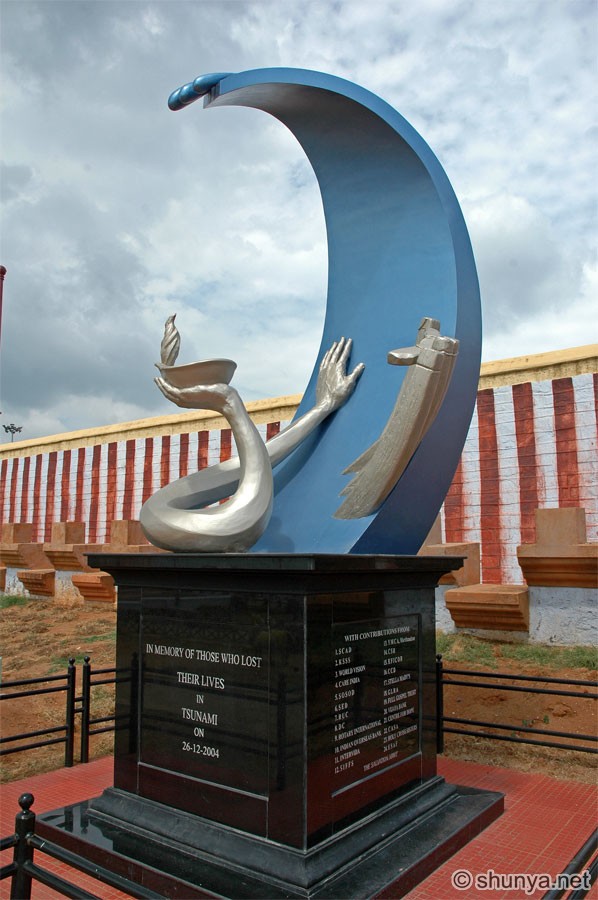
Remembering the South East Asian Tsunami

People around the world recalled the tsunami of 2005, which devastated areas of southeastern Asia. People formed living memorials today, adding to the memorials already in place like the memorial in Tamil Nadu.

Latin Patriarch's Midnight Mass Homily. . .

...in Bethlehem last night.

Midnight Mass happened in the David's city last night. Latin Patriarch Fouad Twal of Jerusalem presided and preached, pronouncing among other things:
Peace is a right for all men. It is also the solution for all conflicts and differences. War does not produce peace, prisons do not guarantee stability. The highest of walls do not assure security. Neither the aggressor nor the aggressed enjoy peace. Peace is a gift of God and only God can give that peace: "My peace I give to you" Jesus says. "I do not give to you as the world gives" (Jn 14:27).

Thursday, December 25, 2008

Christmas word, 25 Dec 2009

Solemnity of the Incarnation (25 Dec 2008)
Is 9. 1-6; Ps 96; Tit 2. 11-14; Lk 2. 1-15

Homily of Fr. Paul Panaretos, S.J.

Wrapped and Unwrapped

Merry Christmas! Jesus injected into his preaching examples from daily living to point people to God and to God’s kingdom, which continues to dawn in our day. Following Jesus I offer you a two-way example this Christmas, wrapped and “Unwrapped.”

Wrapped we have done. We prepared gifts by covering them with colorful, festive paper. Wrapping both designates a thing as a gift and surprises the one who receives our gift.

The Giver of all gifts, our God, chose our human nature and our fragile flesh and wrapped God’s divine being in our human nature and our fragile flesh and all they entail. Sadness is one result of our human frailty. Fear is another. Fear leads to exclusion and disfigures dignity. The Giver of all gifts chose to be wrapped in our human nature and fragile flesh to free us from these and all consequences of sin and to renew our purpose and restore our hope in life. Our new purpose and new hope in life begin with our experience of the world and of the risen life promised us by God in Jesus, the Word made flesh by Holy Spirit and born of the Virgin.

God’s choice to be wrapped in our human nature recreates us, as Pope St. Leo reminded his hearers on a Christmas over 1500 years ago. “Sadness [is out of] place on the birthday of life.” He continued: the “fear of death has been swallowed up [by the incarnation]; life brings us joy with the promise of eternal happiness.” “No one is shut out from this joy”/1/: rich or poor; healthy or infirm; young or old; native or alien; wise or unwise; secure or insecure in the world. Our Christian dignity includes and elevates each one’s human dignity. Today is an occasion to remember our Christian dignity,/2/ of which Jesus’ birth reminds us as we contemplate the manger: people are more valuable than their surroundings.

As we contemplate, we remember. Christians’ memory is not exclusively a mental exercise. Christians remember best when we act on our dignity restored and enriched by God, who chose our human nature and to be wrapped in it. God in Jesus by their Spirit was wrapped in our human nature so that we might share “God’s own nature.”/3/

Until we share God’s nature completely, our role is to unwrap what God offers and to what God in Jesus invites us. What God has done in Jesus by their Spirit is no secret to keep from the world. It’s the opposite! We live to unwrap and to share the Gift, who the Giver of all gifts has become for all people: one who modeled by example; one who led by serving; one who gave himself for our sakes.

What precisely do we do when we unwrap? The Food Network offers a clue. One series on the Food Network is entitled “Unwrapped.” The show unwraps “the secrets of America’s favorite snack foods. “[One show even] ‘unwrap[ed]’ the Food Network [itself], taking viewers behind-the-scenes of [some other] series...revealing what it...takes to put [those] shows on the air./4/

When Christians unwrap, then, we follow Jesus’ example. Jesus wrapped himself in our human nature so that we might share and reveal God’s goodness to the world.

We follow Jesus’ example when we unwrap for others our joy; when we unwrap with others our confidence in Jesus and his life; and when we welcome others into our gift of joy and enhance their dignity. We reveal in our limited ways God-with-us so God will not be secret.

The Giver of all gifts, human and divine, became our gift. Wrapped in our human nature, God in Jesus by their Spirit confirms and sustains us. Wrapped in our human nature, God in Jesus by their Spirit anoints us as prophets, priests and monarchs of the new creation. Wrapped in our human nature, God in Jesus by their Spirit fashions us into a people [who is God’s] own, eager to do what is good. Wrapped in our human nature, God in Jesus by their Spirit gives us all an active vocation: to unwrap, reveal and share their goodness to us. The beginning of our vocation has much in common with the shepherds, who went to Bethlehem to see [God wrapped in our nature] which the Lord has made known to [them and to] us. Like them, what God has wrapped in our nature, we unwrap in worship, word and deed.

Merry Christmas!
_____________
1. These qualities are found in Pope St. Leo’ brief homily in the Office of Readings for today.
2. Ibid.
3. Ibid.
4. Foodnetwork's descriptionof that show.
_____________________________________________
Wiki-image of the Nativity is in the public domain.

Sunday, December 21, 2008

Sunday word, 21 Dec 2008

Advent Sunday4 (21 Dec 2008)
2Sm 7. 1-5,8b-12,14a,16; Ps 89; Rm 16. 25-27; Lk 1. 26-38
Homily of Fr. Paul Panaretos, S.J.
Mutual Confidence

T
oday’s liturgy and its scripture selections shape our immediate preparation to celebrate our Savior’s birth. The opening prayer reminded us that our celebration of God’s birth among us also asks God to “lead us through [Jesus’ mysteries of] suffering and death to the glory of his resurrection”/1/ and our participation in it.

Through our worship God answers our pray to “lead us through [the mysteries of Jesus’] suffering and death to the glory of his resurrection.” Our worship grafts us onto the mysteries of Jesus life, death and resurrection.

I want to reflect with you briefly this morning on a contrast in the very familiar annunciation to Mary that she would be the mother of God. I do it to animate your own prayer and help you discern how God desires to favor you.

Luke’s prophecies of the births of John the Baptizer and of Jesus appealed to his hearers and readers in the 1st-Century Mediterranean world. Soaked in Greek culture they were accustomed to stories of exceptional and extraordinary people to include heavenly messengers and events. The prophecies of the births of John the Baptizer and of Jesus also resumed the history of God’s people, Israel.

The contrasts unfold in detail not only in Luke’s gospel; the liturgical celebrations throughout the year unfold them for us.

You and I are unlike our 1st-Century Mediterranean counterparts when we hear them, yet we still receive compact histories of God’s people about God working in and through them. In both prophecies of the births of John the Baptizer and of Jesus: the Lord, with different titles, is central. The contrasts revolve around the Lord God. Each contrast shouts, ‘Great was John; greater is Jesus.’

John will be great in the sight of the Lord but Jesus will be great and will be called Son of the Most High. John prepare[d] a people fit for the Lord, but Jesus will rule the people. John’s role was temporary, but Jesus’ sovereignty will [have] no end. John was a prophet, but Jesus was more than a prophet, the Son of God. John would be filled with the Holy Spirit as prophets before him, but Holy Spirit and Power of the Most High overshadow[ing] Mary made Jesus the Holy One to whom all prophets pointed./2/

Common to ancient Mediterranean prophecies of the birth of exceptional and extraordinary people were signs, which confirmed the announcements. The contrast between the two signs following Gabriel’s announcements affects us. The two signs: Zechariah, John’s father to whom Gabriel announced John’s birth, was struck mute/3/; Mary was told the fulfillment of an earlier prophecy: behold, Elizabeth, your relative, has also conceived a son in her old age, and this is the sixth month for her who was called barren; for nothing will be impossible for God.”/4/ You may quickly ask, “How does this contrast affect us?” A good question. We have experienced the answer.

Mary was the first person in the gospel to receive confidence from another person’s experience of God’s fidelity. Mutual confidence runs throughout Luke’s writings, but it isn’t confined to them. God’s fidelity to one person is our gift, it’s why we are here. How Catholics, and in particular some of us, have made known God’s fidelity inspired our Catechumens and Candidates to inquire about our Catholic worship and life and seek to become part of us.

Readers of the Sun Press and the Universe Bulletin not only learned about nearly 1000 of us uniting in our service-day, more than a few readers received confidence in their faith, and others may have begun again to notice God at work--or notice for the first time.

“Passing on the faith” is our name for sharing with others God’s fidelity to us. God’s fidelity is God’s life in us. Our relationship with God, faith, is noticing and interpreting God with us each moment. Faith isn’t merely assenting to propositions.

In your 15 minutes with Jesus this week, pause in the love of the Trinity. Then, in your own words, thank Jesus for your faith. Ask him to increase your confidence in him and to reassure you that your faith is resilient more than it is brittle. Close by saying slowly the Lord’s Prayer. Jesus gave us his prayer so that we may grow confident in our faith by the action of forgiveness, which gives us a taste now of the mysteries of Jesus’ “suffering and death [and] the glory of his resurrection.”

____________
1. Sacramentary, Fourth Sunday of Advent.
2. For each pair above see these verse-pairs in Luke’s gospel: 1.15, 1.32; 1.17, 1.33; 1.17, 1.33; 1.15, 1.35; 1.15, 1.35.
3. Luke 1.20.
4. Luke 1.36-37.
__________________________________________________________
Wiki-image of Cavallini's angel and Wiki-image of Rosetti's Annunciation are in the public domain.

Wednesday, December 17, 2008

In Memoriam: Avery Cardinal Dulles, S.J.

Jesuit Avery Cardinal Dulles is being buried this week.

Fordham University, his home, will webcast his funeral live this evening.

The National Catholic Reported offered its obituary of a theologian of national stature!

May he rest in peace!

Sunday, December 14, 2008

Sunday word, 14 Dec 2008

Advent Sunday3 (14 Dec 2008)
Is 61. 1-2a,10-11; Resp Lk 1. 46ff; 1Th 5. 16-24; Jn 1. 6-8, 19-28
Homily of Fr. Paul Panaretos, S.J.
Climate of the Heart

Recently, someone mentioned to me that talk about our Christian hope for the completion of history--our Savior’s glorious return at the end of time--was not something learned as a young person. Our Christian hope for the completion of history St. Paul proclaimed with his phrase, the coming of our Lord Jesus the Messiah. Advent continues the attention given to the Christian hope for the glorious coming of our Lord Jesus in the liturgies of the weeks before it. Even as Advent prepares us to celebrate the birthday of Jesus in Bethlehem, Jesus’ first arrival, Advent continues to recall our Christian hope of his glorious return at the end of time.

Thus, you and I live between two advents of our Messiah. Our purpose living between them is to testify to the light, Jesus’ life with us, in us and for us. We are prone to tolerate darkness more than light. If Christian light is Jesus’ life with us, in us and for us, then darkness is the absence of Jesus’ life. Humans often hamper and block Jesus' life for one another. Two ways darkness registers in daily living are dilemmas and injustices. An example each of our dilemmas and injustices.

In cities across the country, including those of northeastern Ohio, some service-businesses attract immigrants with promises of work but do not make good on their promises. Another: women, both wed and unmarried, are about to give birth far from family and without access to money and the support that is their due. The Catholic Church through various agencies helps supply basic necessities of life to people denied work and health care to anxious parents-to-be.

Today’s immigrants and anxious parents-to-be incarnate the poor, the brokenhearted, captives and prisoners, who are among us in many ways. They are not far, nor did they only inhabit the ancient Mediterranean world, like Joseph and Mary, who migrated when she was a parent-to-be and a as a young mother.

All of us fit in our own ways into the categories of the poor, the brokenhearted, captives and prisoners of whom the prophet sang. Each of us experiences inadequacy, bruised if not broken hearts, and we are held hostage by forces within and outside our selves. Within: we are enslaved by our sinful tendencies. Without: societal pressures straight-jacket us before we’re even aware they are affecting us.

Advent offers us the opportunity to acknowledge the way people, indeed populations, are held hostage, even ignored and forgotten. Icy chill isn’t limited to the air; another chill is part of the climate of the human heart. Nor does darkness drag on in our shorter hours of day-light only; more real darkness grips our hearts and minds as well. More real darkness of every kind reminds us that we need saving.

Advent is Light piercing our darkness. Advent isn’t about doom, but about both our Christian hope for the completion of history and that Jesus’ life is with us, in us and for us to help us conquer our interior and incapacitating darknesses with him. No one else is effective to warm and brighten our true selves and make us servants of Jesus’ mission.

Advent, though, is not an end in itself. Advent does not fixate on the cold, the dark, the brokenness and what robs our spirits and deprives our bodies. Far from it! Our liberty is rooted in God’s reliability. God illumines our darkness by divine and most real light.

Illumined people are God’s hands filling up the hungry, tending bruises, welcoming strangers, and setting free hostages of all sorts. With that loving attention we make real, for those who need it, God’s embrace and God’s fidelity.

Advent opens us to the glory we call Christmas, not because Jesus needs to be reborn each December, but because we need rebirth, renewal and new dispositions each day. To know our need for innermost renewal leads us to rejoice always. God desires we be renewed personally and do our part to renew our world with Jesus.

In your daily 15 minutes with Jesus this week, ask John the Baptizer to present you to Jesus. Speak with Jesus about ways you experience him enlightening your life and welcome him into every dark corner of your heart and mind. Be as intent as you can. Close by saying slowly the Lord’s Prayer: it models Christian intention, desire and purpose. Jesus’ prayer enlighten us until he fulfills our Christian hope for the glorious coming of our Lord Jesus.

____________________________________________
Wiki-image by Jorge Noriega Sevilla of lamp in Maranatha sanctuary is used according to the Creative Commons Attribution ShareAlike 2.5 license. Wiki-image of an icon of the Baptizer is in the public domain.

Monday, December 08, 2008

Monday word, 08 Dec 2008

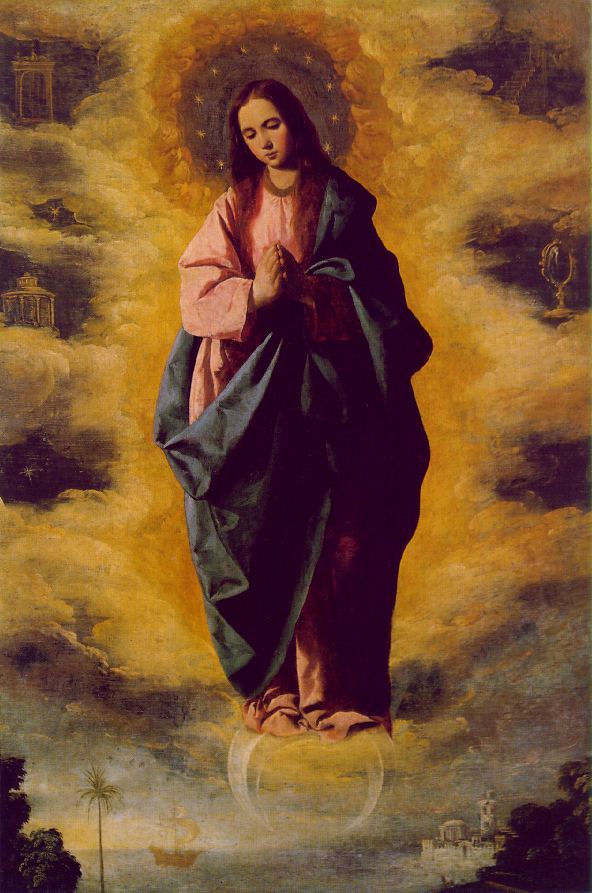
Solemnity of the Immaculate Conception (08 Dec 2008)
Gn 3. 9-15,20; Ps 98; Eph 1. 3-6,11-12; Lk 1. 26-38
Homily of Fr. Paul Panaretos, S.J.
Given and Received

Creation runs through scripture from beginning to end. Creation is a principle theme with many variations. Yesterday, the Second Letter of Peter reminded us that God assures and encourages us to look forward to new heavens and a new earth./1/ How we live, how we witness to our Savior testifies to that new creation. How we live shapes how we anticipate what has been emerging since Mary’s Son lived, died and rose to absolutely new life, promise to us. Jesus gives us a taste of that new creation in word, sacrament and service, both given and received.

Recalling Mary’s immaculate conception previews new heavens and a new earth. Mary was conceived without sin to be a fitting vessel for the Son of God. The Mother of God was full of grace for that very reason! This dogma of ours has a practical aspect because Mary’s immaculate conception blesses us with new confidence.

Hers is new confidence because confidence evaporated early in the first creation. The first stewards of creation had the noble vocation to cultivate and care for/2/ their garden-home and to name every living thing./3/ Both took confidence: a trust; a self-possession; and a feeling at home with oneself as well as with one’s surroundings. The enemy of our human nature, which Genesis depicted by a serpent to impart the subtle, crafty wiles abroad in creation, twisted trust into pride: God had given them only a single prohibition, “You are free to eat from any of the trees of the garden except the tree of knowledge of good and bad. From that tree you shall not eat.”/4/ Pride made that tree like any other for the first human stewards. After eating it they became afraid to meet God, who accompanied them and moved with them day by day. Humans have suffered a crisis of confidence ever since. Mistrust, loss of self-composure and not feeling at home with oneself or one’s surroundings have warped humans from that time.

Yet time has always been pregnant with God’s salvation. In the fullness of time, that is to say, when the Lord made known [the Lord’s] salvation to Mary, she overcame her anxiety at the angel’s greeting and announcement that she would be the Mother of God. She was greatly troubled: the human crisis of confidence insinuated itself in her mind while she was in her own home! If that moment were to have a center, it would be the angel’s greeting, “Do not be afraid, Mary...you have found favor with God.” Mary made everything--present and future--revolve around that center by taking the angel, and therefore God, at God’s word: “Let it happen to me as you say.”

Mary’s response was so compact that we might easily dismiss it as the reply of a greatly troubled girl, whose married life was soon to begin. It was anything but! Mary’s response was her unequivocal Yes, her confidence in God and God’s promise of salvation. She was different after it, and the world is different because of it. Our world counts on us and others Christians to imitate Mary’s new confidence so that we may transform our crisis to renewed faith and be witnesses by actions of new heavens and a new earth, already emerging because of Mary’s son and his life, death and resurrection. Christian faith and its incarnation by action is the Lord’s salvation, both given and received.

____________
1. Chapter 3.13. This rests between its early mention in Isaiah 65.17 and 66.22 and the Book of Revelation (22.1), which specified it with vivid imagery.
2. Genesis 2.15.
3. Genesis 2.19.
4. Genesis 2. 16-17.
___________________________________________________________
Wiki-image of the Zubaran's Immaculate Conception is in the public domain.

Tuesday, December 02, 2008

Advent and the Economy

Adam Cardinal Maida, Archbishop of Detroit, has issued a pastoral letter to the people of the Archdiocese of Detroit. It was placed today on the archdiocesan website.

Cardinal Maida introduced his three-section letter recalling that Christians are a people of hope and "the Scripture for these weeks of Advent, Christmas and Epiphany proclaim God's Word of consolation and hope, even in the midst of uncertainty, loss and suffering." While the people of Michigan are living through a crisis, which may change the state irreversibly, Christians throughout the United States, do well to remember "God's Word of consolation and hope, even in the midst of [the present economic] uncertainty."

Another reason to read it: Cardinal Maida ends each of the three sections of his pastoral letter with a few questions for "prayerful reflection." His is a great service to the people of the Archdiocese of Detroit, and by placing it on its website, a larger circle of people may profit from his service.
____________________________________________
Wiki-image of Detroit's skyline is used according to the GFDL.

Monday, December 01, 2008

New For Advent

T
he Develpoment Director of the Detroit Province of the Society of Jesus announced Friday in an email to Friends of the Province that in the season of Advent "we reflect on the many times Christ has already come into our lives."

Jesuit Fr. Jim Von Tobel has offered this first Advent reflection to enhance that annual exercise.

Sunday, November 30, 2008

Sunday word, 30 Nov 2008

Advent Sunday1 (30 Nov 2008)
Is 63. 16b-17,19b,64.2-7; Ps 80; 1Co 1. 3-9; Mk 13. 30-37
Homily of Fr. Paul Panaretos, S.J.
We Measure Time Differently

Some may consider sobering Isaiah’s plea, which opened today’s liturgy of the word: Why do you let us wander, O Lord, from your ways, and harden our hearts so that we fear you not? Return for the sake of your servants...Oh, that you would rend the heavens and come to us. If we live with an image of an angry deity rather than God, who is our Creator and Redeemer, then the prophet’s plea would be sobering, indeed even frightening.

However, we know that for us Catholics sobering words invite us to new life not to fear life. Nor are Isaiah’s words imprisoned by time and locked in the unreachable past. We pray at each mass that God would make our hearts more supple and help us walk in God’s ways. Harden[ed] hearts distort the actions which flow from them; they distance us from God, both the results of sin. Catholic worship is clear about that, which is why we pray at each mass after the Lord’s Prayer, “Deliver us, Lord, from every evil and keep us safe in our day. In your mercy keep us free from sin as we await with joy the coming of our Savior, Jesus Christ.”

We pray to walk more resolutely in God’s ways because God in Jesus by their Spirit entrusts us with a mission to be alert to the future coming of our Savior and to his continual presence with us as we extend his saving work.

Jesus did not merely tarry on earth; he formed a people to do his work until that day of his return at the end of time. No one knows that day nor can reckon its hour. People through the ages have wasted so much energy over that even though the authority about our not knowing how to reckon it is Jesus himself: of that day or of that hour no one knows, not even the angels in heaven, nor the Son, but only the Father./*/

The point is not about knowing or guessing. It isn’t about God keeping us out of the loop, as we’d say today. The point is so that our being alert to both the future coming of our Savior and to his continual presence with us won’t be shattered by false prophets of frantic frenzy or of apathetic disregard and unconcern.

That makes us true prophets, who bear a different set of expectations than false prophets whose number is too large. They see the future through the lenses of frantic frenzy, which lead them to fear rather than hope, and through the lenses of apathy, which make them inert rather than servants of Jesus’ name. Prophetic, Christian attitudes to self, others and the world receive expression by prophetic disciples today.

We measure time not by centuries and milennia nor by the rise and fall of nations. No. We measure time by God inviting us in Jesus and by Jesus empowering us to live our baptismal commission as his witnesses day by day.

Jesus encourages us as he encouraged his first disciples: “Be watchful! Be alert!” Jesus encourages us to have a daily concern for our mission. Obsessive focus on the day of the Lord’s second coming distracts us from our mission as prophets today. It distracts us from being aware that we are coworkers of Jesus, who seek to extend his mission and refuse to allow time and its concerns to supersede Jesus’ concerns or to diminish our concern for them.

The grace is that Jesus adapts his concerns and our mission to human time, not the other way around. The end will arrive when the mission is satisfied. That frees us to live without apathy or hysteria so that our mission-efforts will be truly effective. Jesus’ mission is the reason we are alert and eager stewards.

In your daily 15 minutes with Jesus this week, yield control and bask in the love of the Trinity embracing you. Ask the communion of saints to present you to Jesus so that you may converse with him. Speak with Jesus about what worries or disturbs you about being his missionary and about what elates and energizes you when you serve in his name. Desire with all your heart to be a more eager steward of Jesus’ words and deeds. Close by saying slowly the Lord’s Prayer, which reminds us at the start that we are ambassadors of the kingdom of God and that God gives us all we need to be its witnesses.
_____________
* These verses are left out of the passage in the lectionary, but they are crucial to why we live on alert--alert to Jesus’ words and mission.


____________________________________________
Wiki-image of a candle in hand is in the public domain. Wiki-image from an Advent flower shop is used according to the GFDL and the Creative Commons Attribution ShareAlike 3.0 license.

Saturday, November 29, 2008

Saturday word, 29 Nov 2008

34th Saturday (29 Nov 2008)
Rv 22. 1-7; Ps 95; Lk 21. 34-36
Homily of Fr. Paul Panaretos, S.J.

God Adapts Mission to Time


Although the selection from the Book of Revelation and the gospel selection may seem to have in common only a view of the end of history and of time, they share rejection.

Rejection applied not only to the first-Century church, when a human regime, which ruled the western world, scoffed at Christianity and persecuted its adherents. Our contemporaries, and not only sophisticated people from developed lands, reject faith’s view of time.

The reason? Control, namely, God’s control of history. The consoling message of the Book of Revelation abides: God will shine living light when the solar source light and the lunar magnetism, drawing the tides ceases; God sets the times; God is in charge of history despite appearances to the contrary.

Also we, 21-Century people, are mesmerized by time to the point of enslavement. Time organizes more of us than we organize time. The frenetic pace many of us keep testifies to that. Even we religious are not immune. What does it mean if God keeps the time and sets the schedules? It means that human time is adapted to the mission entrusted to us by Jesus.

In calling us to join him on his mission means that we coworkers with him shape our attitude and our endeavors in the name of Jesus according to our vocation: to God’s call; to the words and deeds of Jesus; to our creative imitation of them in our circumstances; and to be vigilant for the gospel at all times. The challenge to do those things is coordinating our lives according to our baptismal mission.

Luke’s Jesus uniquely reminds us to be alert to his mission--our mission--so that the anxieties of daily life, and that day catch [us] by surprise like a snare snapping shut. Our focus on the end--that day--distracts us from the day-to-day counsel of Jesus about anxieties, literally, things dividing the mind./1/ Jesus warned about this throughout his ministry, introducing it vividly in his parable of the sower of the seed: people are choked by the anxieties and riches and pleasures of life, and they fail to produce mature fruit. Being choked by them affects our mission: we fail to produce mature fruit./2/

The grace is that our Creator and Redeemer adapts his mission to human time. The end will arrive when the mission is satisfied. That frees us to live without apathy or hysteria so that our mission-efforts will be truly effective.
______________
1. The New Testament world knew this effect of anxious interest on people by this phrase.
2. Luke 8.14; see Martha in 10.41; and Jesus encouragement to his disciples in 12. 22-26, where we easily miss the focus on self versus mission with a psychological connotation easily given to worry, the word often used to translate anxieties in verses 22, 25, 26.

____________________________________________
Copyrighted Wiki-image is courtesy of Crew Creative, Ltd., which gave permission to reuse.

Thursday, November 27, 2008

Thanksgiving word, 27 Nov 2008

34th Thursday Thanksgiving Day (27 Nov 2008)
Sir 50. 22-24; Ps 34; 1Co 1.3-9; Mt 11. 25-30
Homily of Fr. Paul Panaretos, S.J.
Celebrating Our Mission

A word about the holiday and what Jesus makes distinctive about it. “The first recorded Thanksgiving observance was held on June 29, 1671, at Charlestown, Massachusetts by proclamation of the town’s governing council. ”/1/ In the next century days of thanksgiving were not limited to one day a year.

A Thanksgiving Day 200 years ago was a day set aside for prayer and fasting, not a day marked by plentiful food and drink as is today’s custom. Later in the 18th century each of the states periodically would designate a day of thanksgiving in honor of a military victory, an adoption of a state constitution or an exceptionally bountiful crop./2/

These first and later days of thanksgiving revolved around the historic first, national one proclaimed by President Washington during his first term: “A Day of Publick Thanksgiving and Prayer.”

His October 3, 1789, decree appointed the day “to be observed by acknowledging with grateful hearts the many and signal favors of Almighty God.”/3/

God’s chief signal favor is no less than God’s self-gift to us in Jesus by the power of their Spirit. Jesus is God’s grace; how we are enriched in every way...so that [we] are not lacking in any spiritual gift as [we] wait for the revelation of our Lord and Savior.

The revelation of our risen Messiah has the aspect of his final, glorious return as well as his constant communion with us. His fidelity to me moves me so that I feel awestruck as well as joyful. Awe takes our breath away, while joy is the bellows of our hearts. Both are valid responses to our God [who] is faithful. Today reminds us that our daily responses to God have a public character: we Catholics call it mission. The Second Vatican Council described our mission concretely: each of us is in “the world as a witness to the resurrection and life of our Lord Jesus and as a sign that God lives.”/4/

Jesus is the source of our life and all we have. We celebrate that today as citizens. Our distinctive role, given us by Jesus, is to nourish our world with fruits of Jesus’ spirit. “In a word [which is an ancient observation], ‘what the soul is to the body, let Christians be to the world.”/5/ Nothing is or can be more distinctive!
______________
1. This and other quotations are at Earlyamerica.com
2.
Ibid.
3.
Ibid.
4.
Lumen gentium (Dogmatic Constitution on the Church), 38.
5. Letter to Diognetus, 6, by an anonymous author. This one-sentence exhortation from this letter closed the conciliar paragraph
cited above in note 4.
____________________________________________
Wiki-image of a church interior is in the public domain.

Sunday, November 23, 2008

Sunday word, 23 Nov 2008

Solemnity of Christ the King (23 Nov 2008)
Ez 21. 4b-9; Ps xx; Phil 2. 6-11; Mt 25. 31-46
Homily of Fr. Paul Panaretos, S.J.

Two Things At Once


Is it possible in our democratic day and age to profit from the solemnity of Christ Jesus our King, which closes a year of celebrating the many ways he is present with us? We can profit from it, and I suggest an approach for your reflection this week and beyond.

First, God communicates to us through the writings of 1st-century, Mediterranean authors. Those authors clothed God’s communication in their particular human language, shaped by their circumstances, culture and experience.

Their core values were "honor" and "shame." We continue to see both values operate in the Mediterranean world. News from there confuses because we don’t measure honor and shame with the same categories. Regarding honor: scripture measures it as glory: all the angels with [the Son of Man, who] will sit upon his glorious throne, and all the nations will be assembled before him--is far different from any human notions we have. Regarding shame: we tend to measure it as doing something wrong or illegal rather than measuring it by the failure to put our faith into action with and for people with whom we have no bonds.

Bonds, especially of kinship to family, to leader or to the clan, figured large and still do in the Mediterranean world. Ours is a culture of the individual and of the market, good reasons why Mediterranean values confuse us.

Yet, we know that the market--and the money and possessions which accrue from the market --cannot satisfy our thirst for meaning. We also know that as lone individuals we are unable to satisfy that thirst either. Real meaning and other aspects of honor depend on others receiving and accepting us for who we are.

When we show family members and close friends that sort of acceptance we show them kindness. The bonds linking us as family shape how we treat them: it is expected. Showing kindness at home helps children learn, and us to continue to learn, how to show hospitality to others not closely bonded to us.

Hospitality--not merely offering space to another but welcoming people with respect, treating them as human companions in life--hospitality is the action by which our risen Lord measures our lives.

Christian hospitality does two things at once: first, we treat others, with whom we have no bond other than our shared humanity, as we desire to be treated; and second, by extending hospitality we welcome and offer food, drink, clothing and care to our risen Lord. By withholding hospitality we deny welcome, food, drink, clothing and care to our risen Lord. To use the core values of Jesus’ time and culture, we serve our risen Lord to our honor, or, we snub our risen Lord to our shame.

Our desire to serve our risen Lord is very alive among us at Gesu. Our soon-to-arrive Parish Service Day, our third annual one, will help 900 parishioners of all ages to directly serve our risen Lord by serving others in metropolitan Cleveland. That’s to your honor, indeed! To your greater honor is that many parishioners allowed the first Service Day in which they participated to deepen their desire to extend Christian hospitality each day of the year.

Keeping alive the desire to extend Christian hospitality in every way possible keeps our hearts supple and prepares us to enjoy the future glory our risen Lord desires to extend to us: Come, you who are blessed by my Father. Inherit the kingdom prepared for you from the foundation of the world.

In your daily 15 minutes with Jesus this week, pause in the presence of the Trinity to relish that the Trinity creates you to extend Christian hospitality. Ask the communion of saints to present you to Jesus. Speak with Jesus about your desire to serve him. Ask Jesus to deepen that grace in you. Close your prayer by saying slowly the Lord’s Prayer. Jesus’ prayer guides us to extend Christian hospitality and shapes daily living to be a prelude to the honor and glory our risen Lord desires to extend to us.


__________________________________________________________
Wiki-image of an interior view of the Sagrada Familia is used according to the GFDL. Wiki-image of sunlit cloud by Ibrahim Iujaz is used according to the Creative Commons Attribution2.0 license.

Friday, November 21, 2008

Recent Remarks and the Necessity. . .

. . .of context

The cardinal's remarks have been disseminated on Youtube.com. The same cardinal spoke by invitation about Human Vitae. The cardinal did not speak on behalf of the Vatican.

The cardinal is the American, Francis Cardinal Stafford, who works in a Vatican court.

Mr. John L. Allen Jr. in his weekly All Things Catholic has put in context the cardinal's remarks, which, due to many sound-byte reports on TV and in the press, need context in order to be appreciated.