Showing posts with label Advent07. Show all posts

Sunday, December 23, 2007

Sunday word, 23 Dec 2007

Advent Sunday4 A (23 Dec 2007) Is 7. 10-14; Ps 24; Rm 1. 1-7; Mt 1. 18-24
Homily of Fr. Paul Panaretos, S.J.
Made From Concentrate


“God bless your Advent! May it continue to unfold onto a bright and holy Christmas and a Happy New Year.” I have been signing Christmas cards and other correspondence with that greeting because Advent is a concentrated three-weeks-plus which flows into Christmas time and beyond. Advent is a concentrated season which commingles the sources of our identity and life as Christians. St. Paul expressed these sources in a compact sentence in greeting the Roman church he wrote before he arrived there. Paul introduced himself, as we heard, as set apart for the gospel of God...about his Son, descended from David according to the flesh, but established as Son of God in power according to the Spirit of holiness through resurrection from the dead, Jesus Christ our Lord.

Advent helps us prepare ourselves together for Jesus’ two advents. All of us are to be like expectant mothers, full of the life of our Messiah and eager to bear his life into our world while we expect him, our creator, redeemer and judge, to return to us--his next advent. Being and living in the world eagerly bearing our Messiah gives real sweetness to our annual celebration of his birth and life in the Holy Land--his first advent.

This final Advent Sunday focuses us more sharply on Jesus’ first advent. Its focus helps us remember that the prophets pointed to Jesus; that Prophet Isaiah prepared us to expect the Messiah’s marvelous birth not a marvelous life; and Gabriel reminded Joseph that the child Jesus he would raise as his son would save his people from their sins.

Even more marvelous, this savior would be God-with-us. Emmanuel, God-with-us, is the most concentrated, the most intense, the most real presence. God-with-us is also the most abiding presence we have. Not only did Matthew want us to hear that at the outset of his gospel: Jesus’ birth fulfilled the prophet’s words: they shall name him Emmanuel, which means “God is with Us”; Matthew wanted us to hear it at the close of his gospel. That closing bookend is worth a brief look. No doubt you’ll recognize Matthew’s closing verses. After Jesus died and rose he joined his disciples on the mountain in Galilee to which Jesus had ordered them. They worshiped him there...then Jesus said to them, “All power in heaven and on earth has been given to me. Therefore, go and make disciples of all peoples, baptizing them [and] teaching them to observe all I have commanded you. Behold, I am with you always....”/1/.

From the First Gospel’s opening to its close; from Joseph’s dreams to the Trinity’s dream-come-true; from Jesus' manger and on our mission, Jesus remains Emmanuel, God-with-us. How easy to hasten to the manger and worship the infant son of so marvelous a birth and remain there! Surely, we ought to go there to remind ourselves not only of our Messiah’s beginnings but of our Christian beginnings. We ought to contemplate Joseph who awoke--advent is all about waking up and being alert--and who did as the Lord commanded him. What did Joseph do? He embraced a wife, and more, he embraced a life he would never have imagined for himself. He welcomed, certainly against his own better judgment, what God dreamed and desired for him.

This final Advent Sunday invites us to prepare to visit the manger--but only to visit. Shepherds returned praising God after they visited. We can do no better. We are more properly Galilee mountain disciples with a mission, than Bethlehem bound. St. Francis of Assisi was aware of that and the concentrated nature of advent when he made the first Christmas crèche. Francis was well aware the wood of the manger did not disappear from Jesus’ life. At the appointed time it reappeared as the wood of the cross. We continue to live in the bright shadow of his cross and resurrection; as we do we enjoy access to his abiding presence.

His abiding presence, born anew, invites us to rediscover ourselves in each new thing he gives. New birth is our baptism; new power allows us to proclaim the gospel of Jesus with our lives; new patience allows us to continue to proclaim it and live it; new hope deepens our fidelity as apostles of Jesus' gospel; and new majesty is each one's share in the prophetic, priestly and royal roles of Jesus, who is with us always.

This brings me full circle to my greeting this year: “God bless your Advent! May it continue to unfold onto a bright and holy Christmas and a Happy New Year.” As we wrap the last gifts, hang the last ornaments and mail the last card, we do well to pause each day and ponder. In your daily 15 minutes with Jesus converse with him. Then consider in your voice: how much am I like Isaiah and announce the Lord’s promise? How much am I like St. Paul and glory in my unique relationship with Messiah Jesus, who sends me to continue his mission? How much am I like St. Joseph, seeking what the Lord desires of me, waking up to it and acting on it? Those questions and people unfold the concentrated quality of Advent. Close by slowly saying the Lord’s Prayer, which lead us to live the concentrated life of Advent’s hope.
___________________
/1/ Matthew 28.16-20.
________________________________________________________________
Wiki-image of advent wreath is in the public domain. Wiki-image of St. Joseph statue used under the terms of the GFDL.

Friday, December 21, 2007

Friday word, 21 Dec 2007

Advent Friday3 (21 Dec 2007) Sgs 2. 8-14; Ps 33; Lk 1. 39-45
Homily of Fr. Paul Panaretos, S.J.
How It Works

The reading from the Song of Songs is only offered at mass on this weekday and not on Sundays. No other selection from the Song of Songs is used in the usual cycles. It’s rare use alerted me to ponder it. This is what I noticed.

The first half of the title of a Christmas carol captures what I offer for your reflection: “Silent Night.” Silence describes many things, including the interior workings of humans. Our thoughts and emotions don’t make a sound, yet they affect us powerfully. Their silence moves us to articulate what we think and how we feel.

The silent way in which God became flesh for us--God with us--and the first proclamation of Jesus’ birth was given to people on the margin of society, shepherds. Shepherds did not own the sheep they tended; they watched and cared for the property of others. The first to hear the angelic message of Jesus’ resurrection were marginalized people, too: women had no legal standing in the first century world of the gospel.

Exultation begins in silent awe before human mouths voice it, before we sing to [the Lord] a new song, as our psalm urged us.

The Annunciation to Mary of Jesus’ birth was shrouded in silence. Artists’ renderings of it suggest that. Mary, even the angel, may have been more vocal than scripture suggests. It gives the kernel of the divine invitation to Mary and her acceptance. Silence played its part: Mary was troubled and wondered what the angel’s greeting meant. Wondered and troubled
both begin silently. Mary’s journey to Elizabeth probably gave her plenty of time to allow silent movements to affect her before they erupted in her song of praise. Elizabeth was not different.

Nor are we. Our vocal jubilation is a good thing, but it isn’t first. God’s silent moving within us, and our own awareness and responses are first silent. Our fast-paced, hectic and noisy world distract us from that which allows us to recognize God as our beloved and beautiful one who comes silently and who will come in glory.

Wednesday, December 19, 2007

Wednesday word, 19 Dec 2007

Advent Wednesday3 (19 Dec 2007) Jdg 13. 2-7,24-25a; Ps 71; Lk 1. 5-25
Homily of Fr. Paul Panaretos, S.J.
Vocations Reshaped


We are familiar with announcements. They give information: weddings and births deserve written announcements; others give information of different sorts. In Christianity announcements give more than information; they proclaim God and God’s desires for the sake of people. The proclamation parts of Christian annunciations involve more than the individuals receiving them.

Yesterday we heard Matthew recall Joseph’s annunciation, which proclaimed that Jesus would save his people from their sins. Luke recalled John the Baptizer would turn many of the children of Israel to the Lord their God. Even the annunciation of Samson’s birth proclaimed that he would begin the deliverance of Israel from the power of the Philistines. The God of Abraham, Isaac and Jacob can rightly be called the Deliverer, as King David called God, and quoted by St. Luke and St. Paul./1/ The Deliverer is the personal God of the scriptures.

Annunciations abound in the Old and New Testaments. They were always personal, that is, they happened to people. As they continued in the ancient world, a shift happened and we’ve heard it. I call it “from unnamed to named.”

Samson father was named: Manoah; but not his mother. Likewise John’s father was named: Zechariah; and so was his mother, Elizabeth. Likewise, the parents of Jesus, Joseph and Mary are mentioned in proclamations of his birth.

In pondering this shift “from unnamed to named,” I have felt more deeply convinced of God’s desire for a profoundly personal relationship with me, each of you and all people. Paradoxically the more personal God becomes, the more far-reaching a shaper of community God becomes in Jesus by their Spirit. By becoming enfleshed for us, Jesus reshaped human vocations in ways none of us may call private or undemanding. Our own annunciations --and each of us has one--welcome us to further deliver our world in the name of Jesus, empowered by his Spirit.
____________
/1/ 2Samuel 22.2; Psalms 18.2; 40.17; 70.5; 144.2 (the Psalms have traditionally been attributed to David); Acts 7.35; Romans 11.26.
_________________________________________________________
Wiki-image of the Tree of Jesse, of which Jesus is the flower, is in the public domain.

Tuesday, December 18, 2007

Tuesday word, 18 Dec 2007

Advent Tuesday3 (18 Dec 2007) Jer 23. 5-8; Ps 72; Mt 1. 18-25
Homily of Fr. Paul Panaretos, S.J.
Our Mission: Between Bookends

We’ve heard the phrase, the justice of God is tempered by God’s mercy. God’s justice, not comprehensible by humans and at the same time beyond human comprehension, is the attribute that makes the God of Abraham, Isaac and Jacob, sacred and “great Lord of might,” as today’s antiphon cries.

God’s justice was and is like no other because God remains close to us even when we distance our hearts and selves from God’s heart. Because God accompanied humans from the first, one prophet could call God Emmanuel, God-with-us. God with us took on a greater significance when God in Jesus let go of his divinity in order to join our humanity. God in our flesh is Emmanuel in a way that confounds human imagining! This blending of divinity and humanity in Jesus truly is our salvation. As Pope St. Leo the Great put, it “The Conqueror’s victory would have profited us nothing if the battle had been fought outside our human condition.”/1/

Let us pause in our human condition. Step into Joseph’s skin. Imagine hearing the angelic messenger announce to you, the child of your betrothed you are to name...Jesus, because he will save his people from their sins. If God were mighty, as Joseph surely believed, how great a Lord of might Joseph appreciated!

Joseph surely marveled, Why and how is it I? as did Mary. God’s choice of Joseph gave him a new vision of God’s justice, namely, making good God’s promises from the start. Joseph did as the angel of the Lord had commanded him, again and again not only this once. His godliness didn’t allow him to mope unworthily in a pitiable way. No. God’s justice became flesh in order to save all people. If we have any doubts, Jesus reassured disciples in every age saying at the close of Matthew’s gospel, “I am with you always.”/2/ It ended as it began: God with us.

This annunciation to Joseph suggests that an antidote to an unhealthy feeling of unworthiness is to consider the justice of God, who creates us each moment to be a more faithful disciple.
____________
/1/ Letter 31, excerpt in the Office of Readings, 17 December, Liturgy of the Hours, vol. 1, p. 321.
/2/ Matthew 28.20.
________________________________________________________
Wiki-tune of today's Advent antiphon (embedded above at "great Lord of might") is used under the terms of the GNU.

Monday, December 17, 2007

Monday word, 17 Dec 2007

Advent Monday3 (17 Dec 2007) Gn 49. 2,8-10; Ps 72; Mt 1. 1-17
Homily of Fr. Paul Panaretos, S.J.
Satisfying Suspicions


Synagogue worship focused on God’s revelation, and readings from torah, the Hebrew scriptures, were read in a regular sequence. Because the majority of Jews no longer understood Hebrew, the reader of the sacred text would translate it on the spot, making it clearer and connecting it with the contemporary hearers. These Aramaic translations were written, and we have several.

The reading we heard from Genesis, the beginning of Jacob’s farewell to and blessing of his 12 sons, remembered Judah. The Aramaic rendering of it focused on the “determined time the King Messiah [would] come,” reason for all the descendants of Jacob to “purify” themselves, that is, to make their ways of living correspond more closely to God’s heart.

Matthew began his gospel with Jesus’ genealogy, his lineage. Jesus is immediately identified as Messiah (the Christ in Greek), who is son of David and son of Abraham.
Being a descendant of Abraham connected Jesus with the whole people. But Matthew’s community needed more. They needed the prophetic credentials of Jesus as Messiah, and his relation to David, the king and the house God promised never to leave, satisfied the community for whom Matthew wrote his gospel.

Plus, Jesus’ parentage was suspect. Luke focused on Mary in his gospel, who crisply stated the problem: “How can this be?” Matthew focused on Joseph and his annunciations by angels and in dreams. Even before introducing Joseph’s annunciations, Matthew offered four female ancestors of Jesus: Tamar; Rahab; Ruth; and Bathsheba, the wife of Uriah. All were sexually suspect and outsiders to Israel, and God worked mightily through them.

God works mightily even now. Jesus’ genealogy suggests we consider how God works in our lives, choosing us as envoys of God’s son, our Messiah, who will come again.
______________________________________________
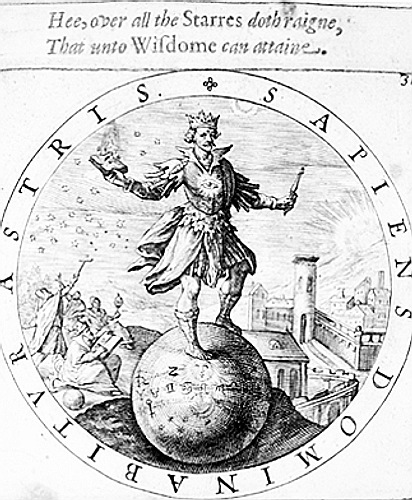
Wiki-image of Wisdom is in the public domain. Today the Church recalls the Messiah personified wisdom.

Tuesday, December 11, 2007

Tuesday word, 11 Dec 07

Advent Tuesday2 (11 Dec 2007) Is 40.1-11; Ps 96; Mt 18. 12-14
Homily of Fr. Paul Panaretos, S.J.
Hinge

Think of a hinge. Think how it works, or better, think how a hinge allows something to work or move.

Simply put a hinge allows two things to move or to work in relationship with each other. A door opens and closes in relation to a stationary wall. Flanges of a hinge attach to two things so they can work together.

Our Messiah Jesus is our hinge. Fully human and fully divine, Jesus bridges humanity and divinity for us. As our hinge our Messiah Jesus allows us to open to the world and to embrace the world as it is--as Jesus embraced it--in order to draw it closer to us and to God in Jesus by their Spirit. Like a hinge we allow the world and its peoples to revolve around God. That expresses our servant leadership, which extends and continues the mission and ministry of Jesus in our time and place.

Some times it is easy to lose sight of the fact that we fulfill our mission to extend and continue Jesus’ mission together, as a people, as a community of faith.

From the beginning God liberated a people and gave them the vocation to make him more present to people in the world. Isaiah’s vision of God speaking was God speaking to people gathered in a worshiping assembly. Comfort...my people and speak tenderly to Jerusalem are in the plural in the original language of the prophet's book: all of you worshiping me, God said, all of you give comfort.

Jesus spoke to his disciples not to one person the image of an individual shepherd finding a lost sheep. We disciples of Jesus, all of us, are to seek and to care like that. Advent invites us to open our hearts and to see more clearly how we already revolve around God, and how we might revolve around God more closely.
_______________________________________________________________
Flickr-image by Baltimike used under Creative Commons Attribution 2.o license.

Sunday, December 09, 2007

Sunday word, 09 Dec 2007

Advent Sunday2 A (09 Dec 2007) Is 11. 1-10; Ps 72; Rm 15. 4-19; Mt 3. 1-12
Homily of Fr. Paul Panaretos, S.J.
Giving Clearer Evidence

Advent trains our vision on the whole mystery of our Messiah Jesus. We may think first of his incarnation, specifically his human birth as God’s son born of Mary. We might think Advent prepares for that. Yet, Jesus’ birth happened once and for all over 2000 years ago. Like our births, his will never be repeated. We celebrate our birthdays, our anniversaries of birth. Christmas, our celebration of Jesus’ birthday, reminds us our God joined us in our humanity.

You and I prepare for Jesus’ return in glory, his second advent. Not only did Jesus join us in our humanity, Jesus is our Messiah because he rose from the dead to give us a share in his risen life. Messiah Jesus invites us to live already his risen life, even though partially, as we await his return. The liturgical season of Advent focuses us to prepare daily to live more clearly united with Jesus, one with him and his community of faith. Advent invites: trust Messiah Jesus.

Prophet Isaiah encouraged people to place confidence and trust in the kings of David’s line. Prophet Isaiah’s words described a heroic, charismatic--that is, God’s anointed--leader to shepherd and guide God’s people selflessly. The charisms cascaded from David’s successor:
The spirit of the Lord shall rest upon him:
a spirit of wisdom and of understanding,
a spirit of counsel and of strength,
a spirit of knowledge and of fear of the Lord,
and his delight shall be the fear of the Lord.
Not by appearance shall he judge,
nor by hearsay shall he decide, but
he shall judge the poor with [the Lord’s] justice.
When early Christians reread Prophet Isaiah’s words describing God’s anointed--Messiah in Hebrew and Christ in Greek--they recognized Jesus as Messiah: human-born of David’s line, our link to the divine by virtue of his resurrection.

Matthew reminded us Jesus’ invitation to be his disciples isn’t fluff but challenging. Jesus’ Holy Spirit strengthens us to live up to Jesus’ challenging invitation and to give clear evidence by how we live that we unite ourselves with Jesus.

St. Paul showed us how to live our mystery of faith, which we proclaim, Christ has died, Christ is risen, Christ will come again, with his words: Welcome one another...as Christ welcomed you, for the glory of God.

Welcome isn’t only receiving someone. Welcome regards another without suspicion. Welcome treats another with compassionate concern. Welcome seeks another’s good. Christian welcome always glorifies God. God’s truthfulness is God’s mercy, God’s loving kindness. Our words mercy and loving kindness don’t do justice to God. We may say that God in Jesus by their Spirit cannot be anything other than truthful, merciful and welcoming us in lovingly kind ways. As envoys of Messiah Jesus we welcome others as Messiah Jesus always and everywhere welcomes us.

The Incarnation unites us to Messiah Jesus, our link between divinity and humanity. Advent invites us to cooperate with Jesus’ Spirit and allows us to be refashioned more and more in the image of our Messiah, who ceaselessly welcomes us patiently, tenderly and lovingly.

In your daily 15 minutes with Jesus this week, begin by pausing to feel more deeply the Trinity creating you and welcoming you with love. Ask Isaiah, St. John the Baptist and St. Paul to usher you to Jesus so that you may converse with him. Praise Jesus for his patient love of you, then ask Jesus to help you know more intimately the gift of Jesus’ spirit you received at your Confirmation: “the spirit of wisdom and of understanding, the spirit of right judgment and courage, the spirit of knowledge and reverence, the spirit of wonder and awe in [God’s] presence.”/1/ Be alert to how your life aligns with Jesus confirming you as his disciple. Close by slowly saying the Lord’s Prayer, which shapes us to live daily what we both ask and expect of Jesus’ Father: may your kingdom come. Advent invites us to give clearer evidence by how we live that we are disciples of Jesus.
____________
/1/ Included in the prayer of the celebrant as he extends his hands over those to be confirmed. In the Rite of Christian Initiation of Adults, 325.
_________________________________________________________
Wiki-image of Isaiah is in the public domain. Wiki-photo of Advent wreath by Clemens PFEIFFER, Vienna, is used under the Creative Commons Attribution 2.5 license.

Tuesday, December 04, 2007

Tuesday word, 04 Dec 2007

Advent Tuesday1 (04 Dec 2007) Is 11. 1-10; Ps 72; Lk 10. 21-24
Homily of Fr. Paul Panaretos, S.J.
God’s Original Justice

The psalms are a good teacher. The hymnbook of the Jewish people extols over and over two things, creation and exodus. As it extols one or the other, or sometimes both, qualities of God emerge. When a psalm sang about the people’s exodus, it praised God’s liberating action, God moved by compassion. When a psalm sang of creation, it recalled God’s creative power, God sustaining everything in existence, God’s original justice.

God’s anointed one, God’s messiah, would recreate everything, refashion it according to God’s original justice for the sake of all: Justice shall flourish in his time, and fullness of peace for ever. Advent is our expectation of the new creation. Somehow, as Jesus proclaimed, the new creation is breaking into time and space. “Blessed are the eyes that see what you see. For I say to you, many prophets and kings desired to see what you see, but did not see it, and to hear what you hear, but did not hear it.”

What did they see and hear. The deaf heard, the blind saw, the lame walked, and the poor had the good news preached to them. By whom? First by Jesus, of course. But Jesus broke into praise as we just heard at the return of six dozen disciples he empowered and sent to do the very same. Their return from doing his work moved Jesus to erupt with praise.

How united with Isaiah and other prophets they must have felt! That day of God’s original justice entered their lives. That phrase, on that day, signaled God’s day and with it God’s life reinvigorating all people and all things with God’s justice, not human fairness, but God’s compassionate justice.

Fr. McGrath was correct to connect our parish service day with our Advent mission. The way we mark advent, the celebration of our daily expectation of our Messiah’s return, is by doing Jesus’ work in our small space and time.
______________________________________________________________
Wiki-image is used according to the GNUFDL.