Wednesday, July 30, 2008

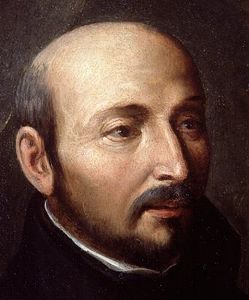
Before the Feast of St. Igantius of Loyola. . .

. . .an essay linking two ways of considering the saint; how he would have responded to the most recent Jesuit General Congregation 35; and peering toward the future has been offered by Father Ron Darwen, S.J., of the British Province.
Father Darwen's contributes to the online British journal, Thinking Faith.

Will the Real Ignatius Please Stand Up? is a fine way to prepare for tomorrow's feast.


________________________________________________________________
Wiki-image of St. Ignatius of Loyola is in the public domain.

Friday, July 25, 2008

Pope in Australia

Mr. John L. Allen Jr. reviews Pope Benedict's first World Youth Day in Australia.

This blogger is still on vacation.

Tuesday, July 15, 2008

On Vacation in. . .

Cohasset, Massachusetts, until the end of July. [The photo is by Panoramio.com user ragutis.]

A Look at Catholicism in Canada

This look is the fruit of an interview by Mr. John L. Allen Jr. with Italian Archbishop Luigi Ventura, the current Apostolic Nuncio of Canada.

Before the interview one Mr. Allen briefly set things into context:
the construction of a vibrant Catholic sub-culture, more inclined to push back against Canada's prevailing secular consensus.

At the level of senior leadership, the transformation has been remarkably rapid. Of Canada's 18 archdioceses, 12 are now led by bishops appointed since Italian Archbishop Luigi Ventura, the current Apostolic Nuncio, arrived in 2001. Seven of those new bishops were appointed or installed in 2007 alone. (The real number is actually eight, since Archbishop Michael Miller was also named coadjutor in Vancouver that year, and should take over in relatively short order.) The impact has been especially noticeable among the country's English-speaking bishops, with additional appointments in Quebec likely in the next few years.

This column Mr. Allen posted on the last Friday in May 2008.


Monday, July 14, 2008

New Roman Appointment by Pope Benedict

In his weekly column, Mr. John L. Allen Jr. wrote that
the most sensitive jobs in the Holy See under Benedict XVI are generally going to "affirmative orthodoxy" personalities. In the end, I suspect this will be remembered as a defining feature of Benedict's papacy -- his intriguing way of blending the bitter with the sweet, of combining doctrinal clarity with personal dolcezza.
His most recent appointment filled the vacancy of the top doctrinal Vatican position. The pope name Jesuit Fr. Luis Ladaria, a Spaniard, as secretary of the Congregation for the Doctrine of the Faith.

In his column Mr. Allen shares
a sampling of what I heard about Ladaria from various sources, some of them fellow Jesuits, some fellow theologians, and some Vatican personnel who've had dealings with Ladaria. The comments span the spectrum of theological positions, cultures, and languages.

Sunday, July 13, 2008

Sunday word, 13 Jul 2008

15th Sunday of the Year A (13Jul2008) Is 55. 10-11; Ps 65; Rm 8. 18-23; Mt 13. 1-23
Homily of Fr. Paul Panaretos, S.J.
Decision, Growth, Choice

Today’s gospel is the beginning of a chapter in which Jesus used parables to teach his disciples--and us--about God’s power to transform and to renew people and all creation. It may help us to ponder more deeply if we consider the question, What is a parable?

A parable is a brief, succinct story, in prose or verse, with a moral or religious lesson. It differs from a fable in which animals, plants, lifeless objects and forces of nature are actors--think of Aesop’s fables--while parables generally feature human actors. The actor in Jesus’ parable today is human, a sower of seed.

A parable is simple in design. With realism and familiarity, it sketches a setting--today, a plot of land; describes an action--someone scattering seed; and shows the results--some seed grew, some did not. A parable often involves a person facing a difficult moral choice. Jesus spoke in parables to direct attention to him and his way of living. Jesus always demands our choice.

A contemporary theologian repeated an important point when I heard her several years ago: “Parables are stories about ordinary men and women who find in the midst of their everyday lives surprising things happening. [Parables] are not about ‘giants of the faith’ who have religious visions.”/1/ Indeed! Parables are about people like us, people choosing Jesus repeatedly and entrusting our lives to his gracious power, power we can’t explain.

Immediately before the verses we heard as our first reading, Isaiah, long before Jesus, had announced for God that God’s ways are not human’s ways/2/. We heard Isaiah offer a clue to the mysterious nature of divine power. Working in patterns unseen and without our scientific understanding, like the pattern of rain-evaporation-condensation-rain, God’s word gives us life and saves us, achieving the end for which I sent it. Life is God’s goal.

When it comes to the way God achieves God’s goal of real life, I feel the helpful proverb, “God writes with crooked lines,” limps. Surely God writes upside down and backward!

The dying and rising of Jesus, which is the source of real life and offers real life to us at each moment, shocks us when we’re honest. Jesus prepared us by teaching in parables to accept him, our crucified Messiah, as the parable of God and God’s life. Those who have ears, let them hear is not about human acoustics only; Jesus’ words closing his parable invite us to accept Jesus with and by our lives.

This parable of Jesus by which he began teaching his disciples teaches us with its elements of decision, growth and choice: of decision--the sower sowed seed despite the consequences; of growth--successful and frustrated; and choice--Those who have ears, let them hear. Like the first hearers of Jesus’ parable, we, also, are to choose to ponder and explore how Jesus moves in our lives, how Jesus transforms them and the ways we respond.

Our lives, in the parable’s language, are soil. Alone we may be unable to change it from hard and shallow. Jesus graces us to make our lives deep, rich soil. Keeping hearts and minds focused on Jesus, allows us to make the calculated risks of responding in faith with our fragile lives, which God in Jesus transforms by the power of their Holy Spirit.

In your 15 minutes with Jesus this week first pause to rest in the creative, loving, fruitful and nourishing love of the Trinity. Ask the crowds of heaven to present you to Jesus. Praise and thank Jesus for the “surprising things” Jesus has done or is doing in and with your life. Become of aware of Jesus addressing you, which may register as Jesus inviting you to keep choosing him; Jesus reassuring your faith-response to him; or Jesus allowing something new to emerge on the horizon of your life. Close by saying slowly the Lord’s Prayer. Jesus’ words allow us daily to ask concretely for him to nourish us with his desires for us and to encourage us to cultivate his desires in and with our lives.


__________________
/1/ Sallie McFague TeSelle, “Parable, Metaphor, and Theology,” Journal of the American Academy of Religion 42.4 (December 1974:630-645). She spoke at a Convocation at The Divinity School, Yale University, some years ago, and I noted her remark emphasized the ordinariness of the actors above the ordinariness of the circumstances; the latter is mentioned more often about parables than the former.

/2/ Isaiah 55.8-9.
______________________________________________________
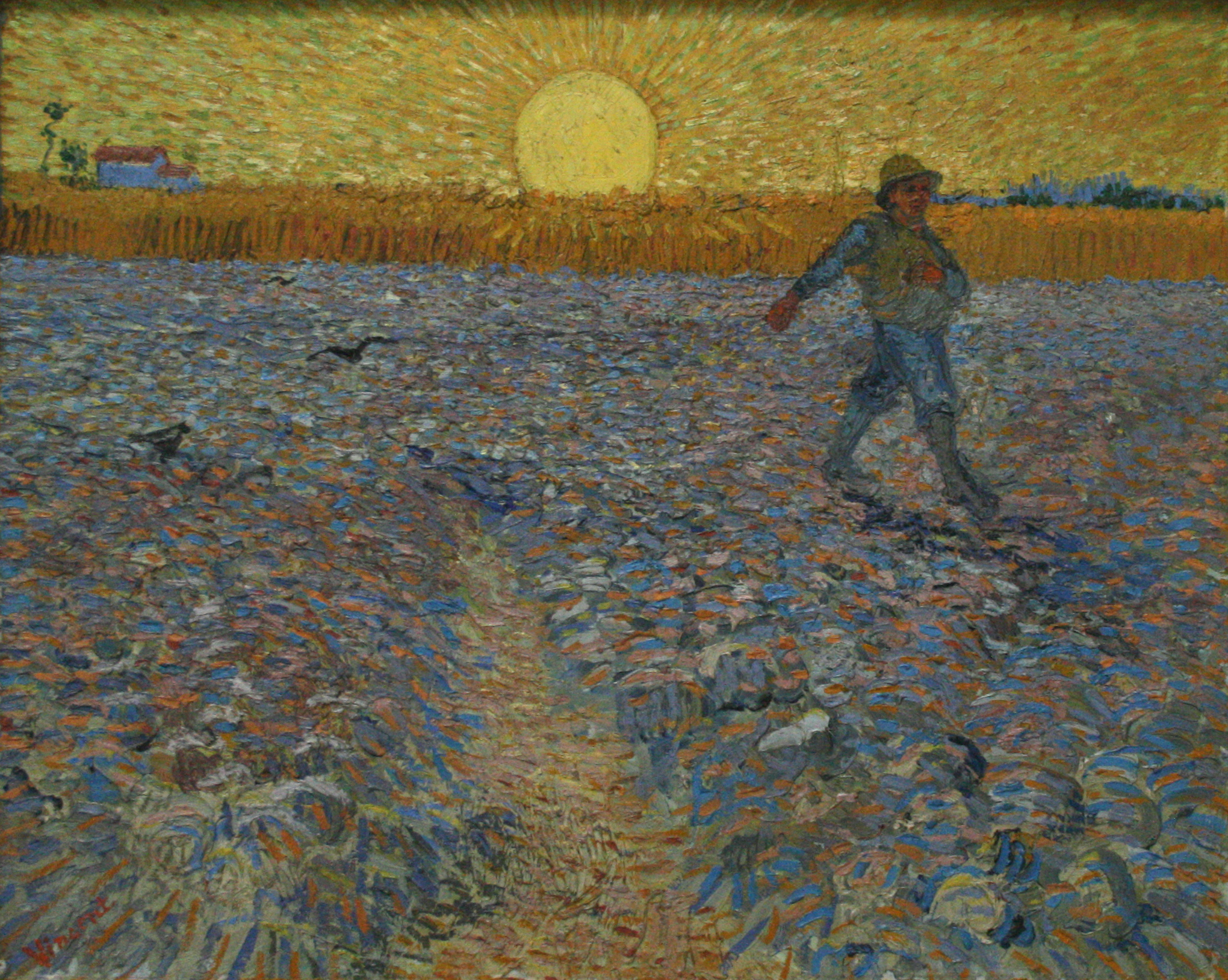
Wiki-image of Van Gogh's The Sower is in the public domain. Wiki-image of rain on grass is used according to GFDL.

Sunday, July 06, 2008

Sunday word, 06 Jul 2008

14th Sunday of the Year A (06Jul2008) Zech 9. 9-10; Ps 145; Rm 8. 9,11-13; Mt 11. 25-30
Homily of Fr. Paul Panaretos, S.J.
Freedom Tour

Jesus has been sung as gentle, meek, mild and loving down through the ages. Today’s gospel points to those qualities, which Jesus embodied. The first reading recalled those qualities were within the heart of God long before God in Jesus walked with us. Take a tour of torah with me and see.

Torah is that Hebrew word I try to help people appreciate because it has everything to do with Jesus and his mission portrayed by Matthew’s gospel. Torah is rich in meanings. Torah is text: it refers to the first five books of the Old Testament, the Books of Moses. Moses was God’s mouthpiece, who established God’s covenant with the people God liberated from slavery to be uniquely God’s own. An outstanding feature of that covenant was that God was a merciful and gracious God, slow to anger and rich in kindness and fidelity./1/ By covenant God demanded these very qualities of the people God liberated. Spending one’s life trying to embody those divine qualities makes a person uniquely God’s own.

Torah
also means “commandment.” God offered people ways to embody true mercy, patience, kindness and fidelity. Torah is not trapped in its text but comes alive as people embody it day to day. The many commandments of the relationship with God called Judaism may seem frivolous or even meaningless to us. Each commandment offered a way to live the covenant with God; to be godly; and to draw others to God. Torah is not trapped between the covers of a bible. A Jewish friend once told me, “Judaism is not a religion, it’s a way of life.” Torah is a way of living.

The scribes and Pharisees became overly focused on the commands found in the text of torah, and they forgot their purpose: to live God’s covenant by practicing true mercy, patience, kindness and fidelity. They didn’t see torah’s commands as a pattern of freedom but became enslaved by them and sought to enslave others, too. Yes, the scribes and the Pharisees [had] taken their seat on the chair of Moses. It would have been better if they just sat, but they acted; so Jesus warned, “do and observe all things whatsoever they tell you, but do not follow their example. For they preach but they do not practice. They tie up heavy burdens (hard to carry) and lay them on people's shoulders, but they will not lift a finger to move them./2/ A new, human bondage Jesus transformed into a redeeming bond because Jesus personified torah. To appreciate torah better appreciates Jesus. To encounter Jesus, who personified torah, is to encounter the desires of God. Jesus is the destination of this tour: from text to covenant-action to person, who models for us how to live.

Because Jesus was gentle and meek, Jesus personified membership in the realm of the merciful and gracious God. Jesus revealed the desires of God just as torah did. Jesus freed people from the hardships imposed by scribes and Pharisees by offering an easy yoke. Torah was the first “yoke of the kingdom of God.”/3/ Jesus replaced it by fulfilling it and revealing it, so that we might learn from the one who personifies God’s desires, God’s heart and God’s covenant.

Down through the ages, as people lost connection with God’s heart, many saw Jesus as a milksop, not the messiah; as misguided, not the new Moses. Take your tour, a tour of yourself and of the ways Jesus desires to free you; to guide you to truly real life; to reconnect you with himself, his Father and other people; and to allow others to meet Jesus through you.

In your daily 15 minutes with Jesus this week, pause and tarry with the Trinity, who create, redeem and sustain you. Ask Mary and the saints to present you to Jesus and meet him as if for the first time. Praise and thank Jesus for and redeeming you. Ask Jesus to reveal to you your greatest need. I offer examples to jump-start your prayer:
Is your inmost self starved for quiet? Ask Jesus to anoint you with his peace. Do you desire everything or unnecessary things? Ask Jesus to reveal to you what will increase your desire for his life for you. Do you allow fleeting things to shape you? Learn from Jesus his timeless gift he offers you to transform you and make you his disciple.
Close by saying slowly that prayer Jesus taught us, which binds us closer to him not with chains but with a pattern of freedom--his freedom, faith’s freedom, in order to walk with him and learn him.
_____________
/1/ Exodus 34.6.
/2/ Matthew 23.2-4.
/3/ Moshe Weinfeld, Normative and Sectarian Judaism in the Second Temple Period. New York: Continuum International Publishing Group, pp. 34-35.

_______________________
I am indebted to my teacher of New Testament, Luke Timothy Johnson, who taught me about torah and helped me meet Jesus, who personified it. He made his course available to a wider audience when he published it as The Writings of the New Testament: An Interpretation. Minneapolis: Fortress Press, 1986, rev. 1999.
____________________________________________
Wiki-images of a page from a manuscript of Matthew's gospel (the genealogy of Jesus) and of a torah scroll are in the public domain.

Friday, July 04, 2008

Friday word, 04 Jul 2008

Mass for Justice and Peace (04Jul2008) Is 32. 15-18; Ps 85; Jms 3. 13-18; Mk 12. 28-34
Homily of Rev. Paul D. Panaretos, S.J.
“Follow Up Our Faith”

Last night two of us watched the movie, “Amazing Grace,” whose author, John Newton and his personal conversion from slaver to champion of freedom moved William Wilberforce to serve God by whom he felt called through his political career. Wilberforce sought the abolition of the slave trade in the British Empire, and after 18 years Parliament suspended slavery and the Crown assented to its bill.

While at first blush the historical particulars may not suggest independence, Mr. Wilberforce sought independence from forces which prevented him from entrusting himself to God and allowing God to work through him. A contemporary commentator has noted that at that time in England, religious zeal was considered out of place in polite society and people with religious inclinations received little respect./1/ Nineteenth Century England sounds a lot like 21st Century United States.

Wilberforce also sought independence of a sort at once personal and social: to free humans from capture; trafficking, which either led to death or ownership by another human, and the degradations that entailed.

Our public holiday celebrates our national independence from a monarchy which oppressed the first colonists, beginning in Europe--the reason why they left it. Britain even reached across the Atlantic with domineering laws and influence.

Perhaps it is amazing that we inherited independence at all. Surely it is more amazing that we continue to seek independence from more real enslavement to forces which prevent us from entrusting ourselves to Jesus and allowing Jesus to work through us. That we choose to cooperate with Jesus and to spread his good news are first of all his empowering gift. Jesus’ manifold grace empowers each of us according to each one’s need for ongoing conversion and to each one’s abilities to call for the liberty of humans, to promote human dignity and to foster peace and progress among peoples everywhere.

Those are concrete examples of, in words of Pope St. Gregory the Great, “follow[ing] up our faith with good works. ...true believer[s] practice[] what [they] believe[].”/2/ In our day the church expressed that conviction with focus on human behavior: “Personal behaviour is fully human when it is born of love, manifests love and is ordered to love. This truth also applies in the social sphere; Christians must be deeply convinced witnesses of [Jesus’ freeing love], and they are to show by their lives how love is the only force...that can lead to personal and social perfection, allowing society to make progress towards the good.”/3/

To witness to Jesus’ freeing love is to embrace the amazing grace of Jesus and to allow civic independence to participate in the most real independence, the Christian liberty by which we serve one another according to the love/4/ by which Jesus free us to be his and do his work.
___________
/1/ Brown, Christopher Leslie (2006), Moral Capital: Foundations of British Abolitionism, Chapel Hill: University of North Carolina Press, pp. 380-82.

/2/ Homily 26, Liturgy of the Hours, vol 3, p. 1517.

/3/ Compendium of the Social Doctrine of the Catholic Church, © 2004 Libreria Editrice Vaticana, 580.

/4/ See Galatians 5.13.
____________________________________________
Wiki-image of William Wilberforce is in the public domain. Wiki-image by Stig Nygaard of Independence Arch in Accra, Ghana, is used according to the Creative Commons Attribution 2.0 license.

Monday, June 30, 2008

Resources for the Year of St. Paul

The website of the Bishops of England and Wales has its own links of resources for the Year of St. Paul, which began after Evening Prayer on 28 June 2008, the Vigil of the Solemnity of Ss. Peter and St. Paul.

The sixth link is particularly rich. Listed early are four consecutive papal General Audiences of the Fall 2006, to which Pope Benedict devoted his prepared remarks to St. Paul.

The U.S. Bishops' Committee on Divine Worship offer a modest set of resources, chiefly papal homilies.
__________________________________________________________
Wiki-image of Michelangelo's Conversion of St. Paul is in the public domain.

Sunday, June 29, 2008

Sunday word, 29 Jun 2008

SS Peter & Paul, Solemnity (29Jun2008) Ac 12. 1-11; Ps 34; 2Tm 4. 6-8,17-18; Mt 16. 13-19
Homily of Fr. Paul Panaretos, S.J.
Jesus Befriends Us

Last year at Evening Prayer I in the Roman Basilica of St. Paul Outside the Walls, Pope Benedict preached a surprise:
[Christ Jesus] needs witnesses and martyrs like St Paul. Paul, a former violent persecutor of Christians, ...did not hesitate to change sides to the Crucified One and followed him without second thoughts. He lived and worked for Christ, for him he suffered and died. How timely his example is today! [then the surprise]

And for this very reason I am pleased to announce officially that we shall be dedicating a special Jubilee Year to the Apostle Paul from 28 June 2008 to 29 June 2009, on the occasion of the bimillennium of his birth, which historians have placed between the years 7 and 10 A.D.

It will be possible to celebrate this “Pauline Year” in a privileged way in Rome where the sarcophagus which, by the unanimous opinion of experts and an undisputed tradi-tion, preserves the remains of the Apostle Paul...beneath the Papal Altar of this Basilica for 20 centuries./1/
St. Paul and St. Peter together have been honored as the founders and patrons of the Church of Rome for nearly all those centuries.

Both of them witnessed effectively because Jesus’ risen life--in shorthand, “grace”-- transformed their weaknesses into strength and allowed each to overcome his resistance to Jesus to become channels of faithful living for us.

While each of us is to witness by our lives to our crucified and risen Messiah Jesus, we are not clones of either St. Paul or St. Peter. However, like Saints Peter and Paul, a personal relationship with Jesus is the foundation for becoming a faithful witness to Jesus.

Relationship with Jesus, specifically “Friendship with Christ” Jesus has been the Pope’s Prayer Intention this month of June. Many of us have been praying it: May “all Christians...cultivate a deep and personal friendship with Christ so to communicate the strength of his love to every person they meet.”/2/

Jesus befriends us. We may not think so, but Jesus befriends us. He called his disciples in the Gospel of John friends, and all four gospels portrayed Jesus befriending everyone, especially those others would not.

How does Jesus befriend us? Jesus “help[s] us to know our own weakness”--as he did St. Peter when he warned Peter that he would betray Jesus, and St. Paul when he revealed his risen self to Paul when Paul tried to exterminate followers of Jesus--“and to rejoice in [his] saving power.”/3/ Jesus “help[s] us know our own weakness and to rejoice in [his] saving power.”

Friends are in good positions to alert us to our ways, which need to change. Often friends know us better than we know ourselves, a reason to rejoice and feel saved. If our friends assist us to live more integral and more effective lives, then how much more does Jesus reshape us and really save us and make us his disciples in our contemporary world?

Because Jesus befriends us and because we aren’t clones of Saints Peter and Paul, each of us is responsible to search and explore each one’s faith-friendship with Jesus in order to know in a felt way how it shapes us and how Jesus welcomes us to be his witnesses throughout our lifetimes.

In your 15 minutes with Jesus this week, feel the Trinity recreate you lovingly in the divine image. Ask Saints Peter and Paul to present you to Jesus so that you may converse with him. Praise Jesus, who befriends you and transforms you. Thank Jesus, who welcomes you to be his ambassador. Ask Jesus to help you learn him better so you may “lead others to [him] by the manner of your life.”/4/ Close by saying slowly the Lord’s Prayer, by which Jesus befriends us and shapes us to befriend others in his name.
______________
/1/ Papal homily, Evening Prayer I, Solemnity, Ss. Peter and Paul, 28 June 2007.
/2/ Monthly Prayer Intentions of Pope Benedict are available online, and Gesu parish makes them available at the doors of the church each month.
/3/ Prayer Over the Gifts, Mass, Vigil of Ss. Peter and Paul.
/4/ Prayer Over the People, Mass During the Day of Ss. Peter and Paul.
__________________________________________________________
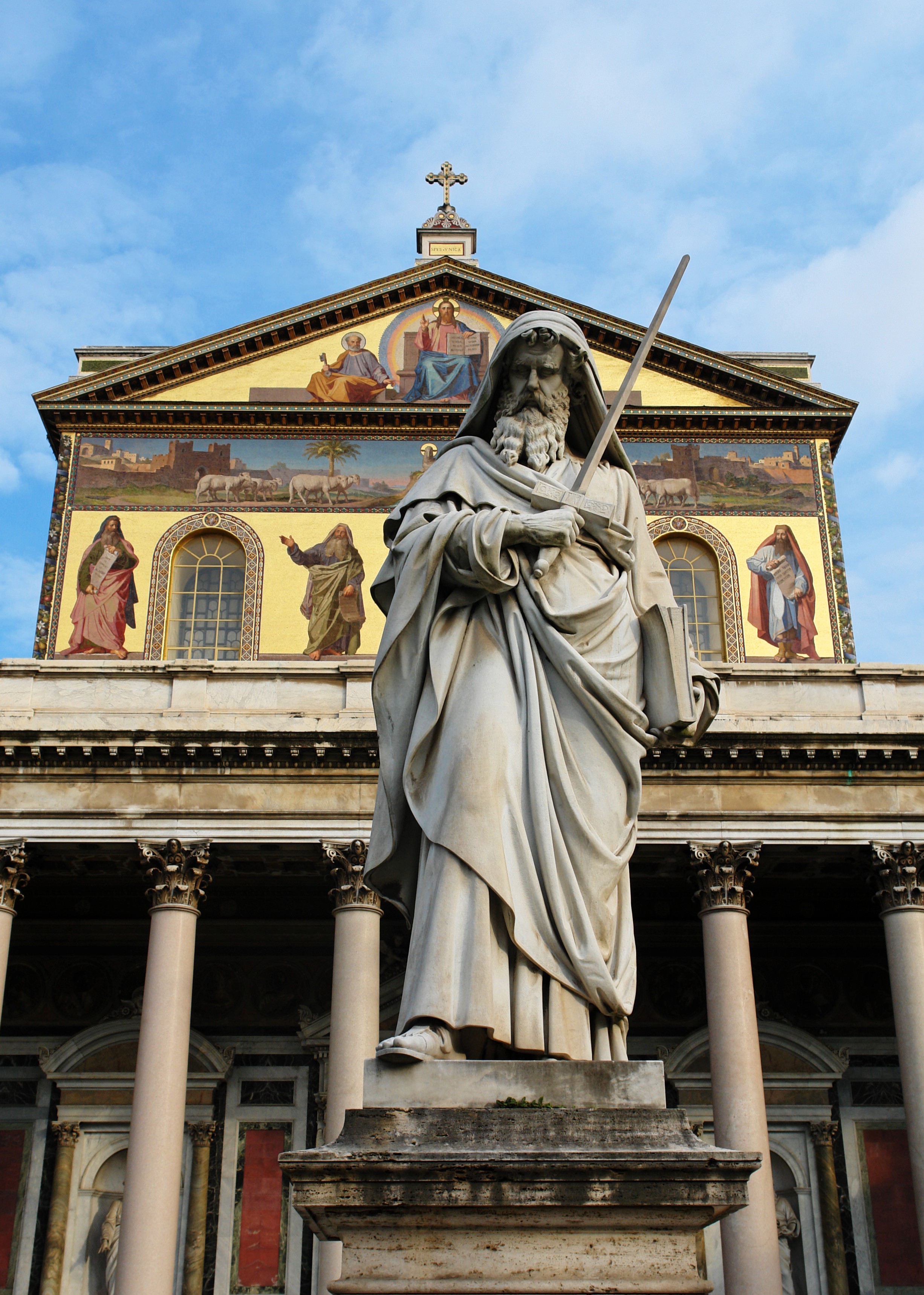
Wiki-image by Alberto Fernandez Fernandez of the front of St. Paul Outside the Walls is used according to the GFDL. Wiki-image of risen Jesus with Ss. Peter and Paul is in the public domain.

Saturday, June 28, 2008

Saturday word, 28 Jun 2008

St. Irenaeus, Memorial (28Jun2008) Lam 2. 2, 10-14,18-19; Ps 74; Mt 8. 5-17
Homily of Rev. Paul D. Panaretos, S.J.
Faith Fluency

The gospels yesterday and today have been about coming to faith in Jesus. Specifically, neither disciples, who were slow to come to faith (which is hope for us all), nor demons, who knew the identity of Jesus, but people the tradition from well before Jesus and afterward called God-fearers, approach Jesus and ask Jesus to help them. They traveled to Jesus physically. They also traversed a more real distance not found on maps from disbelief to belief.

Jesus words described this journey and its goal when he cried out in amazement, “many will come from the east and the west, and will recline with Abraham, Isaac, and Jacob at the banquet in the Kingdom of heaven, but the children of the Kingdom will be driven out into the outer darkness, where there will be wailing and grinding of teeth.”

Jesus’ words remind me that traversing the more real distance from disbelief to belief or from less faith to greater faith involves our movements through life. Jesus’ words remind
caused me to ponder that St. Irenaeus was born on the coast of what we call Turkey and served as bishop in what we know as east-central France, in what had begun as a Roman colony.

He traveled uncharted depths of faith and reason, too, and so could express the essence of Christianity concisely with the maxim “the glory of God is a human being fully alive!”

Full life means exercising ourselves so that we can live the Christian life more effortlessly, like the way we speak our native languages. After we learn the rules of English we don’t think about them as much as we use them to communicate effectively. To travel the uncharted distances of faith and reason and encounter Jesus more clearly in a personal manner makes us more fluent in living the faith of Jesus and making it our own. The more we witness to Jesus with our lives the nearer we get to the light and life of the kingdom. Not practicing our faith veils us in darkness, the consequences of which none of us would choose over light and full life.
_________________
Wiki-image of St. Irenaeus is in the public domain.

Friday, June 27, 2008

"Ten Commandments" for Catholic life today

Mr. John L. Allen Jr. this week happened to speak at the same event as Fr. Ronald Rolheiser. Mr. Allen took notes of the "'Ten Commandments' for Catholic life today," which Fr. Rolheiser offered.

His column also included comment on an inconclusive vote by the bishops at their annual summer meeting. Trying to approve texts for liturgical use is not easy because translation of them from the original Latin cannot be mechanical and then expected to be readily understood or to echo within people's spirits.

The bishop, who intervened to make the vote inconclusive, did not make petty criticisms of words but raised “'structural and semantic' issues." The translating body considered Bishop Victor Galeone's criticism worthy of a response, some of which Mr. Allen quotes, giving us a feel for the difficulty of translating liturgical texts.

Thursday, June 26, 2008

Russet Remembrance. . .

. . .by Jim Wallis

A memorial tribute to Tim Russert premiered on Father's Day, the weekend following Mr. Russert's death at a young age. Jim Wallis, also a man of faith and a commentator, as well as being a preacher, began by admitting, "I knew Tim a little, mostly from the times I have been on the show or at Washington events that we both attended."

However, Mr. Wallis captured many qualities of Mr. Russert as though he "knew Tim [more than] a little."
_______________________________________________
Wiki-image of Tim Russert by hyku used according to the Creative Commons Attribution ShareAlike 2.o license.

Wednesday, June 25, 2008

Need For Therapy Can Arise Anytime

Tuesday's Cleveland Plain Dealer offered an easily overlooked article in its Health Section. "How to know when a therapist can help you" reminds that somethings or events can cause us to seek help to put things in perspective. Otherwise things or events can victimize us.

The brief article also lists seven things people might notice in their lives, their behavior or both that may control their lives. Each of the seven is a moment when a therapist may be of help.

In these days of more sunlight during longer days, people may expect to feel brighter. These seven items encourage us to know that at times we cannot feel brighter on our own. "Truth is," columnist Diane Suchetka wrote, " some problems need a pro."

"How to know when a therapist can help you" reminds that help exists to cooperate with us and brighten our futures. Pass it on!
______________________________________________
Wiki-image of Oliverhold's Clouds-2007 is used according to Creative Commons Attribution 3.o Unported license.

Monday, June 23, 2008

Monday word, 23 Jun 2008

Francis Picklow, M.D., funeral (23Jun2008) Jb 19. 1, 23-27; Ps23; 1Jn 5. 1-5; Mt 9. 6-13
Homily of Rev. Paul D. Panaretos, S.J.
An Older and a Younger Physician

On behalf of Gesu Parish and personally, I extend our prayers and heartfelt sympathy to you, Thomas on the passing of your dear father. Because Dr. Picklow was active and able to the end that will make it harder not to have him in your life as you did; however, he will continue to be with you in different and new ways, which you will discover.

You are not alone in your grief. Both the Catholic church and the medical guild bid farewell to one their own of many years. I offer a few words to console and to strengthen you and your family and friends in your grief; to help you appreciate God’s astounding compassion by noticing that Jesus’ victorious dying and rising were present in the life of your father and in you as well./1/

I did not have the privilege of knowing Francis. I am most grateful to Thomas for introducing his dad to me, sketching him in words for me. Of the details Thomas offered two, which shaped my reflections with you: “old time doctor” and “faithful.”

I am old enough to remember watching the weekly TV show, “Marcus Welby, M.D.” What is more important is that I was old enough to intuit that the opening of the show reflected and confirmed an aspect of life many of us here can remember. Let me refresh your memory, if anyone’s memory is dimmed.

As that shows opening credits finished a white door with a shiny knocker filled the screen. At the sound of the bell the door opened inward, as if by us, and Dr. Welby, portrayed by Robert Young, medical bag in hand, stood with a smile for whoever awaited him and his ministrations.

The house call was synonymous with doctors into the 1960s. The practice of admitting into one’s home not just any professional but one’s physician summarized the qualities Dr. Francis Picklow possessed in daily living: he was “generous, understanding and completely dedicated to his patients, no matter what they needed,” Thomas emphasized to me. Our good fortune in ministering to Dr. Francis Picklow for the last time on behalf of the church is that his life allows us to appreciate Jesus’ reference to himself as divine physician.

One intersection is something we intuit: a physical ailment or an emotional syndrome may take us to a doctor or a psychiatrist, but we are well aware that we are more than our ailments. We expect members of the medical arts to consider our entire selves. Jesus cured diseases, but he healed people. Jesus mended bones and strengthened ligaments, but he healed people. His physical contact with people others shunned broke the barriers of isolation that people allowed to grow between them. Jesus is the divine physician because he healed all levels of human existence: physical; emotional; social; and spiritual.

Another intersection with Dr. Welby is apt. Dr. Welby was the older of the two physicians featured in that television drama. The younger Dr. Kiley practiced medicine in a textbook manner. This difference drove the plots of the weekly shows. The plots of the gospels are driven similarly, although the age of the characters is reversed. Jesus, the young rabbi, was opposed by the orthodox religious professionals of his day. Age isn’t the point; fidelity to life, learning and experience is. The religious professionals of Jesus’ day were so concerned about their observances that they neglected God’s holy longing: I desire mercy not sacrifice.

That is the second detail connecting Dr. Francis Picklow with the mystery of our crucified and risen Messiah Jesus. Dr. Picklow was faithful. Fidelity is a matter of the heart. We humans are reasoning and reasonable, and we are fully human when we engage our hearts and minds together. Dr. Picklow embodied that in his complete dedication to his patients. His fidelity to them was doubtlessly motivated by his fidelity to God. His fidelity to his family, of whom Thomas remains, was similarly motivated by his fidelity to God.

Thomas, you succeed your father as a physician in times and circumstances very different from his. In your father you have a model of a practitioner of the art of medicine. You also have a model of fidelity. When your heart longs for your father, your heart will reach also for Jesus, the divine physician. Making Jesus’ aim yours, I desire mercy not sacrifice, will make you a more compassionate physician and a more faithful Catholic.

To practice compassion, whatever our paths in life may be, is the way to become more healed and whole human beings. Privileged to have known in person or by story Dr. Francis Picklow, who has begun to share in Jesus’ full healing, will give us a share in our own healing, which will be completed when we are reunited with him, Irene--his wife, whom he loved so much--and all who have gone before us and pray for us who pray for God’s kingdom to come.
___________________
/1/ Cf. Order of Christian Funerals 27.
______________________________________________
Wiki-images of Jesus' raising the daughter of Jairus and Grunewald's Resurrection are in the public domain.

Sunday, June 22, 2008

Sunday word, 22 Jun 2008

12th Sunday of the Year A (22Jun2008) Jer 20. 10-13; Ps 69; Rm 5. 12-15; Mt 10. 26-33
Homily of Fr. Paul Panaretos, S.J.
Flip Side

Probably everyone here has heard or red the poet’s line, “No man is an island.” John Donne, who spanned the 16th & 17th Centuries, was convinced that all humanity, in his words,
"is of one author, and is one volume; when [anyone] dies, one chapter is not torn out of the book, but translated into a better language; and every chapter must be so translated."/1/

His conviction, common to many, is that people don’t thrive in isolation. This conviction can be expressed positively, as by a woman writing more recently: “a thousand fibers connect us to those who are present and those present throughout the generations.”/2/ Connection is the flip side of isolation.

Today’s reading from St. Paul also positively expresses a flip side, the concise scriptural expression of our doctrine of original sin. Because this 3-verse selection is proclaimed only every third year, and because our focus favors only one side of the doctrine of original sin--the transgression instead of the gift, to use St. Paul’s words, to hat is reason enough to consider it. Even more important is the fact that all of us are baptizing Christopher and Caroline at this mass, so I am moved to briefly reflect on St. Paul's words during our worship together.

Original Sin is the name the church gives to the consequence of the first humans’ choice to disrupt the harmony of God’s creation. The power of art may even train our eyes on the result for Adam and Eve, their banishment from Paradise. That image evokes for us that Adam and Eve were aware of their no-longer graced condition and that, instead of living in the garden of God, they would have to eke out their living by toil and pains. In a word, everything about human existence is distorted.

We inherit this distortion because “a thousand fibers connect us to those who are present and those present throughout the generations.” Original Sin is unlike any other sin because we inherit it, we do not commit it. Original Sin describes our human condition: we are in desperate need of being returned to right relation with God, with others, with ourselves. Not only fractured relationships, we inherit death, the final wrenching apart of our bodies and spirits./3/

The name of the doctrine contains only half of the doctrine, original sin, which focuses us on the transgression. The rest, the flip side of the doctrine, is the gift./4/ The gift is a person, Jesus, who restores us to right relationship with God, with others and with ourselves. We are spirits clothed in flesh, we were created as bodily images of God. God’s intention was that our bodies reveal our selves.

Jesus’ body revealed his true self. We know that we do not always reveal our true selves. That is our inheritance of original sin. That is why Jesus is both the gift and the one who restores us to our original holiness, to our true selves as images of God.

Our openness to God restoring us in Jesus by their Spirit is precisely that. It isn’t our effort, our alignment of certain qualities or even virtuous will-power: it is being open. Our restoration, our redemption, our salvation, our confident trust in our Creator and Redeemer: indeed every name and aspect of the gift we inherit no less than we inherit original sin. This is the positive side of the doctrine.

Jesus translates our lives into his "better language," the powerful effects of his grace. Grace is real; grace is God’s life. Grace is more real than the distorting effects of original sin. The grace, the life of Jesus, has already begun to translate us from distortion, disharmony and isolation into clarity, concord and connection.

In your 15 minutes with Jesus this week cast whatever burdens you onto the Trinity. Ask St. Paul to present you to Jesus. Praise Jesus for the gift of life Jesus is to you. Thank Jesus for the life Jesus offers you and creates within you. Ask Jesus to allow you to continue to grow more connected to him; to become a more thriving disciple of his gospel; and to proclaim it more clearly with every fiber of yourself. Close by saying slowly the Lord’s Prayer, which restores our relationships with Jesus, with others and with ourselves the more we pray it.

___________
/1/ Meditation XVII from Devotions Upon Emergent Occasions.

/2/ Violet George,
cited in “Quite Moments,” Catholic Digest, June 2008, p. 126. It provided no bibliographical information about Violet George, and an internet search was not fruitful.

/3/ “We are at once body and spirit,” proclaims
The Catechism of the Catholic Church [CCC] #1146

/4/ CCC expressed it this way: “The doctrine of original sin is, so to speak, the reverse side’ of the Good News that Jesus is the Savior of all...that all need salvation, and that salvation is offered to all through Jesus Christ.” #389. St. Paul emphasized the graciousness of salvation by calling it
charis, a Greek word translated by the Latin, gratis, grace. The meaning is free and unearned.
______________________________________________
Wiki-image of the Expulsion of Adam and Eve and Christ's descent among the dead in the public domain.
Sunday, June 15, 2008

Sunday word, 15 Jun 2008

11th Sunday of the Year A (15Jun2008) Ex 19. 2-6a; Ps 100; Rm 5. 6-11; Mt 9. 36-10.8
Homily of Fr. Paul Panaretos, S.J.
Deeply Personal, Never Private

You may recall hearing on the Second Sunday of Lent God calling Abram to leave behind his father’s home and land and go to a place to which God would lead him./1/ Abram was not hearing God the way you and I hear one another, but he was alert to God communicating in a most real way. God made a covenant with Abram in that land when Abram took animals slaughtered them and divided them in half along a line. As the sun was going down, a deep sleep fell on Abram… and he heard God promise him and his descendants the land Abram reached./2/

Scripture described in human language an altered state of consciousness: deep sleep fell on Abram, and he discerned God address him. Other prophets before Jesus and his disciples with him and after him were aware of God’s communication in altered states of consciousness. In deep sleep, drowsy, in dreams are only a few ways scripture describes how people discern God. It is figurative language. Human speech cannot capture this most real and awesome event: God communicating to humans. Figurative does not necessarily mean fanciful or false. Jesus spoke the truth, using many figures--his parables./3/

We heard in the first reading God communicated with Moses on Mt. Sinai. To hear not human speech but divine communication; to hear not with ears but inwardly and truly: Moses was conscious in a way deeper than in ordinary living. Most importantly, what Moses discerned was not meant for him only: you shall speak to the children of Israel…you shall be to me a kingdom of priests and a people set apart. Those are powerful words: all the people would make God known by how they lived. Jesus' compassion, his teaching and preaching, his healing ministry embodied God’s compassion and modeled for his twelve disciples their mission on which he sent them.

In these days of natural disasters, untimely deaths--many of us remain stunned by the loss of Tim Russert--and high-jacked personal and national economies, we welcome encouragement to remember that how we live has greater power than all devastating twists, which wrench us from our moorings and seem to drown our morale.

Along with the first apostles--who knew their own devastations--Jesus commissions us each day to make him better known, to spread his kingdom by the way we live. Jesus was quick to add that we cannot do kingdom-work by our efforts alone: pray the Lord of the harvest to send out laborers into his harvest. To pray means our public worship and intercessory prayer. To pray also means to enter our other consciousness in which we discern how Jesus invites each of us to embody his mission of compassion, teaching and healing, and not without frequent prayers to Jesus to keep us from drowning in so many concerns. What we discern Jesus communicates to us is deeply personal and never private. When I’m aware of Jesus forgiving me, I am to show forgiveness more readily. When I’m aware of Jesus’ patience with me, I am to exercise patience as well. When I receive Jesus’ body and blood, I am to carry myself with Christian dignity and let it shine.

In your 15 minutes with Jesus this week, allow the Trinity to enfold you with love and divine security. Ask the 12 apostles to present you to Jesus so that you and Jesus may converse. Speak with Jesus about how Jesus has reconciled you to Jesus, to his Father and to others. Praise and thank Jesus for making you one with him and for making you a minister of his reconciliation in your daily life. Close by saying slowly the Lord’s Prayer, which guides us on living the mission on which Jesus sends us each hour of every day.

____________
/1/ Genesis 12. 1-3.
/2/ Cf. Genesis 15. 7-18.
/3/ Mark 4.2.
__________________________________________________________
Wiki-images of Abram journeying to new land and of Jesus and his apostles are in the public domain.

Saturday, June 14, 2008

Saturday word, 14 Jun 2008

Greg Hoener/Bethany Lyons wedding (14Jun2008) Gn 2.18-24; Ps; 1Jn 4.7-12; Mk 10 6-9
Homily of Rev. Paul D. Panaretos, S.J.
A New Harmony of Salvation

Greg and Bethany, I compliment you on your selection of scripture readings. They challenged me to see anew about our life with God and about your future together with God and each other. I’d like to explore that briefly with you and with your guests this afternoon.

Our Christian tradition has always offered us many ways to consider God and us in relationship. One way is as Creator. I have found it helpful, and people with whom I have shared what I am about to share with you have told me it has helped them, to consider God creating. The emphasis is on the verb more than the noun: focusing on creating not just Creator. Training our inmost attention on God creating broadens our appreciation of God, our Creator. Considering, even praying, “God, who creates me,” deepens a person’s sense that God works in and through all things at this moment for me and with me. We collaborate more closely with God creating us and more readily glorify God with our bodies, our personalities, ourselves.

Bethany and Greg, you make this concrete for us by inviting us to consider God creating you. Your choice of verses from the Book of Genesis is a familiar, perhaps so familiar that its words flew by our ears. God was convinced that the crown of creation, the human, needed another like himself: it is not good for the man to be alone. Did you notice how God remedied the man’s loneliness? The Lord God cast a deep sleep on the man, and while he was asleep, he took out one of his ribs and closed up its place with flesh. The point is not how God did that. The point is that God created the woman out of the man: the man [who had been naming all that God created] said: “This one, at last, is bone of my bones and flesh of my flesh.”

Flesh connoted the entire human being for ancient Hebrews because their language had no word for “body.” The man implied "self" by his statement, not merely this one had flesh rather than feathers, scales or coarse skin. The man saw himself in the woman. You know that the first humans saw more than similarities or family resemblances. They saw the humanity they shared, their humanity which God creates at each moment.

Because God creates us at each moment, we aren’t only human; we are like God. That means we are not the highest animals. Instead, we are “spirits clothed in flesh,” to use the venerable expression of St. Thomas Aquinas. Our kinship with God, that we are spirits clothed in flesh, surpasses human generation, which is a blessed effort Greg and Bethany will enjoy. Our Christian tradition has distinguished God creating us moment by moment to be like God with the word, begotten: Beloved, let us love one another, because love is of God; everyone who loves is begotten by God and knows God.

Divine begetting produces effects, qualities God infuses in us. The specifically Christian quality is Christlike love. Christian love is no emotion. Christian love is authentic compassion freely and readily extended to others. God infuses within us this godly effect of Christian love at baptism. Our lives seek to cultivate authentic compassion freely and readily extended to others. Bethany and Greg, making one life out of your two lives is your Christian future of cultivating authentic compassion.

The first school in being begotten by God is the family. Christian spouses are a “domestic church,” /1/ and they enflesh the divine qualities, esp. authentic compassion freely and readily extended: first to one another; to family and friends; to the poor and those on the margins of society; and then to your children.

Bethany and Greg, today you begin to fashion your domestic church. Your married life will help you save each other’s souls and welcome “children lovingly from God”/2/; your married life will also allow God to work through you for the sake of the world. You will never lose your individual selves. Instead, both of you will strive to make one life together. Even more than the way you give love, the way you receive love from each other will allow God to keep bringing to perfection in you authentic compassion, which Jesus embodied and models for you and for all, and to keep creating you to be the man and woman God desires you to be for each other.

I’m very proud of you and, I wish you every good thing. I congratulate you on behalf of the church. It is true that God created you for one another. It is even more true that God will create you each moment for everything ahead of you. Please remember that in pledging yourselves to each other you allow God to work through you for the salvation of each other as well as our world. As you forge one life together God begets something new: a new harmony to feel God creating you and your love for each other, and to help us and others feel God recreating the world as we see you receive love as well as give it.


______________
/1/ Dogmatic Constitution on the Church, 11 of The Second Vatican Council.
/2/ Rite of Marriage, Ch.2: 44.
__________________________________________________________
Wiki-image of wedding floristry used under the GFDL; Jason Hutchen's exchange of rings is used according to the Creative Commons Attribution 2.0 license.

Sunday, June 08, 2008

Sunday word, 08 Jun 2008

Deacon James O'Donnell assisted me at Masses today, at which he preached this fine homily. All credit for its text belongs to him.

10th Sunday of the YearA (08Jun2008) Hos 6.3-6; Ps 50; Rm 4.18-25; Mt 9.9-13
Homily of Rev. Dr. James O'Donnell

You are what you eat. We’ve all heard that expression before and it’s very old. The Roman philosopher, Lucretius, probably gets credit for it. What he actually reportedly said was, “A man becomes what he eats.” I think it can be modified a little: We become like those we eat with. Two nights ago, we were invited to a rehearsal dinner before a wedding. It was held at a Chinese restaurant and it was fabulous. There were ten courses in this dinner, not counting two more dessert courses. But what made it so special was the company of those with whom we shared that meal. We assembled as strangers, literally from all over the world. A relative of the groom had only just arrived from Beijing. By the end of the evening, after introductions, and speeches, and toasts in Chinese, Polish, and perhaps several other tongues, we were a community. Strangers no longer, we celebrated together new friends and the joy of the young couple who were getting married. Across all cultures of our human family, we are often at our best when we share a meal together.

In today’s Gospel we find Jesus sharing a meal and, in doing so, he is not just describing but acting out a parable about the universal message of conversion he brings. Jesus had many a dinner in the company of tax collectors and those considered sinners – not necessarily evildoers but people religiously unclean, outside the many laws that dictated everyday existence for a good Jew. Some Bible commentaries say this would include, but not exclusively: herdsmen, butchers, tanners, sailors, and even some shopkeepers. The Pharisees asked why he does that. Why he eats with, and travels with, and lives with those outcasts. And Jesus, using full measure of his very uncommon virtue of common sense, lets them know: because that’s where I am needed. Jesus never did anything just for show. Remember that the dinner scene here occurs early in the ministry of Jesus. He has just come on the public stage in the Gospel of Matthew. Already, he is the new preacher who gave the memorable Sermon on the Mount that included the Beatitudes. People were still talking about it. He has swept through the countryside curing a leper, a centurion’s servant, Peter’s mother-in-law, the paralyzed man at Capernaum, and he freed several possessed people of their demons. The Pharisees are trying to take the measure of this young vagabond rabbi. How can he do all this, and yet hang out with a rough crowd who are all outside the law…especially this Matthew, this extortionist, this tax collector?

Consider the challenge of Jesus to Matthew. To the universally hated, Roman-collaborating, crooked, tax collecting Matthew, Jesus simply says, “You, follow me.” And Matthew followed. Matthew must have known that his response would come at a cost. Matthew knew he was walking away from a comfortable job for uncertainty. He gave up a good income but gained honor. He gave up security for an adventure that would change the world. Matthew could not not go. Matthew is us. The call that Matthew heeded and the one to which we are certainly also called, is not superficial. I came to call sinners. Alright then. Who is not a sinner? Who is not an outcast from something? The invitation and the challenge from Jesus is universal and we all get the offer. But it is not a call to just show up. There are no auditions here. No alternatives. Jesus calls us to change profoundly. To prioritize differently. To give up a lot for a lot more.

The clue for us to accepting his challenge is in what he said, “Go and learn the meaning of I desire mercy and not sacrifice.” The Pharisees knew exactly what he was getting at. Jesus quoted the prophet Hosea who quoted the words of God saying, “When their shallow piety evaporated like morning dew I slew them by my very word because it is love I desire, not sacrifice, and knowledge of God rather than holocausts.”

Mercy and love take root within, they come from the heart. Once vitalized they can be given out, expressed in actions of mercy and love toward someone else – these deeds ever so much more desired by God than simply showing up at any altar, hardhearted and selfish, in an empty ritual only of words, even with burning a dove or a goat.

Clearly, Jesus picks his dining partners for their character, their internal possessions of mercy and love that they cultivate and share. He likes that kind of people. He wants more of them at the table. We are invited to dinner with him. And remember, we become like the One with whom we eat this meal.
______________________________________________
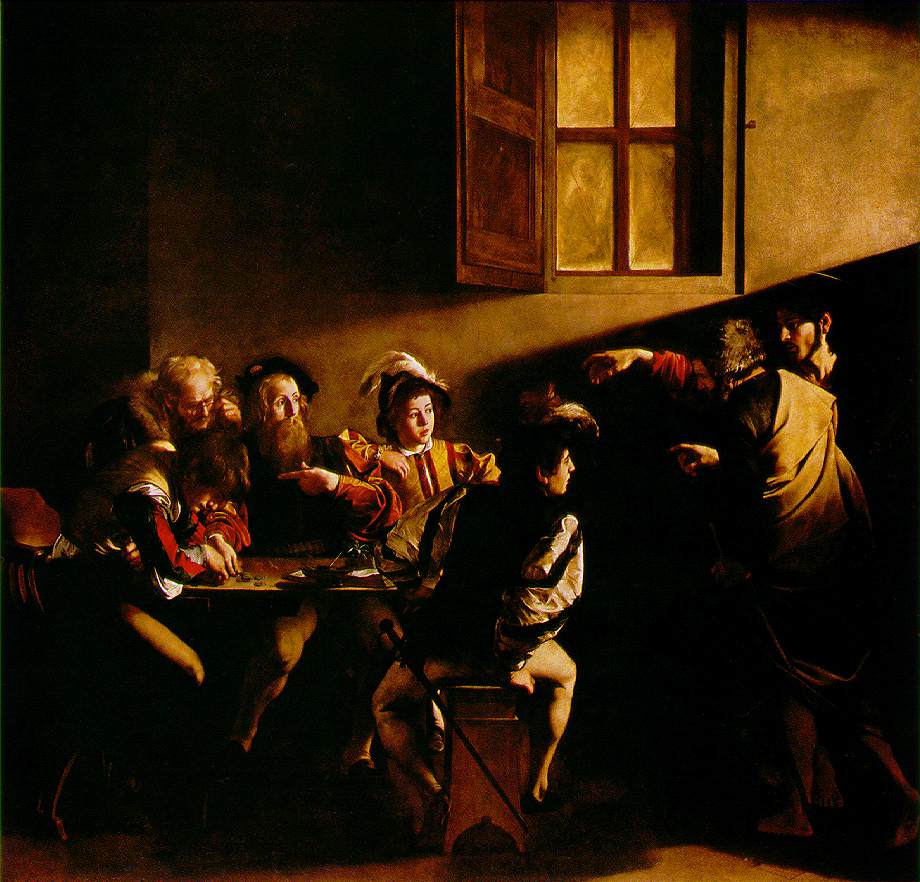
Wiki-image of the Calling of St. Matthew is in the public domain.

Saturday, June 07, 2008

Saturday word, 07 Jun 2008

Marc Thibeault-Bridget Cavanagh wedding (07 Jun 2007) Gn 1.26-28; Ps 145; Col 3.12-17; Mk10. 6-9 Homily of Fr. Paul Panaretos, S.J.
The Image You Are

Bridget and Marc, from this day forward you save each other's soul. Let me repeat that: from this day forward you save each other’s soul.

The communal nature of following Jesus involves more than attending to personal religious needs. Jesus calls disciples in each era to “come away from ourselves, take leave of ourselves,” as my German Jesuit brother, Karl Rahner, so concisely expressed it./1/

His phrase to “come away from ourselves, take leave of ourselves,” echoes for me the words of Jesus you asked us to hear with you on your wedding day: for this reason a man and a woman shall leave...father and mother...and the two shall become one flesh. Jesus speaks to us about more than physical location. Jesus recognizes more than individual maturity to live away from home. To become one flesh means that you reveal Jesus in a new way, you have become an image of the church.

What does it mean to become an image of the church? First, it means that, Marc, you bring Bridget closer to Jesus by revealing divine love in your person; and Bridget, you bring Marc closer to Jesus by revealing divine love in your person. To reveal Jesus to each other is down to earth, most practical as well as a great grace as St. Paul expressed it. Using a clothing-metaphor, St. Paul realized this great grace is one with our humanity. So adorn yourselves in heartfelt compassion, kindness, humility, gentleness and patience, bearing with one another, if one as a grievance against another.

To become an image of the church also means that how you learn both to receive love from each other and to give love--in all those myriad ways St. Paul named, as well as ways you will discover on your own--how you learn both to give and to receive love from each other will allow you to move with greater Christian poise among people. People may not know how to name what they sense, but they will feel some-thing unique, for you will be revealing Jesus to them even without saying a word.

Thirdly, to become an image of the church means that affection is true communication. In your married relationship, as I mentioned in one of several conversations we enjoyed, every-thing is a medium of communication. In addition to words silence, time, eating, laughing, crying, challenging, money and sex are ways you will communicate. Your affection for each other is unique and belongs solely to you both. In future, your children will school you in showing affection and communicating in ways that will gratify you and challenge you to be more loving than you have yet to imagine.

The Sacrament of Matrimony doesn’t only offer you the opportunity to become an image of the church, an image of Jesus’ compassion. The Sacrament of Matrimony graces you to be a “domestic church”/2/ to incarnate Jesus by your life and love for the sake of our world. Image of Jesus’ compassion and his church is your vocation of married maturity, which flows from your baptismal maturity. To continue to grow more mature requires keeping near Jesus.

The Sacrament of Matrimony graces you to do that. Staying connected with the church graces you to do that. Living the Christian life, beginning with each other in those practical ways St. Paul listed, graces you to grow more mature in and with Jesus.

Bridget and Marc, and their families and friends, I don’t toss the word “grace” casually. We know lovers are not always compassionate and kind; not always gentle and patient; lovers do not always bear with one another. Grace helps us to do so and to work with one another genuinely to forgive and to learn how to move forward with one another lovingly and honestly.

I’m proud of you both and delighted in your future. I’m grateful to you for being honest with one another. I congratulate you personally and on behalf of the church, who rejoices that you have agreed to save each other day by day and to reveal Jesus by your married life and love to us, who know you, as well as to people, who do not.

_____________

/1/ His The Love of Jesus and the Love of Neighbor. New York: Crossroad, p. 85.
/2/ Gaudium et spes, The Second Vatican Council.

______________________________________________

Wiki-image of summer flowers is used according to the GFDL.