Friday, August 16, 2013

Team and Agony

Mr. John L. Allen Jr. reports on one Vatican worker in a story about the emerging papal “team.” He also adds that this this has been a “truly agonizing week [for anyone] “concerned about the fate of Italian Jesuit Fr. Paolo Dall’Oglio.” Both appear in today’s All Things Catholic.
___________________________________________________

Monday, August 12, 2013

Jesuit Jargon

Because posts here frequently link to Ignatian as well as Jesuit sites readers may find Jesuit terminology confusing. During lengthy Jesuit formation terminology multiplies. Jesuit James Martin names and explains them.
___________________________________________________
Wiki-image by MOIC of seal of Society of Jesus CC BY-SA 3.0.

Sunday, August 11, 2013

Sunday word, 12 Aug 2013

Personal Touch
19th Sunday of the Year (11 Aug 2013)
Homily of Fr. Paul Panaretos, S.J.
Each Easter Vigil we prepare the paschal candle. It symbolizes Messiah Jesus, who has come and who will come again. Priests trace the inscription on the paschal candle, saying: Jesus Christ, yesterday and today, the beginning and the end, the Alpha and the Omega; all time belongs to him and all ages; to him be glory and power through every age and forever.1 That sentence voices faith in Jesus: the Word, who creates all things and to whom all time belongs, entered human history, God-with-us. By time we don’t mean some mystical measure or a calendar for convenience. All time means past, present and future with all created things. Jesus is Lord of history and all within it.

The visible paschal candle assures us Messiah Jesus, though unseen, accompanies us daily. Jesus’ presence also shapes us to expect his return. At mass we acknowledge we expect Jesus’ return in glory. One way is by our Amen closing the priest’s words after the Lord’s Prayer, which include: as we await the blessed hope and the coming of our Savior, Jesus Christ. Heard often they fly by our ears. Those words link us to Jesus, whom we await.

The Second Vatican Council reminded us that the expectation of the blessed hope and of the coming of the Lord is part of the mystery of Messiah Jesus as is his incarnation and birth,[his life] until the ascension [and] the day of Pentecost.2 We celebrate them and other aspects of the Christian mystery here; we read them on the pages of sacred scripture. You and I write them on the sacred pages of life when we are alert and ready to act on every opportunity to do our Messiah’s work. To that the gospel pointed. It did not spell out what being alert and ready to act look like in detail.

Though we have no recipe for action, we have gifts to guide us. We have Jesus, the greatest gift. To be in relationship with him is God’s gift. To continue his work of care and reconciliation is God’s gift. To live our experience of God caring for and reconciling us is possible because of Jesus’ self-gift, the eucharist we share here. Our Christian mystery deepens more: as we respond to Jesus and his self-gift, our response to him turns us to others. Pope Francis named that gift: “When you meet with the one in greater need, your heart will begin to enlarge, to enlarge, to enlarge!”3

Extending ourselves and our resources to others draws us closer to Jesus. He is, in the words of his parable, our master whose return we await. We are stewards of his mystery. Jesus peopled his parable with key players in ancient Mediterranean households. The steward was the one “to whom the head of the house...entrusted the management of his affairs, the care of receipts and expenditures, and the duty of dealing out the proper portion to every servant and even to the children not yet of age.”4

Stewards not only kept track of accounts and supplies. Stewards knew the members of the households they served. Mediterranean households outnumbered our largest extended families. That meant a steward’s knowledge was personal and not just a knack for figures. Relationship figured large in a faithful and prudent steward. It’s no wonder early in the church’s history the Greek word for steward was used for a preacher of the gospel.5

Jesus’ parable describes our Christian life: you and I preach the gospel with a personal touch, to use a familiar phrase. Because we await the blessed hope and the coming of our Savior, we deepen our relationships with Jesus; as our relationships with Jesus deepen, we are freer to share our gifts with others, especially those vulnerable and in need; our sharing helps others meet Jesus. Money, power and influence aid preaching the gospel with a personal touch; none is an end in itself. Stewardship of our homes, parish, diocese and community confirm that.

In your daily 15 minutes with Jesus this week
  • Begin by noticing ways the Trinity blesses you.
  • Ask St. Peter to present you to Jesus.
  • Chat with Jesus: praise Jesus for being your companion, who creates and redeems you; thank him for choosing you to be a steward of his mystery.
  • Ask him to confirm your faith in his presence as well as in his return to complete what Jesus has begun in you.
  • Close saying slowly the Lord’s Prayer. His words, your kingdom come, on our lips point to a future which is becoming present. Jesus announced the reign of God is at hand6 and among us.7 Jesus chooses us to join him and spread his gospel with a personal touch.

Link to this homily’s Spiritual Exercise

_____________
  1. Roman Missal. Preparing the Candle begins each Easter Vigil.
  2. That Council’s Constitution on the Sacred Liturgy, 102.
  3. His video message to his fellow Argentines on the  07 August Memorial of St. Cajetan. text of  message
  4. Entry for economos [Greek, οικονομος] in Thayer’s Lexicon, online version.
  5. Strong’s Lexicon at 3623, online version.
  6. Matthew 4.17; 10.7 (instruction to his disciples and us); Mark 1.15.
  7. Luke 17.21.

________________________________________________________________

Saturday, August 10, 2013

Encouraging Fascination

The Roman Catholic Lectionary begins reading Chapters 11 and 12 of the Letter to the Hebrews for a month of Sundays. It is a fascinating homily. Yet its distance from the contemporary scene includes modern human experience, culture and ways of knowing. Compared to other New Testament documents, it is read sparingly. Jesuit Peter Edmonds not only “helps us to make something of the readings from the Letter to the Hebrews that we will hear over the next four weekends”; he also comments on its other portions read at different times of the liturgical year.
_______________________________________________________

Friday, August 09, 2013

Of Kidnapping and Litigation

Mr. John L. Allen Jr.’s reports on the kidnapping of Jesuit Paolo Dall’Oglio, the apostle of “Muslim-Christian friendship” in Syria. In whose hands he is detained recently came to light.
A few lawsuits against priest-abusers have charged that each acted “as an ‘agent’ or an ‘employee’ of the Holy See while he served as a priest, and the Vatican is responsible for damages from his behavior.” Mr. Allen comments on both stories in his All Things Catholic.
_______________________________________________________

Wednesday, August 07, 2013

Not an Endorsement, But a Vivid Video

How do caregivers do their jobs well? According to this Cleveland Clinic video caregivers, “Hear what [others] hear. See what they see. Feel what they feel.” Everyone has a story. This video captures that and invites anyone to look at others differently.

Tuesday, August 06, 2013

Revolution—Part 1

Pope Francis has begun a revolution. It is more substan-tive than his popularity (the pope’s “approval ratings,” Mr. John L. Allen Jr. noted, “would be the envy of any politician or celebrity.”) The substance registers as change, accountability, augmenting the role of laity, and “repositioning the church.” Mr. Allen amplified these in part one of his appraisal.

_______________________________________________________

Monday, August 05, 2013

Pilgrimage Then and Now

Jesuit Michael Holman preached on 31 July. Not so long ago he had visited the site of a chapel St. Ignatius had once visited. Then it was on the outskirts of Rome; now it is within its borders. The chapel on the site now is of 20th-Century vintage. The site, then and now, Fr. Holman reminded is about “everything.”
__________________________________________________
Wiki-image by Croberto68 of chapel at La Storta CC BY-SA 3.0.

Sunday, August 04, 2013

Sunday word, 04 Aug 2013

Two Implications
18th Sunday of the Year (04 Aug 2013)
Homily of Fr. Paul Panaretos, S.J.
St. Paul wrote faith communities—churches he had established. The communities shaped his messages. They told the good news of the risen messiah Jesus; how the baptized participated in the new life of the Risen One; and how living that life reshaped relationships with the God of Abraham and Sarah, Moses, Miriam and all the prophets before the prophet Jesus and with all humans. Baptized living still means seeking to deepen the absolutely new life of risen Jesus in us and all we do.


Today’s scriptures suggest two implications about deepening this new life or setting our affections1 on the life of risen Jesus we share by our baptisms. Implication one is to live for others. To the Colossians St. Paul suggested no private rigorism to seek divine life. He recommended the community, the common union of our shared humanity. Christian life is not measured by nationality, gender, status or insider-outsider divisions. St. Paul listed pairs of divisions contemporary to him and the Colossians: Jew/Greek; male/female; slave/free and circumcised/uncircumcised. We have ours: established/migrating; developed/developing; addicted/free; traditional/new age; healthy/ill; employed/jobless—supply yours.

Private heroics or rigorism tempt us to shape our lives and seek fulfillment. The faith community—not private heroics or rigorism—is both shaper and goal of seeking what is of God, who is most real: being honest in word and deed; making every effort to build up others; and being open handed as well as open hearted. Seeking what is most real, being honest with one another and not living solely for self benefit both the faith community and the global, human community.

Living without reference to others dooms us to a lonely, meaningless existence. This second implication the Book of Ecclesiastes laid bare. Vanity of vanities was no curse but the Old Testament Preacher’s way to say how wretched life lived with no reference to others is. The Old Testament Preacher lived amid advances to humans as well as age-old inclinations to make self the center of things. Those inclinations registered and still register as pride, honor and riches, to use Ignatian shorthand. The Old Testament Preacher was a courageous witness. He courageously witnessed to making God the horizon to which we lean and the mystery embracing daily routines as well as astonishing wonders and searing traumas.

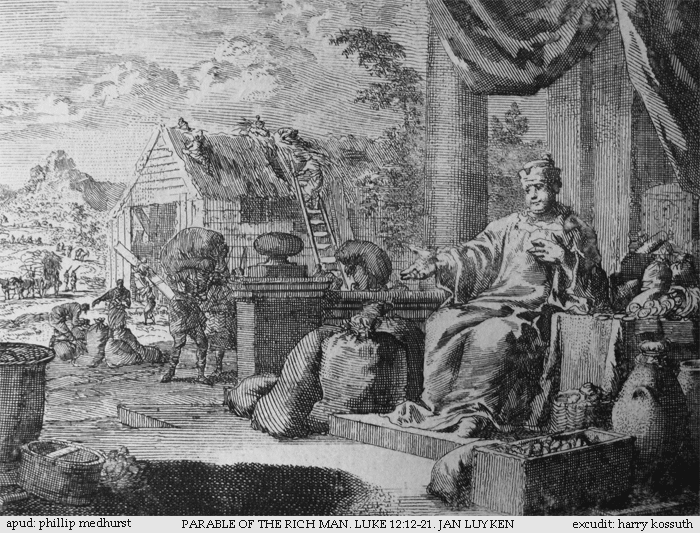
Jesus preached that, too, in his time of even more advances in travel, communication, urban planning—to name only three the Roman Empire markedly improved. That’s the point of his parable of the rich fool. His folly was not his wealth measured in bales of barley and other grain and other goods; his folly was he thought he completely controlled his life. Not only were his harvest and its wealth to him in the market gifts of the Creator. So was his very self. Had he come to think he controlled the rains, which allowed him to store so much in his barns and silos?

When we live with no reference to God; when we refuse to allow God to be the mystery embracing daily routines as well as astonishing wonders and traumas that sear us, we feel trapped in the futility of it all and sucked into ourselves. When we allow God to be our horizon and the mystery embracing us, we live for others with energetic freedom. Not any freedom but the freedom of faith. Faith is nothing less than Jesus’ human response to God, God who is also with us, ever inviting and blessing our response.

In your daily 15 minutes with Jesus this week
  • Pause in the loving light of the Trinity, who creates you each moment. 
  • Ask St. Paul to present you to Jesus.
  • In your words praise Jesus for sharing his risen life and his faith in the mystery who invites us beyond ourselves.
  • Ask Jesus to renew your sense of his presence with you and deepen your awe and wonder at all God’s gifts.
  • Close saying slowly the Lord’s Prayer. Give us this day is more than a petition. Jesus’ phrase reminds us we live moment by moment by divine kindness and for the sake of others as Jesus lived, died and rose for each of us and all people.

Link to this homily’s Spiritual Exercise

____________
  1. The Greek word in Colossians 3.2 we translate as think had richer connotations from what we heard when it was proclaimed. Other versions offer: Think of what is above, not of what is on earth to Set your minds on things that are above, not on things that are on earth [Revised Standard Version]. Set your affection on things above, not on things on the earth [King James Version]. St. Paul conveyed a much more humane activity than mentally connecting ideas.
________________________________________________________________
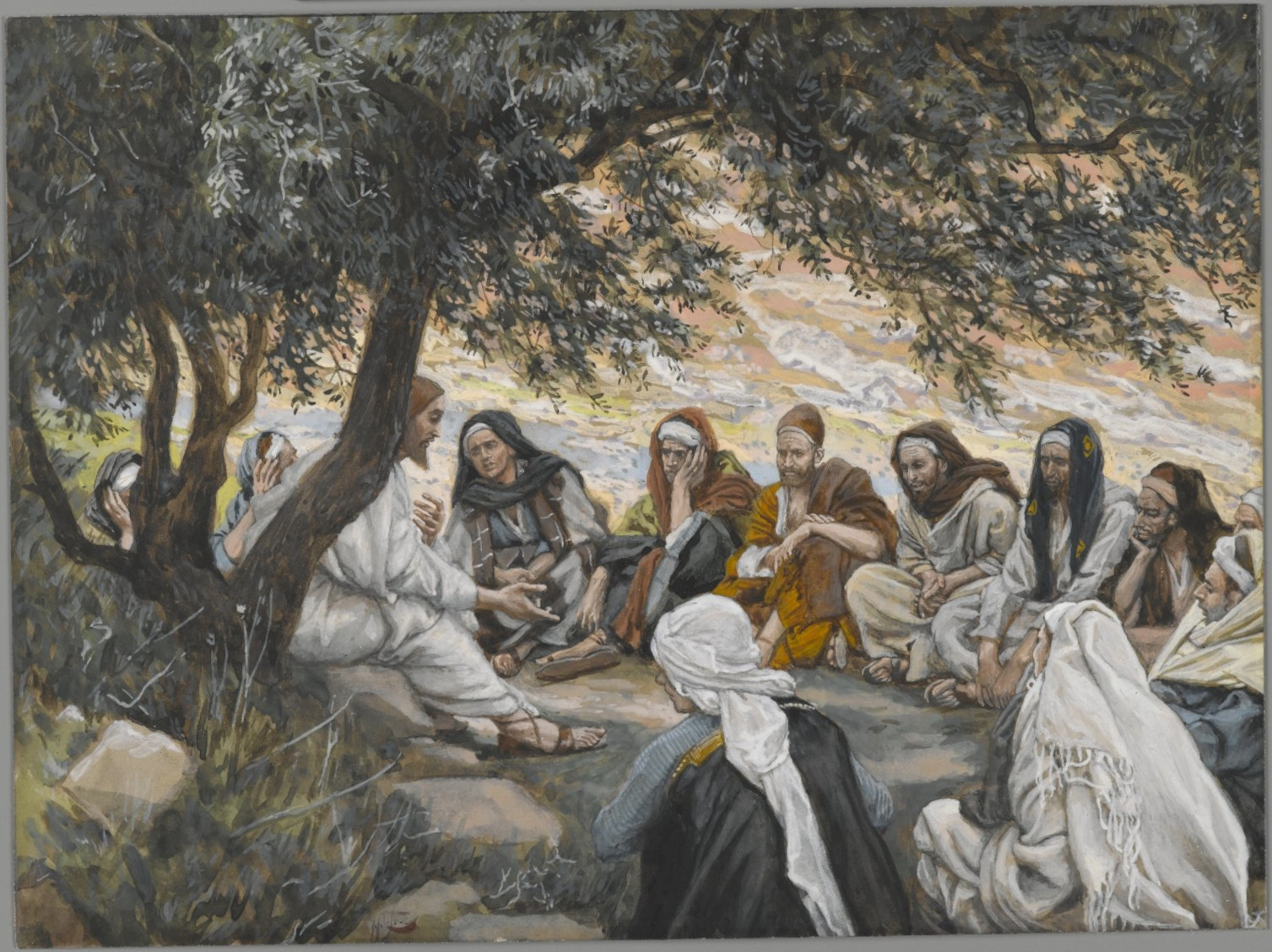
Wiki-image of 17th-C depiction of Vanitas public domain in the U.S. Wiki-image of illustration of parable of rich man Free Art License.

Saturday, August 03, 2013

“Beating Heart of Francis’ Papacy”

In his All Things Catholic post Friday Mr. John L. Allen Jr. recalled that the descriptor of Pope John Paul II was “‘do not be afraid’”; of Benedict XVI “‘reason and faith.’” Pope Francis is the “Pope of Mercy.”
__________________________________
Wiki-image by SajoR of papal coat of arms CC BY-SA 2.5.

Friday, August 02, 2013

In First Jesuit Triumvirate: the One Least Known

Pierre Favre roomed with Francis Xavier and Ignatius Loyola during their years at the University of Paris. The latter two were canonized. Pierre remains beatified. Jesuit Edel McLean helps everyone know him better.
__________________________________
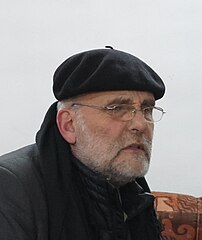
Wiki-image of Pierre Favre public domain.

Monday, July 29, 2013

Pope “Gave a Whopper of [an Interview]”

Pope Francis felt well during WYD 2013. The press corps aboard his plane to Rome would confirm that in spades. Mr. John L. Allen Jr. reported that Francis personally decided “to hold the news conference aboard the 12-hour flight from Rio de Janeiro to Rome...and that aides at one point had counseled him against it.” The Vatican bank, homosexuality, women, Synod of Bishops and reform were among the wide-ranging subjects.
___________________________________
Wiki-image of Shepherd One public domain.

Update: Button Appears

At the Vatican homepage a button on the left links to the pope's daily homilies.

_______________________________
Wiki-image of arrow is in the public domain.

Sunday, July 28, 2013

Sunday word, 28 Jul 2013

Personal and Affectionate
17th Sunday of the Year (28 Jul 2013)
Homily of Fr. Paul Panaretos, S.J.
Our scriptures readings amplify the Psalmist’s words we made ours: The Lord will complete what he has done for me; your kindness, O Lord, endures forever. Two things they affirm are what God begins God completes; and God’s way of steadfast, loving kindness is the way of a parent not a guardian or a leader. Parents help children fulfill the lives parents began. Parents love their children even when their children make themselves difficult to love. Like parents God loves us when we blur God’s image in whom we are created.


Genesis describes God like parents who seek to know what and how their children are doing.   God sought to find out the truth of those in Sodom and Gomorrah. They had blurred the image of God by discounting the dignity of others. Whatever our images of God may be, Abraham enjoyed an intimate, parental one. His back-and-forth with God over those God sought to learn testified to his deeply felt knowledge of God’s faithful mercy.


Abraham’s knowledge of God’s mercy allowed him to persist in calling God to remember God’s mercy. Abraham was not coercing God to Abraham’s whim. We Christians, as Jesus taught us, do likewise: we bless God and praise God and call on God ever to remember us. When we pray our model prayer Jesus gave us, we call on the mercy and love of God we receive in the eucharist.


When we pray we do not coerce God. We seek deeper awareness of how our lives intersect with God’s desire for us. “God’s desire for us” describes the will of God in a way both personal and affectionate. God desires us always. That is why God created us and keeps creating us each moment. God’s desire for deeper personal bond with us is why God became human with us and for us in Jesus. For us Jesus recovered what Abraham enjoyed in his relationship with God.


Jesus’ prayer expresses his relationship with God, whom he called his Father. Jesus’ disciples sought it when they sought to pray like him. Our Lord’s Prayer allows us to enjoy Jesus’ relationship with his Father. Here are five ways: 1) Jesus always endorsed the holiness of God; he and all Jews knew by heart, the Lord is one, the Lord alone whom we love with our whole being and others because the Lord loves them1; 2) Jesus proclaimed the reign of God by his actions not only in words; 3) Jesus relied on God not things. Jesus used created things to help him proclaim God’s reign; 4) Jesus linked forgiveness of sins with his ministry to individuals and to the world; his blood was the new covenant for the forgiveness of sins2; and 5) Jesus encouraged his disciples to pray for courage and freedom from testing. He was tested as we3 are from his desert temptations through his agony in the garden.


Jesus’ tiny parable of the friend at midnight closed his teaching his disciples to pray. It vividly encourages us to persist in our praying. The sleepy friend responded to a crisis in the dead of night. God’s way of responding and giving always exceeds the ways humans give. God may respond and give mysteriously but never with spite nor any snake-for-a-fish or scorpion-for-an-egg trickery.


Recently Pope Francis considered Abraham and encouraged us to “forge ahead in prayer, courageous [and] insistent.” He would agree with Jesus’ tiny parable that we pray also with firm purpose. Those are “motivations,” he said, “which come right from the heart of God.”4


In your daily 15 minutes with Jesus this week
  • Praise the Trinity for constantly creating and redeeming you.
  • Ask Jesus’ disciples to encourage you to ask him their question, “Lord, teach [me] to pray just as John taught his disciples.”
  • Chat with Jesus: let him know what makes praying difficult as well as what moves you to pray.
  • Ask Jesus to deepen your courage and to strengthen your affection and your insistence with him, his Father and their Spirit.
  • Close saying slowly the Lord’s Prayer. Our model prayer Jesus gave us contains all we believe; it reminds us our Creator treats us as good parents treat their children; and it reminds us that we are siblings of Messiah Jesus, the Only Begotten of God.5
__________________
  1. Deuteronomy 6.4; Leviticus 19.18. Jesus joined these in his teaching; so Christians do.
  2. Jesus’ words over the chalice remind us of that daily.
  3. Hebrews 4.15.
  4. Today’s first reading was the first reading on 01 July and Pope Francis spoke about it in his homily.
  5. So St. John Chrysostom summarized the Lord’s Prayer in his Homily on Matthew 19 at #6.

Link to this homily’s Spiritual Exercise
________________________________________________________________

Thursday, July 25, 2013

“One Riveting Moment”

Favellas are Brazil’s slums. In them, Mr. John L. Allen Jr. says, the “only things that really work are the gangs and the Pentecostals.” In his third installment from Rio during World Youth Day, Mr. Allen reports that Pope Francis “came to [one] slum to say, ‘The church is with you.’”    
______________________

Sunday, July 21, 2013

Sunday word, 21 Jul 2013

Proportion
16th Sunday of the Year (21 Jul 2013)
Homily of Fr. Paul Panaretos, S.J.
A while ago in The New Yorker John Radney, I recall, wrote its “Shouts and Murmurs” column. He wrote about hearing voices in his head. Humorously, Mr. Radney related these voices long had been with him:
Get up; go to the bathroom; take a shower; get dressed; eat breakfast (I don’t recall he admitted always listening to that one); go to work.
Such voices drive us all.

Other drives have their voices. Many people find “voice” best describes religious experiences. I wondered what voices Abraham and Sarah heard in their heads while extending hospitality to God. Abraham may have heard, “These visitors are more than visitors, but I can’t ask them. I’ll rely on my Eastern Mediterranean behavior: when in doubt, spread a feast.” Abraham may have answered that voice, “Heaven knows if I’ll be around to tell this to my promised ancestors!” And Sarah and that flour: she used nearly a bushel! It seemed to have clouded Sarah’s hearing. At least it muted voices she may have entertained. At the tent door she overheard one visitor’s voice tell Abraham she would be the mother of his son. She had nothing to say to that voice echoing in her old soul. Her laugh was answer enough.

I also imagined voices Mary and Martha heard as they opened their home to Jesus. Voices like: “It is so kind of Jesus to stop when he visits Jerusalem!” Mary, right? “We have little food! Jesus never comes alone!” Surely Martha. “When I listen to Jesus it’s as though he had never left Bethany.” “I never look forward to Jesus’ visits even when I expect him.” “Being with Jesus is to live in the presence of the Lord”: Jews often made the Psalmist’s voice theirs!

Freeing my imagination I realized Martha and Mary dwell in me. I suppose they dwell in each of us. To which voices, like ones which may have echoed within them that day at home, do I give first importance in the home of my heart? Does the melee of mundane, essential events drown my thirst for inner quiet? Do I allow only one voice? The gentle voice or the urgent one? When we afford room to each in the right proportion, we allow God to make known the riches of…glory in us. Proportion is key to this gospel. We see what the lack of it has done.

Some had and gave the impression that Mary won that day. Some contemporary folk think Jesus settled for Mary over Martha. Others live frustrated, thinking Mary had never helped her sister at all. A close reading opens onto freedom not frustration. Martha, burdened with much serving, came to Jesus and said to him, “Lord, do you not care that my sister has left me by myself to do the serving? Tell her to help me.”

Would any of us ask guests to settle squabbles? Guests are not asked to do that. We ask nothing of guests and forbid them to help. When a guest defies a host and helps, the host allows the guest to win. It’s the hospitable thing for us.

Ancient Mediterraneans had a stricter code of hospitality than us. To ask guests to settle disputes violated their code. In her stress Martha did. Jesus did not gasp to Martha that she had done anything wrong. Nor did Jesus obey Martha’s order. He assured her that as important as hospitality is, it is not the only thing.

I have to remind myself of that all the time: when I’m a host or hard at work of other kinds. How easily I am tempted to lose proportion! How easily I can choose not to give 15 minutes to savor the mystery in whom I live my day, Jesus, who creates me and you each moment.Jesus did not demean hospitality and the work it and other stewardship entails. He lived from the hospitality of many, especially women.1 Nor did he idolize it. He did invite people to cultivate a gentle, savoring manner to appreciate all they do. Why? Activities of every kind tend to dominate us and seduce us from loving Jesus more deeply and from following him more closely.

That New Yorker journalist wrote he sometimes spoke responses to the voices he heard. He responded, he insisted, “for the voices’ sake.” While he wrote in humor, responding to voices pictures prayer aptly. In gospel words prayer is the Mary in us attending to Jesus after we do other vital things to satisfy the Martha in us. If not she will distract us from Jesus, this mystery in whom we live, to use St. Paul’s phrase.

In your daily 15 minutes with Jesus this week
  • Pause from activity to rest in our triune God.
  • Ask Martha and Mary to present you to Jesus.
  • Praise Jesus for creating you and giving you life this moment. Thank Jesus for allowing you to welcome him as your guest.
  • Ask Jesus for grace to welcome him regularly so activity of any sort will not frenzy you.
  • Close saying slowly the Lord’s Prayer: say one word as you breathe in; say the next as you breath out. That method2 is vital for us who are tempted never to slow ourselves and savor what is most real.

Link to this homily’s Spiritual Exercise
____________
  1. Luke 8.3.
  2. Ignatius of Loyola recommended praying “according to rhythmic measures” (Spiritual Exercises, 258). A recent translator of the Exercises noted the method was akin to the ancient Jesus Prayer, “which had widespread popularity in the 14th century and its apogee in the 17th.” The 15th Century was Ignatius’ era. (George E. Ganss, S.J., The Spiritual Exercises of Saint Ignatius, St. Louis: Institute of Jesuit Sources, 1992, note 135, p. 187.)
________________________________________________________________
Saturday, July 20, 2013

More Than a Gathering

History is being unearthed in Brazil. “Diogo da Silva Cardoso, a doctoral candidate in geography at the Federal University of Rio de Janeiro…is conducting an archeological dig on the sight [of Guaratiba. [It] has strong Jesuit roots.” At the close of WYD2013 the sight will live no longer as an artifact but a place where heaven, earth and people (millions is the current estimate) will converge.
______________________

Tuesday, July 16, 2013

Catholic Charities Partners with Bethlehem University

News released by Catholic Charities USA at the top of July:

“To those who suffer, God does not provide arguments which explain everything; rather, his response is that of an accom-panying presence, a history of goodness which touches every story of suffering and opens up a ray of light.”
- Pope Francis
Lumen Fidei (“The Light of Faith”), July 5, 2013

Catholic Charities USA Launches Internship Program with Bethlehem University
Catholic Charities USA (CCUSA) is partnering with Bethlehem University, a Catholic university located in the Holy Land, to sponsor a select group of students to spend the summer learning and serving with Catholic Charities agencies across America.
Eight Palestinian students underwent a one-week orientation at CCUSA before spending the next six weeks working at local Catholic Charities agencies across the country.
“This internship program is an opportunity to students to engage with the mission of the Catholic Church and apply it to the real-world challenges facing so many,” said Father Larry Snyder, president of CCUSA. “We hope they will take these life-altering experiences and stories back to Palestine and call others to meet the needs of their community.”
For more information, please visit the CCUSA Newsroom.
______________________
Wiki-image from Bethlehem University by Philip daoud of BU Main Bldg CC BY-SA 3.0.

Monday, July 15, 2013

Not Indifferent to Indifference

In last Friday’s All Things Catholic Mr. John L. Allen Jr. noted a recent book. In the main it suggests “that selective memory underlies America’s ambivalence on immigration.” Mr. Allen also recalled and summarized the witness of Pope Francis on behalf of the “roughly 20,000 people who have died trying to make the crossing [from Africa and the Middle East into Europe] and to show compassion for those who survived.” Mr. Allen noted reaction to the pope’s “penitential act” included the author of the recent book at the top of his column.
______________________
Wiki-image by Jeffrey Sciberras of n.e. cliffs of Lampedusa CC BY-SA 3.0.

Monday, July 01, 2013

On Vacation. . .


...from 01July through 14July in Omena, MI   
 

______________________
Image of Omena Bay in late morning by PDP.