The U.S. Bishops via their Committee on International Justice and Peace. It sent its appeal [the full text] to General James Jones, the U.S. National Security Advisor.
He wrote the letter to offer guidelines and suggestions while the country's administration reviews its strategy in Afghanistan.
"While we are pastors and teachers and not military experts," [Bishop Howard Hubbard of Albany] stated on behalf of the entire conference, "we can share Catholic teaching and experience which may help inform various policy choices."
Bishop Hubbard also noted "that the situation in Afghanistan and neighboring Pakistan is at a critical juncture. Should these states fail, particularly with Pakistan possessing nuclear weapons, there are grave implications for regional and international security."
The full text of their appeal includes three principles and recommends five actions.
Thursday, October 15, 2009


Wednesday, October 14, 2009
And Counting
Zenit.com has listed key words at the Second Special Synod for Africa still in progress in Rome this month. The list also includes the numbers of times the words have been used. It provides a snapshot of the orientation of the synod.
The Vatican website offers more detailed information, including the preparation documents and Reflection of Pope Benedict during the synod's first general congregation (on 05 October). The proceedings synods and more in Rome are aids to learning the world and its situations beyond those in North America.
The Vatican website offers more detailed information, including the preparation documents and Reflection of Pope Benedict during the synod's first general congregation (on 05 October). The proceedings synods and more in Rome are aids to learning the world and its situations beyond those in North America.
Sunday, October 11, 2009
Sunday word, 11 Oct 2009
28th Sunday of the Year (11 Oct 2009)
Homily of Fr. Paul Panaretos, S.J.
Releasing the Gospel
On his way with his disciples to Jerusalem and his cross, Jesus encountered the rich man who eagerly sought Jesus’ counsel, was disappointed and provoked the disciples to ask Jesus, “Who can be saved?” As was his custom, Jesus made the occasion a lesson for his disciples—and us.
The question of the rich man, “Good teacher, what must I do to inherit eternal life?” may seem to have a narrow focus, yet it touched convictions about God, convictions Jesus laid bare in his reply to the rich man: “Why do you call me good? No one is good but God alone.” Jesus’ answer confuses us because we confuse doing good with the Source of all that is good. God’s goodness exceeds, even excludes human claims we are good, as well as human needs to impress on others our real or artificial goodness. Jesus began his answer to the rich man—and to us today—that God is the source of goodness.
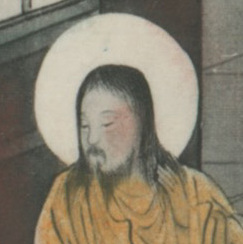 By doing whatever is good we join ourselves, ally ourselves with the God of Abraham, Moses and Jesus. By doing whatever is good we put ourselves on God’s side; we don’t manipulate God to our sides. We place ourselves on God’s side when we respond to the commands God gave us to inherit God’s life. Jesus replied to the rich man’s question by rehearsing all the commandments having to do with human relations with one another. You and I inherit God’s life by how we live with one another!
As challenging as that is for us, I think we get that like the rich man did. It’s the rest of Jesus’ answer that comes less easily: exchange treasure of earth for treasure of heaven. The matter is not simply one of having nothing; rather it is drawing closer and closer to the Source of goodness, life, love and generosity. By coming nearer and absorbing with heart and mind what flows from God—in daily practice, goodness, life, love and generosity—we follow Jesus, we become his disciples daily. Yet, to follow Jesus, to be his disciples, does not make us good. Oh, that it were that easy; but it’s not.
In practice possessions are risks to promoting goodness, life, love and generosity when possessions grip us and manage us. Jesus said we are to manage possessions not be managed by them. To the rich man Jesus put it this way: “Go, sell what you have, and give to the poor and you will have treasure in heaven; then come, follow me.”
To follow Jesus, to be his disciple, does not make us good. Being disciples challenges us to join Jesus in his move down not up: downward mobility not upward mobility, to use modern language for accepting the cross. This lesson to surrender wealth is a hard blessing for us.
 Surrender of wealth does not mean throwing our wealth on the junk heap. Surrender of wealth by love, generosity, concern for others and care for them gradually yet really discloses God’s power: all things, including our entering God’s realm of life, are possible with God!
Two verses, early and late in this gospel selection, are key. Read together, they make sharing God’s life nothing short of miraculous, and they tame human ambition instead of the gospel Jesus proclaimed. The verses give us access to God’s mercy toward us: “Good teacher, what must I do to inherit eternal life? ...For human beings it is impossible, but not for God. All things are possible for God!”
When we pray with those two verses, as we keep them together in mind and heart, they don’t suffocate the wonder of creation around us and of people in our lives. As we pray with those verses, as we keep them together in our minds and hearts, they help us not overreach ourselves or substitute our ambition for God’s merciful power. They help us release the gospel into our lives and the world and not tame it or try to fashion it to our liking.
In your daily 15 minutes with Jesus this week, praise the Trinity for creating you and giving you creation to make a return of love to our God more easily. Ask the disciples, who listened often to Jesus, to present you to him. In your words praise and thank Jesus for his gospel and ask Jesus to help you continue to be his disciple more in fact than in name. Close by saying slowly the prayer Jesus taught us. It teaches us to show to others the mercy Jesus works in us.
______________________________________________
Wiki-image of Jesus and the rich man is in the public domain . Wiki-image by Sengkang of Fountain of Wealth: the author has allowed its use in any form.
Monday, October 05, 2009
Synod for Africa

The Synod for Africa opened in Rome Sunday. The word "synod" comes from two Greek words meaning "together" + "way;" thus, synods seek to help all in the church to progress together in the Christian life. Synods are almost as old as the church!
After the Second Vatican Council Pope Paul VI invited the world's bishops to come together around a specific theme of importance to the church at any given time. His successors have continued that practice. Pope Benedict explained the operation of synods before Sunday's Midday Angelus:
Synods always constitute an intense ecclesial experience, an experience of pastoral collegial responsibility in regard to a specific aspect of the life of the Church, or rather, as in this case, of a part of the Christian people determined on the basis of a geographic area. The Pope and his closest coworkers join together with the designated members of the assembly, with the experts and auditors, to reflect on the chosen theme. It is important to emphasize that it is not a matter of a study group, nor a programmatic assembly. Communications and speeches are heard in the hall, there is discussion in groups, but we all know that we are not the protagonists: it is the Lord, his Holy Spirit, who guides the Church. The most important thing, for everyone, is listening: listening to each other and, everyone, listening to what the Lord wants to tell us. Thus the Synod takes place in a climate of faith and prayer, in religious obedience to the Word of God. It is the place of the Successor of Peter to convoke and guide the synodal assembly, gather together what emerges from the work and then offer the opportune pastoral instructions. [Zenit translation]The pope reminds that synods are guided by Jesus' Spirit, whom he gave to his church to be with it always. Synod members read the signs of the times; they prepare well in advance in order to exercise their "pastoral collegial responsibility in regard to a specific aspect of the life of the Church, or...a part of the Christian people determined on the basis of a geographic area."
[After reciting the Angelus with the people gathered in St. Peter's Square, Pope Benedict also remembered to God the Asian nations and peoples suffering from the recent typhoons, earthquakes and tsunami, before making other remarks.]
____________________________________________
Wiki-image of Pope Benedict is in the public domain.
Sunday, October 04, 2009
Sunday word, 04 Oct 2009
27th Sunday of the Year (04 Oct 2009)
Gn 2. 18-24; Ps 128; Hb 2. 9-11; Mk 10. 2-16
Homily of Fr. Paul Panaretos, S.J.
Heart at Home
Gn 2. 18-24; Ps 128; Hb 2. 9-11; Mk 10. 2-16
Homily of Fr. Paul Panaretos, S.J.
Heart at Home
This Sunday throws into bold relief our respect for life. The church throughout the United States asks those who assemble around the tables of divine word and eucharist to allow respect for life to be a lens through which our vision of divine word and eucharist might be sharpened.
 Our eucharist is both source and summit./1/ Something lays between. If the eucharist is Jesus’ self-gift to us to guide us on our pilgrim way to [the] kingdom/2/ he proclaimed, then our prayer—our relationship with Jesus—our self-gift to Jesus rests between both source and summit and realigns our direction as we journey.
One metaphor of our self-gift to Jesus has a venerable place in the church. It is consecrating our hearts and homes to the Sacred Heart of Jesus. This is what Fr. Snow, Br. Denis, a team of planners and I invite parishioners to do for a year beginning this month. It is a great help to respect life.
While the word “heart” refers to a specific organ of the human body, you and I use the word “heart” more often to mean the whole person. “Put your heart in it!” is such a way. We know we mean self, body and soul. In the same way, to consecrate, that is, to join our hearts to Jesus means we pray to put our lives in the service of Jesus, his gospel and the life he invites us to live by the power of his Spirit.
God became flesh and blood in Jesus by their Spirit. God inhabited our world, our humanity. We humans receive the world through our senses. By becoming human Jesus made our senses, already good because he created them, Jesus made our senses holy. In liturgy the church exploits our senses with water, oil, fire, bread, wine, silence, words and song. Using our senses, we consecrate ourselves to Jesus and his Sacred Heart in a home liturgy.
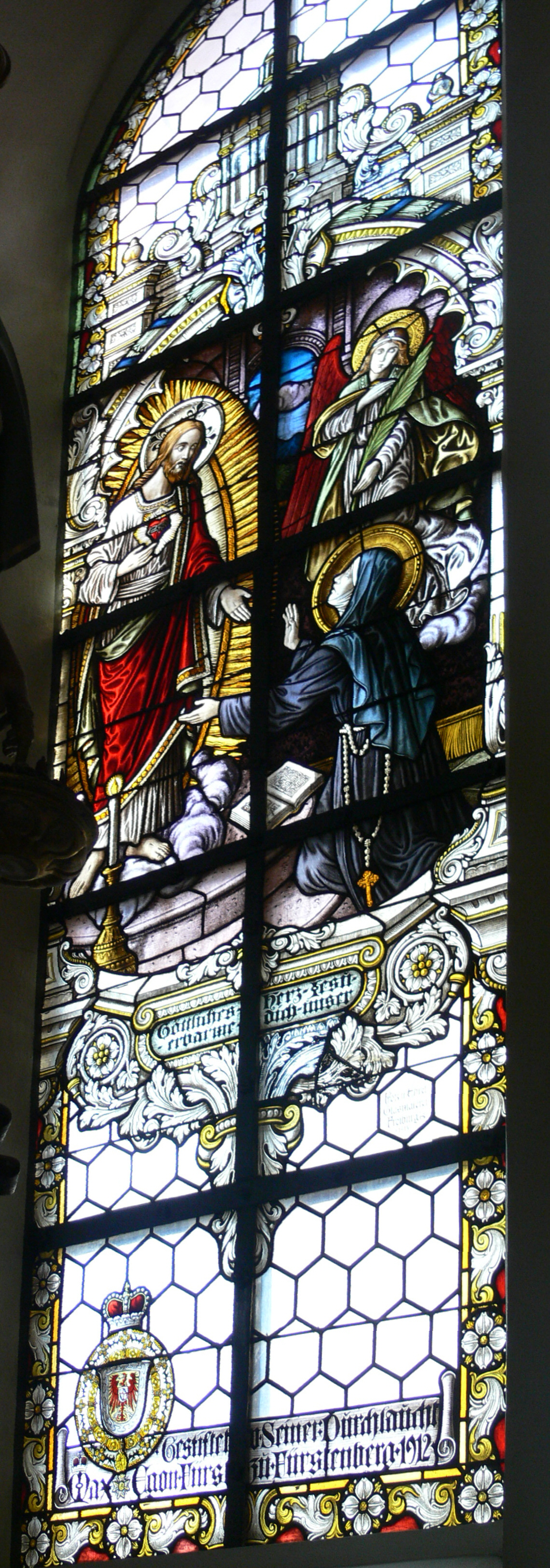
It is called an Enthronement of the Icon of the Sacred Heart of Jesus. A member of each household will receive this icon to take home inside this liturgy of Enthronement of the Sacred Heart of Jesus for Gesu Parish. The first sense we employ is our sight. What catches your eye? What do you notice? Much is present to notice many times over: Jesus’ face; his hands; his eyes; a scroll he holds; his heart; and more.
 Before families enthrone the icon of the Sacred Heart in their homes, people consider their hearts. The Sacraments of Reconciliation, the Eucharist along with one’s prayer style, members of one’s family, the walls of the house itself can help our hearts become more alert, more supple and more grateful for the many gifts we have received. When a family chooses a date this month to consecrate themselves and their home to Jesus’ Sacred Heart, they will find its liturgy here.
Fr. Snow, Br. Denis and I ask that to keep alert to Jesus and to the ways Jesus blesses you and calls you to glorify his name with your lives, you begin to do the Daily Examen together. The Daily Examen was St. Ignatius’ favored way of praying. On the reverse of the icon is an adaptation of it you can introduce before you begin supper or at another time when everyone is together. One way I’ve introduced people to the Daily Examen is to do one of is steps daily for a week. The next week add to the first step the second step, and the next the third step and so on. Take one week at supper or whenever your family is together and ask Jesus to join you; then share: for what moment today I am most grateful? for what moment am I least grateful?
Each one or together you may begin your day with the Daily Offering Prayer to unite yourselves with "Jesus...who continues to offer himself in the eucharist for the salvation of you and of the world.”/3/ In your daily 15 minutes with Jesus this week ask the Trinity to brighten your home with grace. Ask Mary to present your household to Jesus. Speak with Jesus, asking him to deepen your desire for his life in your home and to help you resolve to dedicate your home “in response to Jesus’ great love for [you].”/4/ Close by saying slowly the Lord’s Prayer, which Jesus gave us to guide our steps in his love and to model it for each other beginning at home. The Enthronement of the Sacred Heart of Jesus in your home will help you feel more deeply with all your senses his love and how to radiate it to others inside and outside your home.
_____________
1. Decree on the Liturgy, 10, 14; Second Vatican Council.
2. Prayer after Communion, Order of Christian Funerals, 410A.
3. Daily Offering Prayer, adapted on the reverese of the Icon of the Sacred Heart of Jesus given to Gesu Parishioners this weekend.
4. Introduction of Enthronement of the Sacred Heart of Jesus for Gesu Parish.
__________________________________________________________
Wiki-image by AndreasPraefcke of a heart of Jesus window is used according to the Creative Commons Attribution 3.0 Unported license. Wiki-image of Claude dela Colombiere, S.J., spiritual director of St. Margaret Mary Alacoque, is in the public domain.
Saturday, October 03, 2009
Saturday word, 03 Oct 2009
Gentry Lee Cooper Jr. funeral (03 Oct 2009)
Eccl 3. 1-14; Ps 23; Rm 5.5-11; Jn 5. 24-29
Homily of Fr. Paul Panaretos, S.J.
Faith and Promise
On behalf of Gesu Parish, I extend our prayers and heartfelt sympathy to you, Clarence at the death of your brother; and to Ellis, Gentry, Donna, Derrick and Celeste at the death of your father. Your children grieve, too, for their grandfather. Be more courageous than your grief is sharp. Your confidence in our risen Messiah will help your children grieve well. Evan, Ariane, Sawana and Craig, you will help your parents to experience your grandfather’s presence in real and new ways. All of Gentry’s family will experience his presence in real and new ways.
 Today the Catholic church bids farewell to one of hers. I offer a few words to console and strengthen you in your grief; to help you appreciate God’s astounding compassion by noticing Jesus’ victorious dying and rising were present in Gentry Lee Cooper Jr./1/
We are grateful, Donna, for your remembrance of your dad. Her spoken words and Celeste’s written words all of us have in the worship aid help us connect your brother, father and grandfather with the mystery of Jesus dying and rising we celebrate at his funeral mass.
I am grateful to Donna and Celeste for confirming what I observed about your father and your grandfather in the few years I have been at his longtime parish. “Man of faith” and “man of promise” are how their words and the words of scripture shape my remarks.
While some of you know, everyone else who follows the line along which my finger points will know where Gentry sat at each 10:30 Sunday mass here at Gesu. Quietly engaged with the community at the Lord’s table and with our Messiah and his, Gentry brought his week to Jesus and asked Jesus to guide him in his week to come.
His fidelity allowed him to be generous and, together with your mother, to shape his family to be good and generous. Gentry encountered Jesus in a personal way through your mother, for whom he became Catholic and with whom he lived his faith in Jesus.
His relationship with Jesus expressed itself in his patient goodness. His goodness practiced reassures us that your father and grandfather, brother and uncle and friend, felt God’s power in his life. Holy Spirit is the name we give to God’s power. We heard St. Paul remind us, hope does not disappoint, because the love of God has been poured out into our hearts through the holy Spirit that has been given to us.
Human words cannot exhaust the meaning of God love, the way that our words, “I love you,” never fully express what we mean with them. Yet that does not mean that speaker and hearer do not know love. Gentry Lee Cooper Jr. knew what words can only point to: God loved him and was loyal to him.
 This was not easy. Gentry struggled with four cancers yet knew God’s loyalty and presence. You, his family and friends, and I face this time under the heavens. God has not changed God’s fidelity to Gentry. Gentry’s life is changed not ended./2/ That conviction of our faith challenges us to let go of him--he is not available to you, his family and friends, as he was. Still, our desire is to have him with us; and the assurance of our faith promises that we shall be reunited when Jesus returns in glory with salvation for his people./3/ It is while we await Jesus’ return, the resurrection of the dead and our reunion with them that we need to remember that promise and live from it as your father and grandfather, brother and uncle did.
 This was not easy. Gentry struggled with four cancers yet knew God’s loyalty and presence. You, his family and friends, and I face this time under the heavens. God has not changed God’s fidelity to Gentry. Gentry’s life is changed not ended./2/ That conviction of our faith challenges us to let go of him--he is not available to you, his family and friends, as he was. Still, our desire is to have him with us; and the assurance of our faith promises that we shall be reunited when Jesus returns in glory with salvation for his people./3/ It is while we await Jesus’ return, the resurrection of the dead and our reunion with them that we need to remember that promise and live from it as your father and grandfather, brother and uncle did.
The man who provided for you, his children, who put first his wife and his family, made the promise of life real for you. As Celeste and Donna put it, speaking for you all: “We knew our [parents’] love; we grew up seeing their love, and they knew our love.” Their love for you and for your children embodied our Triune God’s for you. Without having to know about the mystery we name the Incarnation, you have known it! You will see your father and grandfather again and know his love in ways none of us can imagine.
Your father also modeled how to hold on to the promise of our faith. Donna told me that the Saturday your mother was buried she saw your Dad at her grave, speaking softly. Later, Donna asked Gentry what he said. He said he promised to visit Gwen’s grave every week. For 13 years, with a yellow rose in hand, Gentry fulfilled his promise. Hold on to that memory: his memory and his promise kept!
Your father also modeled how to hold on to the promise of our faith. Donna told me that the Saturday your mother was buried she saw your Dad at her grave, speaking softly. Later, Donna asked Gentry what he said. He said he promised to visit Gwen’s grave every week. For 13 years, with a yellow rose in hand, Gentry fulfilled his promise. Hold on to that memory: his memory and his promise kept!
Memories and dreams—both waking dreams and sleeping dreams—play roles in accepting death and in grieving. Memories and dreams also play roles in our faith lives. In his final days, Gentry dreamed of your mother, calling out, “Gwen, Gwen! The pickles!” While we cannot know now his dream, it is safe to guess the scene may well have been one of those many family gatherings at which Gentry hosted, entertained and BBQed for you. Surely God is hosting and entertaining Gentry with divine life and love that exceeds what any of us can imagine!
Jesus reminded us in the gospel, Amen, amen, I say to you, whoever hears my word and believes in the one who sent me has eternal life and...has passed from death to life. Hear Jesus’ words as his promise to your father. Thank Jesus for the gift of your father and your mother; thank Jesus for their love, which made Jesus real to you. Remember they passed the faith to you. As they made its promise real for you, honor them by keeping the promise alive for one another and for everyone you meet.
___________________
1. Cf. Order of Christian Funerals, 27.
2. Preface for Christian Death I, Roman Missal.
3. Penitential Rite (C,ii), Roman Missal.
_______________________________________________________________
Wiki-image by Elucidate of a yellow rose is used according to the Creative Commons Attribution 3.0 Unported license. Wiki-image of the Resurrection is in the public domain.
Monday, September 28, 2009
Birds of the September Sky
Avian constellations in the September sky boast a triangle of stars--and more. Jupiter and Venus are featured planets, too.

_____________________________________________________
Wiki-image by Blueshade of the lighting during the equinox is used according to Creative Commons Attribution ShareAlike 2.0 license.
_____________________________________________________
Wiki-image by Blueshade of the lighting during the equinox is used according to Creative Commons Attribution ShareAlike 2.0 license.
Sunday, September 27, 2009
Sunday word, 27 Sep 2009
26th Sunday of the Year (27 Sep 2009)
Nu 11. 25-29; Ps 19; Jms 5. 1-6; Mk 9. 38-43, 45, 47-48
Homily of Fr. Paul Panaretos, S.J.
Our Mission: Our Messiah’s Mission
Nu 11. 25-29; Ps 19; Jms 5. 1-6; Mk 9. 38-43, 45, 47-48
Homily of Fr. Paul Panaretos, S.J.
Our Mission: Our Messiah’s Mission
Each one’s vocation is to be disciples of our Messiah Jesus. Misunderstanding our messiah leads to misunderstanding discipleship. The first disciples misunderstood Messiah Jesus while he was with them. He said he would be handed over to others, who would kill him then rise on the third day, but they did not understand the saying, and they were afraid to question him. Jesus taught them that God’s messiah came to serve with his life./1/
 Today we heard they misunderstood that God’s messiah came to serve all without distinction. John spoke on behalf of the disciples, whom Jesus sent to do his work of healing and evangelizing: “Teacher, we saw someone driving out demons in your name, and we tried to prevent him because he does not follow us.” We easily, too, make the distinction between us and them. It’s part of our human condition and always has been. It challenged Moses, early in the history of God’s people. So, when a young man quickly told Moses, that two men he did not appoint were prophesying in the camp,” Joshua...who from his youth had been Moses’ aide, said, “Moses, my lord, stop them,” Moses’ response speaks to us and our vocation today: Would that all the people of the Lord were prophets!
You and I are prophets. We were baptized into Jesus our Priest, Prophet and King./2/ Jesus, too, sends us to do his work; to give voice to his gospel by our deeds; to grow as people free to do and to be without need of honors; to do and to be with openness and understanding Jesus modeled for everyone, particularly people in need of reconciliation.
That singular voice in the New Testament, the Letter of James, is a companion to the gospel message. The Letter of James shares Jesus’ desire for his church that all people are equal and deserve equal rights and opportunities. Equality does not ignore or erase differences. Equality among humans means that each person has inestimable value.
The scathing censure of the rich, who withheld from others so they might enjoy luxury and pleasure, hurts our ears. The result of hoarding—You have condemned; you have murdered the righteous one—wounds our hearts. As ear-hurting and heart-rending as these words and much of the Letter of James is, James reminds us that we are people of morals not manners.
Morals are about right and wrong and about choosing to do the lesser wrong and the more right action. Manners are about habits, customs, practices and the ways we put things to use. If we operated only from manners, we would do the lesser wrong and the more right by chance. Human habits, customs and practices are often shaped by our penchant to distinguish, as the disciple John and Moses’ aide, Joshua, did: between us and them.
 Morals, as James, Jesus, indeed our Catholic tradition with its social teaching remind us, shapes our choices to do some things and not others. Jesus clothes our choosing with his Spirit, who makes us prophets, people whose deeds and lives give voice to Jesus here and now. Morals, not manners, make our actions authentic, give our actions authority. Authority as Jesus understood and practiced it and reflecting on Jesus and his gospel, the church understands that authority functions as service and ministry to all in need of God’s mercy. As Gesu Parish knows better and better, placing God’s mercy to us in service of others, shapes us as more faithful, prophetic servants of our Messiah’s mission.
In your daily 15 minutes with Jesus this week, become freshly aware of the Trinity anointing you to continue Jesus’ priestly, prophetic and royal work. Ask Moses, who desired all God’s people to be prophets, to present you to Jesus. Praise Jesus for his goodness to you and ask Jesus, “Help me be your authentic disciple and your prophetic voice in deed and word.” Close saying slowly the Lord’s Prayer. Jesus gave us his prayer to shape us as servants of God’s mercy and help our gospel-actions deepen the union of heaven and earth and of human minds, hearts and lives.
_____________
1. Mark 9.30-37, last Sunday’s gospel selection, which immediately precedes today’s gospel selection.
2. RCIA [228, U.S. Edition]; RBC 125; 151.
____________________________________________
Wiki-images of Moses with children of Israel and the headpiece to the Letter of James are in the public domain.
Saturday, September 26, 2009
Saturday word, 26 Sep 2009
25th Saturday of the Year (26 Sep 2009)
Zech 2. 5-9, 14-15a; Resp: Jer 31; Lk 9. 43b-45
Homily of Fr. Paul Panaretos, S.J.
A New Way
Zech 2. 5-9, 14-15a; Resp: Jer 31; Lk 9. 43b-45
Homily of Fr. Paul Panaretos, S.J.
A New Way
In Luke’s gospel angelic and human voices resound earlier prophecy. The angel Gabriel focused Zechariah’s prophecy of God, “I am coming to dwell among you, says the Lord,” in the annunciation to Mary. Whatever hope the prophecy first offered, the incarnation of God in Jesus by the power their Spirit exceeded its first offer; it surpassed how humans could imagine God’s nearness.
Luke demonstrated that when Jesus told his disciples that he would be handed over: ...they did not understand this saying; its meaning was hidden from them so that they should not understand it, and they were afraid to ask him about it.
For all our sophistication, intelligence and technological talents some of God’s meaning is and will remain hidden from our ability. That means God announcing to us, revealing God’s desires to us, is God’s prerogative, and that God desires us to be bold in asking God to help us be alert to how God reveals God’s desire.
“How can this be?” Mary asked the angel, who announced she would be the Mother of God. That the truth was conveyed in a conversation—Gabriel and Mary—does not mean some instantaneous understanding was Mary’s. Rather she accepted the message she received, May it be done to me as you say./1/
 What Mary did next tells me that hers was not instantaneous understanding. She journeyed/2/ to minister to her cousin Elizabeth, also pregnant and more than unexpectedly because she had been barren all her life! What went on in Mary’s heart and mind as she journeyed to her cousin? As with us when we’re alone with our thoughts, we weigh and sift, we accept or deny, we rejoice or rue our decisions. When she reached Elizabeth Mary extolled, “My soul proclaims the greatness of the Lord!” and she did not know all that would unfold!
Our community has been stunned by tragic deaths which deeply affected the Gesu Parish; the Gesu School; the St. Ignatius High School; the Beaumont High School; and the John Carroll University communities. No one expected any of the deaths, yet so many responded in ways to incarnate God’s desire, especially in difficulties, to dwell among us. Any meaning in the deaths is hidden from us. Lack of meaning did not stop people from imagining God’s nearness or demonstrating it.
If we wonder what the prophecy, “I am coming to dwell among you, says the Lord,” includes, we know in a new way that it involves us: how we choose; how we respond; and how we receive God in and through others.
_______________
1. The annunciation to Mary is in Luke 1.28-38.
2. Luke 1.39-56.
_____________________________________________
Wiki-image of the Galilee is used according to Creative Commons Attribution 2.5 license.
Monday, September 21, 2009
"Green Pope" Following Tradition Not Fad
Pope Benedict is very open to the concerns facing the environment. His predecessor, Pope John Paul II, had said that ecology was not opposed to theology. The Greek Orthodox Patriarch, Bartholomew I, has also advocated for the environment. None of these leaders is following fads; nor are they limited to scientific concerns, real as they are. Instead, they are rooted in the Christian theological tradition, which appreciates all created things as gifts of the Creator.
 We can expect Pope Benedict to continue to include the care creation in his remarks. "Indeed, the pronouncements on the protection of the environment, on the safeguarding of creation, are more frequent and -- we can say -- almost continuous," commented Jesuit Father Federico Lombardi, director of the Holy See's press office.
In that same commentary Father Lombardi mentioned Benedict's most recent encyclical, Caritas in veritate. Its Chapter Four is entitled: "The Development of Peoples; Rights and Duties; The Environment." The pope relates these three. At paragraph 48 of his fourth chapter, the pope introduces his remarks concerning the environment, situating them in the Christian theological tradition:
________________________________________________
Wiki-image of Clear green globe is used according to the GNU Lesser General Public License.
 We can expect Pope Benedict to continue to include the care creation in his remarks. "Indeed, the pronouncements on the protection of the environment, on the safeguarding of creation, are more frequent and -- we can say -- almost continuous," commented Jesuit Father Federico Lombardi, director of the Holy See's press office.
In that same commentary Father Lombardi mentioned Benedict's most recent encyclical, Caritas in veritate. Its Chapter Four is entitled: "The Development of Peoples; Rights and Duties; The Environment." The pope relates these three. At paragraph 48 of his fourth chapter, the pope introduces his remarks concerning the environment, situating them in the Christian theological tradition:
48. Today the subject of development is also closely related to the duties arising from our relationship to the natural environment. The environment is God's gift to everyone, and in our use of it we have a responsibility towards the poor, towards future generations and towards humanity as a whole. When nature, including the human being, is viewed as the result of mere chance or evolutionary determinism, our sense of responsibility wanes. In nature, the believer recognizes the wonderful result of God's creative activity, which we may use responsibly to satisfy our legitimate needs, material or otherwise, while respecting the intrinsic balance of creation. If this vision is lost, we end up either considering nature an untouchable taboo or, on the contrary, abusing it. Neither attitude is consonant with the Christian vision of nature as the fruit of God's creation.Given this "Christian vision of nature," Pope Benedict's "pronouncements on the protection of the environment, on the safeguarding of creation," will continue with frequency. Christian theology and catechesis, of course, grows out of Christian worship of lavishly generous and constantly creating Triune God.[Hear and watch Fr. E. J. Tyler read both paragraphs 48 and 49.]
________________________________________________
Wiki-image of Clear green globe is used according to the GNU Lesser General Public License.
Sunday, September 20, 2009
Sunday word, 20 Sep 2009
25th Sunday of the Year (20 Sep 2009)
Wis 2. 12, 17-20; Ps 54; Jms 3. 16-4.3; Mk 9. 30-37
Homily of Fr. Paul Panaretos, S.J.
Hosting God
Wis 2. 12, 17-20; Ps 54; Jms 3. 16-4.3; Mk 9. 30-37
Homily of Fr. Paul Panaretos, S.J.
Hosting God
We seek to grow in our Christian lives of faith and action. That is each one’s vocation. The church in the United States recognizes our common vocation on Catechetical Sunday, the third one each September. “Catechesis and the Proclamation of the Word” is the name of this year’s focus. I want to highlight our hearing and receiving the Word, the second half of its proclamation. As St. Paul noted, Faith comes through hearing, that is, receiving the word.
St. James has been sounding these past weeks that the word received leads to action, summarized today as full of mercy and good fruits. Receiving the word—the word of the gospel, the promptings of Jesus’ Spirit or another human’s word—receiving the word demands more than the mechanics of hearing. Receiving the word—particularly the word of the gospel and the promptings of Jesus’ Spirit—involves welcoming it, yielding to it, giving it center-stage rather than me and my needs.
 In gospel language giving the word and the promptings of Jesus’ Spirit center-stage for a dedicated amount of time rather than me and my needs involves humility and service. “Whoever wishes to be first shall be the last of all and the servant of all.” These words of Jesus were his teaching on the mystery of the cross. We know that; yet I think we fear learning what that may mean for us. Our fear is not my idea but inspired by the gospel. Consider the scene.
Jesus one more time was teaching and telling his disciples about the cross as his destiny. Notice their reaction after Jesus had told them one more time: they did not understand the saying, and they were afraid to question him. Did their fear rise because they did not understand? It could have. I know I’m at least anxious when I don’t understand. Did the disciples fear because they realized some implications of the mysterious thing Jesus had said? That could also have been the case. Surely they did not understand how Jesus once dead could be alive: three days after his death the Son of Man will rise. Even we who believe it do not understand it! Hearing Jesus would rise, I can appreciate the disciples feeling if things would be more than right again with their Messiah, they’d think about their future and how great they’d be, which is what they did behind Jesus’ back: They had been discussing among themselves on the way who was the greatest.
Jesus taught his disciples that the cross is about humble service and being host or hostess to God. Welcoming the visible Jesus welcomes the invisible sender of Jesus: “Whoever receives one child...in my name, receives me; and whoever receives me, receives not me but the One who sent me.”
Jesus chose a child because children are open and take in everything. As we mature we run the risk of being less open and willing, and we often justify our narrowness saying, “I’m being selective.” From being selective we easily rule out the demanding aspects of the gospel, in particular the mystery of the cross. To welcome Jesus is to welcome the cross, and we shun the cross because of how people will think of us or how people will treat us.
Jesus recommends how to treat one another as we welcome the mystery of the cross in our lives. Jesus didn’t censure his disciples for not understand or for arguing. He patiently, gently showed them the meaning of the cross: humble service of and respect for others. The cross no longer is an event in the past, it is a mystery imparting divine power to us as we welcome the cross and its true meaning into our lives.
In your daily 15 minutes with Jesus this week, bask in the Trinity’s love for you. Ask the disciples to present you to Jesus as you are. Speak to Jesus: in your words tell Jesus the many ways you welcome him in others; also tell Jesus what holds you back from welcoming him. Trace the sign of cross on yourself as you tell Jesus. Tracing the cross on ourselves is prayer. Close, saying slowly the Lord’s Prayer. Jesus gave it to us to help us to live the mystery of his cross which challenges us to give forgiveness as much as we ask for it.
_____________________________________________
Wiki-image of stained glass window is used according to the Creative Commons Attribution ShareAlike 3.0 license.
Wednesday, September 16, 2009
Migration Through a Theological Lens
Holy Cross Fr. Daniel G. Groody wrote an essay, which lays a foundation for further exploring migration from a theological perspective. His essay appeared Monday. In Fr. Groody's words
His essay demonstrates both a knowledge of the Catholic theological tradition and the humans who are migrants and refugees.
_____________
Wiki-image of earth is in the public domain.
HotlyAfter listing several current facts, He offered his "four foundations of such a theology: the Imago Dei, crossing the problem-person divide; the Verbum Dei, crossing the divine-human divide; the Missio Dei, crossing the human-human divide; and the Visio Dei, crossing the country-Kingdom divide."debated, much has been written about the social, political, economic and cultural dimensions of immigration, but surprisingly very little has been written from a theological perspective, even less from the vantage point of immigrants themselves.
Yet the theme of migration is at the heart of the Judeo-Christian scriptures.


His essay demonstrates both a knowledge of the Catholic theological tradition and the humans who are migrants and refugees.
_____________
Wiki-image of earth is in the public domain.

Sunday, September 13, 2009
Sunday word, 13 Sep 2009
24th Sunday of the Year (13 Sep 2009)
Gospel As Personal Story
The location of today’s gospel selection within the whole of Mark’s Gospel makes it a hinge in this portrait of Jesus. The setting of the passage, along the way, is the first of many times that Jesus will speak to others on his way to suffer, die and rise in Jerusalem.
Earlier in Mark’s Gospel the disciples had wondered who Jesus was. When Jesus stilled the wind and waves and saved their lives, the disciples, filled with great awe [wondered] to one another, “Who then is this whom even wind and sea obey?”/1/ Their ability to identify Jesus as God’s messiah was gradual. Their knowledge of his identity, however, did not allow them to follow in his way immediately.
The disciples portrayed by Mark learned Jesus slowly, often taking two steps back for their steps forward in learning him. Unlike us the disciples did not know the end of the story of Jesus. Yet their two steps back for each one forward is not different from us when it comes to learning Jesus.
Learning Jesus includes unlearning weighing everything from a strictly human point of view. Peter’s rebuke of Jesus when Jesus began to teach [his disciples] that the Son of Man must suffer greatly and be rejected by the elders, the chief priests, and the scribes, and be killed, and rise after three days, was no mere wish things would be different; Peter rejected what God revealed to Peter; the human struggled against the divine.
 The word rebuke, in Peter...began to rebuke Jesus, is the same word that described Jesus confronting the wind and sea, and moreover, the unclean spirits. After calling his first disciples to follow him, Jesus taught in a synagogue, where he healed a man with an unclean spirit: Jesus rebuked him, saying, “Quiet! Come out of him!” What followed next is even more vivid: when the unclean spirit had torn him, and cried with a loud voice, he came out of the man./2/
 The word rebuke, in Peter...began to rebuke Jesus, is the same word that described Jesus confronting the wind and sea, and moreover, the unclean spirits. After calling his first disciples to follow him, Jesus taught in a synagogue, where he healed a man with an unclean spirit: Jesus rebuked him, saying, “Quiet! Come out of him!” What followed next is even more vivid: when the unclean spirit had torn him, and cried with a loud voice, he came out of the man./2/
What we take for granted, Jesus is our crucified Messiah, tore Peter, ripped through his mind and heart and emotions. Put yourself in Peter’s skin: to have a helpless savior or to have a flawed hero or to have a limited liberator or to have a puny protector—those offend us; to Peter all the more offensive was a crucified Messiah.
How often we function the same way! We rebuke God and don’t allow God to grace our limited humanity. We continue to live the struggle between God’s desire and plan for our salvation and our limited logic and urge to be in control at all costs. We echo Peter, who “expressed human wisdom at it’s most convincing.”/3/
This hinge in Mark’s gospel is also a hinge in Christian living: our struggle to trust in Jesus, not just the miracle worker but the crucified Messiah, is demanding. Perhaps its sharpest demand is coming to admit that not thinking in the ways of Jesus is folly and that thinking in the ways of Jesus and his Father is true wisdom.
Two things I find revealing and encouraging in this struggle: first, Jesus did not intimidate Peter or debate him. Jesus disclosed the deception Peter allowed to control him: “You are thinking not as God does, but as human beings do.” Jesus had confidence in Peter, as limited as his learning was. Next, Jesus immediately summoned the crowd with his disciples and continued to make God’s case that the cross yields life. Together both tell me that entering the gospel as my personal story is two steps forward for each one back, those moments when I allow the deception to control me.
In your daily 15 minutes with Jesus, become aware that the Trinity is confident in you. Ask Peter to present you to Jesus because Peter knows how you are attracted to Jesus and ready to rebuke Jesus. Tell Jesus how you are attracted to him and tell Jesus what moves you to rebuke him, to think your ways are better than his ways. Ask Jesus to help you accept Jesus as our crucified Messiah, who turns much of our human wisdom on its head. Close by saying slowly the Lord’s Prayer, which Jesus gave us to grace our human knowing and learn Jesus better and to allow his story to become our story.
____________
1. Mark 4.41.
2. Mark 1.25.
3. Paul S. Minear, The God of the Gospels: A Theological Workbook, Atlanta, John Knox Press, 1988, p. 40.
_____________________________________________________________________________________
Wiki-image of a gospel page depicting Jesus saving Peter before Jesus rebuked wind and sea is in the public domain.

Friday, September 11, 2009
Friday word, 11 Sep 2009
Anna Mae Schager funeral (11 Sep 2009)
Wis 3. 1-9; Ps 23; 1Co 12.31-13.8; Mt 5. 1-12a
Homily of Fr. Paul Panaretos, S.J.
Shaped Anew
On behalf of Gesu Parish, I extend our prayers and heartfelt sympathy to you, Susann, Patricia and Nancy at the death of your mother, Anna Mae. Your children grieve, too. I noted that you requested gifts be made to the Little Sisters of the Poor and the Hospice of the Western Reserve. Your mom required that kind of care, and your dad did in a more prolonged way. I know what that’s like because my sister informed me while I was living in Asia that Alzheimer’s began to manifest itself in our mom. When I returned in eight months I was able to help my sister, who had been doing the lion’s share of being with our mom and getting her good care.
Although my mom is still alive and profits from full care—not yet hospice-care—I grieve often as she lives her long good bye, as Alzheimer’s is aptly called. I pray that you be more courageous than your grief is sharp. Your confidence in our risen Messiah will help you grieve well and come to experience your mom’s presence in real and new ways.
 Today the Catholic church bids farewell to one of hers. I offer a few words to console and strengthen you in your grief; to help you appreciate God’s astounding compassion by noticing Jesus’ victorious dying and rising were present in Anna Mae./1/
We are grateful for the words of remembrance Patty offered. They helped us connect your mom and her passing with the mystery of Jesus’ death and resurrection. I am grateful to Susann for selecting the scriptures proclaimed at Anna Mae’s funeral mass. They shape my brief reflection with you.
I did not have the privilege to meet Anna Mae or Arthur because she had moved and Arthur had died before I came to Gesu Parish over three years ago. I would like to reflect with you on the challenge to let go of our loved ones.
All of us can name challenging times in our lives when people accompanied us through a challenge. All of us can recall how important their presence was, although they could not change our circumstances. Parents and grandparents accompany us in most significant ways. We accompany Anna Mea to church for the last time.
Of course, Anna Mae’s life is changed not ended./2/ That conviction of our faith challenges us to let go of Anna Mae—she is not available to you, her family and friends, as she was—even though our desire is to have her with us; and the assurance of our faith promises that we shall be reunited when Jesus returns in glory with salvation for his people./3/ It is during the interval while we await Jesus’ return, the resurrection of the dead and our reunion with them that we need graced companionship. That’s why we come here. We pray for ourselves as much as, or even more, than for Anna Mae.
The Book of Wisdom reminded us that Anna Mae’s hope [was] full of immortality. I hope your prayers for your mother and grandmother will also deepen your hope to continue to share God’s life now and completely one day. That’s what immortality is, God’s life.
The Book of Wisdom reminded us that Anna Mae’s hope [was] full of immortality. I hope your prayers for your mother and grandmother will also deepen your hope to continue to share God’s life now and completely one day. That’s what immortality is, God’s life.
Graced companionship is not only for church. God works in every moment of our lives. At each moment our triune God creates us. When people enjoy clarity, people enjoy God’s companionship. When we experience anew our connection with God, we enjoy God’s com-panionship. Jesus embodied this graced companionship and modeled it for us. We name it Christian love.
 Christian love is not an emotion, it’s an action with many aspects as St. Paul reminded us. Perhaps now is the time to remember that Christian love bears all things; believes all things; hopes all things; endures all things.
“Now” because grieving is heavy yet we can move through it as you already have with your dad and your maternal aunt. Moving through grief not only challenges our belief and hope, it shapes them.
Memories and dreams—both waking dreams and sleeping dreams—play roles in grieving. Memories and dreams also play roles in our faith lives. The memory of Jesus in the early church lives in our worship and in our Christian loving each day. More than challenging our Christian faith, hope and love, grieving, that is, letting go of those who go before us filled with the hope of immortality, allow us to exercise our Christian faith, hope and love in more authentic ways.
Without knowing your mom or your dad, your grandmother or your grandfather, I’ve learned their prayerful desire and their prayerful desire for each of you was to live authentic Christian lives. Active Christian loving allows God and others into our lives. Allowing others is active; it doesn’t seem so because we are not in control.
Without knowing your mom or your dad, your grandmother or your grandfather, I’ve learned their prayerful desire and their prayerful desire for each of you was to live authentic Christian lives. Active Christian loving allows God and others into our lives. Allowing others is active; it doesn’t seem so because we are not in control.
The Beatitudes challenge us precisely to welcome God’s loving kindness each day so that, like Anna Mae, we will one day be able to rest in God’s merciful loving and enjoy new life, life more vibrant than we can imagine.
Until we enjoy God’s life in an unveiled way and see our God as [God is],/4/ graced companionship in its many forms, especially as human accompaniment, is that still more excellent way, which is our surest guide to live authentically the Christian life your parents and your grandparents, in their own ways, have bequeathed to you. Their legacy puts you in contact with the Source of all life, whose Holy Spirit renews your life and is your power to accompany others as your parents and grandparents accompanied you with their lives.
Until we enjoy God’s life in an unveiled way and see our God as [God is],/4/ graced companionship in its many forms, especially as human accompaniment, is that still more excellent way, which is our surest guide to live authentically the Christian life your parents and your grandparents, in their own ways, have bequeathed to you. Their legacy puts you in contact with the Source of all life, whose Holy Spirit renews your life and is your power to accompany others as your parents and grandparents accompanied you with their lives.
___________________
1. Cf. Order of Christian Funerals, 27.
2. Preface for Christian Death I, Roman Missal.
3. Penitential Rite (C,ii), Roman Missal.
4. Eucharistic Prayer III, Roman Missal.
______________________________________________
Wiki-images of the Resurrection is in the public domain and of the mother of all virtues is used according to the Creative Commons Attribution ShareAlike 3.0 license .


Tuesday, September 08, 2009
Diocesan Reminder about Communion and H1N1 virus
The Diocese of Cleveland, like other dioceses, is working in tandem with the United States Conference of Catholic Bishops [USCCB] and the Center for Disease Control [CDC] to help people avoid the H1N1 flu virus. This virus has arrived before seasonal flus arrive in the United States.
The diocesan website as released its information and guidelines about receiving communion to help people stay healthy.
The diocesan website as released its information and guidelines about receiving communion to help people stay healthy.
Monday, September 07, 2009
Monday word, 07 Sep 2009
Blessing of Human Labor (07 Sep 2009)
Col 1. 24-2.3; Ps 62; Lk 6. 6-11
Homily of Fr. Paul Panaretos, S.J.
Sharing With the Worker of All
Col 1. 24-2.3; Ps 62; Lk 6. 6-11
Homily of Fr. Paul Panaretos, S.J.
Sharing With the Worker of All
Like some of our other holidays, the originator of today’s is not known. We do know the Central Labor Union, the organization in Brooklyn, New York, and New Jersey, which predated the AFL-CIO and its various locals, adopted a Labor Day proposal and appointed a committee to plan a demonstration and picnic. So that’s why we picnic on this day. Yet there’s more than that.
In the mid-1880s municipalities declared Labor Day holiday observances. Then states began to proclaim the holiday. By June of 1893 the federal government proclaimed today as a national holiday in honor of workers. Still later, I learned recently, the American Federation of Labor convention of 1909 resolved that the Sunday preceding Labor Day was adopted as Labor Sunday and dedicated to the spiritual and educational aspects of the labor movement./1/
Churches and synagogues are free to fashion ways to focus on the spiritual aspects of human labor. We celebrate a mass on Labor Day “For the Blessing of Human Labor.” I want to remark on St. Paul and today’s difficult times.
 St. Paul worked with his hands during his evangelizing ministry./2/ As he wrote on of his churches:
You know well that these very hands have served my needs and my companions. In every way I have shown you that by hard work...we must help the weak, and keep in mind the words of the Lord Jesus who himself said, “It is more blessed to give than to receive.”Manual labor and the "work of God," one of the names for liturgy, are not opposed and they do not exclude the other. Yet St. Paul said long before me that what any of us may work is to use time and created things well, that is, our work gives glory to the Worker of All, the Creator of the universe. The church has always asked us to consider if we use time and created things well, even if no paycheck accompanies our stewardship.
In these difficult times for workers—worrying if they will keep their jobs and worrying if they can find new employment—we do well to pray that people won’t feel burdened by unrealistic guilt if they have lost their jobs. It is easy for responsible people to feel they were at fault, especially when earning a wage is so important to supporting self and family.
Rather, these difficult times for workers renew our opportunity to praise and thank God for giving us stewardship of creation and of the gospel (the riches of the glory of [God’s] mystery among us, we heard St. Paul name it) and to ask God in ways that are more genuine to bless our efforts as privileged stewards and to bless our approach to creation so that at every turn we may know more clearly and live more compassionately what Jesus perceived and practiced: that to save life rather than to destroy it includes the obvious meaning and inspires us to appreciate the true effect human labor has for dignity, solidarity and humane participation in society.
* * *
____________1. See the Department of Labor website.
2. 1 Corinthians 4.12; 1 Thessalonians 4.11; 2 Thessalonians 3.7-9 and counseled others to do the same in
1 Thessalonians 4.11. Paul was likely a tentmaker (Acts 18.3), which allowed him to be self-sufficient (Philippians
4.11) and able to share with others (Acts 20.34-35).
____________________________________________
Wiki-image of an 1882 New York Labor Day parade is in the public domain.

Friday, September 04, 2009
Pope's Remark on Italy's 'Green' Day
On 01 September, Italy observed a national Day for the Protection of Creation. Pope Benedict welcomed it and remarked on its significance.
It is a significant event, even of ecumenical importance "that has as its theme this year 'air,' an indispensable element for life. ...His last sentence repeated his last sentence from his earlier Wednesday general audience.Greek Orthodox Patriarch Bartholomew I has been in the forefront of safeguarding the environment. People around the world are taking notice. The Worldwatch Institute, with its Vision for a Sustainable World, is spreading the word.
I call everyone to a greater commitment to the safeguarding of creation, gift of God.
Monday, August 31, 2009
Dignity and Ecology
During his summer vacation Pope Benedict had occasion to connect the gift of nature with each Christian's vocation. At his general audience at Castel Gondolfo last week, the pope said, "From this awareness [as stewards of creation], the Church considers questions linked to the environment and its safeguarding as profoundly linked with the topic of integral human development."
 In other words, an individual appreciation of the natural realm together with a desire to ensure others can marvel at and enjoy the natural realm--"to protect it, to obtain benefits and cultivate it"--seek to fulfill each Christian's vocation. The Church, the pope reaffirmed, seeks to help all people profit from the gift of nature.
The pope offered a straightforward way to recognize when ecology and human dignity disconnect: ""inconsiderate use of creation begins where God is marginalized."
_____________________________________________
Wiki-image by Mac of a view of Lake Albano is used according to the Creative Commons Attribution ShareAlike 3.0 license.

Sunday, August 30, 2009
Sunday word, 30 Aug 2009
22nd Sunday of the Year (30 Aug 2009)
Doing the Word
From the beginning God’s invitation of the people Israel, God’s invitation from the mouth of Jesus to form a people—the community, the church—and God’s ongoing invitation to us and to all people in every time and place, has never demanded wooden obedience. God desired from the beginning, now and in the future that people would engage God and one another from their hearts and respond with heartfelt concern.
We may frame God’s desire and humans’ response with the word, “motives.” Its an apt word because a quality of a motive is a reason for doing something, especially one that is hidden or not obvious. In law, for example, efforts to get at motives seek to make plausible why people acted in certain ways.
 Our notion of law may blind us to the difference of God’s law. The practical aspects of God’s law sought to draw and keep people close to God and to have that effect on others. Torah, God’s law, affected human hearts: For what great nation is there that has gods so close to it as the Lord, our God, is to us whenever we call upon him? That being so close is heart language, relational language, and relationship with God comes before, establishes, underpins, validates—use your word—all practical aspects of living God’s covenant.
Relationship with God—entering it or not; deepening it or neglecting it; making room for it or closing ourselves to it; living it or paying lip-service to God—relationship with God is the unfolding story of the bible as well as the unfolding life-story of each person. Relationship with God is also the unfolding story of a community of people striving to live their relationship with God.
Jesus took to task the Pharisees and some of the experts in torah, not because they failed to observe many practical aspects of torah— the Pharisees observed scrupulously! Jesus took to task the Pharisees and some of the experts in torah because their hearts were elsewhere. Their motives put themselves first, not God nor other people. Their self-centered motives also closed them to God’s ongoing invitation.
In Jesus’ words their self-centered motives moved their hearts...far from God, and using the words of James, the Pharisees were unable to humbly welcome God’s saving invitation. While others saw the Pharisees observe God’s commandment the motives of the Pharisees, in fact, disregard[ed] God’s commandment.
Fortunately, today’s gospel doesn’t describe us. However, it serves to alert us to how a motive may disfigure our intentions; how a motive may distance our hearts...from God; how a motive may make us less open and receptive to God’s invitation and God’s desire that we share God’s life for ever. Plus, if to ascertain motives in a courtroom demands diligent thought and effort, then to ascertain our own motives can be more demanding. When we stop discerning our motives we delude ourselves: we think we observe God’s commandment, when actually we disregard it and, what may be worse, we close our hearts and minds to God’s invitation to share God’s life for ever, beginning now.
In your daily 15 minutes with Jesus this week, bask in the light of the Trinity creating you and inviting you to share divine life forever. Ask Mary and the saints to present you to Jesus. Speak with Jesus: as one friend to another thank Jesus for inviting you to join him and to make him better known by how you live. Ask Jesus for the grace to know yourself better and to recognize any motives, which keep you distant from him. Close by saying the Lord’s Prayer. Jesus gave us his prayer so that the more we pray it his prayer will shape us to do his word, rather than to hear it and quickly disregard it.
__________________________________________________
Wiki-image from the beginning of the Letter of James is in the public domain.

Saturday, August 29, 2009
Saturday word, 29 Aug 2009
Martyrdom of John the Baptizer (29 Aug 2009)
Light from Light
Joan was fascinated with light as it revealed the mystery of God. When she died her Jesuit brother recalled that in his homily, mentioning Joan’s fascination with the image in our creed, “Light from light.”
Jesus referred to his cousin, John the Baptizer, the forerunner of Jesus, saying, He was a burning and shining lamp, and you were willing to rejoice for a while in his light.
Light points the way; it allows us to see and to read. Light affects us positively, which is why some of us are sad to see the hours of daylight gradually diminish as summer slips away.
Light also can blind, it can hurt our eyes, not to mention age our skin if we get overexposed to some of its wavelengths. Think of rousing and beginning to wake in a darkened room. Someone flips a switch and floods the room with light. What is our reaction? We cover our eyes, we squint open our eyes a little at a time as our eyes adjust to the light of day.
That image helps me appreciate the weak-willed Herod: When he heard [John] speak he was very much perplexed, yet he liked to listen to him. Herod’s spirit squinted, yet he liked the light of this burning, shining lamp. I wonder how many times after he put John in his prison that Herod went to hear him. Yes, he was afraid to kill John because the people admired him, but more than fear moved Herod’s heart. Such a movement, hard to name, might well be being taught by God.
I once wrote off Herod as a worthless villain. Yet even Herod was sensitive to John and his message and to Jesus and John’s message which Jesus continued: transform your lives!
Our Orthodox brothers and sisters fast today to recall the strict life John led. We might choose to fast from what keeps us from drawing nearer to the Light from light and living as the shining lamps Jesus said our vocations are--light for the sake of our world.
_________________________________________________________
Wiki-image .
Subscribe to:
Posts (Atom)