Monday, March 23, 2009

Economy and the Younger Generation. . .

. . .specifically Generation Y

Today's Christian Science Monitor examines the impact of the economy on the 20-somethings of today. They have no less to worry about, but, writes the correspondent,
Signs suggest that the very characteristics Gen- Y-ers are often ridiculed for – self-awareness, assertiveness, relentless positivity, etc. – are what will help us emerge from this economic crisis with our livelihoods and our sanity still intact.
The article begins by recalling an image many of the "Gen- Y-ers" may have never seen. The author referred to the "Migrant Mother" by Dorothea Lange. It is well described as the "most iconic image to emerge from the devastating Depression of the 1930s...in which a desperate-looking woman, her face heavy with weariness, holds an infant in her arms while her other children cling to her shoulders."

The image is part of a set. The set helps us appreciate her weary distress. The CSM article reminds that what an older generation criticizes in a younger may be traits, which will help it "emerge intact."
___________________________________________________________
Wiki-image of Migrant Mother is in the public domain.

Sunday, March 22, 2009

Sunday word, 22 Mar 2009

Lenten Sunday4 B, Scrutiny 2 (22 Mar 2009)
1Sm 16. 1b,6-7,10-13a; Ps 23; Eph 5. 8-14; Jn 9. 1-41
Homily of Fr. Paul Panaretos, S.J.
Credible Witnesses
The significance of today’s lenten celebration flows from the second scrutiny of the Elect. We will soon celebrate their initiation at the Easter Vigil. Their initiation, like ours, is a response to divine invitation: God invites us to salvation and to full life in and with God.

A word about that word “scrutiny.” As a church word scrutiny has a precise meaning. Very early in the history of the church some men and women, who had responded to God’s invitation, desired to affiliate with the community of Jesus’ disciples. The church community made them hearers of the Word. They listened to the scriptures and were encouraged to find themselves in them. When their formation matured, and they matured in living the way of the Christian life with fidelity, the church promoted them to Hearers of the Gospel. The pace of their formation increased.

This phase was marked with frequent hand-laying, a gesture used by the apostles to impart to others peace, forgiveness, authority and Holy Spirit, who is the energy of divine life and the personality of Jesus. These were done in the presence and with the participation of those already initiated by water, chrism and the eucharist. In a phrase, a scrutiny is a rite to help the Elect turn from sin and grow in more godly.

Your scrutiny, my friends, also causes us already-initiated to consider our lives. Together we continue the call of Ash Wednesday: Turn away from sin and be faithful to the gospel! The prayers of today’s scrutiny tell us what turning from sin and what adhering to the gospel mean: allegiance and witness.

Lord God...Hear our prayers for these elect, whom you have called to be your adopted children. ...[deliver them] from the prince of darkness, to live always as children of the light./1/ This scrutiny, like your first, reminds us all that the Lord of light and the ruler of darkness vie for our allegiance. The difference is stark: God desired to anoint us so we all have a share in the prophetic, priestly and royal ministry of our Messiah Jesus. The ruler of darkness, however, has nothing life-giving to offer us. To paraphrase the insight of St. Ignatius of Loyola the ruler of darkness has no power to give us a moment of life./2/

The life God in Messiah Jesus by their Spirit offers us is not a possession to be contained but a gift to be shared. The messianic life of Jesus we share propels us to be witnesses, as the second prayer of today’s scrutiny reminds: Lord Jesus...let [these elect] prove to be staunch and fearless witnesses to the faith./3/

We witness by how we live the faith. St. Paul reminded us that to live our faith means to live as children of light, for light produces every kind of goodness and righteousness and truth. That means that moral formation is even more crucial than sound instruction in Catholic doctrine. Both are necessary, and lives, which produce[] every kind of goodness and righteousness and truth, announce Jesus to others with great credibility.

Credibility is a dynamic in today’s gospel. The Pharisees, the instructors and interpreters of religious instruction needed to know. To the parents of the man born blind they said, “How does he now see?” and to the man they demanded, “What did he do to you? How did he open your eyes?”

Their answers were not enough for them. They were certain Jesus was not of God. With mud and spittle, not thunder and lightning, Jesus opened his eyes. Jesus was credible even though he was not certain about Jesus’ origins. The man said to his interrogators, “This is what is so amazing, that you do not know where he is from, yet he opened my eyes.” Credibility of our faith does not hinge on our certainty. People who do not see your scrutiny but see your lives will meet Jesus without realizing it!

In your daily 15 minutes with Jesus this week, bask in the light of the Trinity. Ask the man born blind to present you to Jesus. Speak to Jesus about your spirit’s blindness and its sight. Offer them both to Jesus, and ask him to help you pass from darkness to light more each day. Close by saying slowly the Lord’s Prayer. It helps us to receive the light only our Messiah can give and to live by it both to glorify God and to save our souls.


____________
1. Rite of Christian Initiation of Adults, 168.
2. See A Pilgrim’s Journey, 20. Ignatius referred to himself as a “pilgrim.” [Other editions exist of his testimony to the first-generation Jesuits. They keep the same numbering scheme.]
3. Rite of Christian Initiation of Adults, 168.


____________________________________________
Wiki-images of St. John and of Jesus healing the blind man are in the public domain.

Saturday, March 21, 2009

Saturday word, 21 Mar 2009

Lenten Saturday3 (21 Mar 2009)
Hos 6. 1-6; Ps 51; Lk 18. 9-14
Homily of Fr. Paul Panaretos, S.J. Checking Progress

Remember Jesus’ words to us on Ash Wednesday? …whenever you pray, do not be like the hypocrites; for they love to stand and pray in the synagogues and at the street corners, so that they may be seen by others. …But whenever you pray, go into your room and shut the door and pray to your Father who is in secret; and your Father who sees in secret will reward you./1/

A hypocrite puts on an act. Our word hypocrite is a Greek loan word meaning an actor on a stage. In the New Testament it means a religious or moral counterfeit. I don’t know if this comes to your mind, but the image Jesus gives me is that of someone adept at using peripheral vision. Standing on a street corner, in a worship space that means a person pays attention to others: ‘Do they notice me? Do they see what I’m doing? God may be in my words, but my heart is elsewhere.’ Can you see how that is possible?

Jesus made it clear in his parable about the Pharisee and the Publican, the first inside the synagogue, the second standing afar off. Remember the Pharisee’s words? God, I thank you that I am not like other people: thieves, rogues, adulterers, or even like this tax collector. That is praying with peripheral vision.

Remember the publican’s prayer? He would not even look up to heaven, but was beating his breast and saying, ‘God, be merciful to me, a sinner!’ That is praying with direct, steady vision. Jesus added that the publican went down to his home justified rather than the Pharisee. How sweet were the movements of spirit in the publican, even if he struggled still with how he lived! He savored them in the same way as his brave prayer of self-knowledge.

St. Ignatius of Loyola echoed Jesus with the first Jesuit’s practical advice for making spiritual progress. The more we give ourselves to silence, seclusion and solitude “the more fit do we make ourselves to approach and attain our Creator and Lord; and the more we unite ourselves to him in this way, the more do we dispose ourselves to receive graces and gifts from his divine and supreme goodness.”/2/

Lent is the church’s annual way we unite ourselves to our Creator and Lord, that is, to Jesus’ paschal mystery. As we pass the midpoint of Lent, we profit by checking our progress and ask if we persist in using peripheral vision or if we have allowed our lenten practices to help us see ourselves and to pray with direct, steady vision.
___________
1. Matthew 6.5-6.
2. Spiritual Exercises, 20.
____________________________________________
Wiki-image of the Publican is in the public domain.

Wednesday, March 18, 2009

Announced: Year for Priests

French parish priest, St. Jean Marie Vianney, has long been the patron of parish priests. Pope Benedict announced Monday that he would proclaim a year for priests.
The theme for the priestly year is "Faithfulness of Christ, Faithfulness of Priests." The Pope is scheduled to open the year with a celebration of vespers June 19, the solemnity of the Sacred Heart of Jesus, in the presence of the relic of the Curé of Ars, to be brought to Rome by Bishop Guy Bagnard of Belley-Ars, the press release stated.
Lifelong formation of priests is among the things the pope desires priests to make a personal priority in their lives.

The pope announced this "during an audience with participants of the Congregation for Clergy's plenary assembly." Some of the popes comments may be read at this link.
____________________________________________
Wiki-image of St. Jean Vianney entombed is used according to the GFDL.

Monday, March 16, 2009

This announcement from Catholic Charities and its weekly review of capitol events.


ww logo

March 16, 2009
Volume 4 Number 9

. . .
Special Announcement Regarding Justice for Immigrants Regional Training
The U.S. Conference of Catholic Bishops' Justice for Immigrants (JFI) campaign will conduct a training in the Cincinnati area on March 26-28, 2009. The purpose of the training is to convene supporters of comprehensive immigration reform (CIR) in Ohio, Indiana, West Virginia, Kentucky, and Michigan, strengthen and grow the support base for immigration reform, and arm supporters with updated messages and educational pieces to continue to push for CIR.

JFI has identified Ohio and the surrounding states as prime areas of opportunity to move large numbers of Catholics and Catholic federal lawmakers to support CIR.
Event information, including the agenda, may be found here.

A limited number of scholarships are available, and anyone interested in a scholarship should call 202-541-3165 to apply for one. Questions about the convening may also be directed to the same telephone number.

Please consider attending the training and/or sharing this information with your networks.
For more information, please contact Lucreda Cobbs, Senior Director of Advocacy and Civic Engagement, lcobbs@catholiccharitiesusa.org.

Sunday, March 15, 2009

Sunday word, 15 Mar 2009

Lenten Sunday3 B (15 Mar 2009)
Ex 20. 1-7; Ps 19; 1Co 1. 22-25; Jn 2. 13-25
Homily of Fr. Paul Panaretos, S.J.
All Our Senses
The familiar gospel-scene of Jesus putting the merchants out of the temple area begins his life of ministry, following miracle at Cana. Jesus’ first of seven signs performed at Cana and the cleansing of the temple form Chapter 2 of the Fourth Gospel. In the temple episode the disciples recalled and remembered: they recalled the words of Scripture, Zeal for your house will consume me; and when [Jesus] was raised from the dead, his disciples remembered that he had said...“Destroy this temple and in three days I will raise it up.” Recalling and remembering led them to believe the Scripture and the word Jesus had spoken.

Recalling and remembering is more than interpreting in a living way so that they could learn the meaning of both God’s word and God’s son. Recalling and remembering is how we stay close to Jesus, and how we enter repeatedly his paschal mystery. Lent is about drawing closer to Jesus and entering more deeply his paschal mystery.

Our Catholic experience communicates the paschal mystery via all our senses: fire, color and images allow our vision to remind us; words sung and proclaimed allow our hearing to remind us; bread, wine, water, oil, ashes and palms allow our taste and our touch to remind us; and even wax, incense and balsam allow our olfactory sense to remind us. Lenten practices focus on one of more of our senses so that our whole body and heart may become more deeply aware of Jesus: present, loving and living as our dead and risen Messiah.

The call to pray invites us to say more than words. To pray means Christians go beyond words to detect the presence of Jesus in our midst. Praying is not exercising our human wisdom or human strength. Praying deliberately open us to God’s wisdom and God’s strength, which registered in flesh and blood as Jesus, God’s son, who continues to be present more powerfully by his Holy Spirit.

In the beginning of God’s relationship with people, words figured large, and particularly ten words enshrining actions to do and not to do; we call them commandments but Jews even today continue to call them words, reminding people that God spoke them for their good. God’s goodness to people permeated their existence. That moved the Psalmist to cry, Lord, you have the words of everlasting life.

Words became flesh and blood in Jesus. One like us continued to speak for our good. Jesus still continues to speak for our good in the power of his Holy Spirit. Lent allows us to accept more willingly the particular way Jesus communicates to us now, at each moment. Lent lived well transforms us, makes us more alert to Jesus’ ongoing communication to us.

Savoring one of our senses, using one thing to get one of our five senses working--an image like a candle flame or the concentrated gleam of the tabernacle; an aroma; the taste and texture of Jesus’ Body and Blood or the moisture of holy water traced on our bodies; the vibrations of music or singing--connects us with Jesus.

It opens us to Jesus communicating to us through personal praying, works of service and the rhythms the life of the church. In particular, the liturgy is Jesus speaking, and it is us speaking, too. It is a great gift helping us to continue to recall and to remember what is most real and life-giving, the paschal mystery of our dead and risen Messiah, Jesus.

In your daily 15 minutes with Jesus this week, pause in the light of the Trinity. Ask the disciples to present you to Jesus so that you may both be aware of Jesus communicating to you and express to him whatever is on your heart and mind. Resolve to be more attentive to the church’s ways and its holy things because they communicate God’s love and care for you. Ask for the grace to know more clearly how Jesus invites you to join him. Close by saying slowly the Lord’s Prayer, which keeps us in close communication more by deed than by word.
____________________________________________
Wiki-image of the reception of the Ten Words is used according the GFDL. Wiki-image of Jesus cleansing the Temple is in the public domain.

Friday, March 13, 2009

Letter: Pope Benedict to Bishops of the World

The fallout was large after Pope Benedict revoked an excommunication of four priests who were "ordained validly but not legitimately." The fallout caused the pope to write a letter (in which the previously quoted phrase appeared) to the world's Roman Catholic bishops.

In the letter the pope related what he learned; what he did to "make it clear that the problems now to be addressed are essentially doctrinal in nature and concern primarily the acceptance of the Second Vatican Council and the post-conciliar magisterium of the Popes;" and his distinction between discipline and doctrine in this case.

In the third paragraph of his letter Pope Benedict drew "the distinction between individuals and institutions." The pope clarified that discipline applies to individuals. Once ministry and church institutions are involved then discipline no longer applies, doctrine does. In the pope's words:
This disciplinary level needs to be distinguished from the doctrinal level. The fact that the Society of Saint Pius X does not possess a canonical status in the Church is not, in the end, based on disciplinary but on doctrinal reasons. As long as the Society does not have a canonical status in the Church, its ministers do not exercise legitimate ministries in the Church.

The specific ministry in this case is that of holy orders, and the specific institution is the institute of the Society of Saint Pius X. It counts more than 700 priests and seminarians and 281 religious brothers and sisters. Asked Pope Benedict, "Can we be totally indifferent about a community which has 491 priests, 215 seminarians, 6 seminaries, 88 schools, 2 university-level institutes, 117 religious brothers, 164 religious sisters and thousands of lay faithful? Should we casually let them drift farther from the Church?"

The Vatican posted the pope's letter to bishops on its website. Individual bishops have been making it available, too. It is a valuable window on how Pope Benedict learns in addition to clarifying what often is muddled by others.


[e P.S. added 14 March 2009: The Society of Pius X responded favorably to Pope Benedict, assuring him, "We Fully Share His Utmost Concern for Preaching to Our Age."]
____________________________________________
Wiki-image of a species of ginger plant is in the public domain.

Wednesday, March 11, 2009

Old in New Vesture

This is a reflection on faith. Thus, the world "Old" in the title connotes not chronological age as much as "traditional." In the Catholic sense of things, "traditional" means what is handed on to others. In the Catholic sense, dead tradition (a phrase which is in use) is a contradiction. Because tradition is a handing on to others by others (parents to children, siblings to siblings; teachers to students, peers to peers), tradition is very much alive!

As people grow and change, so do their horizons of understanding and appreciation. If the language, which clothes faith's tradition, does not grow and change, it will fall by the wayside. This is partly why Blessed John XXIII decided to move on his illumination to call the Second Vatican Council. As he said: "The Gospel has yet to be discovered."

Pope Benedict offered priests of Rome some advice to help others discover the gospel and to plumb its truths:
I would like to say that it is important, on one hand, to make the great word of the faith concrete with our personal experience of faith, in our meeting with our parishioners, but also to not lose its simplicity. Naturally, great words of the tradition -- such as sacrifice of expiation, redemption of Christ's sacrifice, original sin -- are incomprehensible as such today. We cannot simply work with great formulas, [although] truths, without putting them in the context of today's world.
Adults are used to simplifying in authentic ways for the children in our care. We don't violate meaning when we do this; rather we dress it manners which will aid its understanding and appreciation at the time. This simplifying does not dilute the meaning.

So, too, with faith. Keeping alive faith's tradition and handing on to others belongs to all the baptized. The pope's words to priests in Rome benefit all Christians.
__________________________________________________________
Wiki-image of one Spring is in the public domain.

Monday, March 09, 2009

Legislative & Executive: Different With Similarity

Certain initiatives flow through and out of Congress. Some actions can be executive decisions of the President. Two examples:

1. Freedom of Choice Act[FOCA] is an example of legislation. It has a long history, which has "languished," in the words of one Catholic News Service article of November last year. The Catholic Church voiced its concern and objection, should Congress pass FOCA, about forcing health care providers to provide abortions if it is against their consciences.

2. The Provider Refusal Rule is a federal Regulation, which protects hospitals, physicians, nurses and other health care providers for whom abortions contradicts their consciences. [See background with the position of the U.S. Catholic Bishops.] The Provider Refusal Rule can be rescinded by executive decision. President Obama has expressed his willingness to rescind it. The process to do so requires a 30-day "public comment" period. This one began 06 March 2009.

Registering comments with the White House may be registered at 202.456.1111; or through its switchboard, 202.456.1414.

While rescinding this rule concerns the United States, conscience is not limited by borders. A 2007 "Vatican assembly of health care professionals and others...explored how conscience plays out in the daily choices of Christian health care workers, scientists, legislators, lawyers, and others as they confront life and death issues."
________________________________________________
Wiki-image of Daylight Moon by Joe Online is used according the Creative Commons Attribution 2.0 license.

Sunday, March 08, 2009

Sunday word, 08 Mar 09

Lenten Sunday2 B (08 Mar 2009)
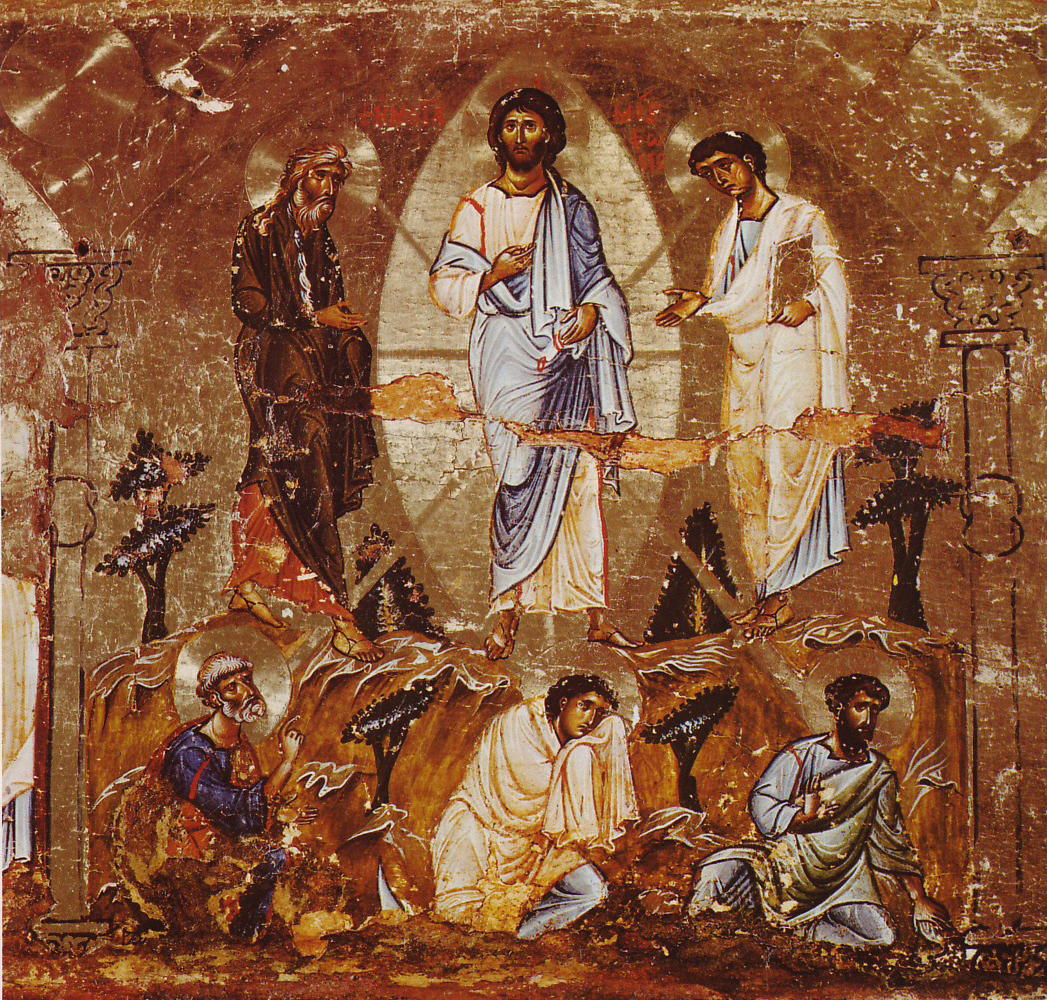
Gn 22. 1-2,9a,10-13,15-18; Ps 116; Rm 8. 31b-34; Mk 9. 2-10
Homily of Fr. Paul Panaretos, S.J.
Clearer Than Usual

We have entered Lent. Each of us has been experimenting with a practice to help us renew our baptisms and transform our lives in and with our risen Messiah Jesus. Some of us may have found one practice, which draws us closer to Jesus and takes us deeper into his paschal mystery. Others of us may still be trying to find one practice, which draws us closer to Jesus and takes us deeper into his paschal mystery.

Lent is not about doing many things. Lent is about one thing: drawing closer to Jesus by entering into his paschal mystery. No lenten practice or any other practice to exercise our spirit is an end in itself. It is a means not the goal. The goal is Jesus and his paschal mystery and our deeper union with him. Our lenten practice ought to guide us closer to Jesus not concentrate us on any discipline. For example, if I’ve chosen to fast one day a week this Lent, then the effects on me of having a single, moderate main meal ought to make me more attentive to Jesus present in my life and inviting me to live differently.

If having a single, moderate main meal consumes me with hunger pains and prevents me from considering Jesus’ suffering, especially in the poor, the homeless the malnourished and those we put on the margin of society, then I ought to find another lenten discipline. Lent’s power causes us to feel differently about Jesus: more close; more fascinated; more in tune with his way; more in need of Jesus’ healing love; more aware of his suffering and dying in too many of the world’s little ones; and more confident in his new life given us in baptism, which the eucharist sustains and nourishes each time we celebrate it.

The difference goes beyond feelings to involve how we look at the world, how we appreciate others and God. It reshapes and transforms us. God isn’t limited to Lent to reshape us and transform us. We give ourselves more to God and others during Lent. Indeed, religions the world over long have been aware the divine transforms the human. Feeling different accompanies altered states of consciousness: awareness more intense and clearer than usual.

An anthropologist studied this and wondered if “altered states of consciousness, for the most part in traditional societies and in a sacred context, are...a rare and exotic phenomenon of interest only to specialists [or] a major aspect of human behavior that has significant impact on the functioning of human societies.” Her question leads us to ask about ourselves: do personal praying and communal worship affect me, or are they a waste of time? Do they offer me glimpses of God, or do I just imagine them? The anthropologist reassures us.

After combing through evidence from almost 500 societies “in all parts of the world...[she found] 90% are reported to have one or more institutionalized, culturally patterned forms of altered states of consciousness.”/1/ God gives us glimpses of who God is. Personal praying and communal worship are windows on God.

Today’s gospel scene preserved and handed to us a pivotal moment in Jesus’ life in which his disciples’ awareness was not routine: one hardly knew what to say; all three were...frightened; what they saw suddenly was not available to their sight. Nor was their more intense and clearer-than-usual awareness complete.

They saw something, but the gospel is not clear that they heard Jesus conversing with Moses and Elijah, or that they heard the voice from the cloud. They would discern what their mountaintop experience offered them after Jesus rose from the dead; but their mountaintop experience filled them with awe although its meaning lay hidden from them.

In your daily 15 minutes with Jesus this week, compose yourself and step out of your world into the life and light of the Trinity. Force nothing; each time you exhale step from your world, and each time you inhale enter their life. Ask Peter, James, and John to help you be both open and attentive to what Jesus desires to offer you in those 15 minutes. Rest in what Jesus offers you: peace; tears; refreshment; feeling safe with him; invited to live both his dying and rising. Resolve to allow Jesus’ gift to affect your daily living. Close your time by saying slowing the Lord’s Prayer. Each time we echo Jesus’ personal prayer, we converse with God and, God transforms us along with Jesus to be more confident in what is not routine and much more real than we imagine.


_____________
Erika Bourguignon, Religion, Altered States of Consciousness, and Social Change. Columbus, OH: Ohio University Press, 1983, p. 9.
_________________________________________________________
Wiki-image of Living Shadow is used according to the GFDL. Wiki-image of the Transfiguration is in the public domain.

Friday, March 06, 2009

Pope Benedict: Q & A Artist; Also Enclyclical Preview

Pope Benedict is comfortable with the format of the Q & A. Mr. John L. Allen Jr. has commented on it in; listed some of the pope's past ones; and included a link to his latest one with priests of the Diocese of Rome.

In this same article Mr. Allen also gives a bit of a preview of the next encyclical due to appear soon. He gives more in a separate article to help anyone appreciate the upcoming encyclical, which will focus on social themes. Its title is "Charity in Truth."
____________________________________________________________
Wiki-image of Pope Benedict on his arrival in the U.S. in 2008 is in the public domain.

Sunday, March 01, 2009

Sunday word, 01 Mar 2009

Lenten Sunday1 B (01 Mar 2009)
Gn 9. 8-15; Ps 25; 1Pt 3. 18-22; Mk 1. 12-15
Homily of Fr. Paul Panaretos, S.J.
Each Moment

Certain images become controlling ones. They shape what comes to our minds. A red octagon suggests Stop even when we aren’t on the road. Many are the examples each of us can offer. Scriptural images, too, shape what comes to our minds. Controlling images do not always aid our full appreciation. The name Noah often conjures the flood, which destroyed creation. While the flood may be more memorable, it fails to capture completely God’s heart and God’s desire for humans.

The climax of the Genesis account of Noah and his family is not destruction or devastation but life. God’s desire for life is as broad as creation itself for all people. God established this new life by covenant at God’s initiative.

This was not lost to Christians at the beginning. Their experience of the dead-and-risen Messiah Jesus, present more powerfully then and now by his Holy Spirit, allowed them to read scripture, beginning with Genesis, with new eyes, with new minds and hearts.

The First Letter of Peter, a homily about Christian baptism, saw life in the Spirit in the water of dying with Jesus just as God promised life after the waters of the destroying flood. It saw the Church protecting people as the ark protected Noah and his family.

Because the liturgy does not offer us the First Letter of Peter as often as the Letters of Paul art and legend suggest the images of Noah and the flood are destructive. Taken together Genesis and the First Letter of Peter help us see that God’s desire is to preserve life, and more, to transform life from human to divine. That transformation begins in baptism.

The Gospel of Mark made another, more subtle Genesis-connection. Mark did not enumerate temptations of Jesus as did Matthew and Luke, who gave us our controlling images of Jesus in the desert. Instead, the First Gospel simply noted that Jesus was among wild beasts. How different the world had become because of sin: in God’s original creation no enmity existed between humans and animals!

As a result our experiences, spanning the mundane and the religious, are beset by forces inimical both to God and to us. Yet, at each moment God’s desire is to minister to us, to protect us just as God ministered and protected God’s son, Jesus. Even when to human eyes God seemed to have abandoned Jesus in death, God raised Jesus to absolutely new and indestructible life, the life of heaven as scripture names it.

This is good news, gospel, to which Jesus calls us to believe each day. Lent renews us in his good news. Entering it allows us to become more like Jesus, the new Noah, who waited patiently, confident God would save him; and not only save him but make his proclamation of the good news of salvation fruitful.

What then might Lent’s controlling image be for us this year as we enter it? We heard St. Paul offer a refreshing and restorative one on Ash Wednesday: now is a very acceptable time...now is the day of salvation./1/ Each day is now. Many of us who heard Christopher Walker here at Gesu in the middle of February appreciate the word now in God’s sense. Each moment is now.

Each moment God invites us to live God’s life. Each moment God invites us to share by what we do the life God gives us. Each moment God invites us to allow the paschal mystery of the death and resurrection of our Messiah Jesus to transform us and renew us.

In your 15 minutes with Jesus this week, compose yourself in the life-giving love of the Trinity. Ask your patron saint to present you to Jesus so you may converse with him. Speak to Jesus about the many images which seek to control your allegiance to him and to the risen life Jesus shares with you. Resolve to focus on your baptism and its life, dignity and vocation in order to renew the way you live your Christian life. Close by saying slowly the Lord’s Prayer. No better prayer so succinctly appeals to God and helps us to live as agents of the new creation in Jesus our risen Lord.


______________
1. 2 Corinthians 6.2, which closed the Second Reading at mass that day.

____________________________________________
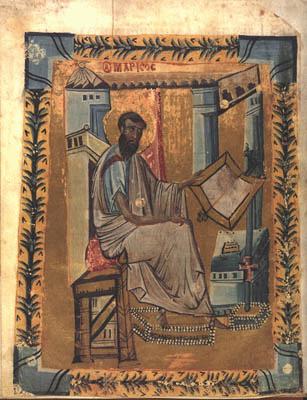
Wiki-images of the Sacrifice of Noah and of Mark the Evangelist are in the public domain
Saturday, February 28, 2009

Saturday word, 28 Feb 09

Lenten Saturday1 (28 Feb 2009)
Is 58. 9b-14; Ps 86; Lk 5. 27-32
Homily of Fr. Paul Panaretos, S.J.
Community of Disciples

Lent is not for loners, I remarked on Ash Wednesday at Gesu. In the 21st as well as the 20th centuries, the church has continued to shed an individual emphasis rather than a communal one during Lent. One reason for this is the fact that Lent evolved backwards. The idea of Lent was foreign in the Western church from its beginnings.

Each Sunday was the day for liturgy, celebrating Jesus’ death and resurrection. No annual celebration yet existed. When an annual celebration began, it was preceded by only a week, which corresponded to Holy Week as we know it. A Great Week preceded the Great Sunday. During the Great Week people recalled the events of Jesus’ entering Jerusalem for the final time and his last days. Over time the preparation got longer, and in medieval times people dramatized the memorial.

Together with the loss of preparing adults and children old enough to understand for baptism, the dramatization caused Lent to become a private rather than communal affair. Dramatizations of Lent gave the impression Jesus had never risen from the dead!

Helping people to prepare for baptism and for full communion with the church helps us recall our baptisms. This principle focus of Lent returns us to the communal dimension of the paschal mystery: Jesus’ dying and rising make possible for us to do in memory of him what he said: Take all of you and eat, take all of you and drink.

Jesus has personal relationships with all of us not private ones. The effects of Jesus personal relationship with anyone are far ranging and affect other people. Devotion to Jesus puts us into the fray of life, into the lives of one another and particularly those in need. When we said with the Psalmist, I am devoted to [our]...God, we qualified our devotion--each is God’s servant. Our desire during Lent is to learn more deeply Jesus’ way...that we may walk in his truth.

Lent allows us to feel more in need of Jesus’ love and our need for his healing. A gift of entering Lent wholeheartedly is spiritual health. It refashions us as more credible servants, who keep Jesus present not as holy loners but as a community of disciples Jesus chooses to draw others to him and to his church.
______________________________________________
Wiki-image .

Friday, February 27, 2009

U.S. Catholic Bishops Offer an Online Lenten Resource

The U.S. Catholic bishops unveiled a website to assist people enter and profit from Lent.

Its four categories are:

  • What We Believe;
  • What We Celebrate;
  • How We Live; and
  • How We Pray.

It offers daily reflection, thought and links to the readings at mass both as text and audio.

Thursday, February 26, 2009

Recovered Not New

Lent's emphasis on baptism is not new. For Latin Rite Roman Catholics it was recovered before the Second Vatican Council, which implemented the discovery by restoring it to church practice. This recovery is enshrined in the Rite of Christian Initiation of Adults.

The second reading in today's Office of Readings of the Liturgy of the Hours (see the seventh section, Celebrating Hours, at this link) included this sentence from Pope St. Leo the Great of the fifth century:
The special note of the paschal feast is this: the whole Church rejoices in the forgiveness of sins. It rejoices in the forgiveness not only of those who are then reborn in holy baptism but also of those who are already numbered among God’s adopted children.
Lent's emphasis on baptism is clearly not new. Its recovery benefits us by helping us to celebrate our baptismal vocations.
__________________________________________
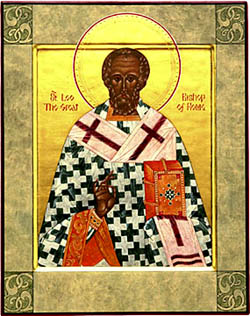
Wiki-image of Pope Leo the Great is in the public domain.

Wednesday, February 25, 2009

Lent Begins Our Preparation. . .

. . .to recall baptism and help prepare for it


Recalling and preparing for baptism is the twofold character of Lent. There are many ways to do both. The Church shapes ways of living Lent principally by liturgies of word--both personal praying with it and the Liturgy of the Hours--and eucharist. To enhance experiences of Lent the Church also recommends the three pillars of Lent: prayer; fasting; and almsgiving.

Pope Benedict invited Catholics to consider fasting, which often gets minimal attention and is misunderstood. In his annual Lenten Message the pope reflected on fasting through Jesus' experience of it.

Regarding its personal aspect Pope Benedict wrote, "Denying material food, which nourishes our body, nurtures an interior disposition to listen to Christ and be fed by His saving word."

Regarding its social aspect--Lent is both personal and social--the pope mentioned that "fasting is an aid to open our eyes to the situation in which so many of our brothers and sisters live."

Pope Benedict's Lenten Message is brief. It offers a unified window on the Paschal Mystery, of which Lent is an integral part.
____________________________________________________________
Wiki-image of an Ash Cross by by Gareth Hughes is used according to the Creative Commons Attribution ShareAlike 2.5 license.

Ash Wednesday word, 25 Feb 2009

Ash Wednesday (25 Feb 2009)
Jl 2. 2-1; Ps 51; 2 Co 5.20-6.2; Mt 6. 1-6, 16-18
Homily of Fr. Paul Panaretos, S.J.

Ambassadors For Our Messiah

The first character of Lent is baptism: recalling our baptism and helping others prepare for it. The second character is a spirit of penance./1/ Penance isn’t punitive; it’s an array of disciplines helping us focus more clearly on baptism and Christian living according to God’s measure and not by human measure. First, consider with me preparing others for baptism. I will close with a comment on God’s measure.

Preparing people for baptism belongs to the community of the church. The community is the first minister of initiation because baptism is “the responsibility of all the baptized.”/2/

Lent involves us all together. It is personal but never private. Just like relationship with God is personal, it is never private: God missions each of us to give witness to God by our deeds as well as our words and worship. Just like spurning relationship with God or rupturing it by my sin is personal, it is never private: when my relationship with God is shallow, I am not a clear channel to God.

Just like a grace God may give you is personal, it is never private: God blesses you in concrete ways so you may give more effective witness to God for others.

“Not private” is the essence of Joel’s prophetic message we heard: call an assembly; gather the people, notify the congregation; assemble the elders, gather the children and the infants at the breast. Together we return to [God] with []our whole heart. We accompany each other on our journey to God. Lent is a time when the community’s role is greatly important. Lent is not for loners. “During Lent, penance should not be only internal and individual but also external and social.”/3/

If Joel made the communal nature of penance clear, St. Paul handed us our lenten vocation: we are ambassadors. God...appeal[s] through us, and Lent helps us shape our lives so that we make Jesus appealing to others and more appealing to one another.

We don’t make Jesus attractive if we leave out his struggles, his temptations, his fear and his sufferings and death. Temptations to picture Jesus as a non-suffering Messiah, as someone who did not count on others measure Jesus by human standards not God’s standards.

The gospel reminded us of Jesus’ words about piety--not abstract reverence but putting devotion into practice. Heavenly Father, the one seeing in secret, the one who is hidden was Jesus point of reference. Jesus did not chart a plan humans can accomplish completely and on their own. No! Jesus invites us to overcome our great temptation to fashion Christian living on our terms and, instead, allow God to shape our praying, our almsgiving and our fasting so that we may become better ambassadors of mercy, praise and the paschal life Jesus calls us to rediscover in a deeper way this Lent.


___________
1. Second Vatican Council, Constitution on the Liturgy, 109.
2. Rite of Christian Initiation of Adults, 9.
3. Second Vatican Council, Constitution on the Liturgy, 110.
___________________________________________________________
Wiki-image of ashen cross by Gareth Hughes is used according to the Creative Commons Attribution ShareAlike 2.5 license.

Saturday, February 21, 2009

Saturday word, 21 Feb 2009

Sixth Saturday of the Year (21 Feb 2009)
Hb 11. 1-7; Ps 145; Mk 9. 2-13
Homily of Fr. Paul Panaretos, S.J.
Faith Offers Ourselves


For two weeks every other year, the church offers for our consideration at weekday masses the creation’s beginning and its re-beginning with Noah. Today the lectionary closes this consideration by pointing us toward faith, with a snippet taken from the Letter to the Hebrews: the beginning of the roll call of the ancients, who lived from faith. This roll call of the ancients helps us appreciate the account Genesis offers of Adam to Noah. Let me suggest two points.

First, we are quick to fashion faith as something mental, but it is much greater than a thought or just a way of thinking. Translators do want to broaden faith as something greater, and yet a favored translation of the word describing faith is assurance. As we heard, the New American Bible uses realization. We don’t cause this realization, as if we were to think hard enough. That returns us to a mental quality of faith. We don’t realize it.

A catechism statement helps us here: “Faith is a gift of God.”/1/ In the Letter to the Hebrews God’s gift registers repeatedly as God attests; God affirms; God certifies/2/: the ancients were well attested. When the bible uses the passive voice, and when a passage cannot supply an agent, as in the ancients were well attested, God is the agent. God certified the ancients because they lived from their faith.

For us and all people of faith that means that faith shapes how we understand: created things have their origin in something greater than what our senses perceive. Even more surprising, we give our loyalty to what our senses cannot grasp! God certifies us and all who live from this loyalty to God.

This isn’t only past. It’s present and future! God certified the ancients; God certified Jesus as the long awaited one: This is my beloved Son. Listen to him. God certifies us today and will certify us--and generation after generation of others--each moment we live from faith.

God creates at each moment. Faith is the gift God gives us to respond, not merely mentally, but with our loyalty. God rewards this loyalty of ours, even if we may not perceive it.


___________
1. Catechism of the Catholic Church, #153 (original emphasis).
2. The Letter to the Hebrews used the Greek word for “to witness,” from which we get the word martyr: 2.4; 7.17; 10.15; 11.2, 4, 5 (in this selection).
___________________________________________
Wiki-image of The Ancient of Days by William Blake is in the public domain.

Wednesday, February 18, 2009

Wednesday word, 18 Feb 2009

Josephine Nahas funeral (18 Feb 2009)
Sir 3. 1-14; Ps 23; Rv 14. 13; Jn 14. 1-6
Homily of Fr. Paul Panaretos, S.J.
New Migration

On behalf of Gesu Parish, I extend our prayers and heartfelt sympathy to you, Maureen, at the death of your mother. Richard, Geoffrey and Michael we pray for you because you survive your grandmother to whom you were dear. I know something of what you are experiencing because my father’s mother lived with us and died with us. She and I were close, I didn’t know how close until after her death. Be more courageous than your grief is sharp. Your confidence in our risen Messiah will help your children grieve well. Josephine’s great-grand-children, you will help your parents and grandmother to experience your great-grandmother’s presence in real and new ways.

I add my condolence to the staff at Judson Park, Josephine’s last home. Maureen told me how you recognized and appreciated her mother’s kindness. I’m not the only one she has told.

Today the Catholic church bids farewell to one of hers. I offer a few words to console and strengthen you in your grief; to help you appreciate God’s astounding compassion by noticing Jesus’ victorious dying and rising were present in Josephine./1/

I noticed the online Guest Book of the Plain Dealer brought you words of comfort from as near as Ohio and as far as California. Those words amplify the comfort you give each other as you gather today. I noticed in that Guest Book two refrains. One was strength: Josephine was a “determined” woman with “a positive attitude.” The second refrain described one way Josephine’s strength registered: encouragement. Florence Rahaim phrased it this way:
[Josephine] would say to us, “Keep going,” making us feel encouraged about many things that were bothering us.
You all will miss her many other ways she expressed her love, her generosity and her joy in you. I can say that because that was one thing I sorely missed after my grandmother died. I was 17. For many years before that I felt that I grew up with three parents: Mom, Dad and Grandma. I can imagine how she showered you with her Lebanese pride because my brother-in-law is Lebanese, and Abe and Elaine are grandparents themselves.

Maureen, when you were introducing me to your mother as we sat in the parish office Monday, you evoked Abe when you spoke of your mother and food. Abe always wants people to eat. Food flows from Lebanese like water flows from fountains. You know that. Richard, you know it in particular because as fast you bought your grandmother food it was out her door and into the hands of others. I even learned Josephine gave cooking lessons to people from her assisted-living apartment!

What lessons about Jesus does the life of your mother, grandmother, great-grandmother and friend offer us about Jesus? Of the many I’d like to mention two. First is generosity. Jesus taught it by living simply and by spending time among people for whom simple living was simply living. To measure generosity by things is elusive and endangers our hearts. As descendants of Josephine Nahas you have experienced that generosity is not measured in things but by an open heart. Josephine’s heart opened not only to give but to embrace you. Her first lesson is that receiving love teaches us to love well.

The second lesson I call a “new migration.” Josephine came to the United States from Lebanon. My Irish grandmother with whom I lived was an immigrant, too. She migrated when she was 19. As a boy I was fascinated, and often asked her why she came and how. On the one hand, whatever our age, it isn’t easy to leave places or let go what is familiar. On the other hand, one of the things that make us human is a desire or will to move and discover.

You and others you know have spoken with Josephine about the past. Share those memories with each other. As you do, be alert to how your mother, your grandmother, your great-grandmother and friend lived in the present, moving toward life and especially new life, both her “positive attitude” and Jesus’ new life extended to her and to all of us.

Devotions and sacramentals help us focus on the new life Jesus extends to us at each moment and to the divine life of his Father and their Holy Spirit. The number devotions is less important than how one or a few help you stay aware of Jesus’ new life offered to you. Josephine had many which helped her.

How do we know they helped her? Because they strengthened her desire for the good of all. To desire good for all indicates that we are one with Jesus and helps make present now his new life to come fully one day.

Through her dying Josephine has migrated for the last time to rest in the absolutely new life Jesus has prepared for her. Her life with you has prepared you for Jesus’ new life; and her generosity and encouragement to you and others have shown you concrete ways of welcoming that life and making the new migration to it more part of you, visible by how you live.

Today you have a new patroness interceding for you. You are also fortunate your mother, your grandmother, your great-grandmother and your friend offered you concrete ways to grow closer to Jesus; and as his disciples, you can lead others closer to Jesus by how you keep alive by your actions what Josephine modeled for you with her great generosity and encouraging love.

___________________
1. Cf. Order of Christian Funerals, 27.
_____________________________________________
Wiki-image of Osmorhizabrachypoda is in the public domain. Wiki-image of Day Two by Jonat, who gives permission to reproduce it.

Monday, February 16, 2009

Contents of The American Recovery and Reinvestment Act

This list was compiled by Network, the Catholic Social Justice Lobby. What Is in and Out of the The American Recovery and Reinvestment Act, H.R.1.
========================================================

NETWORK logo Legislative Update - February 14, 2009

On Friday February 13 the House and Senate voted to pass the final conference version of The American Recovery and Reinvestment Act, H.R.1 -- also known as the "economic stimulus package." The House vote was 246-183. Sadly, not one House Republican was able to resist party pressure and support the common good. The Senate vote was 60-38. (60 votes were needed to pass the bill.) All Democratic senators voted for the bill, except Senator Kennedy, who was unable to return to Washington. Three Republican senators voted for the bill: Senator Arlen Specter of Pennsylvania, and Senators Susan Collins and Olympia Snowe from Maine.
Although this bill, as any compromise bill, is far from perfect, it will help to provide approximately 3 million jobs. As unemployment has continued to escalate over recent months, this is a tremendous step toward keeping more families from destitution. In addition to creating jobs, the legislation also improves safety net programs to support those who are already suffering the greatest losses.
In the past few weeks, we asked you to advocate for many provisions in the Recovery/Stimulus bill. The information below shows you what we supported and achieved, and what we opposed and kept out of the bill.
We hope that as you contact your members of Congress you will use this information to support or challenge them on their vote. To find out how your representative and senators voted, go to http://capwiz.com/networklobby/keyvotes.xc/?lvl=C . You can enter your zip code or click on the final conference report vote for H.R.1.
Supported and achieved
Job creation
Job creation is a part of each provision included.
Head start and early head start
$ 2.1 billion - provides 50,000 additional jobs for teachers and staff
Job training for all skill levels
$ 3.95 billion under Workforce Investment Act
$ .25 billion for Job Corps
Unemployment Insurance
$27 billion for extension and increase in benefits
"Greening" of our nation
$ 11 billion - Smart Electric Grid
$ 2.3 billion for energy-efficient renovations of HUD units
$ 5 billion for Weatherization Assistance Program
$ .5 billion for energy efficiency upgrades for Native American housing programs
$ .1 billion for lead-based paint removal
$ 20 billion energy tax credits
$ 9.3 billion for mass transit
$ 1.6 billion for Amtrak intercity rail services - emphasis on high-speed
Safety net programs
Housing
$ 4 billion for HUD Capital Fund
$ 2.3 billion for the HOME Program
$ 1.5 billion in Neighborhood Stabilization Program
$ 1.5 billion for emergency homeless shelter grants
Nutrition
$20 billion increase in food stamps (SNAP) and lifting time limit on receipt of assistance
Child Tax Credit - partial success
$14.8 billion
Maximum credit raised to $1000 per child. At income above $75,000 ($150,000 per couple) phase out of $50 per $1000 of income.
The bad news: Those with the least income receive the least benefit from the CTC. The floor to receive a credit is $3000 and the benefit is 15% of income. Therefore, earning $3000, the benefit would be $450 and earning $60,000, the benefit would be $9000.
Medicaid Federal Medical Assistance Percentages (FMAP)
$86.6 billion in additional federal matching payments for state programs
Oversight
$84 million to create a Recovery Act Accountability and Transparency Board to coordinate oversight of federal spending
"Flash Reports" to Congress
Quarterly Reports to Congress and Administration
Reports posted on website: Recovery.gov
The bad news: protection for whistle-blowers on federal projects was removed from the bill, although retained for state and local level whistle-blowers.
Opposed and kept out of the Recovery bill
  • E-Verify Program - would have required all contracting employers to use the Internet-based program to verify the employment eligibility of their hires. This was removed from the bill.
  • $ 1 billion for Nuclear Weapons-related activities was removed from the bill.
2456 messages on Economic Recovery/Stimulus were sent via NETWORK's Legislative Action Center in January and February 2009. Thank you -- your messages made a difference.