Friday, March 13, 2009

Letter: Pope Benedict to Bishops of the World

The fallout was large after Pope Benedict revoked an excommunication of four priests who were "ordained validly but not legitimately." The fallout caused the pope to write a letter (in which the previously quoted phrase appeared) to the world's Roman Catholic bishops.

In the letter the pope related what he learned; what he did to "make it clear that the problems now to be addressed are essentially doctrinal in nature and concern primarily the acceptance of the Second Vatican Council and the post-conciliar magisterium of the Popes;" and his distinction between discipline and doctrine in this case.

In the third paragraph of his letter Pope Benedict drew "the distinction between individuals and institutions." The pope clarified that discipline applies to individuals. Once ministry and church institutions are involved then discipline no longer applies, doctrine does. In the pope's words:
This disciplinary level needs to be distinguished from the doctrinal level. The fact that the Society of Saint Pius X does not possess a canonical status in the Church is not, in the end, based on disciplinary but on doctrinal reasons. As long as the Society does not have a canonical status in the Church, its ministers do not exercise legitimate ministries in the Church.

The specific ministry in this case is that of holy orders, and the specific institution is the institute of the Society of Saint Pius X. It counts more than 700 priests and seminarians and 281 religious brothers and sisters. Asked Pope Benedict, "Can we be totally indifferent about a community which has 491 priests, 215 seminarians, 6 seminaries, 88 schools, 2 university-level institutes, 117 religious brothers, 164 religious sisters and thousands of lay faithful? Should we casually let them drift farther from the Church?"

The Vatican posted the pope's letter to bishops on its website. Individual bishops have been making it available, too. It is a valuable window on how Pope Benedict learns in addition to clarifying what often is muddled by others.


[e P.S. added 14 March 2009: The Society of Pius X responded favorably to Pope Benedict, assuring him, "We Fully Share His Utmost Concern for Preaching to Our Age."]
____________________________________________
Wiki-image of a species of ginger plant is in the public domain.

Wednesday, March 11, 2009

Old in New Vesture

This is a reflection on faith. Thus, the world "Old" in the title connotes not chronological age as much as "traditional." In the Catholic sense of things, "traditional" means what is handed on to others. In the Catholic sense, dead tradition (a phrase which is in use) is a contradiction. Because tradition is a handing on to others by others (parents to children, siblings to siblings; teachers to students, peers to peers), tradition is very much alive!

As people grow and change, so do their horizons of understanding and appreciation. If the language, which clothes faith's tradition, does not grow and change, it will fall by the wayside. This is partly why Blessed John XXIII decided to move on his illumination to call the Second Vatican Council. As he said: "The Gospel has yet to be discovered."

Pope Benedict offered priests of Rome some advice to help others discover the gospel and to plumb its truths:
I would like to say that it is important, on one hand, to make the great word of the faith concrete with our personal experience of faith, in our meeting with our parishioners, but also to not lose its simplicity. Naturally, great words of the tradition -- such as sacrifice of expiation, redemption of Christ's sacrifice, original sin -- are incomprehensible as such today. We cannot simply work with great formulas, [although] truths, without putting them in the context of today's world.
Adults are used to simplifying in authentic ways for the children in our care. We don't violate meaning when we do this; rather we dress it manners which will aid its understanding and appreciation at the time. This simplifying does not dilute the meaning.

So, too, with faith. Keeping alive faith's tradition and handing on to others belongs to all the baptized. The pope's words to priests in Rome benefit all Christians.
__________________________________________________________
Wiki-image of one Spring is in the public domain.

Monday, March 09, 2009

Legislative & Executive: Different With Similarity

Certain initiatives flow through and out of Congress. Some actions can be executive decisions of the President. Two examples:

1. Freedom of Choice Act[FOCA] is an example of legislation. It has a long history, which has "languished," in the words of one Catholic News Service article of November last year. The Catholic Church voiced its concern and objection, should Congress pass FOCA, about forcing health care providers to provide abortions if it is against their consciences.

2. The Provider Refusal Rule is a federal Regulation, which protects hospitals, physicians, nurses and other health care providers for whom abortions contradicts their consciences. [See background with the position of the U.S. Catholic Bishops.] The Provider Refusal Rule can be rescinded by executive decision. President Obama has expressed his willingness to rescind it. The process to do so requires a 30-day "public comment" period. This one began 06 March 2009.

Registering comments with the White House may be registered at 202.456.1111; or through its switchboard, 202.456.1414.

While rescinding this rule concerns the United States, conscience is not limited by borders. A 2007 "Vatican assembly of health care professionals and others...explored how conscience plays out in the daily choices of Christian health care workers, scientists, legislators, lawyers, and others as they confront life and death issues."
________________________________________________
Wiki-image of Daylight Moon by Joe Online is used according the Creative Commons Attribution 2.0 license.

Sunday, March 08, 2009

Sunday word, 08 Mar 09

Lenten Sunday2 B (08 Mar 2009)
Gn 22. 1-2,9a,10-13,15-18; Ps 116; Rm 8. 31b-34; Mk 9. 2-10
Homily of Fr. Paul Panaretos, S.J.
Clearer Than Usual

We have entered Lent. Each of us has been experimenting with a practice to help us renew our baptisms and transform our lives in and with our risen Messiah Jesus. Some of us may have found one practice, which draws us closer to Jesus and takes us deeper into his paschal mystery. Others of us may still be trying to find one practice, which draws us closer to Jesus and takes us deeper into his paschal mystery.

Lent is not about doing many things. Lent is about one thing: drawing closer to Jesus by entering into his paschal mystery. No lenten practice or any other practice to exercise our spirit is an end in itself. It is a means not the goal. The goal is Jesus and his paschal mystery and our deeper union with him. Our lenten practice ought to guide us closer to Jesus not concentrate us on any discipline. For example, if I’ve chosen to fast one day a week this Lent, then the effects on me of having a single, moderate main meal ought to make me more attentive to Jesus present in my life and inviting me to live differently.

If having a single, moderate main meal consumes me with hunger pains and prevents me from considering Jesus’ suffering, especially in the poor, the homeless the malnourished and those we put on the margin of society, then I ought to find another lenten discipline. Lent’s power causes us to feel differently about Jesus: more close; more fascinated; more in tune with his way; more in need of Jesus’ healing love; more aware of his suffering and dying in too many of the world’s little ones; and more confident in his new life given us in baptism, which the eucharist sustains and nourishes each time we celebrate it.

The difference goes beyond feelings to involve how we look at the world, how we appreciate others and God. It reshapes and transforms us. God isn’t limited to Lent to reshape us and transform us. We give ourselves more to God and others during Lent. Indeed, religions the world over long have been aware the divine transforms the human. Feeling different accompanies altered states of consciousness: awareness more intense and clearer than usual.

An anthropologist studied this and wondered if “altered states of consciousness, for the most part in traditional societies and in a sacred context, are...a rare and exotic phenomenon of interest only to specialists [or] a major aspect of human behavior that has significant impact on the functioning of human societies.” Her question leads us to ask about ourselves: do personal praying and communal worship affect me, or are they a waste of time? Do they offer me glimpses of God, or do I just imagine them? The anthropologist reassures us.

After combing through evidence from almost 500 societies “in all parts of the world...[she found] 90% are reported to have one or more institutionalized, culturally patterned forms of altered states of consciousness.”/1/ God gives us glimpses of who God is. Personal praying and communal worship are windows on God.

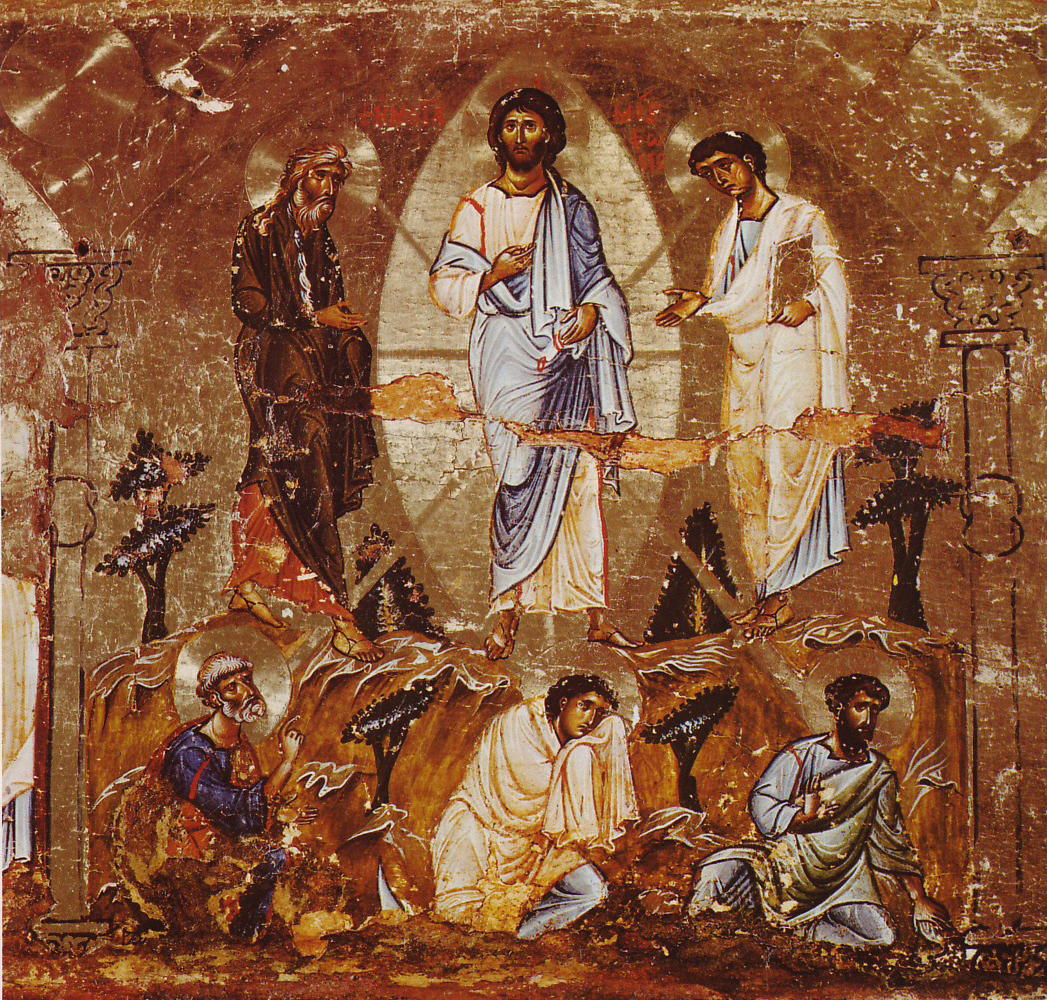
Today’s gospel scene preserved and handed to us a pivotal moment in Jesus’ life in which his disciples’ awareness was not routine: one hardly knew what to say; all three were...frightened; what they saw suddenly was not available to their sight. Nor was their more intense and clearer-than-usual awareness complete.

They saw something, but the gospel is not clear that they heard Jesus conversing with Moses and Elijah, or that they heard the voice from the cloud. They would discern what their mountaintop experience offered them after Jesus rose from the dead; but their mountaintop experience filled them with awe although its meaning lay hidden from them.

In your daily 15 minutes with Jesus this week, compose yourself and step out of your world into the life and light of the Trinity. Force nothing; each time you exhale step from your world, and each time you inhale enter their life. Ask Peter, James, and John to help you be both open and attentive to what Jesus desires to offer you in those 15 minutes. Rest in what Jesus offers you: peace; tears; refreshment; feeling safe with him; invited to live both his dying and rising. Resolve to allow Jesus’ gift to affect your daily living. Close your time by saying slowing the Lord’s Prayer. Each time we echo Jesus’ personal prayer, we converse with God and, God transforms us along with Jesus to be more confident in what is not routine and much more real than we imagine.


_____________
Erika Bourguignon, Religion, Altered States of Consciousness, and Social Change. Columbus, OH: Ohio University Press, 1983, p. 9.
_________________________________________________________
Wiki-image of Living Shadow is used according to the GFDL. Wiki-image of the Transfiguration is in the public domain.

Friday, March 06, 2009

Pope Benedict: Q & A Artist; Also Enclyclical Preview

Pope Benedict is comfortable with the format of the Q & A. Mr. John L. Allen Jr. has commented on it in; listed some of the pope's past ones; and included a link to his latest one with priests of the Diocese of Rome.

In this same article Mr. Allen also gives a bit of a preview of the next encyclical due to appear soon. He gives more in a separate article to help anyone appreciate the upcoming encyclical, which will focus on social themes. Its title is "Charity in Truth."
____________________________________________________________
Wiki-image of Pope Benedict on his arrival in the U.S. in 2008 is in the public domain.

Sunday, March 01, 2009

Sunday word, 01 Mar 2009

Lenten Sunday1 B (01 Mar 2009)
Gn 9. 8-15; Ps 25; 1Pt 3. 18-22; Mk 1. 12-15
Homily of Fr. Paul Panaretos, S.J.
Each Moment

Certain images become controlling ones. They shape what comes to our minds. A red octagon suggests Stop even when we aren’t on the road. Many are the examples each of us can offer. Scriptural images, too, shape what comes to our minds. Controlling images do not always aid our full appreciation. The name Noah often conjures the flood, which destroyed creation. While the flood may be more memorable, it fails to capture completely God’s heart and God’s desire for humans.

The climax of the Genesis account of Noah and his family is not destruction or devastation but life. God’s desire for life is as broad as creation itself for all people. God established this new life by covenant at God’s initiative.

This was not lost to Christians at the beginning. Their experience of the dead-and-risen Messiah Jesus, present more powerfully then and now by his Holy Spirit, allowed them to read scripture, beginning with Genesis, with new eyes, with new minds and hearts.

The First Letter of Peter, a homily about Christian baptism, saw life in the Spirit in the water of dying with Jesus just as God promised life after the waters of the destroying flood. It saw the Church protecting people as the ark protected Noah and his family.

Because the liturgy does not offer us the First Letter of Peter as often as the Letters of Paul art and legend suggest the images of Noah and the flood are destructive. Taken together Genesis and the First Letter of Peter help us see that God’s desire is to preserve life, and more, to transform life from human to divine. That transformation begins in baptism.

The Gospel of Mark made another, more subtle Genesis-connection. Mark did not enumerate temptations of Jesus as did Matthew and Luke, who gave us our controlling images of Jesus in the desert. Instead, the First Gospel simply noted that Jesus was among wild beasts. How different the world had become because of sin: in God’s original creation no enmity existed between humans and animals!

As a result our experiences, spanning the mundane and the religious, are beset by forces inimical both to God and to us. Yet, at each moment God’s desire is to minister to us, to protect us just as God ministered and protected God’s son, Jesus. Even when to human eyes God seemed to have abandoned Jesus in death, God raised Jesus to absolutely new and indestructible life, the life of heaven as scripture names it.

This is good news, gospel, to which Jesus calls us to believe each day. Lent renews us in his good news. Entering it allows us to become more like Jesus, the new Noah, who waited patiently, confident God would save him; and not only save him but make his proclamation of the good news of salvation fruitful.

What then might Lent’s controlling image be for us this year as we enter it? We heard St. Paul offer a refreshing and restorative one on Ash Wednesday: now is a very acceptable time...now is the day of salvation./1/ Each day is now. Many of us who heard Christopher Walker here at Gesu in the middle of February appreciate the word now in God’s sense. Each moment is now.

Each moment God invites us to live God’s life. Each moment God invites us to share by what we do the life God gives us. Each moment God invites us to allow the paschal mystery of the death and resurrection of our Messiah Jesus to transform us and renew us.

In your 15 minutes with Jesus this week, compose yourself in the life-giving love of the Trinity. Ask your patron saint to present you to Jesus so you may converse with him. Speak to Jesus about the many images which seek to control your allegiance to him and to the risen life Jesus shares with you. Resolve to focus on your baptism and its life, dignity and vocation in order to renew the way you live your Christian life. Close by saying slowly the Lord’s Prayer. No better prayer so succinctly appeals to God and helps us to live as agents of the new creation in Jesus our risen Lord.


______________
1. 2 Corinthians 6.2, which closed the Second Reading at mass that day.

____________________________________________
Wiki-images of the Sacrifice of Noah and of Mark the Evangelist are in the public domain

Saturday, February 28, 2009

Saturday word, 28 Feb 09

Lenten Saturday1 (28 Feb 2009)
Is 58. 9b-14; Ps 86; Lk 5. 27-32
Homily of Fr. Paul Panaretos, S.J.
Community of Disciples

Lent is not for loners, I remarked on Ash Wednesday at Gesu. In the 21st as well as the 20th centuries, the church has continued to shed an individual emphasis rather than a communal one during Lent. One reason for this is the fact that Lent evolved backwards. The idea of Lent was foreign in the Western church from its beginnings.

Each Sunday was the day for liturgy, celebrating Jesus’ death and resurrection. No annual celebration yet existed. When an annual celebration began, it was preceded by only a week, which corresponded to Holy Week as we know it. A Great Week preceded the Great Sunday. During the Great Week people recalled the events of Jesus’ entering Jerusalem for the final time and his last days. Over time the preparation got longer, and in medieval times people dramatized the memorial.

Together with the loss of preparing adults and children old enough to understand for baptism, the dramatization caused Lent to become a private rather than communal affair. Dramatizations of Lent gave the impression Jesus had never risen from the dead!

Helping people to prepare for baptism and for full communion with the church helps us recall our baptisms. This principle focus of Lent returns us to the communal dimension of the paschal mystery: Jesus’ dying and rising make possible for us to do in memory of him what he said: Take all of you and eat, take all of you and drink.

Jesus has personal relationships with all of us not private ones. The effects of Jesus personal relationship with anyone are far ranging and affect other people. Devotion to Jesus puts us into the fray of life, into the lives of one another and particularly those in need. When we said with the Psalmist, I am devoted to [our]...God, we qualified our devotion--each is God’s servant. Our desire during Lent is to learn more deeply Jesus’ way...that we may walk in his truth.

Lent allows us to feel more in need of Jesus’ love and our need for his healing. A gift of entering Lent wholeheartedly is spiritual health. It refashions us as more credible servants, who keep Jesus present not as holy loners but as a community of disciples Jesus chooses to draw others to him and to his church.
______________________________________________
Wiki-image .

Friday, February 27, 2009

U.S. Catholic Bishops Offer an Online Lenten Resource

The U.S. Catholic bishops unveiled a website to assist people enter and profit from Lent.

Its four categories are:

  • What We Believe;
  • What We Celebrate;
  • How We Live; and
  • How We Pray.

It offers daily reflection, thought and links to the readings at mass both as text and audio.

Thursday, February 26, 2009

Recovered Not New

Lent's emphasis on baptism is not new. For Latin Rite Roman Catholics it was recovered before the Second Vatican Council, which implemented the discovery by restoring it to church practice. This recovery is enshrined in the Rite of Christian Initiation of Adults.

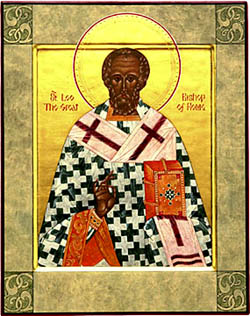
The second reading in today's Office of Readings of the Liturgy of the Hours (see the seventh section, Celebrating Hours, at this link) included this sentence from Pope St. Leo the Great of the fifth century:
The special note of the paschal feast is this: the whole Church rejoices in the forgiveness of sins. It rejoices in the forgiveness not only of those who are then reborn in holy baptism but also of those who are already numbered among God’s adopted children.
Lent's emphasis on baptism is clearly not new. Its recovery benefits us by helping us to celebrate our baptismal vocations.
__________________________________________
Wiki-image of Pope Leo the Great is in the public domain.

Wednesday, February 25, 2009

Lent Begins Our Preparation. . .

. . .to recall baptism and help prepare for it


Recalling and preparing for baptism is the twofold character of Lent. There are many ways to do both. The Church shapes ways of living Lent principally by liturgies of word--both personal praying with it and the Liturgy of the Hours--and eucharist. To enhance experiences of Lent the Church also recommends the three pillars of Lent: prayer; fasting; and almsgiving.

Pope Benedict invited Catholics to consider fasting, which often gets minimal attention and is misunderstood. In his annual Lenten Message the pope reflected on fasting through Jesus' experience of it.

Regarding its personal aspect Pope Benedict wrote, "Denying material food, which nourishes our body, nurtures an interior disposition to listen to Christ and be fed by His saving word."

Regarding its social aspect--Lent is both personal and social--the pope mentioned that "fasting is an aid to open our eyes to the situation in which so many of our brothers and sisters live."

Pope Benedict's Lenten Message is brief. It offers a unified window on the Paschal Mystery, of which Lent is an integral part.
____________________________________________________________
Wiki-image of an Ash Cross by by Gareth Hughes is used according to the Creative Commons Attribution ShareAlike 2.5 license.

Ash Wednesday word, 25 Feb 2009

Ash Wednesday (25 Feb 2009)
Jl 2. 2-1; Ps 51; 2 Co 5.20-6.2; Mt 6. 1-6, 16-18
Homily of Fr. Paul Panaretos, S.J.

Ambassadors For Our Messiah

The first character of Lent is baptism: recalling our baptism and helping others prepare for it. The second character is a spirit of penance./1/ Penance isn’t punitive; it’s an array of disciplines helping us focus more clearly on baptism and Christian living according to God’s measure and not by human measure. First, consider with me preparing others for baptism. I will close with a comment on God’s measure.

Preparing people for baptism belongs to the community of the church. The community is the first minister of initiation because baptism is “the responsibility of all the baptized.”/2/

Lent involves us all together. It is personal but never private. Just like relationship with God is personal, it is never private: God missions each of us to give witness to God by our deeds as well as our words and worship. Just like spurning relationship with God or rupturing it by my sin is personal, it is never private: when my relationship with God is shallow, I am not a clear channel to God.

Just like a grace God may give you is personal, it is never private: God blesses you in concrete ways so you may give more effective witness to God for others.

“Not private” is the essence of Joel’s prophetic message we heard: call an assembly; gather the people, notify the congregation; assemble the elders, gather the children and the infants at the breast. Together we return to [God] with []our whole heart. We accompany each other on our journey to God. Lent is a time when the community’s role is greatly important. Lent is not for loners. “During Lent, penance should not be only internal and individual but also external and social.”/3/

If Joel made the communal nature of penance clear, St. Paul handed us our lenten vocation: we are ambassadors. God...appeal[s] through us, and Lent helps us shape our lives so that we make Jesus appealing to others and more appealing to one another.

We don’t make Jesus attractive if we leave out his struggles, his temptations, his fear and his sufferings and death. Temptations to picture Jesus as a non-suffering Messiah, as someone who did not count on others measure Jesus by human standards not God’s standards.

The gospel reminded us of Jesus’ words about piety--not abstract reverence but putting devotion into practice. Heavenly Father, the one seeing in secret, the one who is hidden was Jesus point of reference. Jesus did not chart a plan humans can accomplish completely and on their own. No! Jesus invites us to overcome our great temptation to fashion Christian living on our terms and, instead, allow God to shape our praying, our almsgiving and our fasting so that we may become better ambassadors of mercy, praise and the paschal life Jesus calls us to rediscover in a deeper way this Lent.


___________
1. Second Vatican Council, Constitution on the Liturgy, 109.
2. Rite of Christian Initiation of Adults, 9.
3. Second Vatican Council, Constitution on the Liturgy, 110.
___________________________________________________________
Wiki-image of ashen cross by Gareth Hughes is used according to the Creative Commons Attribution ShareAlike 2.5 license.

Saturday, February 21, 2009

Saturday word, 21 Feb 2009

Sixth Saturday of the Year (21 Feb 2009)
Hb 11. 1-7; Ps 145; Mk 9. 2-13
Homily of Fr. Paul Panaretos, S.J.
Faith Offers Ourselves


For two weeks every other year, the church offers for our consideration at weekday masses the creation’s beginning and its re-beginning with Noah. Today the lectionary closes this consideration by pointing us toward faith, with a snippet taken from the Letter to the Hebrews: the beginning of the roll call of the ancients, who lived from faith. This roll call of the ancients helps us appreciate the account Genesis offers of Adam to Noah. Let me suggest two points.

First, we are quick to fashion faith as something mental, but it is much greater than a thought or just a way of thinking. Translators do want to broaden faith as something greater, and yet a favored translation of the word describing faith is assurance. As we heard, the New American Bible uses realization. We don’t cause this realization, as if we were to think hard enough. That returns us to a mental quality of faith. We don’t realize it.

A catechism statement helps us here: “Faith is a gift of God.”/1/ In the Letter to the Hebrews God’s gift registers repeatedly as God attests; God affirms; God certifies/2/: the ancients were well attested. When the bible uses the passive voice, and when a passage cannot supply an agent, as in the ancients were well attested, God is the agent. God certified the ancients because they lived from their faith.

For us and all people of faith that means that faith shapes how we understand: created things have their origin in something greater than what our senses perceive. Even more surprising, we give our loyalty to what our senses cannot grasp! God certifies us and all who live from this loyalty to God.

This isn’t only past. It’s present and future! God certified the ancients; God certified Jesus as the long awaited one: This is my beloved Son. Listen to him. God certifies us today and will certify us--and generation after generation of others--each moment we live from faith.

God creates at each moment. Faith is the gift God gives us to respond, not merely mentally, but with our loyalty. God rewards this loyalty of ours, even if we may not perceive it.


___________
1. Catechism of the Catholic Church, #153 (original emphasis).
2. The Letter to the Hebrews used the Greek word for “to witness,” from which we get the word martyr: 2.4; 7.17; 10.15; 11.2, 4, 5 (in this selection).
___________________________________________
Wiki-image of The Ancient of Days by William Blake is in the public domain.

Wednesday, February 18, 2009

Wednesday word, 18 Feb 2009

Josephine Nahas funeral (18 Feb 2009)
Sir 3. 1-14; Ps 23; Rv 14. 13; Jn 14. 1-6
Homily of Fr. Paul Panaretos, S.J.
New Migration

On behalf of Gesu Parish, I extend our prayers and heartfelt sympathy to you, Maureen, at the death of your mother. Richard, Geoffrey and Michael we pray for you because you survive your grandmother to whom you were dear. I know something of what you are experiencing because my father’s mother lived with us and died with us. She and I were close, I didn’t know how close until after her death. Be more courageous than your grief is sharp. Your confidence in our risen Messiah will help your children grieve well. Josephine’s great-grand-children, you will help your parents and grandmother to experience your great-grandmother’s presence in real and new ways.

I add my condolence to the staff at Judson Park, Josephine’s last home. Maureen told me how you recognized and appreciated her mother’s kindness. I’m not the only one she has told.

Today the Catholic church bids farewell to one of hers. I offer a few words to console and strengthen you in your grief; to help you appreciate God’s astounding compassion by noticing Jesus’ victorious dying and rising were present in Josephine./1/

I noticed the online Guest Book of the Plain Dealer brought you words of comfort from as near as Ohio and as far as California. Those words amplify the comfort you give each other as you gather today. I noticed in that Guest Book two refrains. One was strength: Josephine was a “determined” woman with “a positive attitude.” The second refrain described one way Josephine’s strength registered: encouragement. Florence Rahaim phrased it this way:
[Josephine] would say to us, “Keep going,” making us feel encouraged about many things that were bothering us.
You all will miss her many other ways she expressed her love, her generosity and her joy in you. I can say that because that was one thing I sorely missed after my grandmother died. I was 17. For many years before that I felt that I grew up with three parents: Mom, Dad and Grandma. I can imagine how she showered you with her Lebanese pride because my brother-in-law is Lebanese, and Abe and Elaine are grandparents themselves.

Maureen, when you were introducing me to your mother as we sat in the parish office Monday, you evoked Abe when you spoke of your mother and food. Abe always wants people to eat. Food flows from Lebanese like water flows from fountains. You know that. Richard, you know it in particular because as fast you bought your grandmother food it was out her door and into the hands of others. I even learned Josephine gave cooking lessons to people from her assisted-living apartment!

What lessons about Jesus does the life of your mother, grandmother, great-grandmother and friend offer us about Jesus? Of the many I’d like to mention two. First is generosity. Jesus taught it by living simply and by spending time among people for whom simple living was simply living. To measure generosity by things is elusive and endangers our hearts. As descendants of Josephine Nahas you have experienced that generosity is not measured in things but by an open heart. Josephine’s heart opened not only to give but to embrace you. Her first lesson is that receiving love teaches us to love well.

The second lesson I call a “new migration.” Josephine came to the United States from Lebanon. My Irish grandmother with whom I lived was an immigrant, too. She migrated when she was 19. As a boy I was fascinated, and often asked her why she came and how. On the one hand, whatever our age, it isn’t easy to leave places or let go what is familiar. On the other hand, one of the things that make us human is a desire or will to move and discover.

You and others you know have spoken with Josephine about the past. Share those memories with each other. As you do, be alert to how your mother, your grandmother, your great-grandmother and friend lived in the present, moving toward life and especially new life, both her “positive attitude” and Jesus’ new life extended to her and to all of us.

Devotions and sacramentals help us focus on the new life Jesus extends to us at each moment and to the divine life of his Father and their Holy Spirit. The number devotions is less important than how one or a few help you stay aware of Jesus’ new life offered to you. Josephine had many which helped her.

How do we know they helped her? Because they strengthened her desire for the good of all. To desire good for all indicates that we are one with Jesus and helps make present now his new life to come fully one day.

Through her dying Josephine has migrated for the last time to rest in the absolutely new life Jesus has prepared for her. Her life with you has prepared you for Jesus’ new life; and her generosity and encouragement to you and others have shown you concrete ways of welcoming that life and making the new migration to it more part of you, visible by how you live.

Today you have a new patroness interceding for you. You are also fortunate your mother, your grandmother, your great-grandmother and your friend offered you concrete ways to grow closer to Jesus; and as his disciples, you can lead others closer to Jesus by how you keep alive by your actions what Josephine modeled for you with her great generosity and encouraging love.

___________________
1. Cf. Order of Christian Funerals, 27.
_____________________________________________
Wiki-image of Osmorhizabrachypoda is in the public domain. Wiki-image of Day Two by Jonat, who gives permission to reproduce it.

Monday, February 16, 2009

Contents of The American Recovery and Reinvestment Act

This list was compiled by Network, the Catholic Social Justice Lobby. What Is in and Out of the The American Recovery and Reinvestment Act, H.R.1.
========================================================

NETWORK logo Legislative Update - February 14, 2009

On Friday February 13 the House and Senate voted to pass the final conference version of The American Recovery and Reinvestment Act, H.R.1 -- also known as the "economic stimulus package." The House vote was 246-183. Sadly, not one House Republican was able to resist party pressure and support the common good. The Senate vote was 60-38. (60 votes were needed to pass the bill.) All Democratic senators voted for the bill, except Senator Kennedy, who was unable to return to Washington. Three Republican senators voted for the bill: Senator Arlen Specter of Pennsylvania, and Senators Susan Collins and Olympia Snowe from Maine.
Although this bill, as any compromise bill, is far from perfect, it will help to provide approximately 3 million jobs. As unemployment has continued to escalate over recent months, this is a tremendous step toward keeping more families from destitution. In addition to creating jobs, the legislation also improves safety net programs to support those who are already suffering the greatest losses.
In the past few weeks, we asked you to advocate for many provisions in the Recovery/Stimulus bill. The information below shows you what we supported and achieved, and what we opposed and kept out of the bill.
We hope that as you contact your members of Congress you will use this information to support or challenge them on their vote. To find out how your representative and senators voted, go to http://capwiz.com/networklobby/keyvotes.xc/?lvl=C . You can enter your zip code or click on the final conference report vote for H.R.1.
Supported and achieved
Job creation
Job creation is a part of each provision included.
Head start and early head start
$ 2.1 billion - provides 50,000 additional jobs for teachers and staff
Job training for all skill levels
$ 3.95 billion under Workforce Investment Act
$ .25 billion for Job Corps
Unemployment Insurance
$27 billion for extension and increase in benefits
"Greening" of our nation
$ 11 billion - Smart Electric Grid
$ 2.3 billion for energy-efficient renovations of HUD units
$ 5 billion for Weatherization Assistance Program
$ .5 billion for energy efficiency upgrades for Native American housing programs
$ .1 billion for lead-based paint removal
$ 20 billion energy tax credits
$ 9.3 billion for mass transit
$ 1.6 billion for Amtrak intercity rail services - emphasis on high-speed
Safety net programs
Housing
$ 4 billion for HUD Capital Fund
$ 2.3 billion for the HOME Program
$ 1.5 billion in Neighborhood Stabilization Program
$ 1.5 billion for emergency homeless shelter grants
Nutrition
$20 billion increase in food stamps (SNAP) and lifting time limit on receipt of assistance
Child Tax Credit - partial success
$14.8 billion
Maximum credit raised to $1000 per child. At income above $75,000 ($150,000 per couple) phase out of $50 per $1000 of income.
The bad news: Those with the least income receive the least benefit from the CTC. The floor to receive a credit is $3000 and the benefit is 15% of income. Therefore, earning $3000, the benefit would be $450 and earning $60,000, the benefit would be $9000.
Medicaid Federal Medical Assistance Percentages (FMAP)
$86.6 billion in additional federal matching payments for state programs
Oversight
$84 million to create a Recovery Act Accountability and Transparency Board to coordinate oversight of federal spending
"Flash Reports" to Congress
Quarterly Reports to Congress and Administration
Reports posted on website: Recovery.gov
The bad news: protection for whistle-blowers on federal projects was removed from the bill, although retained for state and local level whistle-blowers.
Opposed and kept out of the Recovery bill
  • E-Verify Program - would have required all contracting employers to use the Internet-based program to verify the employment eligibility of their hires. This was removed from the bill.
  • $ 1 billion for Nuclear Weapons-related activities was removed from the bill.
2456 messages on Economic Recovery/Stimulus were sent via NETWORK's Legislative Action Center in January and February 2009. Thank you -- your messages made a difference.

Sunday, February 15, 2009

Sunday word, 15 Feb 2009

Sixth Sunday of the Year B (15 Feb 2009)
Lv 13. 1-2,44-46; Ps 32; 1Co 10. 31-11.1; Mk 1. 40-45
Homily of Fr. Paul Panaretos, S.J.
Healed and United

Jesus continued on his healing move, as we heard in the gospel. Our distance from Jesus both in time and culture can distract us from his mission. The distance of time causes us to think about things in categories familiar to us. The distance of culture causes us to miss things important in one culture that may not carry the same importance in ours. I will return to Jesus and his healing mission after briefly considering distance in both time and culture.

Thursday, my mother said what many of us say about time: “Time moves so quickly, it’s hard to believe that many years have passed.” I had asked Mom if she remembered a priest, who taught me in college and attended my commencement at Yale. Fr. Berg had died; he was a year younger than my mother. I mentioned that he was a year younger than her to help her situate him and herself. She recalled him. That’s when she said, “Time moves so quickly, it’s hard to believe that many years have passed.”

When time separates us from Jesus and his culture, we tend to forget that people did not move as frenetically and frantically as we do. On the one hand, people could savor things more leisurely, and on the other hand, things that needed to change did so even more slowly.

For the Jewish people that meant they forgot God’s desire to welcome people with imperfections. I say imperfections deliberately because biblical leprosy was that and not an illness. The cause of the disease we think of when hear the word leprosy was only discovered in 1868 by a Gerhard Hansen. We hear leprosy, and you and I think of Hansen’s Disease, but that’s not biblical leprosy. The description of biblical leprosy as a white blotch which spread, is more like psoriasis./1/ Imperfect did not describe God, and thus, people with imperfections could not approach God. Worse, a person with biblical leprosy was required to dwell apart and live outside the camp.

That was a death sentence to Mediterranean people. By culture they were gregarious and oriented to groups far more than we are. If our need for social interaction were a liquid, which would fill some quart jars, then Mediterranean peoples’ need would overflow them many times over. Even today in Mediterranean lands, people flock to central squares or to harbors in the cool of the evening to walk and socialize. For me it’s amazing and energizing to watch.

In the days of scripture, though, people with imperfections were sentenced to die--denied interaction with others and forced to live outside the camp. For Jesus to touch those so shunned was an act of defiance difficult for you and me to appreciate. Jesus’ refusal to shun was the beginning of healing the leper in the gospel. The disciples of Jesus surely must have been amazed when Jesus stretched out his hand and touched [the leper]. Cleansed people moved into the city, while Jesus remained outside in deserted places, and people kept coming to him from everywhere. Jesus had chosen a place fruitful for ministering God’s healing and uniting desire.

Touch was Jesus’ powerful way to challenge his culture’s sentence upon people. It also made clear that as the Holy One of God, Jesus announced in ways long lost because of time and culture, God’s desires that people stand as one and that they help each other to welcome God not prevent each other from doing so. People kept coming to Jesus from everywhere because Jesus embodied for them the joy of salvation. Many would in their turn, like St. Paul, imitate Jesus, to help others to be saved.

In your daily 15 minutes with Jesus this week, compose yourself in the Trinity’s healing love. Ask the leper of the gospel to present you to Jesus with all the courage and homage with which that leper approached Jesus. Tell Jesus in your words what you do to isolate yourself from Jesus and from others. Beg Jesus to touch your wound with his wounds to make you whole. Close your prayer by saying slowly the Lord’s Prayer. Jesus gave us his prayer to remind us that God’s desires us to seek God’s healing so that we can help others to become whole.

_______________
1. Leviticus 13.24-27, verses not included by the Lectionary for the First Reading.


_____________________________________________
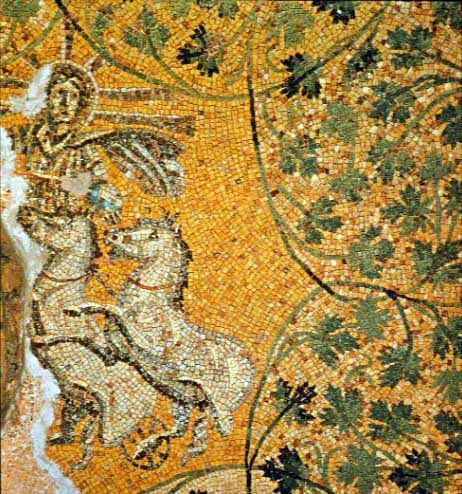
Wiki-image of Jesus depicted as the Sun with healing rays is in the public domain.

Sunday, February 08, 2009

Sunday word, 08 Feb 2009

Fifth Sunday of the Year B (08 Feb 2009)
Jb 7.1-4,6-7; Ps 147; 1Co 9. 16-19,22-23-35; Mk 1. 29-39
Homily of Fr. Paul Panaretos, S.J.
Fuel and Fire

Scripture; spirituality and service--our responses to scripture, which shape how we respond to Jesus--paint a large, living fresco in which we can see ourselves, find ourselves as well as deeper meaning for our lives. Today’s readings offer us that. I will begin with Jesus then return to him to end this homily.

From the beginning of his ministry, Jesus in Mark’s gospel healed. “We’ve heard that before, and we know that!” I can hear someone say. Yes, you have heard, and you know that. However, to attempt to heal--even for professional physicians of Jesus’ day--was risky business, and not for what we may think. Ancient Mediterranean, professional physicians did not attempt to heal people because if they failed, they could be put to death. ("Put to death" makes today’s malpractice suits seem tame.) Rather than attempt to heal, ancient physicians preferred to talk about illnesses, after the fashion of philosopher-healers./1/

People turned to folk-healers, who were willing to treat with means at their disposal. Learning that helped me appreciate more the way people sought Jesus. The healing people sought was greater than their cures because illness had social consequences, namely, separation from or even shunning by the community. Jesus, who addressed those in need of healing did not stop at curing; Jesus restored sick-marginalized people to their places, status and roles in society. That restoration exceeded curing illness and helped make people and society whole.

The effects of being sick-marginalized--I don’t know one word to describe it--were well expressed by Job, and we can identify with him. Illness of every sort leaves us listless so that the most routine task becomes drudgery. Time drags, and we feel it masters us rather than we it: a slave who longs for the shade and a hireling who waits for his wages illustrated what it feels like when time drags. We can quickly paint scenes from our restlessness when, like Job, happiness seems far away.

Consonant with our lives is the need for healing, of which scripture is full. Consonant with the gospel is how we dispose ourselves in our restlessness and in all our limitations. As witnesses to Jesus today we do not only see and seek his cures, which miss Jesus’ mission. We witnesses to Jesus today dispose ourselves to trust the words and ways of Jesus, especially when evidence mocks Jesus and his ways and tempts us to do the same.

The temptation is strong when things do not always unfold as we we’d like. That unfolding challenges us witnesses of Jesus. St. Paul reminded us that witnesses to Jesus today do not always give their testimony willingly. It isn’t always convenient. Yet, that is what stewardship entails: overcoming inertia and obstacles and moving forward. As parents, students, employees and employers, we know that from experience.

So it is with giving witness to Jesus. Witness, testimony, evangelizing begin with personal relationships with Jesus. Personal relationships with Jesus function like fuel and fire: they move us beyond ourselves, and they provide spark to our words and especially our deeds.

Peter’s mother-in-law embodied such fuel and fire. Her rising from bed echoed Jesus’ rising from death in this First Gospel; her waiting on Jesus and his disciples isn’t about subservience. She reclaimed her role in home and society, which is what Jesus healing her accomplished.


  • What sort of healing do we need?
  • Are we aware that we need healing?
  • Is our trust in Jesus strong and unshakable?
  • Do we turn to Jesus quickly in our weakness?

In your daily 15 minutes with Jesus this week, compose yourself in the Trinity. Bask in the light of our Triune God. Ask Peter’s mother-in-law to present you to Jesus to speak with him. Before you speak notice how you are feeling at the moment. Then tell Jesus how you want to trust him, and tell him what prevents you: am I lazy? Do I feel lost? Am I tempted?--and the like. Welcome Jesus into your weakness, and ask Jesus to touch your weakness and heal you to put it into perspective; to learn how you can use it in his service; and to know how your weakness draws you closer to him and to others. Close by saying slowing the Lords’ Prayer, which Jesus gave us to recognize more clearly how God’s life and love is more than sufficient each day.


___________
1. John J. Pilch, “Social Healing.”
_____________________________________________
Wiki-images of Job and of Jesus healing Peter's mother-in-law are in the public domain.

Thursday, February 05, 2009

Thursday word, 05 Feb 2009

St. Agatha (05 Feb 2009)
Hb 12. 18-19,21-24; Ps 48; Mk 6. 7-13
Homily of Fr. Paul Panaretos, S.J.
Secured!

"What to say?" My question to myself opened my eyes to a key metaphor used by the preacher of the Letter to the Hebrews, speech. He used it as he began those words familiar to our ears:
In times past, God spoke in partial and various ways to our ancestors through the prophets; in these last days, he spoke to us through a son, whom he made heir of all things and through whom he created the universe, who is the refulgence of his glory, the very imprint of his being, and who sustains all things by his mighty word. When he had accomplished purification from sins, he took his seat at the right hand of the Majesty on high./1/
God speaking was a remains a banner leading us on our pilgrimages of faith, the preacher’s image for our lives. God speaks most eloquently in and through Jesus, and God continues to speak through Jesus today. God speaks through Jesus’ life, and especially through his suffering death and resurrection, when Jesus took his seat at the right hand of the Majesty on high. That note of God’s reign the preacher sounded again:
You have approached Mount Zion and the city of the living God, the heavenly Jerusalem, and countless angels in festal gathering, and the assembly of the firstborn enrolled in heaven, and God the judge of all, and the spirits of the just made perfect, and Jesus, the mediator of a new covenant, and the sprinkled blood that speaks more eloquently than that of Abel.
The preacher contrasted the power God demonstrated when giving Moses the commandments on Mt. Sinai. It was fearsome. Much greater and consoling--though not to be taken lightly--is God’s existence, God’s covenant-life secured for us by the blood of Jesus.

The blood of Abel, first to die in scripture, cried out for God’s justice. The blood of Jesus, our mediator, actively transfers us and all who follow Jesus into God’s life. Not a place, indeed more real than any place, the preacher described it with the dynamics of an ancient Greek city:
  • angels not only represented God they welcome us/2/;
  • we are the assembly living God’s life, in a real way though not yet fully;
  • God is judge and Jesus is mediator for us.
We share in this divinely royal life because the firstborn, Jesus, has made us sharers in his status!/3/ Jesus has secured/4/ our goal, holding it for us at the end of our pilgrimage of faith.

___________
1. Hebrews 1.1-3.
2. see Hebrews 1.7 for angels as ministers, a role God now expands to include us!
3. Hebrews 1.6 designates Jesus as the first-born & Hebrews 11-13 noted that Jesus says he is not ashamed to call them [us] "brothers," and "Behold, I and the children God has given me." In 3.1 the preacher addressed his hearers as holy "brothers."
4. Hebrews 5.9-10!

__________________________________________
Wiki-image is in the public domain.

Wednesday, February 04, 2009

Wednesday word, 04 Feb 2009

Jesuit Martyrs of the Missions B (04 Feb 2009)
Hb 12. 4-7,11-15; Ps 103; Mk 6. 1-6
Homily of Fr. Paul Panaretos, S.J.

Heirs of God’s Promise

Our semi-continuous hearing of the Letter to the Hebrews will close Saturday. In this series of homilies devoted to it I hope I have been allowing you to hear it with greater appreciation. As it closes you are hearing notes the preacher sounded earlier. The preacher’s purpose was to comfort, encourage and urge his hearers during their pilgrimage through life. The most valuable example for their consideration was Jesus and his obedient faith.

Jesus again appears as the Letter to the Hebrews encourages you and me. At the beginning the preacher reminded us that God spoke to us through a son,/1/ who was opposed, and he struggled and endured even to the point of shedding [his] blood. We have not had to do that for our faith, yet we struggle and endure.

The image discipline conjures is narrower than the preacher intended. For the ancient Greeks, discipline was a part of education, and education was mental, physical and spiritual--”holistic,” we would say today. Because discipline is even for us part of an education, “You are enduring for the sake of an education," is closer to the preacher’s meaning.

This education is greater than mental, physical and pertaining to our human spirit, it is divine. Just as the preacher earlier said that Jesus endured/2/ and was transferred into God’s power and presence--the manner in which Jesus is son--now God treats you [and me] as sons [and daughters], heirs of God’s promise.

God’s promise that we, like Jesus, will share God’s life is the goal of our pilgrimage. The preacher calls us to strengthen our resolve, to continue to free our dispositions for faith. The practical consequences are two, according to the preacher. First, we are to strive for peace with everyone; and we are to live in ways that help each other in the community of faith to grow in our faithful freedom--to sweeten the community and not be that bitter root which defiles it.

Jesus is our model and more than that, the pioneer and perfecter of this faith/3/ of ours. Jesus is the one who leads our transformations as individuals and as a community.

___________
1. Hebrews 1.2.
2. Hebrews 12.2, which began this chapter, verses of which were read yesterday at mass.
3. Hebrews 12.2: see earlier, 2.10 and 5.9 for pioneer. Pioneer captures this leading quality of Jesus. The King James Version uses author and finisher for this pair, the second of which lends us greater appreciation of both our pilgrimage and of faith's goal.
_____________________________________________
Wiki-image by of Faith Triumphing Over Idolatry is in the public domain.

Tuesday, February 03, 2009

Tuesday word, 03 Feb 2009

St. Blase, Bishop & Martyr (03 Feb 2009)
Hb 12. 1-4; Ps 22; Mk 5. 21-43
Homily of Fr. Paul Panaretos, S.J.
Perspective

The preacher of the Letter to the Hebrews recalled God’s action past and present, using the metaphor of speech: God spoke in partial and various ways to our ancestors through the prophets; in these last days, he spoke to us through a son, whom he made heir of all things and through whom he created the universe./1/ The preacher elaborated on Jesus as both human,/2/ too, and our great high priest/3/ and pioneer and perfecter of our faith.

The preacher was not teaching only. He was encouraging his hearers and urging them to renew their faith. He used the image of pilgrimage. Plus, he encouraged his sister and brother Christians to look to Jesus/4/--his faith, how he faced opposition and endured.

Next the preacher continued with the roll call of heroes and heroines of faith. That Chapter 11 is best appreciated by reading it aloud from start to finish. The lectionary only allows us to hear the beginning verses. Jesus, the heroes and heroines in their pilgrimages through life allowed God to witness to them, to guide them and help them negotiate obstacles so that they would persevere to draw near to God.

The preacher, as we heard today, returned to Jesus to complete the encouragement the preacher began by recalling his hearers’ situation.
Remember the days past when, after you had been enlightened, you endured a great contest of suffering. At times you were publicly exposed to abuse and affliction; at other times you associated yourselves with those so treated. You even joined in the sufferings of those in prison and joyfully accepted the confiscation of your property, knowing that you had a better and lasting possession./5/
Looking to heroes and heroines of faith, and esp. to Jesus helps us who have not shed blood for the faith to put things in our pilgrimage of faith in perspective. We look above all to Jesus, as the preacher put it, in order that [we] may not grow weary and lose heart. Jesus strengthens us so we do not succumb to our weaknesses. The message is brief, but more important is that we count on it, that we count on Jesus, pioneer and perfecter of our faith.
______________
1. Hebrews 1.1-2.
2. Hebrews 2.17; 4.15.
3. Hebrews 2.17; 4.14ff.
4. Hebrews 2.9.
5. Hebrews 10.32-34.
___________________________________________________________
Wiki-image is of pilgrims is used according to the GFDL .

Monday, February 02, 2009

Monday funeral word, 02 Feb 2009

Nancy Amata funeral (02 Feb 2009)
Wisdom 3; 1-9; Psalm 23; Romans 14. 7-9, 10b12; Matthew 5. 1--12a
Homily of Fr. Paul Panaretos, S.J.
Ninth Beatitude

On behalf of Gesu Parish, I extend our prayers and heartfelt sympathy to you, Angie, at the death of your sister, Nancy. We especially pray for you because you survive all your siblings, Joe, Carl, Bill, Angelo Sam and now Nancy. Like your brothers before you, you will experience Nancy’s presence in real and new ways.

I extend our prayers and condolences to all of your family and friends. You are not alone in your grief. The Catholic church bids farewell to one of ours today. I offer a few words to console and strengthen us in our grief; to help you appreciate God’s astounding compassion by noticing Jesus’ victorious dying and rising were present in Nancy./1/

Before I continue I want to thank Beth Rizzo for representing you, Angie, to introduce Nancy to me. I was not privileged to have known her, and I’m indebted to you Beth because you helped me to shape my homily at your aunt’s funeral mass.

I noted in the Plain-Dealer Guest Book that Celia Giganti in Florida mourns the loss of her “dearest friend.” Friend and family, I suggest, are lenses through which to view both Nancy and Jesus, our risen Savior.

Jesus accepts us as we are always inviting us beyond ourselves to become the individuals Jesus created. Together with Angie, Nancy gave herself to her family. In the United States family often means spouses and their children in their home. Italians know better. La familia è piu di mama e papa è i loro bambini. Family extends to aunts, uncles, cousins--not only by blood but by marriage, too. Individuals grow to be themselves because of their family relationships, which for Nancy, and you her family, was extensive.

Part Greek, I know we Mediterranean people see family with a larger lens. While we cannot claim to have the corner on family, we enjoy an expansive appreciation of it. Jesus, and our life in Jesus now as the church, is far more expansive than our Mediterranean appreciation of family.

We are friends of one another because Jesus called us his friends. Friends and family are good lenses to appreciate Nancy as well as Jesus, who calls us his friends. Jesus’ friendship entails blessing as the gospel reminded us. The particular blessings Jesus named are conditions by which we enter God’s kingdom--poor in spirit; meek; mourning; being single-hearted; longing for God’s justice; mercy; making peace; even persecution because Jesus befriends us. They indicate our imperfections not our flawless strengths. That Jesus would befriend us because of our needs may shock us. Jesus’ friendship is truly expansive, as la familia suggested.

Jesus’ choice to befriend us in our needs also consoles us, especially today. Our need today is measured by our loss and separation from Nancy. We believe our loss and separation are temporary, but that doesn’t make our loss less sharp. Yet Jesus’ choice to befriend us in our need today not only consoles; his choice calls us beyond ourselves. Nancy modeled that for you in her desire to welcome you and her friends into sua familia, vostri familia. With Angie, and later growing young women and men, they made your pranzo della domenica, the center of your family network.

Jesus does something similar for us and all his friends. Jesus invites us to his table as we bring our sister to church for the last time. His meal nourishes us until Jesus reunites us with Nancy and welcomes us into the eternal banquet of heaven. Nancy joins Jesus to prepare our places.

As I noted at DiCicco Brothers Funeral Home late yesterday afternoon, one of the category names on the picture collage of Nancy and sua familia, vostri familia was “full life.” It recalled Nancy’s long life. It moved me to remind us then and moves me remind us again that even better than length is life-in-its-fullness. Nancy is at its threshold. She begins it because, like Jesus, she did not live for herself. Your memory of her will not only remind you of her selflessness.

Your memory of her will encourage you to live that way, not only for your family but for the greater circle of people, from whom Jesus invites you to receive as well as to give. Why? So that each of you may become the individual Jesus created you to be. You have Nancy as a model of that faithful freedom. Blessed by Jesus, she is your Ninth Beatitude.

___________________
1. Cf. Order of Christian Funerals, 27.
_____________________________________________
Wiki-image of pasta dish by Sami Keinänen is used according to the Creative Commons Attribution ShareAlike 2.0 license. Wiki-image of El Greco's Last Supper is in the public domain.