Sunday, February 15, 2009

Sunday word, 15 Feb 2009

Sixth Sunday of the Year B (15 Feb 2009)
Lv 13. 1-2,44-46; Ps 32; 1Co 10. 31-11.1; Mk 1. 40-45
Homily of Fr. Paul Panaretos, S.J.
Healed and United

Jesus continued on his healing move, as we heard in the gospel. Our distance from Jesus both in time and culture can distract us from his mission. The distance of time causes us to think about things in categories familiar to us. The distance of culture causes us to miss things important in one culture that may not carry the same importance in ours. I will return to Jesus and his healing mission after briefly considering distance in both time and culture.

Thursday, my mother said what many of us say about time: “Time moves so quickly, it’s hard to believe that many years have passed.” I had asked Mom if she remembered a priest, who taught me in college and attended my commencement at Yale. Fr. Berg had died; he was a year younger than my mother. I mentioned that he was a year younger than her to help her situate him and herself. She recalled him. That’s when she said, “Time moves so quickly, it’s hard to believe that many years have passed.”

When time separates us from Jesus and his culture, we tend to forget that people did not move as frenetically and frantically as we do. On the one hand, people could savor things more leisurely, and on the other hand, things that needed to change did so even more slowly.

For the Jewish people that meant they forgot God’s desire to welcome people with imperfections. I say imperfections deliberately because biblical leprosy was that and not an illness. The cause of the disease we think of when hear the word leprosy was only discovered in 1868 by a Gerhard Hansen. We hear leprosy, and you and I think of Hansen’s Disease, but that’s not biblical leprosy. The description of biblical leprosy as a white blotch which spread, is more like psoriasis./1/ Imperfect did not describe God, and thus, people with imperfections could not approach God. Worse, a person with biblical leprosy was required to dwell apart and live outside the camp.
That was a death sentence to Mediterranean people. By culture they were gregarious and oriented to groups far more than we are. If our need for social interaction were a liquid, which would fill some quart jars, then Mediterranean peoples’ need would overflow them many times over. Even today in Mediterranean lands, people flock to central squares or to harbors in the cool of the evening to walk and socialize. For me it’s amazing and energizing to watch.

In the days of scripture, though, people with imperfections were sentenced to die--denied interaction with others and forced to live outside the camp. For Jesus to touch those so shunned was an act of defiance difficult for you and me to appreciate. Jesus’ refusal to shun was the beginning of healing the leper in the gospel. The disciples of Jesus surely must have been amazed when Jesus stretched out his hand and touched [the leper]. Cleansed people moved into the city, while Jesus remained outside in deserted places, and people kept coming to him from everywhere. Jesus had chosen a place fruitful for ministering God’s healing and uniting desire.

Touch was Jesus’ powerful way to challenge his culture’s sentence upon people. It also made clear that as the Holy One of God, Jesus announced in ways long lost because of time and culture, God’s desires that people stand as one and that they help each other to welcome God not prevent each other from doing so. People kept coming to Jesus from everywhere because Jesus embodied for them the joy of salvation. Many would in their turn, like St. Paul, imitate Jesus, to help others to be saved.

In your daily 15 minutes with Jesus this week, compose yourself in the Trinity’s healing love. Ask the leper of the gospel to present you to Jesus with all the courage and homage with which that leper approached Jesus. Tell Jesus in your words what you do to isolate yourself from Jesus and from others. Beg Jesus to touch your wound with his wounds to make you whole. Close your prayer by saying slowly the Lord’s Prayer. Jesus gave us his prayer to remind us that God’s desires us to seek God’s healing so that we can help others to become whole.

_______________
1. Leviticus 13.24-27, verses not included by the Lectionary for the First Reading.


_____________________________________________
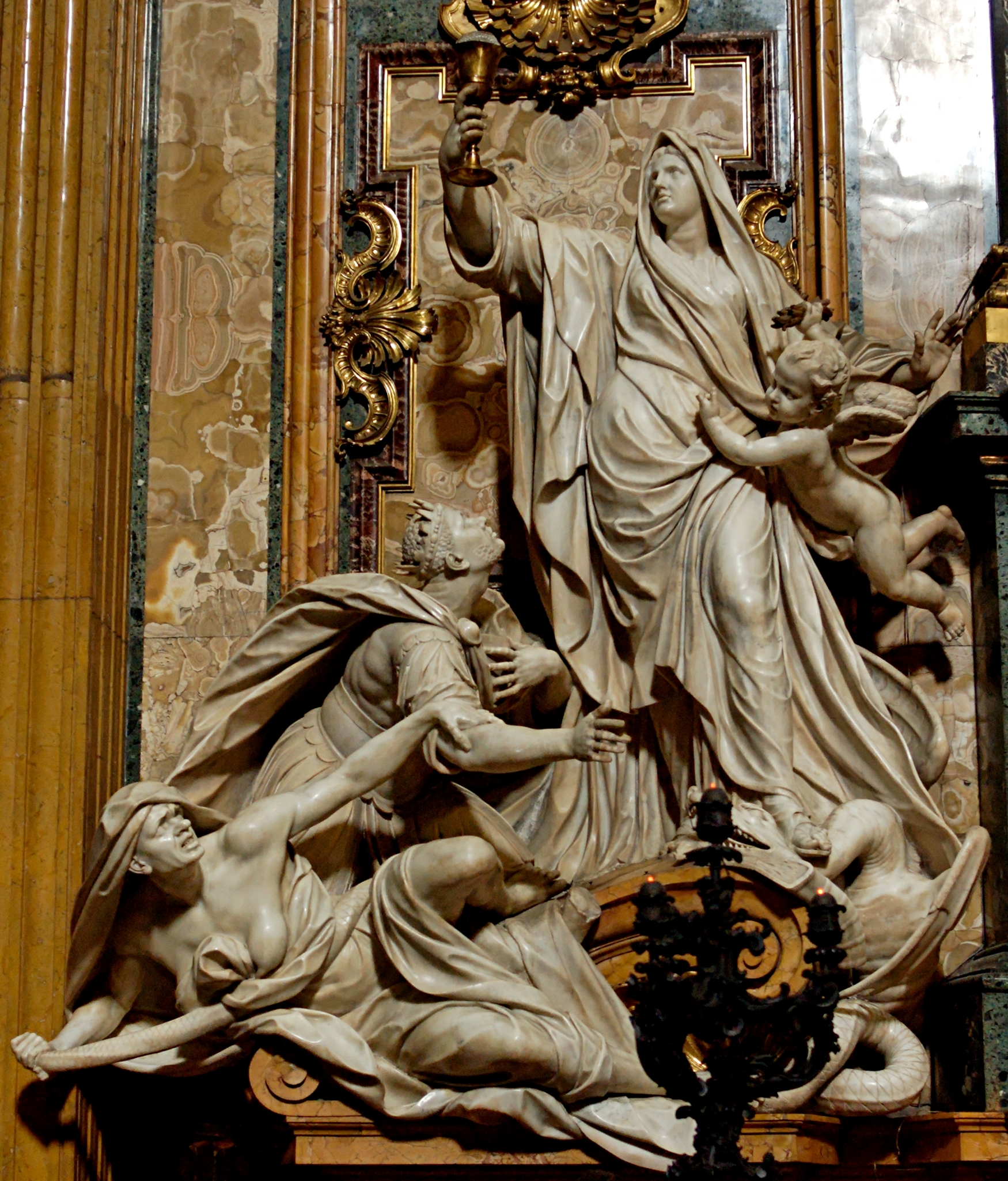
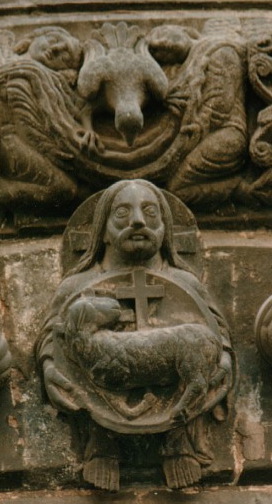
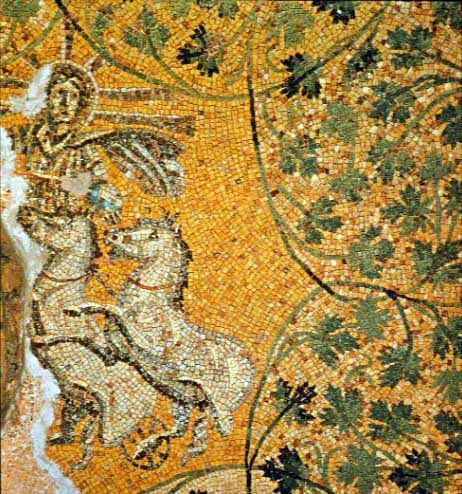
Wiki-image of Jesus depicted as the Sun with healing rays is in the public domain.

Sunday, February 08, 2009

Sunday word, 08 Feb 2009

Fifth Sunday of the Year B (08 Feb 2009)
Jb 7.1-4,6-7; Ps 147; 1Co 9. 16-19,22-23-35; Mk 1. 29-39
Homily of Fr. Paul Panaretos, S.J.
Fuel and Fire

Scripture; spirituality and service--our responses to scripture, which shape how we respond to Jesus--paint a large, living fresco in which we can see ourselves, find ourselves as well as deeper meaning for our lives. Today’s readings offer us that. I will begin with Jesus then return to him to end this homily.

From the beginning of his ministry, Jesus in Mark’s gospel healed. “We’ve heard that before, and we know that!” I can hear someone say. Yes, you have heard, and you know that. However, to attempt to heal--even for professional physicians of Jesus’ day--was risky business, and not for what we may think. Ancient Mediterranean, professional physicians did not attempt to heal people because if they failed, they could be put to death. ("Put to death" makes today’s malpractice suits seem tame.) Rather than attempt to heal, ancient physicians preferred to talk about illnesses, after the fashion of philosopher-healers./1/

People turned to folk-healers, who were willing to treat with means at their disposal. Learning that helped me appreciate more the way people sought Jesus. The healing people sought was greater than their cures because illness had social consequences, namely, separation from or even shunning by the community. Jesus, who addressed those in need of healing did not stop at curing; Jesus restored sick-marginalized people to their places, status and roles in society. That restoration exceeded curing illness and helped make people and society whole.

The effects of being sick-marginalized--I don’t know one word to describe it--were well expressed by Job, and we can identify with him. Illness of every sort leaves us listless so that the most routine task becomes drudgery. Time drags, and we feel it masters us rather than we it: a slave who longs for the shade and a hireling who waits for his wages illustrated what it feels like when time drags. We can quickly paint scenes from our restlessness when, like Job, happiness seems far away.

Consonant with our lives is the need for healing, of which scripture is full. Consonant with the gospel is how we dispose ourselves in our restlessness and in all our limitations. As witnesses to Jesus today we do not only see and seek his cures, which miss Jesus’ mission. We witnesses to Jesus today dispose ourselves to trust the words and ways of Jesus, especially when evidence mocks Jesus and his ways and tempts us to do the same.

The temptation is strong when things do not always unfold as we we’d like. That unfolding challenges us witnesses of Jesus. St. Paul reminded us that witnesses to Jesus today do not always give their testimony willingly. It isn’t always convenient. Yet, that is what stewardship entails: overcoming inertia and obstacles and moving forward. As parents, students, employees and employers, we know that from experience.

So it is with giving witness to Jesus. Witness, testimony, evangelizing begin with personal relationships with Jesus. Personal relationships with Jesus function like fuel and fire: they move us beyond ourselves, and they provide spark to our words and especially our deeds.

Peter’s mother-in-law embodied such fuel and fire. Her rising from bed echoed Jesus’ rising from death in this First Gospel; her waiting on Jesus and his disciples isn’t about subservience. She reclaimed her role in home and society, which is what Jesus healing her accomplished.


  • What sort of healing do we need?
  • Are we aware that we need healing?
  • Is our trust in Jesus strong and unshakable?
  • Do we turn to Jesus quickly in our weakness?

In your daily 15 minutes with Jesus this week, compose yourself in the Trinity. Bask in the light of our Triune God. Ask Peter’s mother-in-law to present you to Jesus to speak with him. Before you speak notice how you are feeling at the moment. Then tell Jesus how you want to trust him, and tell him what prevents you: am I lazy? Do I feel lost? Am I tempted?--and the like. Welcome Jesus into your weakness, and ask Jesus to touch your weakness and heal you to put it into perspective; to learn how you can use it in his service; and to know how your weakness draws you closer to him and to others. Close by saying slowing the Lords’ Prayer, which Jesus gave us to recognize more clearly how God’s life and love is more than sufficient each day.


___________
1. John J. Pilch, “Social Healing.”
_____________________________________________
Wiki-images of Job and of Jesus healing Peter's mother-in-law are in the public domain.

Thursday, February 05, 2009

Thursday word, 05 Feb 2009

St. Agatha (05 Feb 2009)
Hb 12. 18-19,21-24; Ps 48; Mk 6. 7-13
Homily of Fr. Paul Panaretos, S.J.
Secured!

"What to say?" My question to myself opened my eyes to a key metaphor used by the preacher of the Letter to the Hebrews, speech. He used it as he began those words familiar to our ears:
In times past, God spoke in partial and various ways to our ancestors through the prophets; in these last days, he spoke to us through a son, whom he made heir of all things and through whom he created the universe, who is the refulgence of his glory, the very imprint of his being, and who sustains all things by his mighty word. When he had accomplished purification from sins, he took his seat at the right hand of the Majesty on high./1/
God speaking was a remains a banner leading us on our pilgrimages of faith, the preacher’s image for our lives. God speaks most eloquently in and through Jesus, and God continues to speak through Jesus today. God speaks through Jesus’ life, and especially through his suffering death and resurrection, when Jesus took his seat at the right hand of the Majesty on high. That note of God’s reign the preacher sounded again:
You have approached Mount Zion and the city of the living God, the heavenly Jerusalem, and countless angels in festal gathering, and the assembly of the firstborn enrolled in heaven, and God the judge of all, and the spirits of the just made perfect, and Jesus, the mediator of a new covenant, and the sprinkled blood that speaks more eloquently than that of Abel.
The preacher contrasted the power God demonstrated when giving Moses the commandments on Mt. Sinai. It was fearsome. Much greater and consoling--though not to be taken lightly--is God’s existence, God’s covenant-life secured for us by the blood of Jesus.

The blood of Abel, first to die in scripture, cried out for God’s justice. The blood of Jesus, our mediator, actively transfers us and all who follow Jesus into God’s life. Not a place, indeed more real than any place, the preacher described it with the dynamics of an ancient Greek city:
  • angels not only represented God they welcome us/2/;
  • we are the assembly living God’s life, in a real way though not yet fully;
  • God is judge and Jesus is mediator for us.
We share in this divinely royal life because the firstborn, Jesus, has made us sharers in his status!/3/ Jesus has secured/4/ our goal, holding it for us at the end of our pilgrimage of faith.

___________
1. Hebrews 1.1-3.
2. see Hebrews 1.7 for angels as ministers, a role God now expands to include us!
3. Hebrews 1.6 designates Jesus as the first-born & Hebrews 11-13 noted that Jesus says he is not ashamed to call them [us] "brothers," and "Behold, I and the children God has given me." In 3.1 the preacher addressed his hearers as holy "brothers."
4. Hebrews 5.9-10!

__________________________________________
Wiki-image is in the public domain.

Wednesday, February 04, 2009

Wednesday word, 04 Feb 2009

Jesuit Martyrs of the Missions B (04 Feb 2009)
Hb 12. 4-7,11-15; Ps 103; Mk 6. 1-6
Homily of Fr. Paul Panaretos, S.J.

Heirs of God’s Promise

Our semi-continuous hearing of the Letter to the Hebrews will close Saturday. In this series of homilies devoted to it I hope I have been allowing you to hear it with greater appreciation. As it closes you are hearing notes the preacher sounded earlier. The preacher’s purpose was to comfort, encourage and urge his hearers during their pilgrimage through life. The most valuable example for their consideration was Jesus and his obedient faith.

Jesus again appears as the Letter to the Hebrews encourages you and me. At the beginning the preacher reminded us that God spoke to us through a son,/1/ who was opposed, and he struggled and endured even to the point of shedding [his] blood. We have not had to do that for our faith, yet we struggle and endure.

The image discipline conjures is narrower than the preacher intended. For the ancient Greeks, discipline was a part of education, and education was mental, physical and spiritual--”holistic,” we would say today. Because discipline is even for us part of an education, “You are enduring for the sake of an education," is closer to the preacher’s meaning.

This education is greater than mental, physical and pertaining to our human spirit, it is divine. Just as the preacher earlier said that Jesus endured/2/ and was transferred into God’s power and presence--the manner in which Jesus is son--now God treats you [and me] as sons [and daughters], heirs of God’s promise.

God’s promise that we, like Jesus, will share God’s life is the goal of our pilgrimage. The preacher calls us to strengthen our resolve, to continue to free our dispositions for faith. The practical consequences are two, according to the preacher. First, we are to strive for peace with everyone; and we are to live in ways that help each other in the community of faith to grow in our faithful freedom--to sweeten the community and not be that bitter root which defiles it.

Jesus is our model and more than that, the pioneer and perfecter of this faith/3/ of ours. Jesus is the one who leads our transformations as individuals and as a community.

___________
1. Hebrews 1.2.
2. Hebrews 12.2, which began this chapter, verses of which were read yesterday at mass.
3. Hebrews 12.2: see earlier, 2.10 and 5.9 for pioneer. Pioneer captures this leading quality of Jesus. The King James Version uses author and finisher for this pair, the second of which lends us greater appreciation of both our pilgrimage and of faith's goal.
_____________________________________________
Wiki-image by of Faith Triumphing Over Idolatry is in the public domain.

Tuesday, February 03, 2009

Tuesday word, 03 Feb 2009

St. Blase, Bishop & Martyr (03 Feb 2009)
Hb 12. 1-4; Ps 22; Mk 5. 21-43
Homily of Fr. Paul Panaretos, S.J.
Perspective

The preacher of the Letter to the Hebrews recalled God’s action past and present, using the metaphor of speech: God spoke in partial and various ways to our ancestors through the prophets; in these last days, he spoke to us through a son, whom he made heir of all things and through whom he created the universe./1/ The preacher elaborated on Jesus as both human,/2/ too, and our great high priest/3/ and pioneer and perfecter of our faith.

The preacher was not teaching only. He was encouraging his hearers and urging them to renew their faith. He used the image of pilgrimage. Plus, he encouraged his sister and brother Christians to look to Jesus/4/--his faith, how he faced opposition and endured.

Next the preacher continued with the roll call of heroes and heroines of faith. That Chapter 11 is best appreciated by reading it aloud from start to finish. The lectionary only allows us to hear the beginning verses. Jesus, the heroes and heroines in their pilgrimages through life allowed God to witness to them, to guide them and help them negotiate obstacles so that they would persevere to draw near to God.

The preacher, as we heard today, returned to Jesus to complete the encouragement the preacher began by recalling his hearers’ situation.
Remember the days past when, after you had been enlightened, you endured a great contest of suffering. At times you were publicly exposed to abuse and affliction; at other times you associated yourselves with those so treated. You even joined in the sufferings of those in prison and joyfully accepted the confiscation of your property, knowing that you had a better and lasting possession./5/
Looking to heroes and heroines of faith, and esp. to Jesus helps us who have not shed blood for the faith to put things in our pilgrimage of faith in perspective. We look above all to Jesus, as the preacher put it, in order that [we] may not grow weary and lose heart. Jesus strengthens us so we do not succumb to our weaknesses. The message is brief, but more important is that we count on it, that we count on Jesus, pioneer and perfecter of our faith.
______________
1. Hebrews 1.1-2.
2. Hebrews 2.17; 4.15.
3. Hebrews 2.17; 4.14ff.
4. Hebrews 2.9.
5. Hebrews 10.32-34.
___________________________________________________________
Wiki-image is of pilgrims is used according to the GFDL .

Monday, February 02, 2009

Monday funeral word, 02 Feb 2009

Nancy Amata funeral (02 Feb 2009)
Wisdom 3; 1-9; Psalm 23; Romans 14. 7-9, 10b12; Matthew 5. 1--12a
Homily of Fr. Paul Panaretos, S.J.
Ninth Beatitude

On behalf of Gesu Parish, I extend our prayers and heartfelt sympathy to you, Angie, at the death of your sister, Nancy. We especially pray for you because you survive all your siblings, Joe, Carl, Bill, Angelo Sam and now Nancy. Like your brothers before you, you will experience Nancy’s presence in real and new ways.

I extend our prayers and condolences to all of your family and friends. You are not alone in your grief. The Catholic church bids farewell to one of ours today. I offer a few words to console and strengthen us in our grief; to help you appreciate God’s astounding compassion by noticing Jesus’ victorious dying and rising were present in Nancy./1/

Before I continue I want to thank Beth Rizzo for representing you, Angie, to introduce Nancy to me. I was not privileged to have known her, and I’m indebted to you Beth because you helped me to shape my homily at your aunt’s funeral mass.

I noted in the Plain-Dealer Guest Book that Celia Giganti in Florida mourns the loss of her “dearest friend.” Friend and family, I suggest, are lenses through which to view both Nancy and Jesus, our risen Savior.

Jesus accepts us as we are always inviting us beyond ourselves to become the individuals Jesus created. Together with Angie, Nancy gave herself to her family. In the United States family often means spouses and their children in their home. Italians know better. La familia è piu di mama e papa è i loro bambini. Family extends to aunts, uncles, cousins--not only by blood but by marriage, too. Individuals grow to be themselves because of their family relationships, which for Nancy, and you her family, was extensive.

Part Greek, I know we Mediterranean people see family with a larger lens. While we cannot claim to have the corner on family, we enjoy an expansive appreciation of it. Jesus, and our life in Jesus now as the church, is far more expansive than our Mediterranean appreciation of family.

We are friends of one another because Jesus called us his friends. Friends and family are good lenses to appreciate Nancy as well as Jesus, who calls us his friends. Jesus’ friendship entails blessing as the gospel reminded us. The particular blessings Jesus named are conditions by which we enter God’s kingdom--poor in spirit; meek; mourning; being single-hearted; longing for God’s justice; mercy; making peace; even persecution because Jesus befriends us. They indicate our imperfections not our flawless strengths. That Jesus would befriend us because of our needs may shock us. Jesus’ friendship is truly expansive, as la familia suggested.

Jesus’ choice to befriend us in our needs also consoles us, especially today. Our need today is measured by our loss and separation from Nancy. We believe our loss and separation are temporary, but that doesn’t make our loss less sharp. Yet Jesus’ choice to befriend us in our need today not only consoles; his choice calls us beyond ourselves. Nancy modeled that for you in her desire to welcome you and her friends into sua familia, vostri familia. With Angie, and later growing young women and men, they made your pranzo della domenica, the center of your family network.

Jesus does something similar for us and all his friends. Jesus invites us to his table as we bring our sister to church for the last time. His meal nourishes us until Jesus reunites us with Nancy and welcomes us into the eternal banquet of heaven. Nancy joins Jesus to prepare our places.

As I noted at DiCicco Brothers Funeral Home late yesterday afternoon, one of the category names on the picture collage of Nancy and sua familia, vostri familia was “full life.” It recalled Nancy’s long life. It moved me to remind us then and moves me remind us again that even better than length is life-in-its-fullness. Nancy is at its threshold. She begins it because, like Jesus, she did not live for herself. Your memory of her will not only remind you of her selflessness.

Your memory of her will encourage you to live that way, not only for your family but for the greater circle of people, from whom Jesus invites you to receive as well as to give. Why? So that each of you may become the individual Jesus created you to be. You have Nancy as a model of that faithful freedom. Blessed by Jesus, she is your Ninth Beatitude.

___________________
1. Cf. Order of Christian Funerals, 27.
_____________________________________________
Wiki-image of pasta dish by Sami Keinänen is used according to the Creative Commons Attribution ShareAlike 2.0 license. Wiki-image of El Greco's Last Supper is in the public domain.
Sunday, February 01, 2009

Sunday word, 01 Feb 2009

Fourth Sunday of the Year B (01 Feb 2009)
Dt 18.15-20; Ps 95; 1Co 7. 32-35; Mk 1. 21-28
Homily of Fr. Paul Panaretos, S.J.
Our Prophetic Role

Times vary for each of us and all of us together. God’s word speaks to all times, across all time and for all time. While we know times vary, we are convinced that God’s word speaks, and it’s a preacher’s task to help our faith-conviction enlighten us. That task challenges me, more so in these “curious religious times.”

The phrase belongs to Oblate Fr. Ronald Rolheiser, who observed that
We live in curious religious times. A spiritual renaissance of sorts is happening in the Western world, even as church attendance is in steep decline and less and less of our own children are walking the path of faith with us.

The church is generally blamed for the second-half of this equation, but the evidence mostly doesn’t point that way. Indeed, in some ways, life at the level of parish and church-community has never been more finely-tuned, more biblically literate, or more healthy liturgically than it is today./1/
You and I know that from our experiences at Gesu Parish. We know what Fr. Rolheiser described; we don’t know about it, we know it. Yet are you and I willing to accept what Fr. Rolheiser submits as evidence for the decline? He submitted, “We are better at maintaining church life than at initiating it.”
The reasons for this are complex and often are more bound to what’s happening in the culture than to any particular failure inside the churches. ...the high premium that we put on individuality within our culture is a bigger culprit than poor church services. Lack of space in our lives for the church, more than dissatisfaction with it, is the bigger issue./2/
Consider with me one facet of the “bigger issue.” Economic conditions and their consequences on us all drive many to think survival: my company, my job, my family, our home, our future. Most of us haven’t thought of survival in the same ways until now. People in other parts of our world do each day. People in the earliest days of Christianity did as well.

One thing people then, the thing that people in other parts of the world today have heard more clearly has been scripture’s attention to God’s words and God’s deeds. The responsorial psalm today united them for us: hear God’s voice and see God’s works. God promised through Moses, “I will raise up for them a prophet like you from among their kin, and will put my words into his mouth.” Jesus, the prophet like Moses, embodied divine speech by action not only by words. His actions, which made people whole, caused all Jesus said and did to be a new teaching with authority.

When we contribute to building up one another and move our parish community forward, you and I unite ourselves with Jesus and his proclamation of the kingdom. Fr. Snow and I enlist your help to do that in a way most needed by so many. We ask you to initiate community not maintain it, that is, to act to help make the lives of each other more whole.

We are beginning a job bank for parishioners to help other parishioners find employment. Work not only supplies cash needed to live, work contributes to self-development/3/ and secures personal dignity/4/. If you know or if you know someone who knows of local companies which are hiring people, please fill out a brief form in future parish bulletins and email it or mail it to our Parish Office. Today people need every lead they can find. Job postings will be listed in the Bulletin and on the Gesu website for two weeks only to make room for more.

Your contributions make the job bank work. Your contributions keep Gesu a thriving community of disciples, not a church-maintenance organization. Your contributions point to the kingdom, and all pointers to it are prophetic. Your contributions to the job bank help others to be aware of God at work in them.

In your daily 15 minutes with Jesus this week, compose yourself in the creative love of the Trinity for you. Become aware of your gifts up to the present. Ask Mary and the saints to present you to Jesus so you may converse with him. Express your gratitude to Jesus for your blessings. Resolve to pray for our Gesu Job Bank, to contribute to it as you are able and to let others know about it. Close by saying slowly the Lord’s Prayer. Jesus gave us his prayer to help us see how we can act in God’s name to meet others’ needs and to be able to receive help and gratefully and gracefully.

___________

1. “Our Generations’ Particular Task”
2. Ibid.
3. See Second Vatican Council, The Church in the Modern World, 35.
4. The Church in the Modern World, 66.
____________________________________________
Wiki-images of scenes from the life of Moses and of Jesus healing one possessed are in the public domain.

Friday, January 30, 2009

Friday word, 30 Jan 2009

Third Friday of the Year B (30 Jan 2009)
Hb 10. 32-39; Ps 37; Mk 4. 2-34
Homily of Fr. Paul Panaretos, S.J.
Call To Endure

Jesus died, once for all,/1/ and was exalted as Lord at the right hand/2/ of his Father. Jesus is our forerunner,/3/ the first to enter into God’s own existence, winning entrance for us as well. Yet his victory and new life do not register completely in us yet. Knowing that in our bones leads us to ask if the preacher of the Letter to the Hebrews wasted his breath.

The preacher begins his encouragement of his hearers--then and us now--that we live between days past when [we first] had been enlightened and that day drawing near,/4/ the day of our Lord’s coming, when he will complete our transfer into God’s life. Prophets before the preacher expressed this final action of God with the phrase, the day, and the preacher linked two prophets, as we heard, For, after just a brief moment, he who is to come shall come; he shall not delay.

This fulfillment of human destiny, our Lord’s return, is the reason for our confidence and hope.
Our confidence and hope place all things, especially our struggles, in perspective.

The community, which first received the Letter to the Hebrews, struggled on account of their faith. The preacher expressed his awareness of their struggles this way: after you had been enlightened, you endured a great contest of suffering. The preacher elaborated details: At times you were publicly exposed to abuse and affliction; at other times you associated yourselves with those so treated. You even joined in the sufferings of those in prison and joyfully accepted the confiscation of your property. These details involved daily living, even survival.

Some today hear the Letter to the Hebrews more acutely than us. The particulars of our struggles differ, but we struggle no less. We can throw away our confidence in God’s promise to us, or we can hold fast/5/ to it and outlast our struggles.

You need endurance to do the will of God and receive what he has promised. That encouragement of the preacher applies to us. It is encouragement we can never hear too often.

____________
1. Hebrews 7.27; 9.12, 26; 10.10.
2. Hebrews 1.3, 13; 8.1; 10.12; 12.2.
3. Hebrews 6.20.
4. Hebrews 10.25.
5. Hebrews 3.6; 4.14; 10.23. The preacher prepared in earlier chapters for his
encouragement, just as the preacher prepared in earlier chapters for his central
exposition of Jesus as high priest and the efficacy of his priestly act.
___________________________________________
Wiki-image of a crocus in snow in the public domain.

Thursday, January 29, 2009

Thursday word, 29 Jan 2009

Third Thursday of the Year B (29 Jan 2009)
Hb 10. 19-25; Ps 24; Mk 4. 21-25

Homily of Fr. Paul Panaretos, S.J.
Active Not Sentimental

The preacher of the Letter to the Hebrews praised Jesus as the effective high priest, who reconciled us with God, allowing us to share God’s life. Our new confidence and access to God leads to living in ways which build community. The conviction that we have a great priest over the house of God led the preacher to urge his first hearers--and us--to rouse one another to love and good works, like our high priest, Jesus.

As human and one like us in all things apart from sin,/1/ Jesus moved through his earthly existence, his flesh, into God’s existence by his suffering, death and resurrection. The preacher saw the veil, or curtain, of the temple as the shadow of Jesus, God-in-human-flesh. The preacher specifically recalled the curtain before the Holy of Holies. It was “not essentially a physical obstacle”; it served “to hide the Holy of Holies and, to indicate that no one [was] permitted to enter except the High Priest on the Day of Atonement.”/2/ Jesus’ self-sacrifice made obsolete the continuous, annual sacrifices and made at one with God all who obeyed Jesus.

In this way the preacher identified Jesus’ flesh with the veil that prevented us from having access to God and from sharing God’s life. The preacher no longer thought of the house of God as a building but as the assembly of believers, as he said earlier: Every house is founded by someone, but the founder of all is God. ...We are his house, if only we hold fast to our confidence and pride in our hope./3/

To hold fast does not mean to hang on with no purpose. What the preacher earlier implied,/4/ he made explicit here. Our purpose as God’s people is to rouse one another to love and good works and to encourage one another. Good works describes Christian love: it’s active not sentimental. It includes communal worship, which, as we heard, some in the preacher’s day avoided.

After our hearts were sprinkled clean from an evil conscience and our bodies washed in pure water by the self-sacrifice of Jesus--those words more than suggest our reconciliation and consecration by baptism and eucharist--our confession of faith and our hope no longer are mental activities. They move us to approach God and share God’s life, not as individuals but as the people God has gathered in, through and with Jesus, our brother and priest and pioneer./5/
____________
1. Hebrews 4.15.
2. N.A. Dahl, “A New and Living Way: The Approach to God according to Hebrews 10:19-25,” Interpretation 5 (1951),
p. 404.
3. Hebrews 3.4...6b.
4. Hebrews 3.6; 4.14.
5. Hebrews 2.10.

_________________________________________
Wiki-image of the center of the Milky Way by KGyST is the exclusive property of the ESO, which allows its reuse according to the Creative Commons Attribution 3.0 Unported license.


Wednesday, January 28, 2009

Wednesday word, 28 Jan 2009

St. Thomas Aquinas (27 Jan 2009)
Hb 10. 11-18; Ps 110; Mk 1. 1-20
Homily of Fr. Paul Panaretos, S.J.
Eyes Fixed

T
he preacher of the Letter to the Hebrews underscored Jesus’ once for all/1/ sacrifice in to-day’s selection. We recall that the preacher reminded us that Jesus accomplished for us by his self-sacrifice transformation of our inmost selves and won for us access to God’s life.

To appreciate Jesus priestly act and its effectivefinality we can recall what the preacher said at the start of the Letter to the Hebrews about Jesus: When [Jesus] had accomplished purification from sins, he took his seat at the right hand of the Majesty on high, as far superior to the angels as the name he has inherited is more excellent than theirs./2/ Jesus priestly act was final: Jesus had accomplished purification from sins. Jesus, our pioneer,/3/ entered into God’s presence by his priestly act. In royal imagery taken from a psalm the preacher explored throughout his exploration of the priestly act of Jesus, Jesus took his seat at the right hand of the Majesty on high. That reechoed today as we heard that Jesus took his seat forever at the right hand of God.

High-priest Jesus contrasts with every priest of the law of Sinai, who stands daily at his ministry, offering frequently those same sacrifices that can never take away sins. Again, as the preacher noted yesterday, repetition failed to do what Jesus had accomplished for us.

Sharing in divine glory Jesus did first. In being first, Jesus prepared our way to share that glory. His life among us was open to God’s desires, and Jesus sought to fulfill them in his words and deeds. The more we fix our eyes on Jesus, the more we allow his faithful obedience to shape us. Our lives give witness to Jesus, the pioneer of our salvation,/4/ as we continue on our pilgrimage through life.

___________
1. Hebrews 10.10.
2. Hebrews 1.3b-4.
3. Hebrews 2.10.
4. Ibid.
___________________________________________________________
Wiki-image of lily by Denis Barthel is used according to Creative Commons Attribution ShareAlike 2.0 Germany license.

Tuesday, January 27, 2009

Tuesday word, 27 Jan 09

Third Tuesday of the Year B (27 Jan 2009)
Hb 10. 1-10; Ps 40; Mk 3. 31-35
Homily of Fr. Paul Panaretos, S.J.
Real Cleansing

The preacher of the Letter to the Hebrews lived at time when believers in Jesus as Lord can best be described as Jewish Christians. The rupture between Judaism and Christianity, which we know from our first awareness, was not yet. That is very important for us to know. Other-wise we may understand the preacher to be saying that God had abandoned the Jewish people and the covenant God made with Abraham and his descendants forever in favor of Christians. That is not the case.

Rather, the preacher faulted another covenant, the covenant God made with Moses on Mt. Sinai. That covenant issued the law with its ritual prescriptions and sacrificial offerings. The offerings were numerous, and they needed to be repeated. [The law] can never make perfect those who come to worship by the same sacrifices that they offer continually each year. The preacher of the Letter to the Hebrews faulted this failure, which continual repetition of offerings sharpened.

The goal of the covenant was to allow people access to God and God’s life. “To be perfected” was to be transformed. This preacher stood in the tradition of the prophets, who faulted people for relying on ritual and not allowing their hearts to be affected and transformed. Yet no one could accomplish this interior transformation on one’s own, which the repetition of sacrifices made clear. Using the metaphor of cleansing, the preacher asked: would not the sacrifices have ceased to be offered, since the worshipers, once cleansed, would no longer have had any consciousness of sins?

The person and priestly act of Jesus accomplished for us what we cannot. Jesus came into the world open to do what would accomplish our transformation. His union with us as our brother/1/ --like us in all things apart from sin/2/--and at the same time the very imprint of [God’s] being,/3/ make Jesus our mediator, who gives us access to God and even transfers us into God’s existence. Jesus’ self-sacrifice accomplished that once for all. Our part in this new covenant, which Jeremiah had announced and the preacher recalled (we heard Friday), is to imitate Jesus’ obedient faith. Sharing his body and blood helps us to imitate Jesus as members of his true family.

___________
1. See Hebrews 2.11.
2. Hebrews 4.15; see also 2.17.
3. Hebrews 1.3.
____________________________________________
Wiki-image of the risen Jesus as Lord by Andreas Praefcke is used according to the Creative Commons Attribution 3.0 Unported license.

Sunday, January 25, 2009

Sunday word, 25 Jan 2009

Third Sunday of the Year B (25 Jan 2009)
Jon 3. 1-5, 10-4.1; Ps 25; 1Co 7. 29-31; Mk 1. 14-20
Homily of Fr. Paul Panaretos, S.J.
Reluctant or Ready?

Besides the call to repent, do the readings about Jonah and Jesus have anything in common? I suggest "response" is one thing linking them. Let’s begin with selection from Jonah.

Details about the Jonah account can distract our attention: a fish swallowing a human; the large size of the city of Nineveh; its population. The details are not the point; God’s desire to send Jonah as agent of God’s hope for people to be in relationship with God is the point.

Jonah lived according to the covenant God made first with Abraham. The covenant was relationship with God. The covenant established norms for living so that people already in relationship with God could draw others to God. The one God called to do this, Jonah, did not want to be God’s agent, which is why Jonah was aboard a ship in the first place. At the beginning of the Book of Jonah, Jonah spurned God’s first invitation to preach to Nineveh: Jonah made ready to flee to Tarshish away from the Lord. He went down to Joppa, found a ship going to Tarshish, paid the fare, and went aboard to journey with them to Tarshish, away from the Lord./1/

Natural forces denied Jonah his wish and brought him to the great city. Jonah was effective and he was, as we heard, angry, and admitted to himself and God that was why he left home./2/

Remarkable reaction, isn’t it, that Jonah, who lived by the covenant, was angry that large numbers of people outside the covenant responded positively to God through him!

Jonah reluctantly brought good news of a gracious and merciful God, slow to anger, rich in clemency, loathe to punish,/3/ and many responded positively and welcomed his word. It leads me to ponder if I am more like Jonah or more like the people of Nineveh: am I a reluctant Catholic, or do I welcome my faith as a gift and the guarantee of my relationship with God?

In a similar way, details in the gospel might distract us, especially the immediate response of those Jesus called to follow him in his company. Again the point isn’t immediacy, it’s relationship.

Gospel meant good news: of a monarch, of a deity, of a prophet. Mark’s narrative of Jesus shaped another meaning for the word: a chronicle or report. That second meaning has become primary for us. The original meaning, good news, is more dynamic and inviting. Consider it.

When someone tells you, “I have news for you”; or when someone is specific, “Good news!”: our first instinct is to listen. If someone says, “I received some bad news,” we may call forth courage to listen even if we’d rather not. Listening to another binds us. It may be temporary as on a plane, in a store, at the salon or at a class. It may be longer lasting as with schoolmates, neighbors, friends & family.

Listening is not only about others. When we listen freely and without filters to others, we learn about ourselves. Those Jesus called had been seeking for meaning in their lives, hoping for the messiah. Their seeking and hoping shaped their positive reaction to God. Their seeking and hoping freed them to respond to Jesus wholeheartedly, with undivided loyalty, which their immediate and total response to Jesus’ invitation showed.

The point of today’s scriptures, friends, is wholehearted response to God’s compassion, even in the face of things which discount it. We find meaning not in things passing away, to use St. Paul's phrase. We find it in our relationships, especially relationship with God. We access God’s compassion the more we respond to it with open hearts and minds.

In your daily 15 minutes with Jesus this week, pause in the presence of the Trinity. Ask St. Paul to present you to Jesus. Speak with Jesus about your determination and energy to respond to Jesus inviting you. Tell Jesus what stands in your way of responding to him. Ask for the grace to overcome what keeps you from responding wholeheartedly to Jesus. Close your prayer by saying slowly the Lord’s Prayer. Its reminder that God’s kingdom dawns on earth as...in heaven, encourages us and frees our hearts to respond as we are now.
_____________
1. Jonah 1.3.
2. Jonah 4.2.
3. Ibid.


____________________________________________________
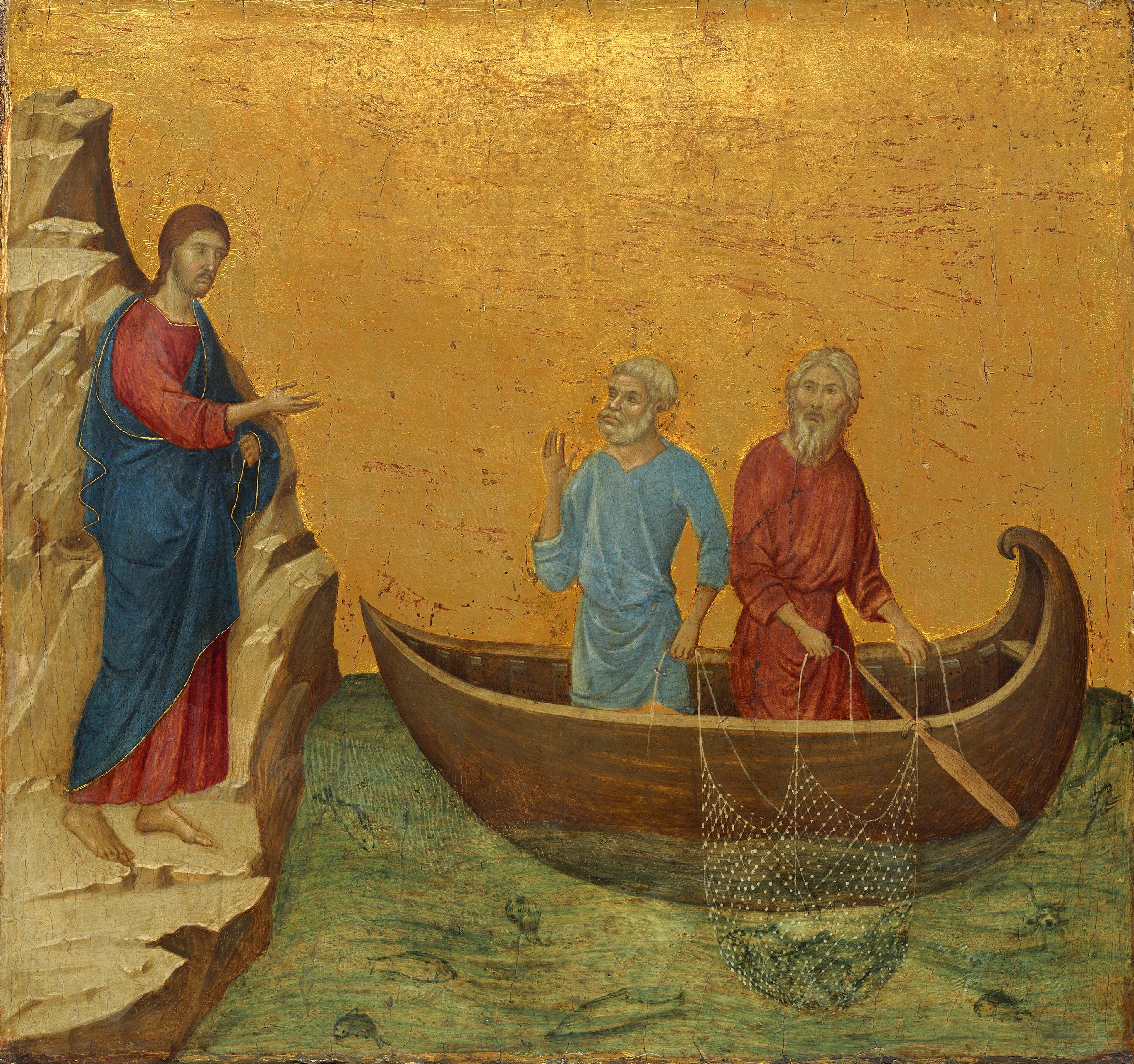
Wiki-images of Jonah preaching to the people of Nineveh and Jesus calling Peter and Andrew are in the public domain.

Friday, January 23, 2009

Friday word, 23 Jan 2009

Second Friday of the Year (23 Jan 2009)
Hb 8. 6-13; Ps 85; Mk 3. 13-19
Homily of Fr. Paul Panaretos, S.J.
Personally Given

The preacher of the Letter to the Hebrews has looked at Jesus, our great high priest. The preacher noted that Jesus’ priesthood was singular and different from all other ones because he offered a sacrifice once for all, and because he entered into God’s own existence. That is what the phrase into the interior behind the veil, where Jesus has entered on our behalf as forerunner./1/

The effect is that Jesus is the source of eternal salvation for all who obey him./2/ How? Jesus is mediator of a better covenant. The preacher again cites scripture, this time the longest citation in the New Testament of Jeremiah. We recognize it because it is familiar. The preacher considered it above all God’s speech, for as the preacher began his reflection, God spoke in partial and various ways to our ancestors through the prophets; in these last days, he spoke to us through a son, whom he made heir of all things and through whom he created the universe...When he had accomplished purification from sins, he took his seat at the right hand of the Majesty on high./3/

Jeremiah’s refrain, the days are coming, the preacher understood to be these last days in which God spoke definitively in Jesus and his priesthood for us. Jesus won for us what Jeremiah announced God promised to do: to make us God’s people, who all shall know me, from least to greatest.

This covenant-knowledge of God is deeply personal and exceeds mere intellectual assent. It is felt-knowledge which God engraves on human hearts: I will put my laws in their minds and I will write them upon their hearts. I will be their God, and they shall be my people. The human response is faithful attentiveness to this personally-given new covenant. Scripture’s favored phrase for this is to obey, which comes into our language from Latin, "to hear towards."

The one who guaranteed/4/ that we receive this personally-given new covenant is our high priest, Jesus, the source of eternal salvation for all who obey him./5/ The preacher of old helps us today: is our response to Jesus sluggish,/6/ or do we unite ourselves to to our high priest who is our guarantee to share God’s very life?

___________
1. Hebrews 6.19.
2. Hebrews 5.10.
3. Hebrews 1.1-3.
4. Hebrews 6.16.
5. Hebrews 5.9.
6. Hebrews 5.11.
___________________________________________
Wiki-image of mosaic of Jesus by G.dallorto, holder of the copyright, gives permission for reuse when attribution is given.

Thursday, January 22, 2009

Thursday word, 22 Jan 2009

Second Thursday of the Year (22 Jan 2009)
Hb 7. 25-8.6; Ps 40; Mk 3. 7-12
Homily of Fr. Paul Panaretos, S.J.
One Is Best

The Letter to the Hebrews expresses the singularity of the priesthood of Jesus, God’s son and our messiah. The preacher of the Letter to the Hebrews thought in the categories of his time--1st Century--and culture--soaked in Greek ways. That way of thinking favored the one over the many, and the preacher expressed it at the beginning: God spoke in partial and various ways through the prophets...but in these last days through a son, whom he made heir of all things and through whom he created the universe...he very imprint of his being./1/

Many were the ways and the times. You and I consider that a positive thing. In this way of thinking, however, many isn’t positive because it is fragmentary and incomplete, partial and various is one translation. Similarly, the agents of God’s invitation to humans were multiple, prophets: it had to be that way because death claimed one after another.

Jesus, however, God’s son and imprint of God’s being, God appointed to invite humans to share God’s life. Not only to invite: Because God forever perfected him, that is, completed him, raised him from death, Jesus has the power to make us sharers in the same life of God.

Jesus did this once for all not only as prophet but also as priest. That was the preacher’s main point. God’s oath, you are a priest forever...sit at my right hand, made Jesus our guarantee. The word the preacher used to describe Jesus’ priesthood, minister, translates the Greek word for one who did public service at one’s own expense./2/ Jesus’ service was his self-sacrifice so that we might share God’s indestructible life/3/. No greater expense exists!

In this way, the one man-God, priest-king Jesus has obtained for us so much more excellent a ministry as he is mediator of a better covenant, enacted on better promises, God’s own. Not only singular, Jesus’ priesthood and self-sacrifice effects forever our transformation if we remain in close relationship with Jesus, that is, true to our baptism into our one "priest, prophet and king."/4/

__________
1. Hebrews 1. 1-3.
2. Theological Dictionary of the New Testament, 4:229.
3. See Hebrews 6.19-20, ending Tuesday’s selection.
4. Rite of Christian Initiation of Adults and Rite of Baptism.
___________________________________________________
Wiki-image .

Wednesday, January 21, 2009

Wednesday word, 21 Jan 2009

St. Agnes, virgin, martyr (21 Jan 2009)
Hb 7. 1-3, 15-17; Ps 110; Mk 3. 1-6
Homily of Fr. Paul Panaretos, S.J.
Moving Forward

In moving forward--the faith-goal of each of our life-journeys, as well as the progress of the preacher of the Letter to the Hebrews--in moving forward with his presentation about Jesus, the preacher considered Melchizedek, whom he mentioned earlier, citing the Psalmist: you are a priest forever according to the order of Melchizedek. To understand better Melchizedek the preacher searched scripture, because ancients used scripture to understand it.

Melchizedek only appears in one other place, in Genesis. He is a gentile, as is Abraham strictly speaking because their meeting predated his circumcision. He is king, and this gentile remarkably is a priest of God most high!

Other than that we cannot know more because Melchizedek is without father, without mother, without ancestry. For him no list exists of which scripture is full, like Abraham was the father of Isaac. This makes sense to us when we accept the principle the preacher and his hearers held, “what is not in scripture is not in the world.”

The preacher inferred that without parents, the priest-king had no beginning of earthly days nor end of life because scripture does not mention his death. Thus does Melchizedek resemble the Son of God, who remains a priest forever. This was obvious to the preacher because he operated within this view of reality.

For the preacher law put people in relationship with God. It was acted out through forms of worship the law prescribed. The goal of the relationship was not sacrifices but the transformation of humans more into God’s likeness and life. Thus, it was even more obvious to the preacher that Jesus’ priesthood/1/ more than resembled that of Melchizedek because Jesus has entered into God’s life ahead of us. Faithful response to Jesus is our ongoing transformation of ourselves. Because Jesus has entered God’s indestructible life,/2/ he offers us the power to enjoy it, too. That is truly moving forward, beginning with Melchizedek and fulfilled by Jesus, our great high priest,/3/ forerunner/4/ and pioneer/5/ of our faith.

____________
1. Hebrews 7.11
2. See Hebrews 6.19-20, ending yesterday’s selection.
3. Hebrews 4.14.
4. Hebrews 6.20.
5. Hebrews 2.10, 5.9.
___________________________________________
Wiki-image .

Tuesday, January 20, 2009

Tuesday word, 20 Jan 2009

Second Tuesday of the Year (20 Jan 2009)
Hb 6. 10-20; Ps 111; Mk 2. 23-28
Homily of Fr. Paul Panaretos, S.J.
Growing Beyond

Jesus is our great high priest,/1/ we have heard the Letter to the Hebrews remind us. He is ours because God appointed him/2/ and because Jesus fully sympathize[s] with our weaknesses--our need to be saved--because [Jesus] was tested as we are, yet had no part in sin./3/ Our salvation depends upon our responsive faith because God in Jesus by their Spirit continually calls us to share God’s life. Both the more often we respond and the more wholeheartedly, the more mature we continue to grow. This maturity/4/ is a learning, which capitalizes on every experience to build our character, that is, our ability to choose well. Faith, then, is moral maturity.

Jesus is our model. Not only are we to pattern ourselves on Jesus’ openness to experience and learn moral maturity, we are to build on our first--introductory--knowledge of and heartfelt encounter with Jesus. We, who were once elementary learners of Jesus, are to be teachers of Jesus, that is, communicate him to others and to the world. We communicate Jesus by demonstrating love for God’s name. Love for God’s name appears only here in the New Testament. Just as names stand for us, so this unique phrase means we demonstrate love for God.

Even that is rare in the bible, which says often that God loves humans and that humans are to love humans. God’s love for us shapes our love for others. This is the active, daily texture of our baptisms, our experience of God’s noble word and the life-giving gifts of the coming age./5/ They are ours because of the singular gift of Jesus, who obtained them for us by his sacrifice once for all.

To have shared in the gift Jesus is and then to reject him has heavy consequences, the preacher warned his first hearers. Like him, I am confident of you. You demonstrate Christian love to others in many ways. By doing so you build on our foundation, Jesus. Rather than be satisfied with the basic instruction of our Messiah/6/ you make your love known, felt; you grow, learning from what you experience./7/

Your Christian love for others binds you to others the way God is faithfully bound to us--by an oath, as the preacher recalled scripture. God’s fidelity to us reminds us of God’s fidelity to Jesus, to whom God was faithful beyond death. God’s fidelity to Jesus makes him our high priest. It is to this identity of Jesus, high priest forever, that the preacher of the Letter to the Hebrews will turn tomorrow and four days more.

___________
1. Hebrews 4.14.
2. Hebrews 5.1.
3. Hebrews 4.15.
4. Hebrews 6.1.
5. Hebrews 6.5.
6. Hebrews 6.1.
7. Hebrews 5.8!
_______________________________________________________
Wiki-image of gold mosaic of Jesus is used according to the the GFDL.

Monday, January 19, 2009

Monday word, 19 Jan 2009

Second Monday of the Year (19 Jan 2009)
Hb 5. 1-10; Ps 110; Mk 2. 18-22
Homily of Fr. Paul Panaretos, S.J.
Aesop, Aeschylus and Jesus

The Letter to the Hebrews encouraged faith. Its preacher surveyed scripture and was convinced that God calls humans in each age. The word of God is God,/1/ who invites humans through Jesus, God’s son, our brother, our high priest, who sympathize[s] with our weaknesses... because he shared our frailty, tested in every way [we are], yet without sin./2/ First, the preacher gave attention to a high priest’s qualities.

A high priest is taken from among humans for their sake in things pertaining to God, to offer gifts and sacrifices for sins. For this role a high priest is appointed by God. The preacher called it an honor to atone for sins, another high priestly function. Jesus’ sacrifice for our sins was not his goal, but that by his sacrifice Jesus transfers us from the limitations of human existence to God’s own life.

The preacher encourages us to open ourselves to the gift Jesus offers us by reminding us that being clothed with our weakness, Jesus deal[s] patiently with our ignorant straying--our rebellion against God just as the Israelites rebelled against God in the wilderness, which the preacher earlier recalled./3/

The preacher encouraged his hearers to restore their faith--he encourages us to deepen ours--by recalling that Jesus was faithful to his mission to be the sacrifice. Jesus’ fidelity was marked by a reverence for his Father, who gave him his mission and who save[d] him from death. Yet remaining faithful meant for Jesus that when he was in the flesh he suffered.

We deny suffering; we bristle at the thought of it. As a result the way God perfected God’s son--that is, raised him from death and made him our pioneer of faith--may be the preacher’s most difficult phrase to hear: he learned obedience from what he suffered.

The ancients did not have the revulsion to suffering we have. Their common wisdom included the saying, to suffer is to learn. By common wisdom, I mean that it was a moral of one of Aesop’s fables: “This shows that in suffering/experience [pathein] someone may draw learning [mathein] and take heed.”/4/ Aeschylus put it on the lips of Zeus in one of his plays./5/ It echoes today, and you know it: No pain, no gain. The point is suffering can be positive--athletic training and childbirth for example--and faithfulness modeled by Jesus is not only positive, it is our hope and way to live God’s life.

____________
1. See Hebrews 4. 12-13, read last Saturday.
2. Hebrews 4. 15.
3. Hebrews 3. 7-14--the selection read last Thursday.
4. “The Butcher and the Dog.” My translation of the Greek.
5. his Agamemnon has received this English poetic expression in which suffering was substituted with affliction:
‘Tis Zeus alone who shows the perfect way
Of knowledge: He hath ruled,
Men shall learn wisdom,
by affliction schooled.
____________________________________________
Wiki-image of Melchizedek is in the public domain.



Sunday, January 18, 2009

Sundayword, 18 Jan 2009

Second Sunday of the Year B (18 Jan 2009)
1Sam 3. 3b-10,19; Ps 40; 1Co 6. 13c-15,17-20; Jn 1. 35-42
Homily of Fr. Paul Panaretos, S.J.
Lifelong Companionship


Our living faithfully can be described as growing more familiar with Jesus and his way of being in the world. Familiar means getting to know Jesus by establishing an intimacy with him in personal praying, public worship and willingly serving others.

At times--moments or even periods--people may move through life without that graced intimacy with Jesus. Sometimes we are not familiar with Jesus by choice, at other times by human stumbling or by simple inattention. Jesus invites us beyond whatever causes us to be unfamiliar with Jesus. Being ever more intimately attentive to Jesus allows one to become one’s true self, to use a phrase favored by Thomas Merton, himself a lifelong seeker of Jesus. Today’s scriptures highlight our divine invitations.

While a boy, the prophet Samuel was not familiar with the Lord, because the Lord had not revealed anything to him as yet. That was a statement of fact for God desires to make self- revelations to all people. Yet the world offers static: certain values of the world hinder or prevent us from receiving the self-disclosure God desires us to receive from God.

Samuel and his mentor, Eli, lived during a time when a revelation of the Lord was uncommon and vision infrequent./1/ That was the state of affairs when God invited Samuel. So even Eli was not immediately able to guide Samuel. The focus isn’t human slow-wittedness but God’s graciously, patient desire to welcome us into God’s heart and orbit.

Eli’s guidance remains good advice for us and our contemporaries: Speak, Lord, your servant is listening. It is not that always we hear a voice like we hear each other. That’s rare! Rather, we feel prompted or moved or drawn. At times describing the feeling we may liken it to a voice. That suggests to us and to others that our interior feeling has a personal quality.

The Baptizer’s proclamation of Jesus ceased to prepare his way and announced a person, whom John pointed as the Lamb of God. The Baptizer’s own disciples--seekers hoping for the Messiah--heard John and followed Jesus. Their movement toward Jesus and away from John dramatize how John later described his mission: [Jesus] must increase; I must decrease./2/ But the increase was not only Jesus’ gain of disciples. The disciples gained, too: they became familiar with Jesus. An afternoon and evening spent with Jesus became lifelong companionship, changing their lives!

Andrew, the brother of Simon Peter, was one of the two who heard John and followed Jesus. Andrew left Jesus and brought his brother to Jesus. Jesus sealed Andrew’s intuition by renaming Simon. That pattern repeated itself with others in the rest of the chapter not proclaimed at mass. I mention it because being familiar with Jesus involves our intuitions. When we follow our graced intuitions, Jesus seals our friendship and gives us a mission.

Each one’s vocation embodies one’s mission. The universal vocation is friendly familiarity with Jesus as both our brother and Lord. How each of us lives the universal vocation is shaped by the lives we lead; and the particular, personal way of being in the world in turn shapes our manner of living. We are male and female, and we may remain single, we may marry, we may profess vows as members of religious orders; we might be ordained, that is, ordered to serve the church.

How we discern and live our particular vocations with one another depends on growing familiar with Jesus by establishing an intimacy with him in personal praying, public worship and willingly serving others. Abiding in Jesus includes being alert to the ways Jesus invites us to live, serve, even suffer so to rise with him.

In your daily 15 minutes with Jesus this week, compose yourself in the presence of the Trinity.
Then ask Samuel or Andrew or the Baptist or your patron saint to present you to Jesus. Thank Jesus for your life and for the vocation-mission Jesus has given you. Or, if you are discerning a vocation, thank Jesus for your life and ask Jesus to enlighten you. Close by saying the Lord’s Prayer, which guides us all to grow more familiar with Jesus and his way and put our faithful friendship with Jesus into action.

____________
1. 1 Samuel 3.1. The designers of the Lectionary chose to silence the first verse of this chapter in the Sunday proclamation about Samuel’s first revelation from God.

2. John 3.30.
____________________________________________
Wiki-image of Hannah presenting her son to Eli is in the public domain. Wiki-image of the St. Denis Trinity are used according to the GFDL.