Sunday, October 19, 2008

Sunday word, 19 Oct 2008

29th Sunday of the Year A (19 Oct 2008)
Is 45. 1-4,6; Ps 96; 1Th 1. 1-5b; Mt 22. 15-21
Homily of Fr. Paul Panaretos, S.J.
Making Our Faith, Hope and Love More Concrete

Some things don’t change. Opponents become unlikely allies when circumstances suit them. Opponents even staunchly support each other. An opponent, more accurately, a conqueror of the Persian empire, where the Jews already had been in exile, became their liberator and God’s agent: For the sake of...my servant, of Israel, my chosen one, I have called you by your name, giving you a title, though you knew me not.

Cyrus was in the right place at the right time. People did not underestimate the ramifications of that moment. None other than the Lord brought it about. God’s chosen servant, the entire people Israel, caught something we miss.
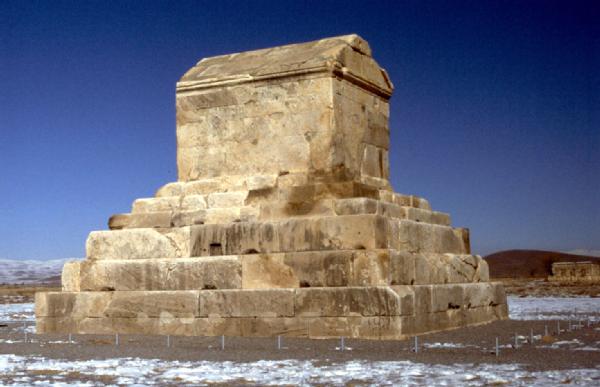
Greek was the language spoken in the ancient Mediterranean world. The Hebrew Scriptures had been translated into Greek so that God’s word could circulate far, and so more people could appreciate it. Lord in Greek is Kyrios (we know it in Kyrie eleison). Greek does not have a letter C, which means that Kyrus was their liberator’s name. That similarity deepened appreciation that the Lord worked through everyone--even a government leader, who didn’t acknowledge the only Lord.

Moving forward five centuries to Jesus’ time, the tension among Jews between being ruled by the Lord or by a man who considered him-self supreme--Caesar--had grown razor sharp. Members of two opposing groups allied themselves against Jesus. The Pharisees represented the Jewish people under Rome’s oppressive thumb. The Herodians, the party of Herod, sided with Rome in order to enjoy power. Herod was a heretic, who only wanted power. He had only the power Rome gave him, and Rome made him puppet-king of the Jews.

Malice made these enemies allies, specifically their hatred for Jesus. Their insincere question was not about taxes but about power, authority and allegiance. Jesus shrewdly asked for the coin used to pay the Roman tax. If a Pharisee had offered the coin, he’d have been a heretic for holding it. If a Herodian had offered the coin, the Pharisees would have been guilty for associating with Herod’s own; their association with them meant the Pharisees distanced themselves from the Lord, what they preached no one ought to do.
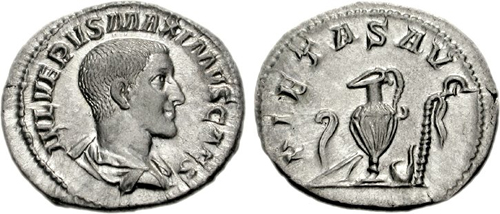
Because the issue is about recognizing God’s authority and about allegiance to God or denying God, these verses do not offer church-state solutions. The episode is about God’s loving control of history and our share as God’s stewards in each present moment. It's about recognizing God as the source of all; that all things are gifts.

October reminds us of two gifts from God: life and mission. This month deepens our awareness about life as given by God not by anyone else. October also calls each Catholic to participate in the church’s universal mission, namely, to make visible in more concrete ways our work of faith and labor of love and endurance in hope of our Lord Jesus.

Gesu offers one more way to do that by inaugurating the Gonzaga Society. Its mission complements other avenues of Christian service. Named after Jesuit St. Aloysius Gonzaga, who helped those in Rome no one else would help, the Gonzaga Society seeks to help people who “slip through the cracks” in our community. Members of the Gonzaga Society give people, who cannot drive, rides to church and to the doctor. They offer respite to those who are 24-7 caregivers at home. They sit with those who are dying, and they accompany survivors in their grief. Doing those things brings people nearer to Jesus. They are tributes of a priceless kind we offer as friends of Jesus.

In your daily 15 minutes with Jesus this week, allow the Trinity’s creative love of you give you new awareness of your partnership with them. Ask St. Aloysius to present you to Jesus. Speak to Jesus about your partnership with him; how you champion life and the church’s mission. Desire strongly to practice in more concrete ways your work of faith and labor of love and endurance in hope of our Lord Jesus. Close by saying slowly the Lord’s Prayer. Those who say it regularly and with passion grow more united with our Creator and Redeemer, who empowers us with his Spirit to practice more concretely our faith, hope and love with and for others.

____________________________________________
Wiki-image of the mausoleum of Cyrus is used freely by its author's permission. Wiki-image of Roman coins is used under the GFDL.

Saturday, October 18, 2008

Saturday word, 18 Oct 2008

St. Luke, Evangelist (18Oct2008)
2Tm 4. 10-17b; Ps 145; Lk 10. 1-9
Homily of Rev. Paul D. Panaretos, S.J.
Our Embassy

St. Luke, as you know, wrote a two-part gospel. Part One we name his gospel, his portrait of Jesus. We name Part Two, his Acts of the Apostles, Luke’s portrait of the infant church. Recalling him today the church directs our attention to Jesus and his compassion as well as recalling the only information in Paul’s letters, which indicated a relationship between him and Luke.

Jesus’ compassion we can identify by turning to our experience. However, our experience is alien to the ancient metaphor of harvesting. Does that mean that this gospel passage is so time-bound that it cannot speak to us? It need not be time-bound, and here’s why.

Scripture comfortably heaps images atop each other. Harvest is named but two others are described by Jesus: shepherding (I send you as lambs in the midst of wolves) and messengers (say to [those I send you], ‘The Kingdom of God is at hand for you’ ).

Jesus is the model messenger as well as shepherd and harvester. Jesus was sent by God, who was the master of the harvest, to proclaim God’s kingdom.

St. Luke’s feast reminds us that all Christians are to act with the master of the harvest; we are to allow ourselves be sent by Jesus as his ambassadors to our world. Our embassy is not an office to which people come. The Catholic embassy is our way of living by which we extend Jesus’ work, empowered by Jesus to invite others to the Kingdom of God to which we already have been welcomed. We invite by our manner of living.

That calls for perseverance as well as moving lightly through life. Becoming enamored of the present world, to use Paul’s language, is to cease to focus ourselves on Jesus’ mission he gives us and not to persevere. Because St. Luke abided with St. Paul--Luke is the only one with me--he is a worthy intercessor to help us persevere, to encounter Jesus and others in new ways and to discover anew how Jesus makes us conduits of his Holy Spirit.
____________________________________________
Wiki-image of St. Luke is in the public domain.

Friday, October 17, 2008

Gazing Action

Lectio divina has arisen repeatedly in the Synod devoted to God's word. [A summary list of topics thus far has been formulated as 19 questions.]

In addition to quietly reading a passage from scripture, lectio divina aims to help a person personally engage the passage. The engagement is not limited to the intellect; it seeks to

"Auxiliary Bishop Santiago Silva Retamales of Valparaiso, Chile, made a concrete presentation of this type of prayer that lasted some 20 minutes." The summary of his presentation listed seven points and described the fruit of five years of praying with scripture this way in his diocese.

Reading, rereading in a meditative way leads to
contemplation, aided by silence or music. What is important, the bishop said, is that "Jesus takes hold of me, looks at me and I at him, an exchange of gazes."
The outcome of this engagement with Jesus through the divine word is action--a concrete way Jesus, through his word, guides and graces individuals to put into practice in their daily lives.

Tuesday, October 14, 2008

Picture of Persecution Today

In the secular and democratic nation of India Christians are suffering persecution in no single area. Orissa, an east-central state, has seen it yet again; Karnataka, the state in which the city of Bangalore is located, saw persecution of Christians for the first time--to name only two states.

The Indian Prime Minister “himself. . .has recognized that this is a ‘national disgrace’ for India, an evident contradiction of the great values of non-violence, tolerance and respect, which the religions of this great country have cultivated for centuries.” [Source: Zenit]

A recent article in the New York Times depicted what is happening in an accurate fashion, according to an Indian Jesuit priest, who teaches theology in his country and is currently studying in the United States.

The perpetrators of this religious persecution offer all sorts of justifications. The fact that it happens at all urgently calls people to ponder the meanings of secular and democracy.

More information with a timeline of recent events are at People for Peace in India.
__________________________________________________________
Wiki-image of India States and Union Territories map by Planemad is used under the Creative Commons Attribution ShareAlike 3.o Unported license.

Monday, October 13, 2008

Disarming With "a Human Approach"

The Vatican has a permanent observer at the United Nations. Last week, Archbishop Celestino Migliore, addressed the 63rd U.N. General Assembly about the still pressing need for nations to disarm. He called for "a human approach" to it because each human being
is the ultimate aim of all public policies, arms regulation, disarmament and non-proliferation must have an interdisciplinary or, more importantly, a human approach.Without considering the social, economical, psychological and ethical impact of armaments, policies on disarmament and non-proliferation become a game of armed truce between States.
Archbishop Migliore, near the conclusion of his address noted the "enhanced complexity of the arms trade," cited two resolutions made by the General Assembly and linked "disarmament"
with more general problems, such as the reform of this Organisation, the procedural and structural reform of the Conference on Disarmament, the tendency of overlapping the civil and military economies and the scarce coherence of the policies adopted in the strategic sectors.
Humans need coherence. Without it individuals, families, societies, cultures and the entire globe suffer.

Sunday, October 12, 2008

Sunday word, 12 Oct 2008

28th Sunday of the Year A (12 Oct 2008)
Is 25. 6-10a; Ps 23; Phil 4. 12-14,19-20; Mt 22. 1-14
Homily of Fr. Paul Panaretos, S.J.
Starting Point

Connotations are the starting points of meaning for us.


  • Take the word "meal," and we usually think first of good nourishment. Farmers may think first of feed for fowl, and bakers may think first of corn meal to dust baking sheets.
  • Take the word banquet, and we may think of more than nourishment, such as too much to eat or, a dinner in conjunction with a gala.
  • Take the word death, and we may think of a particular point in time when life ceases in a living being.
Pausing to consider meanings which come first to us is important because scriptural language, which is Mediterranean language, exceeds the connotations usual to us. Sometimes scriptural connotations clash with our expected meanings. Scriptural connotations always burst human meanings. Scriptural language and images are the vocabulary of worship. Two examples: Jesus took bread, gave thanks, said the blessing, broke the bread and gave it;/1/ and a priest’s greeting at mass quotes St. Paul: Grace to you and peace from God our Father and the Lord Jesus Christ!/2/

Our readings exemplify the differences between scripture’s connotations and our understanding. Isaiah announced God’s desire of life with an image of a feast of choicest things. The image surpasses good nourishment and points to God’s total restoration of humans and their original blessing: the reproach of his people [God] will remove from the whole earth. In the words of the Twenty-third Psalm, which we echoed, God’s companionship with us allows us to move through the dark valley of death--in scripture no single point in time.

In the Mediterranean world life without honor was--and is for many today--unthinkable. Life without honor was no life at all. The phrase, “to die a thousand deaths,” helps us appreciate that the death God would destroy...forever was no single moment in time. God would destroy every force inimical to humans.

This process of God restoring our original blessing was accepted by the people to whom Isaiah announced God’s desire. "This is the Lord for whom we looked; let us rejoice and be glad that he has saved us!"

Jesus’ parable contrasts people who accept with people who reject God’s invitation. Rejecting God’s invitation to allow God to begin to restore us now and to completely restore us when the kingdom dawns is always a temptation we face. If any of us think that temptation does not affect us, the end of the parable warns us to be on guard.

Those who accepted the invitation, coming in from the main roads and streets, followed wedding banquet conventions and came in proper attire--all but one. Not putting on a guest’s wedding garment, that is, not acting in character as disciples and friends of Jesus, is that temptation we face often. For us Christians actions are so important. Actions flow from the inner-self, to paraphrase Jesus, and our actions above all, as Jesus will remind us as the liturgical year closes next month, guarantees our place in the kingdom-banquet.

That’s why the parable’s king ordered his servants to fill his hall with both the bad and good alike. If that shocks us, then the hymn we sing in God’s voice at communion should shock us no less: “O come and sit at my table where saints and sinners are friends.”/3/

In your daily 15 minutes with Jesus this week, calm yourself in the inviting love of the Trinity. Jesus seeks you through word and sacrament; accept his invitation to welcome you and restore you. Speak to Jesus about how you reject him and how you accept him. Resolve to act in ways in harmony with his gospel. Close by saying slowly the Lord’s Prayer, our guide for Christian action for both new and veteran Catholics.
____________
1. St. Paul and the Evangelists grouped these actions of Jesus together.
2. 1 Corinthians 1.3.
3. Dan Schutte, “Table of Plenty,” #312, verse 1, ©1992, Daniel L. Schutte, OCP Publications,
Breaking Bread, 2007.
____________________________________________
Wiki-image of cornucopia of fruits and vegetables is used according to the GFDL. Wiki-image of Russian icon of Paradise is in the public domain.

Saturday, October 11, 2008

Not All Has Stopped During Financial Crisis

Catholic Charities informed through its weekly emailing list of important actions taken by Congress and the President.

ww logo

Special Edition

October 10, 2008
Volume 3 Number 29

Inside this issue:

  • Congress Approves Financial System Rescue Package
  • President Signs Child Welfare Bill
  • Congress Reauthorizes Runaway and Homeless Youth Act
  • House Approves McKinney Vento Legislation
  • Legislative Accomplishments of the 110th Congress

President Signs Financial System Rescue Package

On October 3, the President signed into law (P.L. 110-343) a rescue package (H.R 1424) for the nation's ailing financial and banking sectors. The legislation authorizes the Treasury Department to buy $700 billion in troubled assets. It also raises the FDIC deposit insurance limit for bank accounts from $100,000 to $250,000.

The financial rescue package includes a number of provisions originally included in senate-passed tax-extender bill (H.R. 6049) including:

  • Mental health parity legislation that would require insurers to cover mental health benefits equal to traditional medical benefits;
  • A reduction in the income eligibility threshold for the Child Tax Credit from $12,050 to $8,500
  • Tax relief to victims of natural disasters; and
  • Tax breaks for renewable energy.

The changes raised the total price of H.R. 1424 to almost $850 billion from $700 billion. However, these provisions were already being considered by Congress and were included because of limited time on the legislative calendar.

Catholic Charities USA sent a letter to the Senate Banking Committee and the House Financial Services Committee on September 24. For more background on the issue, please read a letter from the United States Conference of Catholic Bishops to the Congressional leadership on the nation's financial crisis.

For more information, please contact Kellyann McClain, Policy Analyst, kmcclain@catholiccharitiesusa.org.

President Signs Child Welfare Bill

On October 7, the President signed into law (P.L. 110-351) the "Fostering Connections to Success and Increasing Adoptions Act" (H.R.6893). The bipartisan legislation was widely supported by both the House and Senate. It provides a number of important improvements to the child welfare system including:

  • Supporting children aging out of foster care by providing an extension of federal foster care payment beyond age 18;
  • Extending federal foster care funds to tribal governments;
  • Increasing financial incentives for families who adopt children and providing additional support for adoption of children with special needs;
  • Providing grants to improve access to services for relative caregivers; and
  • Allowing access to federal training funds for private child welfare providers.

Catholic Charities USA applauds the leadership in the Senate and House for their hard work in crafting these important changes to the nation's child welfare system.

For more information, please contact Desmond Brown, Senior Director of Government Affairs, at dbrown@catholiccharitiesusa.org.

Congress Reauthorizes Runaway and Homeless Youth Act

On October 8, President Bush signed into law (P.L. 110-378) the "Runaway and Homeless Youth Act of 2008" (S. 2982). The measure reauthorizes the 1974 Runaway and Homeless Youth Act that was set to expire on September 30. The legislation reauthorizes programs that support state and local efforts to help homeless youth through street outreach, transitional care, and crisis intervention.

Several changes were made to S. 2982 to get Senator Tom Coburn (R-OK) to remove a legislative hold on the bill including: removing funding for a public awareness campaign, limiting extensions for how long participants could stay in transitional housing programs, and reducing the fiscal year 2009 funding level by $15 million. After those changes were made, the bill easily passed both the House and Senate.

For more information, please contact Joseph Devine, Policy Analyst, jdevine@catholiccharitiesusa.org.

House Approves McKinney Vento Legislation

On October 3, the U.S. House of Representatives approved legislation to reauthorize the "McKinney Vento Homeless Assistance Act" (H.R.7221) by a vote of 355-61. The measure authorizes $2.2 billion for FY 2009 to support programs that serve homeless individuals and families. This is a significant increase above FY 2008 funding of $1.6 billion. The measure also made a number of changes to the McKinney Vento program including:

  • An expansion in the definition of the homeless;
  • Additional flexibility for communities to address identified need;
  • Additional flexibility to provide supportive services; and
  • An expansion in protection for victims of domestic violence.

The changes to the definition of homeless in the final bill are not as broad as an earlier version of the legislation. While the earlier bill, the "Homeless Emergency Assistance and Rapid Transition to Housing (HEARTH) Act of 2008" (H.R. 840), outlined broader definition for the homeless, the changes in the final bill represent an attempt to compromise with a similar measure in the Senate. The Senate did not pass its version of the bill (S.1518) due to procedural maneuvers.

For more information, please contact Desmond Brown, Senior Director of Government Affairs, at dbrown@catholiccharitiesusa.org.

Legislative Accomplishments of the 110th Congress


At the start of the 110th Congress, Catholic Charities USA outlined a comprehensive legislative agenda as part of our Campaign to Reduce Poverty in America. While a number of these legislative proposals did not become law, it is important to note that we are making progress in some important areas. Both Congress and the Administration took important steps to target relief and strengthen programs that assist some of the most vulnerable among us. Some of the changes passed by Congress and signed into law include:

  • Legislation that increases the minimum wage to $7.25 over two years, signed into law by President Bush on May 25, 2007;
  • "The Second Chance Act" of 2007 (H.R. 1593) which addresses barriers to housing, employment, education, and health care that ex-offenders face when exiting the prison system;
  • The 2007 Farm Bill which provides $10 billion over ten years for the Nutrition Title: $7.8 billion for the Food Stamp Program, $1.26 billion for The Emergency Food Assistance program, and $1 billion for the Fresh Fruits and Vegetable program;
  • A supplemental spending bill (H.R. 2642) that expands veteran education benefits, extends unemployment insurance, places a moratorium on six harmful Medicaid regulations, provides disaster relief for the Midwest, and provides permanent supportive housing vouchers for the Gulf Coast region;
  • The "Medicare Improvements for Patients and Providers Act of 2008" (H.R. 6331) that blocks a 10.6 percent cut to Medicare payments;
  • The "Housing and Economic Recovery Act of 2008" (H.R. 3221) that includes an Administration-backed plan to help troubled mortgage financiers Fannie Mae and Freddie Mac, an expansion of the Federal Housing Administration (FHA) home loan program to help homeowners avoid foreclosure, the creation of a National Affordable Housing Trust Fund to address the lack of housing options for extremely low-income families, and four billion in Community Development Block Grants for communities to rehabilitate foreclosed properties;
  • The "SSI Extension for Elderly and Disable Refugees Act" (H.R. 2608) which provides a two-year extension of eligibility for the elderly and disabled refugees who have lost or will lose their SSI benefits due to the seven-year time limit set by the mid-1990's changes in the welfare law;
  • The "ADA Amendments Act of 2008" (S. 3406), a proposal that clarifies the "Americans with Disabilities Act of 1990" (ADA) to broaden the number of physical ailments covered under the ADA;
  • "Michelle's Law" (H.R. 2851), legislation that allows full-time college students over the age of 18 to maintain their parents' health insurance plans for up to one year if they take a certified medical leave of absence from school;
  • A continuing resolution that includes $5.1 billion in funding for the Low Income Home Energy Assistance Program (LIHEAP), doubling the FY2008 level, as well as $22.9 billion in disaster relief, and $200 million for Emergency Food and Shelter Fund, a $49 million increase over FY 2008; and
  • The "QI Program Supplemental Funding Act of 2008" (S. 3560) that authorizes $45 million in additional funds to assists certain low-income seniors in paying Medicare premiums.

Catholic Charities USA will continue to advocate in the 111th Congress for legislation that provides quality health care, affordable housing, adequate nutrition, and economic security to the more than 37 million people living in poverty in this country.

For more information, please contact Kellyann McClain, Policy Analyst, kmcclain@catholiccharitiesusa.org.

There will be no Washington Weekly until Congress resumes.


***
Washington Weekly is a publication of the Social Policy Department of Catholic Charities USA and is published regularly when Congress is in session.
Catholic Charities USA
Sixty-Six Canal Center Plaza, Suite 600, Alexandria, VA 22314
socialpolicy@catholiccharitiesusa.org
For information about advocacy, please contact Lucreda Cobbs at (703) 236-6243 or lcobbs@catholiccharitiesusa.org

Friday, October 10, 2008

Pope's Reflection at the Synod

Pope Benedict opened the Synod on the Word of God with a reflection about words and power.
Humanly speaking, the word, my human word, is almost nothing in reality, but a breath. As soon as it is pronounced, it disappears. It seems like nothing. But already the human word has incredible force. It is words that create history, it is words that form thoughts, the thoughts that create the word. It is the word that forms history, reality.

Even more, the Word of God is the foundation of everything, it is the true reality.
It is worth pondering in its entirety.

Tuesday, October 07, 2008

Which Month Is Mary's Month?

May answers the title-question. October is the month which contains the Memorial, Our Lady of the Rosary (07 October). The rosary and Mary are so closely related in popular piety, which explains why some mistakenly call October Mary's month.

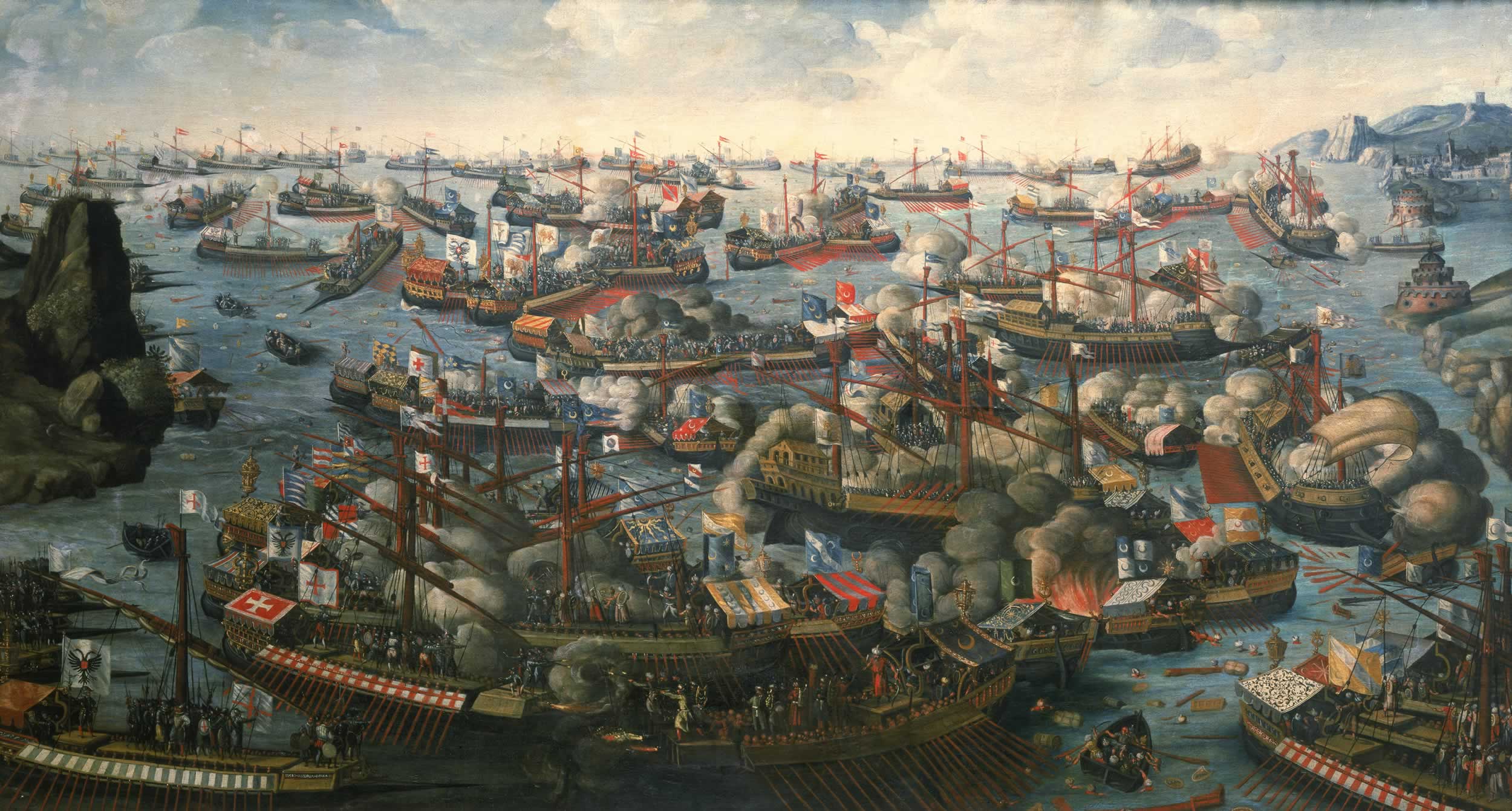
Pope St. Pius V in the year 1571 instituted the memorial to commemorate the miraculous victory of the Christian forces in the Battle of Lepanto on October 7, 1571. The pope emphasized the power of Mary's intercession as greater than the arms of war.

Entrusting self, work and evangelizing efforts to Mary's protection has become characteristic of the Church. In 2005 on the eve of an earlier Synod of Bishops, Pope Benedict did "entrust the work of the Synod to Mary." Before doing so he recalled the efforts his predecessor to revive praying the rosary:
This ancient prayer is having a providential revival, thanks also to the example and teaching of the beloved Pope John Paul II. I invite you to reread his Apostolic Letter Rosarium Virginis Mariae and to put into practice its directions on the personal, family and community levels.

We entrust the work of the Synod to Mary: may she lead the entire Church to an ever clearer knowledge of the proper mission of service to the Redeemer truly present in the Sacrament of the Eucharist. [Angelus, 2 October 2005]

The rosary is a prayer of protection in which we meditate on the mysteries of our Lord Jesus, turning them over in our hearts after the example of his Blessed Mother, who knew her son's incarnation, passion, resurrection and ascension in the most intimate ways.
________________________________________________

Wiki-image of a scene of the Battle of Lepanto is in the public domain.

Sunday, October 05, 2008

Sunday word, 05 Oct 2008

27th Sunday of the Year A (05 Oct 2008)
Is 5. 1-7; Ps 80; Phil 4. 6-9; Mt 21. 33-43
Homily of Fr. Paul Panaretos, S.J.
Tending or Possessing?

My high-school friend’s parents became wine-makers much to their surprise. It was no surprise that Mr. Paluzzi read about home-wine making; purchased supplies; set to work and successfully served delectable wine. Mrs. Paluzzi was not interested in the workings of making wine, but as far as enjoying a glass with dinner or at night with her husband or while reading a book, she was all for it!

When my parents picked up my friend and me from an outing and returned Daryll to his home, we visited. “Get ready for my Dad,” said Daryll, “he only talks about wine lately.” Mr. Paluzzi didn’t disappoint. His enlightening tour included a delicious selection of his efforts.

I learned dandelion wine was delicious; strawberry wine tasted too sweet; elderberries would be worth growing; and cantaloupe wine was superb. Mr. Paluzzi was thrilled, and Daryll lovingly endured it all yet again. Then: “It’s your turn, Mom.”

Mrs. Paluzzi took her cue. “You know why everyone loves the cantaloupe wine?” she asked us with an eye toward her smiling husband. “Angelo didn’t make it. I did.”

“You did!” exclaimed my father. “I thought you didn’t want any part of making wine.” “Well, she was that way,” Angelo answered. “When I kept getting all the accolades from our guests, she wanted in on the action. I told her no way. She makes her own wine now. Sometimes her wine outshines mine. More cantaloupe wine, by the way?” he grinned.

I haven’t sipped Paluzzi wine in years nor will I again. My classmate died of cancer a short while after graduation. His dad died a little later, and his mom had grown ill before I left the area. Yet, their story is fine vintage: being close to the process of making, what Mrs. Paluzzi had taken for granted, changed her outlook and vitalized her spirit. She gave her-self to the discipline of turning fruits into wine.

Mr & Mrs Paluzzi said they made their wines to see who made the better. Motivation in part. I think that wine as gift to refresh life and companionship began to exert its pull. In her way, Mrs. Paluzzi, like her husband in his, gave herself to the value of that gift.

We are less inclined to be astonished by the process of fruit fermenting into wine than our Jewish ancestors in faith and the first Christians who gave us Jesus’ good news. We may be nonplussed by Isaiah’s song of the vineyard and deaf to its echo in Jesus’ parable of the tenants. Something astonishing resides in Israel’s cherished self-identification as God’s vineyard, namely God’s perception of the enormous value of the house of Israel. So great a value that they saw each other as friends: Let me now sing of my friend, my friend’s song concerning his vineyard--our Creator-Friend’s song about us! God befriends us.

In the stresses and strains, the hopes and joys of life the relationship of God with us remains constant. God’s relationship is constant even when we produce sour grapes. Even then we, the new Israel, like the first people of the promise, are God’s cherished plant.

Jesus’ parable of the tenants is a window on our inconstant and fickle nature with God and humans. By his parable Jesus reminds us God is like the owner, who lovingly prepared his vineyard. God, too, is long-suffering, desiring only respect, hoping the limited and selfish tenants would respect my son.

Just as astonishing as the relationship God desires with us as we are is that the parable’s vineyard remained; the tenants came and went. Are we, tenants, fickle at best or greedy at worst, who come and go? Do we covet ownership? Or do we seek to be people who produce...fruit by tending our corners of the vineyard given us in trust?

In your daily 15 minutes with Jesus this week, ask the Trinity to allow you to see with their vision. Ask Mary and your patron saint to present you to Jesus. Speak to Jesus about the ways you exercise stewardship over people and things God has entrusted to you. Desire to be more attentive but not possessive; to be more confident in God’s providence and aware of freedom, yours and others. Close by saying slowing the Lord’s Prayer, which is our act of entrusting ourselves to God: in praise, in need and in our desire to grow more like Jesus, God’s son.
____________________________________________
Wiki-images of an airlock by Joshk and of a vineyard in autumn by HuttyMcPhoo are used according the Creative Commons Attribution ShareAlike 2.5 license.

Saturday, October 04, 2008

Synod on the Bible Begins Monday

Pope Paul VI gave the world's bishops a voice in the governance of the universal church through the medium of the synod. [Synod come from two Greek words meaning journeying together. The discussion and debate by bishops, one hopes, will contribute to the progress of allowing the Tradition to speak to new circmstances.]

On Monday the 22d synod convenes. It's name is “The Word of God in the Life and Mission of the Church.”

Mr. John L. Allen Jr. offered a preview in his weekly online column published yesterday. Synods are considered by some to be wasteful of time and money, "expensive talk shop with no actual authority." Mr. Allen correctly added that
it’s nonetheless a unique sounding board. For roughly the first week and a half, each participant will have a few minutes to deliver a message to the pope himself, and to the wider world, about the state of the church.

The synod is thus a unique gauge for taking the temperature, so to speak, of the global church.

The subject this time around is the Bible, with discussion likely to oscillate between lofty matters of theology and exegesis and more practical concerns about how to foster greater Biblical literacy and a deeper passion for scripture at the grass roots. Here we’ll take a brief look at each.

Mr. Allen considers in turn the "lofty matters" and the "practical and pastoral concerns."

Will this synod make a turn that will be one sided, that is, church, or will it acknowledge the power of the Word in a deeply divided world?

____________________________________________

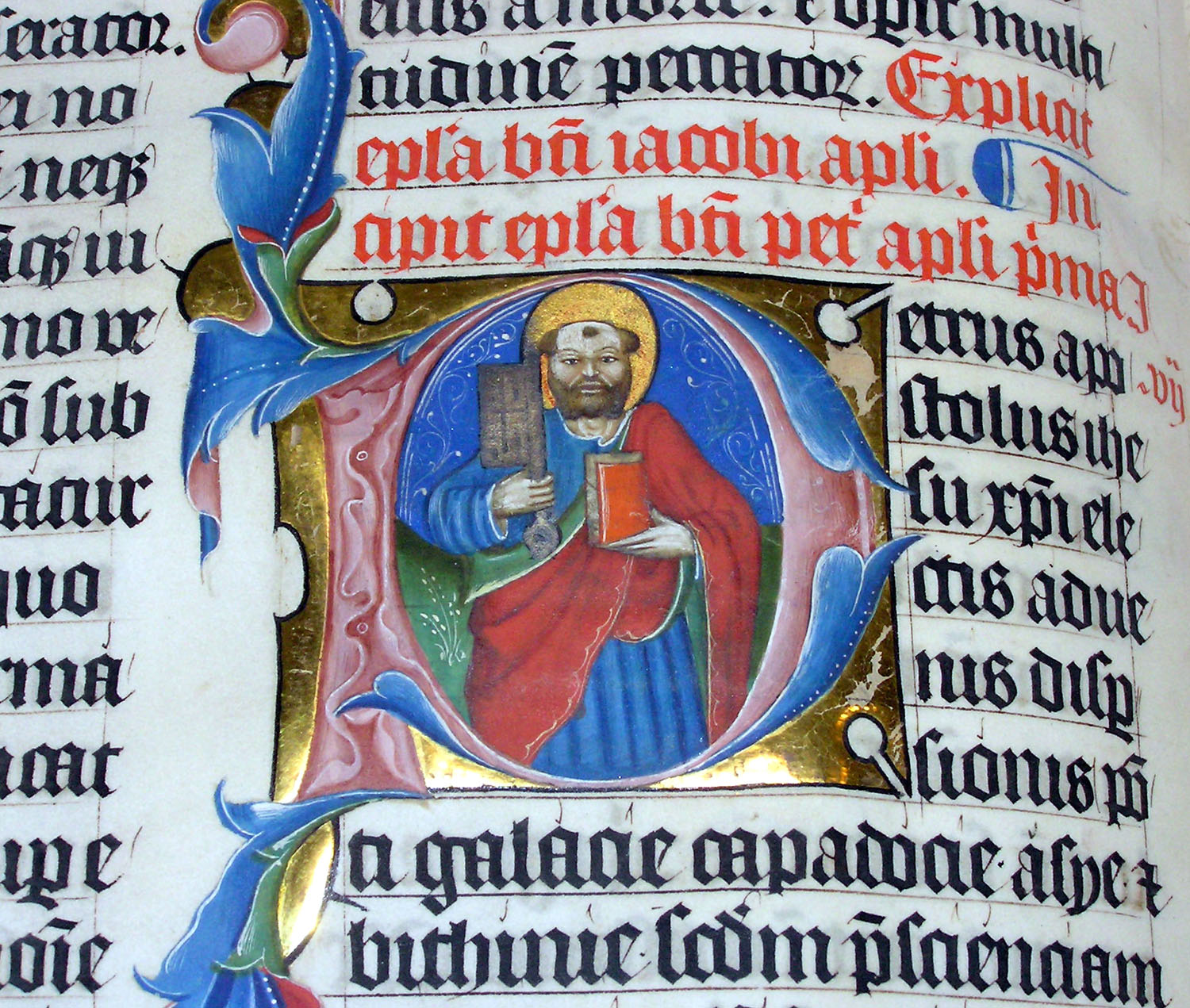
Wiki-image of an illuminated letter P is in the public domain.

Wednesday, October 01, 2008

Wednesday word, 01 Oct 2008

Teresa of the Child Jesus (01Oct2008) Jb.9. 1-12,14-16; Ps 88; Lk 9. 57-62
Homily of Rev. Paul D. Panaretos, S.J.
One Way of Operating

In Sri Lanka today is a solemnity, which I learned as a tertian. The youthful Sri Lankan church recalls its missionary roots. St. Teresa, who never left her Carmelite convent, was named patroness of all men and women missionaries by Pope Pius XI.

Growing up I easily understood why St. Francis
Xavier had been proclaimed in turn patron of mission lands east of the Cape of Good Hope--all missioners bound for Asia had to sail past the tip of the African continent--and later of the Propagation of the Faith. How did a Carmelite, who lived a cloistered life, join him?

Their fundamental principles of operating echoed each other. Francis’
spiritual principle had been: To “love those people to whom we are sent and to make ourselves loved by them.” [Thérèse’s] ...motto of her monastic life was: “To love Jesus and to make him loved.”/1/
Missionaries and even Pope John Paul II/2/ have reminded each Catholic that we are missionaries, too. Jesus invites us to follow him because Jesus loves us. Jesus sends his followers with the mission to continue his work. The first disciples did that by making Jesus known to others.

People attract others to Jesus by their love for Jesus. Your love and my love for Jesus infects others. Our love opens the hearts of others to the love Jesus has for them.

Our roles in the church as well as life differ. Our Catholic way of operating unites us: “To love Jesus and to make him loved.”
__________
1. http://www.ocd.pcn.net/mission/News16en.htm#_ftn5
2.
Redemptoris Missio, 2.

Updated JRS-USA Website

JRS/USA witnesses to the reality that God is present in human history, even in the most tragic experiences of persons driven from their homes by conflict, natural disaster, economic injustice, or violation of other human rights.
[Source: About Us link at home page]


St. Ignatius would use the Internet. Perhaps the most prolific letter writer of his day, St. Ignatius communicated, guided, begged and directed both Jesuits and their friends and benefactors with his written communications. The Jesuit Refugee Service-USA website affords us images of people with whom God is present in dire circumstances.

The updated website not only informs about displaced peoples around the globe. It also allows visitors to it to pray with refugees and to take action on their behalf.
____________________________________________
Wiki-image .

Tuesday, September 30, 2008

Ignatian Wikipedia


Here's a portal visited by people from about 100 countries with over 4,000 articles about things Ignatian. It uses Wikipedia software with freely licensed content to aid all constituencies of Jesuit institutions to understand better and to further their Catholic, Jesuit identity.
___________________________________________
Wiki-image of St. Ignatius by Dr. John Workman Jr. is used according to the GFDL 1.2.

Sunday, September 28, 2008

Sunday word, 28 Sep 2008

26th Sunday of the Year A (28 Sep 2008)
Ez 18. 25-28; Ps 25; Phil 2. 1-11; Mt 21. 28-32
Homily of Fr. Paul Panaretos, S.J.
Choosing Divine Life


The prophet Ezekiel preached a revolutionary message that marked an evolutionary change in a belief, which the people Israel had long held. God through Prophet Ezekiel challenged it: the word of the LORD came to me: Son of man, what is the meaning of this proverb that you recite in the land of Israel: “Fathers have eaten green grapes, thus their children's teeth are on edge?”/1/ People used this proverb to claim that they were being punished for their ancestors’ sins rather than for their own. God challenged that, and the prophet preached a message of personal responsibility, and he received resistance to his message: If my parents were godly, then I deserve their blessings even if I live in ungodly ways. If bad things befall good people, they get what they deserve because of their ancestors’ sins.

We can understand the selection we heard from the Book of Ezekiel as our first reading when we know that. Without knowing that, we can only wonder why people cried, “The Lord's way is not fair!”

The personal responsibility of our Jewish-Christian heritage has nothing to do with our national rugged individualism. Rugged individualism is a “belief that all individuals, or nearly all individuals, can succeed on their own and that government-help for people should be minimal.”/2/ In our Jewish-Christian heritage each of us is responsible to sanctify the world, that is, to impart by our actions traces of God’s presence. We don’t succeed on our own when we do that. We cooperate with God’s grace, we ally ourselves with God’s life, which God lavishes on us regardless of our circumstances.

Allying ourselves with the divine life pulsing within us is our choice. We can choose not to ally ourselves with divine life, not to cooperate with God’s grace. No one here hasn’t refused to cooperate with God’s grace at one time or another. All of us have made new choices to ally ourselves with God’s life and begin again.

Just as we are free not to cooperate with God’s grace, we are free to change our minds and ally ourselves with God’s life God always extends.

Jesus’ parable of the man [who] had two sons illustrates that. Entering the parable, the parent stands for God, and we are God’s children, who sometimes are one with God’s desires for us; sometimes are not; and at other times choose to reconcile ourselves with God and God’s desires.

Jesus’ parable also pointed to the destiny of Jesus and Israel, namely Jesus’ rejection by leaders and the transfer of God’s kingdom to others. The parable is transparent: the hearts of the chief priests and the elders of the people were hardened; and the tax collectors and the prostitutes--scripture-labels for all who reject God’s life and seek to live strictly on their terms--were truly repentant.

Some of us are here to remember and celebrate God’s life has redirected and completes ours. Some of us are here to reconcile yet again with our God and seek the same attitude that is also in Christ Jesus. Some of us are to let Jesus nourish and increase our resolve to follow him more closely. Some of us are here because strength in numbers exists in common worship: communal worship informs personal praying. All of us are here to rediscover how Jesus is inviting us to be his agents of the kingdom, making it more accessible to others.

Each sabbath we convene to remember Jesus has risen, rises in us and transforms us. Our transformation includes an always new and revolutionary attitude: welcoming God’s life to influence, redirect and guide our living moment by moment.

In your daily 15 minutes with Jesus this week, place yourselves in the company of the Trinity,
who create you in each moment and impart their life to you. Ask Mary and your patron saint to present you to Jesus. Speak to him and implore Jesus to refashion you to be like the parable’s son, who changed his mind. Praise Jesus for his attitude and desire the same attitude that is also his. Close your time with Jesus and slowly say the Lord’s Prayer, which Jesus gave us to help us to have his attitude daily and to live by his way.
__________
1. Ezekiel 18.2
2. Entry in Dictionary of Cultural Literacy, 3d Edition, 2002.
____________________________________________
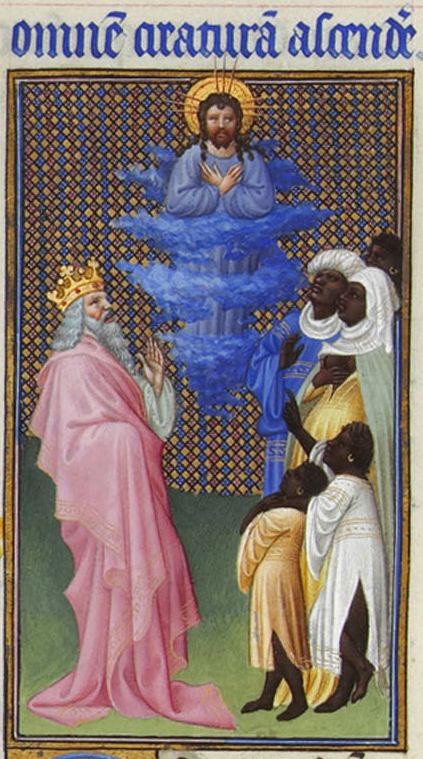
Wiki-image of David imagining Jesus is in the public domain. Wiki-logo by Augustodj is used according to the Creative Commons Attirbution ShareAlike 3.0 Unported license.

Thursday, September 25, 2008

Secularism Has Healthy Form

The word, secularism, has the connotation in common usage, which suggests having no religious or spiritual basis. During his visit to France, though, Pope Benedict encouraged the French President that more than that connotation exists, saying, “I am firmly convinced that a new reflection on the true meaning and importance of laïcité is now necessary." [One can detect the root for the word laity in the French word which we render as secularism.]
“In fact, it is fundamental, on the one hand, to insist upon the distinction between the political realm and that of religion in order to preserve both the religious freedom of citizens and the responsibility of the state toward them,” the pope said during the encounter with Sarkozy and other officials of the French government.

“On the other hand, [it is important] to become more aware of the irreplaceable role of religion for the formation of consciences and the contribution which it can bring to – among other things – the creation of a basic ethical consensus within society,” the pope said.
Mr. John L. Allen Jr., in his weekly online essay examined the implications of these remarks.

In addition, his essay concludes with links to several moments of the trip in reverse chronology.
____________________________________________
Wiki-image of French President Nicolas Sarkozy by Aleph is used according to the Creative Commons Attribution ShareAlike 2.5 license.

Monday, September 22, 2008

Monday word, 22 Sep 2008

25th Monday of the Year (22 Sep 2008) Prv.3. 27-34; Ps 15; Lk 8. 16-18
Homily of Rev. Paul D. Panaretos, S.J.

Light Years

The Book of Proverbs alerts us to its purpose: to hand wisdom, ranging over a wide area of both human and divine activity, to the young prince: Hear, my son, your father's instruction, and reject not your mother's teaching. It closes with a king’s memory: The advice which his mother gave him./1/

St. James reminded us that we live according to our Messiah-king’s royal law./2/ The wisdom Jesus reveals also empowers us by his Spirit to make our lives hand wisdom on to one another.

Jesus' image of light, the light of a lamp to illuminate the way we follow him, is personal. We are no less than light for one another and for our world. Our lives make Jesus visible or they don’t. Making Jesus visible does not always happen instantly, like turning on a switch. Often it’s gradual.

Think of stars. Their light travels astronomical distances, and when it reaches us we see their past existence in our present vision. To measure such vast distances we use a time-related word, year, because miles and kilometers are no longer practical measures.

Light-year may not intuitively make much sense when we think of distance. In a similar way, we may not think how we individuals act affects our world let alone another person. Our national heritage of vast freedom may blind us to the effect we can have on a person; and the proportions of the world stage may decrease our confidence in affecting it.

Yet Jesus asks us to take him at his word. Our Living Light, Jesus, has transformed us. How we live him and his light allows others to recognize him, though it may take years. Our Christian living also sheds new light on Jesus and who he is for us each day.

__________
1. Proverbs 1.8 and 31.1.
2. James 2.8.
____________________________________________
Wiki-image of Star trails by Chad Miller is used according to the Creative Commons Attribution ShareAlike 2.0 license.

Sunday, September 21, 2008

Sunday word, 21 Sep 2008

25th Sunday of the Year A (21 Sep 2008)
Is 55. 6-9; Ps 145; Phil 1. 20c-24,27a; Mt 20. 1-16a
Homily of Fr. Paul Panaretos, S.J.
More Generous and Attentive

A shorthand way to summarize the scriptures before Jesus is this. They tell parallel stories: of God’s loving fidelity to people by means of God’s covenant; and people’s not-always-faithful response to God.

When things go well and when our lives are not interrupted by crises, people have an easier time of attending to God and God’s desires. However, when our lives are lacerated by pain or upended by unexpected happenings, attending to God and God’s desires is not as easy.

We can appreciate Isaiah’s words, Let the scoundrel forsake his way, and the wicked his thoughts, if we at least sympathize with those whom the prophet addressed. God’s people had been exiled and lived captive in a foreign land with alien deities. Their exile had grown long. Some may have grown accustomed to life in Babylon; some may have ignored Prophet Isaiah’s message. Others may have forsaken the covenant with the God of Abraham. In their grief still others may have found God’s desire of renewal after exile too difficult to believe: [God’s] thoughts are not [human] thoughts, to use Isaiah’s language.

In one way or other, God calling people through Isaiah’s language, suggests that some, if not many, exiles may have found other patrons for their lives and abandoned the Lord who had commanded Moses, “Speak to the whole Israelite community and tell them: Be holy, for I, the Lord your God, am holy.”/1/ To live in God’s image is to walk each moment with a sense of God as Giver and Patron of our lives.

The image of God by which we live and operate is crucial. The memory of Jesus of the early church knew this was a fact. It remembered that it in first-century Palestine-- and we in our 21st-century sophistication--could reject or accept Jesus’ description of God as a lavishly generous Mediterranean Patron. The early church--and we--could welcome a lavishly generous, patient and seeking-for-us God, or go through life straightjacketing ourselves with an image of God as an accounts-reckoning employer, trying with all our might to limit God to a contract of our making.

Isaiah’s words focus us on generosity of the landowner of Jesus’ parable. The landowner is God, and we are those in his parable’s marketplace, standing there. Not every contemporary Catholic is standing idle, yet my American upbringing moves me first to take stock of my efforts. God’s efforts are far more important than my most accomplished ones. If not our efforts, then what? God’s desire to intervene and come to our aid.

God does not change our circumstances as the prosperity preachers of today would have us believe. Rather, God accompanies us, even when we distance ourselves from God. When we do distance ourselves from God, God seeks us and desires to stand with us as we are. That is the image of God Jesus continues to offer us, the divine image Jesus invites us to allow to be our operative image of our God, who renews us and offers us what the world cannot give us.

In your 15 minutes with Jesus this week, pause and rest in the creative love with which the Trinity embraces you. Ask those who stood in the marketplace, waiting for someone to show interest in them, to present you to Jesus. Speak to Jesus as you are--whether confident or timid;
advantaged or bereft; closed-handed or open-handed--and name your greatest need. Praise Jesus for choosing to give his life for you and for modeling greater confidence in his Father and ours. Bring your prayer to a close by saying slowly the Lord’s Prayer, which each time we say it, helps us conduct []ourselves in a way worthy of the gospel of our crucified and risen Messiah, and transforms us into his more generous and attentive contemporary disciples.
_______________
1. Leviticus 19.2
____________________________________________
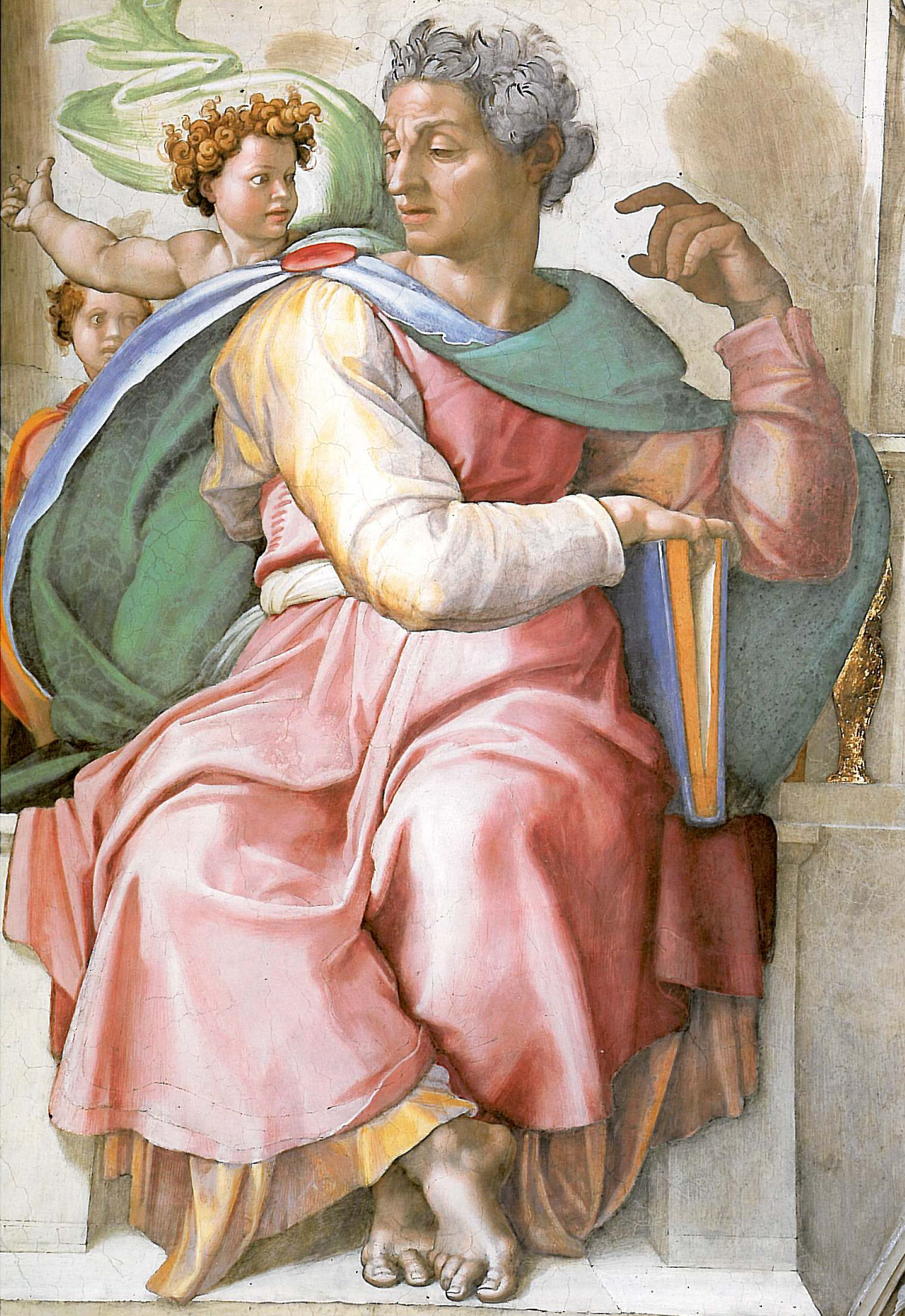
Wiki-image of Michelangelo's Isaiah is in the public domain.

Saturday, September 20, 2008

Saturday word, 20 Sep 2008

Sts. Andrew Kim Taegon, Paul Chong Hasang and Companions,Martyrs
(20Sep2008) 1Co.15. 35-37, 42-49; Ps 56; Lk 8. 4-15
Homily of Rev. Paul D. Panaretos, S.J.
That Pregnant Question

Fine nuances in Luke’s parable of the sower exist. Often they make more precise some of the figures expressed by his source. One difference, however, may be more akin to us sophisticated moderns. In Matthew and Mark, the disciples asked Jesus why he spoke in parables at all./1/ In Luke’s gospel the disciples asked what his parable might mean.

If we pause, we can recall we heard that question before in the gospel. It fell from the lips of Mary, when the angel greeted her to announce she would be the mother of God. Mary was utterly confused by the angel’s speech and wondered what the greeting might mean./2/ I call her wondering a pregnant question.

We often risk reducing the Mystery to something we might understand--two lovers never completely understand each other; on some levels they remain mysteries to each other. When we imitate the disciples and ask Jesus what he means--before asking a commentary or a footnote in our bibles--when we ask Jesus what he means for us, we begin to learn and live the mystery of his risen life in us.

Pope John Paul II canonized in 1984 the 100 Korean martyrs we remember today. Of them 92 were lay people. Speaking at that time the pope recalled the mystery that is growth from persecution:
The Korean Church is unique because it was founded entirely by lay people. This fledgling Church, so young and yet so strong in faith, withstood wave after wave of fierce persecution. Thus, in less than a century, it could boast of 10,000 martyrs. The death of these martyrs became the leaven of the Church and led to today’s splendid flowering of the Church in Korea. Even today their undying spirit sustains the Christians in the Church of silence in the north of this tragically divided land./3/
They lived the meaning of the mystery as St. Paul proclaimed in our hearing again: Just as we have borne the image of the earthly one, we shall also bear the image of the heavenly one. How our bodies and our lives bear the heavenly image now, even slightly, is the most pressing and pregnant question we Catholics can ask. We are wise to ask Jesus to join his Spirit to ours as we ponder how we may live the Mystery more effectively.

__________
1. Matthew 13.10 and Mark 4.10.
2. Luke 1.29.
3. Paragraph 3 of his homily in Seoul, 06 May 1984, original emphasis.
____________________________________________
Wiki-image of the Korean martyrs is in the public domain.

Friday, September 19, 2008

Both/And of Catholicism

"In Rome this week, a blow was struck for the sane middle on the most vexed issue in the modern relationship between faith and science: the theory of evolution."

Mr. John L. Allen Jr. included more in his weekly online essay. The lead story is about the announcement of
a major academic conference in March 2009, organized by the Jesuit-run Gregorian University in Rome and the University of Notre Dame in the United States, and co-sponsored by the Pontifical Council for Culture. The title is "Biological Evolution: Facts and Theories," to be held at the Gregorian in conjunction with the 150th anniversary of the Origin of Species.
Learn who was responsible for this by reading Mr. Allen's online essay.