Tuesday, October 23, 2007

Wednesday word, 24 Oct 2007

29th Wednesday (24 Oct 2007) Rm 6. 12-18; Ps 124; Lk 12. 39-48
Homily of Fr. Paul Panaretos, S.J.
Christian Freedom

The story which conveys the beginning of sin in the world involved deception: the tempter deceived the first humans. On the basis of his personal experience of the risen Jesus, St. Paul communicated that God responded to sin’s deception by God’s gracious act of raising Jesus from the dead. He concluded the heart of his Letter to the Romans that 1) Jesus’ resurrection undid sin’s deception unto death; and 2) that we have been given this power to new life: In conclusion, just as through one transgression condemnation came upon all, so through one righteous act acquittal and life came to all./1/ This was purely gracious gift with awesome effect.

Before St. Paul people had steeped themselves in this real gift of grace through baptism. It really participates in Jesus’ death and resurrection. It is effective, accomplishing what it symbolizes. The life-project of each of us is to translate our baptism into behavior and the way we live. For St. Paul this life-project was obedience, attentiveness to the pattern of our risen Lord and shaping our living after his pattern of living.

The grace of Jesus’ risen life transforms our freedom, empowering us not to use our bodies to sin as weapons for wickedness, but [to] present yourselves to God as raised from the dead to life and the parts of your bodies to God as weapons for righteousness.

When I sin I close myself to Jesus’ gift of new life; I live as though I never received it. My sinful act does not limit his gift and its power; I limit myself by refusing the gift. I hand over myself to what can not give me life. I’m a slave of my grasping compulsions and attachments. To pattern my living on the pattern of risen Jesus reorients my--and all human--choosing. This was freedom for St. Paul, not our notion of individual preference; it was serving what ennobles humans, helping us become as God created us. To paraphrase the Irish orator, Edmund Burke, Jesus’ resurrection of the dead is God’s “chastity of honor...which ennobled whatever it touched, and under which vice itself lost..its evil”/2/ I want to give myself to God’s honor and become as God creates me. St. Paul invites us, Choose our allegiances carefully!

_________
/1/ Chapter 5. 19, near the end of yesterday’s reading.
/2/ Answers.com used his sentence to illustrate the usage of the word, ennoble.

_______________________________________________
Wiki-image of the symbol of Christ, the Beginning and the End is used according to the GNU Free Documentation license.

Tuesday word, 23 Oct 2007

29th Tuesday (23 Oct 2007) Rm 5. 12,15b,17-19,20b-21; Ps 40; Lk 12. 8-12
Homily of Fr. Paul Panaretos, S.J.
In a Different Key


The lectionary rushes us at the heart of St. Paul’s Letter to the Romans, about in whom and how God worked God’s righteousness by faith: in Jesus by his resurrection from the dead. The lectionary didn’t allow us to hear St. Paul emphasize how real is God’s graciousness in Jesus. It skipped to his description of the grand character of God’s gift: we stand in God’s life.

We do well to recall God’s gift in and through Jesus is real; it’s on no wish list. Here and now we have peace with God through our Lord Jesus Christ, through whom we have gained access (by faith) to this grace in which we stand./1/ By peace St. Paul did not mean the absence of war. The word he used translated the Hebrew shalom. Shalom conjured the covenant; it is being in right relationship with God and others. We stand in right relationship with God because Jesus returned it to us. Access to God is not our doing; risen Jesus gives us access.

The grandness of God’s gift in Jesus we can begin to appreciate from experience. Not only are we unable to give this gift of life to our-selves, at times we don’t even want to! That’s the effect of sin. Magnify that by count-less people; yet God reached all in their disinterest! Death and life played key roles.

For St. Paul creation and resurrection are different keys of God’s song. That helps us make sense of that dense verse, through one man [Adam], sin entered the world, and through sin, death, and thus death came to all. God sang into existence the first and representative human, Adam. Recall what God told the first humans if they ate the fruit of the tree in the center of the garden? "On the day you eat of it you shall die."/2/ That is how St. Paul connected sin and death.

In a different key, God called out of death Jesus to absolutely new life. Jesus’ freely chosen death liberated us from Adam’s death-dealing transgression. We trust Jesus’ resurrection because it is our liberation, or put another way, because Jesus’ resurrection connects us with the divine song of life, which we now sing in a different key; one day we will sing in the same key as the Trinity sing it in their eternity.

_________
/1/ Chapter 5. 1-2.
/2/ Genesis 2.17.
____________________________________________
Wiki-image of the Triumph of the Cross is used under the Creative Commons Attribution-Share Alike 2.5 Generic license.


Monday, October 22, 2007

Monday word, 22 Oct 2007

29th Monday (22 Oct 2007) Rm 4. 20-25; Resp. Luke 1. 69ff; Lk 12. 13-21
Homily of Fr. Paul Panaretos, S.J.
Model of Faithful Obedience

I continue my series of reflections on the Letter to the Romans in order to make more accessible for you its treasure of faithful obedience./1/ This relationship with God allows us to give God glory as God and give [God] thanks,/2/ which those who refuse to recognize God do not do. Such a one is an idolater, to use Paul’s language.

Using an imaginary conversation partner to move his proclamation forward, St. Paul offers the prime opposite, our ancestor in faithful obedience, Abraham. He did not refuse to enter into a relationship with God: Abraham did not doubt God’s promise in unbelief; rather, he was empowered by faith and gave glory to God and was fully convinced that what God had promised he was also able to do. This sentence overflows with action-implications for us: namely, trust; hope; and believe.

St. Paul had noted that Genesis remarked that before Abraham was circumcised he was declared righteous because of his faithful attentiveness to God not because of any of his accomplishments--in Paul’s language, his works.

In St. Paul’s day Judaism extolled Abraham because of his works. Implied in accomplishments are claims they allow us to make. St. Paul corrected the view his contemporaries had of Abraham by reminding people that nothing anyone does obliges God or puts a claim on God. Though not obliges, God promised Abraham life.

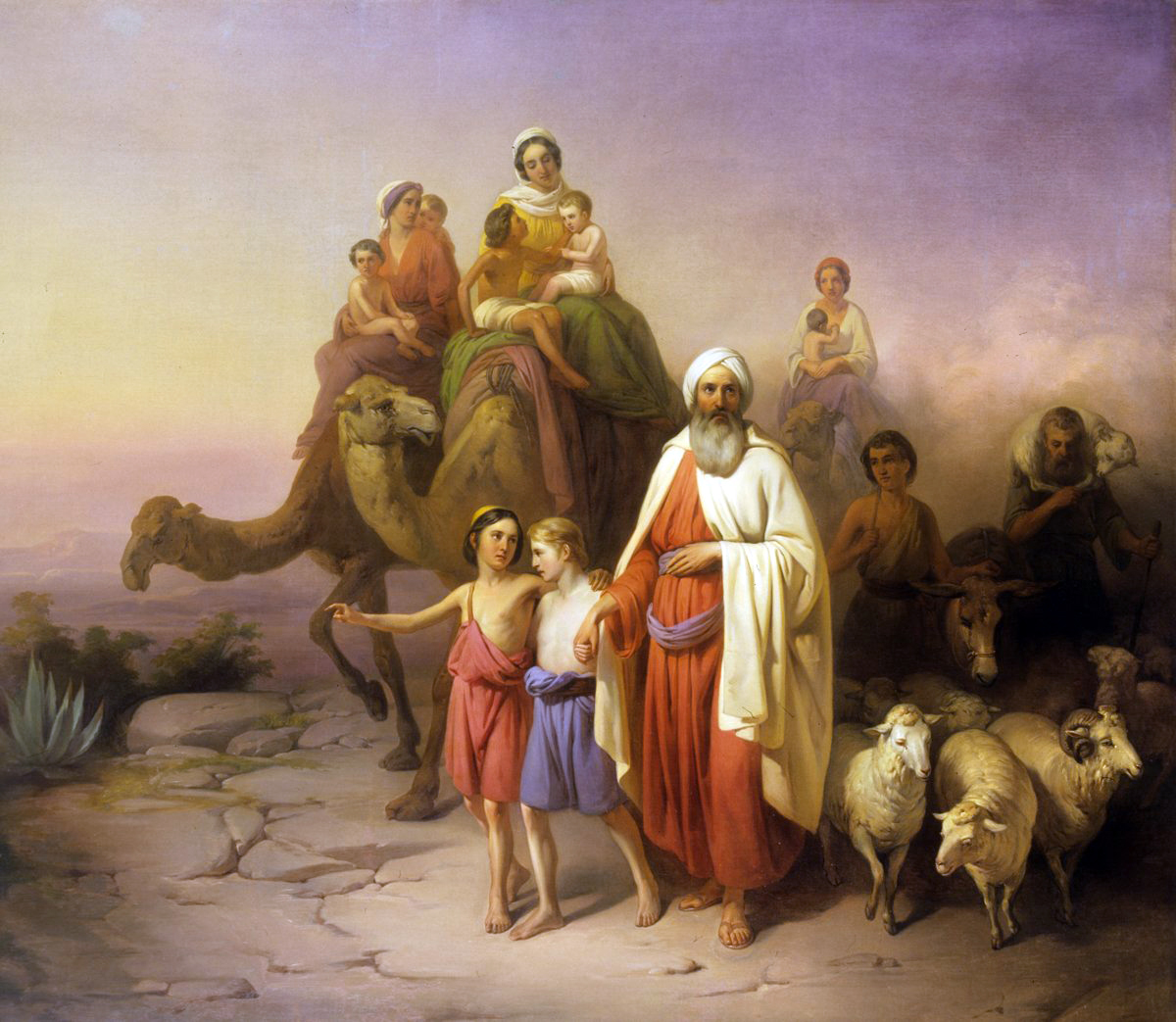
Abraham’s faith is the model for us because he was fully convinced God would fulfill God’s promise. Abraham trusted the promise contrary to experience: his age, as good as dead, and Sarah’s dead womb/3/ Abraham’s faith empowered him to trust and to hope. The promise of life out of death--the birth of Isaac to barren Sarah--shaped Abraham’s faith. It pointed to Christian faith, which is shaped by Jesus’ resurrection from the dead and trust in it.

Appearances confound us, too, and often. For us, who believe in the one who raised Jesus our Lord from the dead, faith is also a relationship of trust, hope and attentiveness. Abraham models how to live by faith as the relationship God desires us to cultivate. Trust and hope feed and empower our faith, too.

_________
/1/ Paul’s phrase functions as bookends of his letter: to bring about the obedience of faith (1.5 and 16.26) was his
apostolic purpose.
/2/ Chapter 1. 21.
/3/ Chapter 4. 19, the verse preceding today’s reading.
_____________________________________________
Wiki-image is in the public domain.

Sunday, October 21, 2007

Sunday word, 21 Oct 2007

29th Sunday of the Year C(21 Oct 2007) Ex 17. 8-13; Ps 121; 2Tm 3. 14-4.2; Lk 18. 1-8
Homily of Fr. Paul Panaretos, S.J.

Crucial, Communal and Conversational


"Patience and perseverance / have it if you can,/ It’s seldom in a woman and never in a man." In her oft-quoted rhyme perSEVerance was my Irish grandmother’s pronunciation of our perseVErance. While it overstates it, the rhyme does point to the precious nature of persisting in any life. If it is seldom in a woman, Jesus called our attention in the gospel to an unnamed, powerless, persevering woman. The first two readings reminded us that Moses and Timothy persevered; men can possess that same virtue! A few words about it to help you this week.

St. Paul encouraged his coworker, Timothy, to persevere: to remain faithful to what you have learned and believed, because you have known from whom you learned it, and that from infancy you have known the sacred scriptures. Timothy highlights the personal nature of persevering in Jesus, our Creator and Lord. Growing up with faith isn’t to understand it completely or to know it whole and entire. Rather, growing up with faith encourages us to cultivate a relationship with Jesus, who neither slumbers nor sleeps [who guards] our coming and going both now and forever. Faith is part of each one’s development like muscular, intellectual and ethical growth.

Each of us has one’s responsibility to put an individual imprint on one’s faith-relationship, however, we do not do that alone. Faith is a communal enterprise as Moses showed. It was no shame that Moses could not by his own strength keep his hands raised up while Israel fought. Aaron and Hur supported his hands after they grew tired. Faith is deeply personal; it’s never private. We easily miss that lesson.

To persevere in relationships, in work, in school, in faith, in all of life is important. Jesus reminded us that persevering in prayer is crucial. Generations before and after Jesus, in his Mediterranean world, women had no right to be heard. They relied on their husbands. Thus widows were especially vulnerable, as were fatherless children: hence the prophets’ constant cry on behalf of orphans and widows, their condensed phrase for any and all powerless people.

Power doesn’t win us a hearing from God, who desires first to respond to those without power; faithful persistence does. Nor does persistence necessarily change others. Recall the dishonest judge’s self-description: “I neither fear God nor respect any human being.” No change caused him to respond to the widow; fear she would blacken his eye did! Praying does not manipulate God, it awakens us to God’s gifts to us.

Persistence in prayer is no immersion into a mysticism; nor is it to think of and do nothing else. Persistence in prayer is an attitude, coming to God mindful of our weakness and our dark prisons as well as relying on God’s fidelity to bring light out of our darkness and free us from what constrains us.

The widow highlighted that persevering in prayer is a very focused activity and mindset. Stock answers for not praying in focused ways include “I’m too busy,” “I got out of the habit,” or a subtly dangerous one, “My life is a prayer.” The failure to see results is another reason. Our desire to control is another. Yet love cedes control, and love which is prayer does not struggle to control God’s presence or God’s message. One of the things God’s presence does is cause our idols to surface before our inmost vision. When they surface we are aware of how attached to them we are. Refusing to be honest about how we are in their grip causes us to flee from praying rather than make it our focus./1/

The three messages today are: 1) persevering in praying is crucial to living our faith; 2) faith is a community enterprise which personal praying shapes, and our communal praying shapes our personal praying and living; and 3) faith is God’s self-gift and praying is our authentic response.

In your daily 15 minutes with Jesus this week, begin leisurely to notice the Trinity creating you with love. Ask the persevering widow in the gospel to present you to Jesus so that you may converse with him about my faith, and how I live it. Express your gratitude to Jesus for his patience with you. Resolve one way you can show another person Jesus’ patience with you. Close by saying slowly the Lord’s Prayer. God anticipates us with God’s light and life, and persevering prayer allows God’s light and life to rise with new radiance in our lives.


______________
/1/ Robert J. Wicks, Seeds of Sensitivity: Deepening Your Prayer Life (Notre Dame, IN: Ave Maria Press, 1995, 2003) discusses these and seven more in a treasure-trove of much practical insight and encouragement.
______________________________________________
Wiki-images of the Prayer of Jesus and the Woman Plead for Her Wayward Son are in the public domain.


Saturday, October 20, 2007

"Sound-bite," New Cardinals and Global Church

The College of Cardinals represent the pope as his cabinet, so to say. Yesterday, John L. Allen observed that
In naming 23 new cardinals on Wednesday, Pope Benedict XVI chose to acknowledge one bit of demographic reality, but largely ignored a much bigger one. ...

To put this into a sound bite, two-thirds of the cardinals come from the global North, while two-thirds of the Catholic people live in the South.

Such disparities do not go unnoticed. The pope's announcement was made at roughly 11:30 a.m. Rome time, and within a half-hour I had an e-mail from La Tercera, a newspaper in Santiago, Chile, asking for a reaction to the following question: "Two-thirds of the nominees are from Western Europe or the U.S. Why?"

Why indeed? At least three reasons suggest themselves.
Read Mr. Allen's entire post to learn his reasons and gain a clearer understanding of the makeup of the Catholic Church today.
__________________________________________________________
Wiki-image of distribution of Christianity (see link for color coding) used according to the terms of the GNU Free Documentation license.
Friday, October 19, 2007

Friday word, 19 Oct 2007

North American Martyrs, Memorial (19 Oct 2007) Rm 4. 1-11; Ps 32; Mt 16. 21,-24-28
Homily of Fr. Paul Panaretos, S.J.

Shape of Our Efforts


St. Paul’s Letter to the Romans extolled Jesus because Jesus reveals God’s mercy, patience and desire to save, namely welcoming people and acting mercifully. Jesus invites us to join him in his saving mission. When Pope John Paul II visited the North American Martyrs shrine in Midland, Ontario,/1/ he likened these apostles to the Hurons to the Apostle Paul because they, too, “gave up their lives for the sake of the Gospel.”/2/

From France to New France, as eastern Canada was called, Jean de Brébeuf, Isaac Jogues, Gabriel Lalemant, Antoine Daniel, Charles Garnier and Noël Chabanel, on fire with the loving zeal, came to proclaim the Gospel of Jesus Christ. With those priests came two lay brothers, René Goupil and Jean de la Lande. They were as courageous as the priests and showed great compassion and care for the natives. The North American Martyrs modeled Ignatian collaboration, which we seek anew.

A blessedness was theirs because they believed God. Their belief was not merely intellectual exercise. Their belief was deeply felt, it was a relationship with God, like that of Abraham, our first ancestor in faith. The relationship with God the North American Martyrs had was visible in their action on behalf of the gospel, their testimony in deed as well as word to our Messiah Jesus.

Abraham could not appeal to satisfying the law of Moses because it did not yet exist. St. Paul’s phrases, his works, and Abraham’s reason to boast, point meant that Abraham might have boasted in himself, something he did not do; likewise, the North American Martyrs. Their accomplishments, including giving their lives for the gospel, were not their works solely. We might say their energy was graced. Faith gives works a specific shape, martyrdom, in the sense that even our slightest effort can witness to God’s mercy, patience and desire to save.

_________
/1/ 15 September 1984. See his homily for the occasion given at Midland, Ontario.
/2/ Ibid.
______________________________________________
Wiki-image of the garden at St. Marie shrine is in the public domain.

Thursday, October 18, 2007

Environmental Blog Roundup from BloggerBuzz

Earlier this week was devoted to environmental awareness. The 15 October post at BloggerBuzz, the official blog of Google.com, listed a several blogs of note.

Yale University devotes today to a symposium on "alternative energy and related topics." The presentations will likely soon appear as podcasts. The Yale School of Forestry and Environmental Management already has a several-episode podcast on the environment. At that page information is available about free-subscribing to podcasts.
_______________________________________________________
Wiki-image is in the public domain.

Wednesday, October 17, 2007

Wednesday word, 17 Oct 2007

St. Ignatius of Antioch, Memorial (17 Oct 2007) Rm 2.1-11; Ps 62; Lk 11. 42-46
Homily of Fr. Paul Panaretos, S.J.
Real and Powerful


St. Paul encouraged the church in Rome, to which he wrote before his visit, to keep in relationship with God, who worked salvation in Jesus by their Spirit. Not to do that rejects God and God’s salvation. Salvation is no private affair because, as St. Paul used the word, salvation means becoming part of God’s people.

Salvation is for us in ways Paul announced. First, God is merciful precisely because God know humans in all our frailty. To us God offers priceless kindness, forbearance and patience. God is no hanging judge. God is a loyal creator, and God saves because God knows sin and how to rescue us from it through Jesus.

St. Paul maintained no anger in God. Instead, making his point with an imaginary conversation partner, you are storing up wrath for yourself...by your stubbornness and impenitent heart. Paul, who once murdered Christians, knew this firsthand, as he said in an earlier letter, I am the least of the apostles, not fit to be called an apostle, because I persecuted the church of God./1/ God’s mercy made him an apostle!

A social and behavioral implication of this is clear: do not judge. If a person seeks glory, honor, and immortality--in other words, lives a godly life--others will experience that search through that person’s perseverance in good works. Christian good works are not swayed by flattery, bribes or corruption. They are impartial. They participate in God’s life because no partiality exists in God.

This may sound trite, at best, or pious, at worst. I appreciated how distinctly divine it is when I learned that this word partiality did not exist in Greek before the New Testament. The human ideal of not being corrupted was projected onto God, the merciful, loving, loyal creator of all. That, too, has social and behavioral implications for friends of our Messiah Jesus.

If Jesus reveals God’s mercy, patience and desire to save, and if Jesus invites us join him, then, welcoming people and acting mercifully participate in divine life. They truly signify that we welcome becoming part of God’s people--salvation. Plus, they show others God’s mercy is very real and powerful to change lives.

_________
/1/ 1Corinthians 15. 9.
______________________________________________
Wiki-image of St. Ignatius of Antioch is in the public domain.

Tuesday, October 16, 2007

Tuesday word, 16 Oct 2007

Tuesday, 28th Week (16 Oct 2007) Rm 1.16-25; Ps 19; Lk 11. 37-41
Homily of Fr. Paul Panaretos, S.J.
We Are Saved Together


St. Paul desired to spread the word about Jesus everywhere Gentiles lived. Rome, even Spain, attracted him. His Letter to the Romans, addressed to the Christians there, sought to shape a communal way of being. His purpose was moral exhortation and encouragement.

Paul opened with his core conviction: God, the Creator, worked salvation for all in Jesus. His style of writing the Romans worked through this conviction by contrasts. We just heard Paul’s first contrast: if God works salvation--and he wanted to encourage believers to live by that--next he rehearsed sin’s power to enslave humans. Today’s selection announced that, the opposite of God’s saving power.

Salvation as Paul used it in his Letter to the Romans means becoming God’s people, and enjoying the life of risen Jesus in part now and fully when he returns in glory. Salvation is no private affair.

Paul recognized that humans can willfully reject God’s salvation: hence, his phrase about those who choose to live enslaved to sin, the opposite of faith: they have no excuse.

The related phrase, which puzzles most of us, the wrath of God, always stood as a symbol for the retribution, which results from rejecting God. As a sullen child angrily reacts to parental love, so for one, who rejects God, even divine mercy may register as “anger.”

Rejection of God, in all manners of ways, is idolatry. Idolatry rejects being a part of God’s people. As the Letter of the Romans unfolds during the daily masses into the first ten days of November, be alert to what St. Paul meant by salvation, becoming part of God’s people, and idolatry, rejecting God’s life as mediated by the church. The faith of Jesus is the pattern for how we welcome salvation and how we resist idolatry.
______________________________________________
Wiki-image of salvation personified is in the public domain.

Monday, October 15, 2007

Monday word, 15 Oct 2007

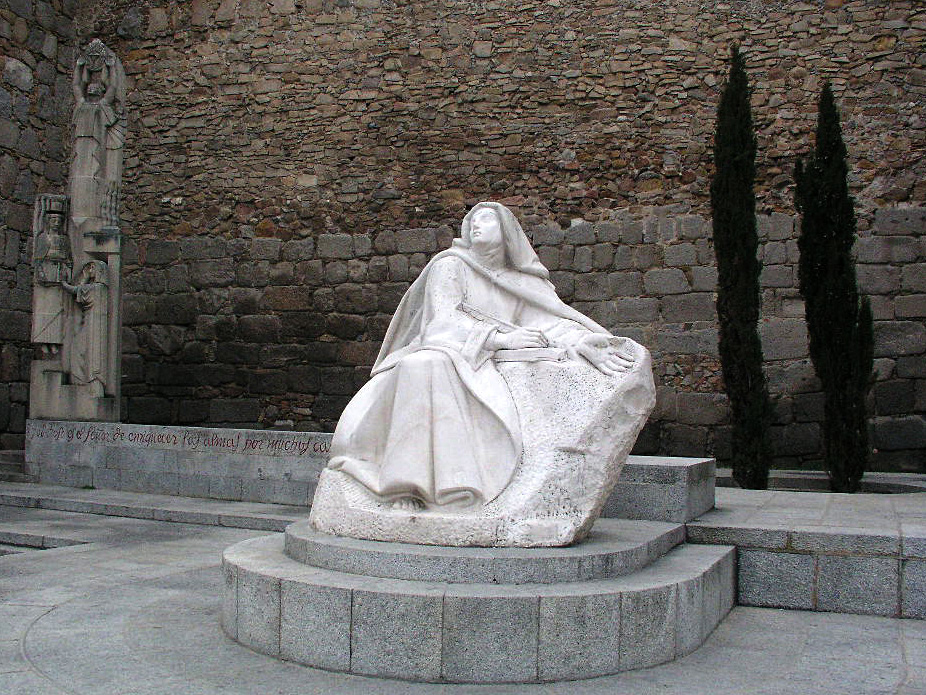
St. Teresa of Jesus, Memorial (15 Oct 2007) Rm 1.1-7; Ps 98; Lk 11. 29-32
Homily of Fr. Paul Panaretos, S.J.

Nearer and Greater


Teresa of Avila came to focus so on Jesus that she is called Teresa of Jesus. She was not always able to focus on Jesus. As she said in her autobiography:
I used to labour with all my might to imagine Jesus Christ, our Good and our Lord, present within me. ...[but] God never endowed me with the gift of making reflections with the understanding, or with that of using the imagination to any good purpose: my imagination is so sluggish, that even if I would think of, or picture to myself, as I used to labour to picture, our Lord's Humanity, I never could do it./1/
Later in her life Teresa came upon a picture of Christ suffering, and that image moved her. She was no stranger to suffering, which is why it moved her so. As she said:
This was my method of prayer: as I could not make reflections with my understanding, I contrived to picture Christ as within me; and I used to find myself the better for thinking of those mysteries of His life during which He was most lonely. It seemed to me that the being alone and afflicted, like a person in trouble, must needs permit me to come near unto Him./2/
The difficulties in praying, which saints knew well, encourage us in our difficulties. Jesus, we heard last week, is the stronger one. Today we heard him say he was greater than the prophet Jonah and the wise king Solomon. Whatever image helps us to pray, to draw closer to Jesus, to deepen our relationship with him, Jesus is always greater. When we are aware of that, then like St. Teresa, we are moved to draw nearer. Plus, we allow Jesus to shape us into more effective witnesses of him and his gospel.
_________
/1/ Life of St. Teresa of Jesus, Chapter 4. 10.

/2/ Ibid., Chapter 9. 4.

The edition quoted here may be found online at

http://www.ccel.org/ccel/teresa/life.viii.i.html
______________________________________________
Wiki-image is used under the terms of the GNU Free Documentation license.

Sunday, October 14, 2007

Sunday word, 14 Oct 2007

28th Sunday of the Year C(14 Oct 2007) 2Kgs 5.14-17; Ps 98; 2Tm 2.8-13; Lk 17.11-19
Homily of Fr. Paul Panaretos, S.J.
Taking the Risk

Preachers often take their cue from the gratitude the foreigner, the Samaritan, demonstrated in contrast with the nine lepers who demonstrated none. Gratitude is essential to our Catholic faith. I take my cue today from something else, from Jesus’ response to the Samaritan leper: “Your faith has saved you.”

Last Sunday’s gospel selection immediately preceded this cleansing of 10 lepers. Let me help you recall how it began: ...the apostles said to the Lord, “Increase our faith.” Their request implied they had little faith or didn’t know how to rely on it. Jesus encouraged: “If you had faith the size of a mustard seed, you would say to this tree, ‘Be uprooted and planted in the sea,’ and it would obey you.” The mustard seed is tiny. The great wonder is not faith’s size: Jesus’ saying assured us that its size did not make it effective. Rather, the wonder is the challenge to give ourselves to faith, to follow its lead. We don’t readily place ourselves in the service of anything: people we can see as well as faith which we cannot.

What does it take for people to entrust themselves? When it comes to faith, giving a few minutes each day to be mindful of the various ways God graces, blesses and draws near us, savoring each way and expressing our gratitude to God for each one fosters an encounter with God and deepens our relationship with God.

A few minutes sound so insignificant. To use two jargon phrases seriously: "Don’t knock it!" and "Just do it!" Faith is God’s gift to us; ours is to cultivate God’s gift: to live it; to seek union with God and others and overcome separation.

Illness separates us from others in more ways than physical contagion or inability to be with people. Illness affects our self-image as well as our attitude. When AIDS emerged in the 1980s, some physicians refused to be in the presence of people with AIDS. In the 1990s I remember visiting someone with an AIDS-related illness. As I visited, someone knocked on the patient’s door

We waited, but no one entered. A “Come in” did nothing. I opened the door to someone gowned and gloved holding the patient’s meal-tray. “Come in,” I said, opening the door so she could enter. She stood like a statue. Her eyes spoke her fear. I took the tray, smiling weakly.

The patient and I rolled our eyes. He was no stranger to frightened attitudes. Working in an Infectious Diseases section of a large city hospital taught me precautions are for patients; not signs to shun another. People with AIDS help us appreciate lepers, who were forced to live outside cities. Lepers had to cry out only to warn others, who might draw near to them without knowing it.

The ten lepers, like countless healthy people in Luke’s gospel, recognized their need to be healed and discerned that in Jesus God was personally visiting them. Lepers knew well they could only cry out to warn, but their faith, awakened by their condition and divine visitation, emboldened them to cry out for mercy. Mercy remains an outstanding feature of God drawing near.

Our burdens blind us to God’s mercy and constant presence. Imagine living with a personal burden, visible to others or invisible to all but oneself. Feel how your burden distorts your sense of self and your view of others and the world. Feel, too, how your burden alienates you from yourself as well as from other people and God. A moment, a person, a word we read, a sight we acknowledge, a prayer we utter, a sacrament we receive: each can bear grace. Visitations of grace free us to hand over ourselves to God. In that encounter our faith saves us, as faith saved the lepers.

Being saved may not be a physical healing. All of us need healing which makes us whole. A retreat team expressed becoming whole as “healing the purpose of [our lives].”/2/

Healing our lives and the purposes for which God created us happens as we join with our Messiah Jesus and the purpose of his life. The faith of Jesus is the pattern of our faith. Our fidelity to the pattern of Jesus’ faith and life saves us.

In your daily 15 minutes with Jesus this week take a risk. Allow yourself to grow more aware of the Trinity loving and creating you with a purpose. Ask the Samaritan leper to present you to Jesus to converse with him about your life. Hold nothing back. Make silent space within you in order to notice Jesus responding to you. Ask Jesus for the grace to recognize him visiting you in person in all manners of ways. Name one way that Jesus has helped to heal the purpose of your life; and resolve to act on it. Close by slowly saying the Lord’s Prayer, which helps us see more clearly that AIDS-victims and people we keep on the margins of society model saving transformation for us modern-day apostles. Our saving transformation continues each moment we risk taking their lead to entrust ourselves to the mercy of Jesus.

___________
/1/ Luke 4.27.

/2/ Dennis Linn, Seila Fabricant Linn and Matthew Linn, Healing the Purpose of Your Life. Mahwah, NJ: Paulist
Press, 1999. This slim book demonstrates that healing is both holistic as well as God’s desire.
__________________________________________________________
Wiki-image of an alpine sunburst is used under the terms of the GNU Free Documentation license. Wiki-image of Christ the Redeemer is in the public domain. .

Saturday, October 13, 2007

Torture, Again in the News With Twist

This week's All Things Catholic by Mr. John L. Allen Jr. is sober reading. Don't miss the questioning e-response submitted by Marie R. entitled, "Is it possible that Olaso...?"

Friday, October 12, 2007

Friday word, 12 Oct 2007

Friday, 27th Week (12 Oct 2007) Jl 1.13-15; 2.1-2; Ps 9; Lk 11. 15-26
Homily of Fr. Paul Panaretos, S.J.
Seeing Isn’t Believing

Difference in culture and time have a sleight-of-hand effect on our hearing about ancient healings in general, Jesus’ healings in particular and the controversy we heard in the gospel selection today.

Contemporaries from the era of Jesus offer us description that align with the ways the gospels describe Jesus healing ministry. Healers existed among the Jews. The point of the controversy with Jesus is not about healing but about Jesus’ call that with him one cannot be neutral. Seeing was not believing for those whose hearts were hard against Jesus.

Luke previewed the identity of the stronger one in this gospel selection when Luke recalled John the Baptizer had said before Jesus appeared on the scene, “I am baptizing you with water, but one mightier than I is coming.”/1/

We are all tempted to be neutral, at best, or even opposed to Jesus at times. The world around us can move us to ask the spirit of Jesus to give us greater courage and conviction to take Jesus at his word more and more.

Jesus, the stronger one, is already among us and desires to share our journeys through life. Jesus has transformed everything, including the day of the Lord, which was long thought to be darkness and gloom. The gospels remind us that when the day of the Lord Jesus will not be dark because Jesus will come in his glory./2/ One opening invocation at Mass reminds us that Jesus “will return in glory with salvation for [his] people.” We are among his people, whom Jesus protects.

_________
/1/ Luke 3.16

/2/ See, for example, Matthew 25. 31.

______________________________________________
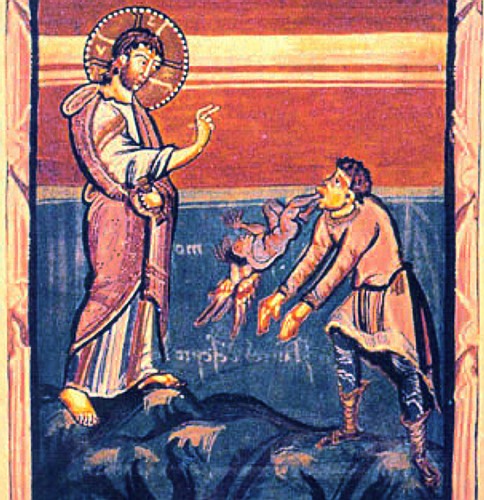
Wiki-image of Jesus healing the demon-possessed is in the public domain.

Wednesday, October 10, 2007

Pauline Jubilee Year Preview

Pope Benedict earlier proclaimed a jubilee year in honor of St. Paul.
The Pauline Year, beginning on June 28, 2008, and ending on June 29, 2009, will include a myriad of events in areas of ecumenism, liturgy, prayer, art, history, archaeology, pastoral initiatives and pilgrimages.
This jubilee honors the 2,000th anniversary of the birth of the Apostle to the Gentiles. Father Oliviero Plichon, the coordinator of the Pauline Year, said
"We don't know exactly which year St. Paul was born," explained Father Plichon, "but the experts say that they date is between A.D. 5 and 10."
The summary of Father Plichon's preview to ZENIT begins with the fact that the upcoming jubilee "will offer pilgrims the opportunity to gain a plenary indulgence."
_____________________________________________
Wiki-image of the Basilica of St. Paul Outside the Walls is used under the terms of the GNU Free Documentation license.

Tuesday, October 09, 2007

Tuesday word, 09 Oct 2007

Tuesday, 27th Week (09 Oct 2007) Jon 3.1-10; Ps 130; Lk 10. 38-42
Homily of Fr. Paul Panaretos, S.J.
Divine Hospitality

I would like to have seen Jonah’s face when the people of Nineveh turned from their evil way, and God repented of the evil [God] had threatened. The story of salvation history, if told from God’s side, may be described as God ever offering divine hospitality to humans.

We are like Jonah, not only reluctant to allow God to work in and through us; we easily envy how solicitous God is toward others. In our objective moments, God’s hospitality--namely, God welcoming everyone because God desires all people to be saved--astonishes us and makes us more receptive to God.

Not only does envy violate hospitality. Many other stresses can move us to violate it or neglect it. Good Martha--as good as her sister and brother--is a fine example. We readily understand Martha’s anxiety and worry because we have worked to prepare for guests and welcome them and attend to their needs.

It isn’t good form, to say the least, to argue in front of guests or bark orders at them. In the Mediterranean world it was, and remains, worse form to bring someone outside one’s family to settle a family dispute. That’s what Martha did: she asked someone outside her family to settle a family dispute when she commanded their guest, Jesus, “Tell [my sister] to help me.” If Mary violated hospitality by not helping her sister, Martha violated hospitality more strikingly.

This leads me to suggest to you an examination of conscience for today: Ask Jesus’ spirit to enlighten your hearts and minds. Then consider this question: “How do I spurn the divine hospitality, which Jesus extends to me at every moment?” Prayerfully considered that question can help us turn anew to Jesus and even make our good form better.
______________________________________________
Wiki-image of Christ in the House of Martha and Mary is in the public domain.

Monday, October 08, 2007

Monday word, 08 Oct 2007

Monday, 27th Week (08 Oct 2007) Jon 1.1-2. 1-2,11; Resp Jon 2.3,4,5,8; Lk 10. 25-37
Homily of Fr. Paul Panaretos, S.J.
Fear Transformed

The story of Jonah is one of God inviting Jonah to speak the divine word to people who did not believe in the God of Abraham, and of Jonah’s reluctance and great fear to do that.

Sometimes any of us uses our fear to convince ourselves not only that we cannot do our evangelizing Christian mission; we also convince ourselves that God cannot work through us. Jonah shows us that both notions are folly. Jonah also shows us that our efforts to limit God, to render God powerless are futile.

In no way I am I saying to ignore fear. I speak of fear, which is a warning-feeling towards someone or something questionable or unknown. That’s what the well-known phrase, fear of the unknown, describes.

Side by side with it are feelings, which tug at our hearts and draw us to act. Jesus’ parable of the Good Samaritan illustrates that. Do we ever consider the fear the Samaritan had when he came upon the man, whom [robbers] stripped and beat...and went off leaving...half-dead?

Do we allow ourselves to consider the fear Jesus felt, especially in the face of his death? Indeed the New Testament suggests it was more than caution: Jesus was terror-stricken!

I suggest that we never deny our fear. That would deny our humanity. I suggest we recognize it and that we ask the Good Samaritan, and Jesus, too, to work through our fear and transform it into energy, which will enable us to be clearer witnesses of his gospel.
_____________________________________________
Wiki-image of the Good Samaritan is in the public domain.

Thursday, October 04, 2007

Is Creationism Science?

Creationism, as well as its more modern partner, intelligent design, make their appearances now and again. Both are opposed to evolution, but are they sciences? Moreover, does science what is most real?

Pope John Paul II stated clearly in 1981 that "[t]he Bible speaks to us of the origin of the universe and its make-up, . . .to state the correct relationships of [humans] with God and with the universe."
http://www.blogger.com/img/gl.link.gif
This month's Catholic Update, "Creationism: What's a Catholic To Do?" quotes a longer paragraph which contains the pope's statement above. It also reminds readers that
  1. As valuable as it is, science is not about the most real; and
  2. that "in all the major court challenges to creationism, Roman Catholic scholars--biblical specialists, theologians and scientists--have been witnesses against Creationism and the fundamentalist understanding of intelligent design.
The brief, four pages are worth reading.
______________________________________________
Wiki-image of NASA's Blue Marble photo is in the public domain.

Health Alert: President Vetoes SCHIP

Email received from Catholic Charities, 03 October 2007:

Health Alert: President Vetoes SCHIP

Take Action!

Let the President Know What You Think!

alert

WHAT: Despite strong support from the U.S. Congress and the American people, President Bush today vetoed the bill to renew and strengthen the State Children's Health Insurance Program (SCHIP). The bill rejected by the President would have provided access to proper health care for nearly ten million of the neediest children in our nation.

ACTION NEEDED: Click on "Take Action" and enter your zip code to send a letter to President Bush and let him know that his veto has imperiled the health of vulnerable children in communities across our nation.

BACKGROUND: Last week, both the House and the Senate passed a bi-partisan SCHIP reauthorization bill which would have provided an additional $35 billion over five years to keep children already receiving health care coverage, and to provide insurance to nearly four million more children whose health is at risk due to lack of proper health coverage. The President vetoed the bill not because the funding passed by Congress exceeded the $5 billion over five years that his Administration had requested, but because of ideological differences about how to expand health coverage to poor Americans.

Improving public policies that promote the health of our nation's children is a key issue area of Catholic Charities USA's Campaign to Reduce Poverty in America. Click here for more information on our positions on SCHIP.

WHAT HAPPENS NOW? Congress will likely schedule votes to attempt to override the President's veto in the coming weeks. Please look for alerts from Catholic Charities USA to help you call on your Members of Congress to successfully override the SCHIP veto.

For more information, please contact Desmond Brown, Director of Health and Welfare Policy at dbrown@catholiccharitiesusa.org or Christin Driscoll, Senior Director for Policy Development and Advocacy at cdriscoll@catholiccharitiesusa.org.

Thank you for taking action for America's children!


Wednesday, October 03, 2007

Stand with Burmese People!


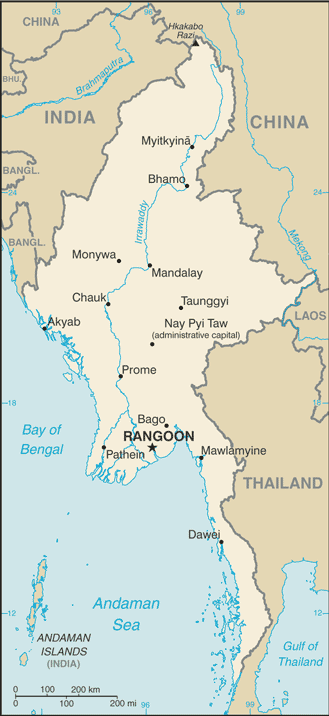
Yesterday was the birthday of Ghandi, the exponent of nonviolent expression of last century. People in Burma marched peacefully expressing their desire for an end to the repressive regime and for a beginning of democracy. Very many have been brutalized, and the number killed is yet unknown.

A recent email informed and offered an action:
Burma is ruled by one of the worst military dictatorships in the world. This week Buddhist monks and nuns began marching and chanting prayers to call for democracy. The protests spread and hundreds of thousands of Burmese people joined in -- they've been brutally attacked by the military regime, but still the protests are spreading.

I just signed a petition calling on Burma's powerful ally China and the UN security council to step in and pressure Burma's rulers to stop the killing. The petition has exploded to over 200,000 signatures in a few days and is being advertised in newspapers around the world, delivered to the UN secretary general, and broadcast to the Burmese people by radio. We're trying to get to 1 million signatures this week, please sign...and tell everyone!

_______________________________________________________________
Wiki-map of Myanmar (Burma) is in the public domain.

Wednesday word, 03 Oct 2007

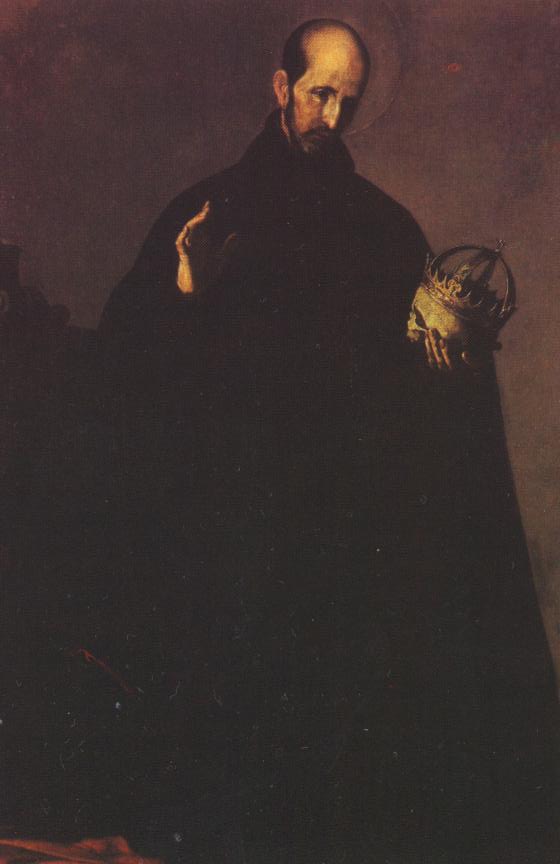
St. Francis Borgia, S.J. (03 Oct 2007) Neh 2. 1-8; Ps 137; Lk 9. 57-62
Homily of Fr. Paul Panaretos, S.J.

Opportunity Seized

Lots of traveling in today’s scriptures. Of course, the bible is filled with traveling: exodus-liberation; self-discovery of individuals, groups and peoples; movements away from God and toward God.

Pilgrimage is the word that describes moving toward God both in scripture and in liturgical processions and other devotional practices. Encountering God, however much it benefits us personally, also contains an evangelizing formation and mission: namely, what we receive from God is never for ourselves exclusively. Encounters with God make us ambassadors of the gospel, of the kingdom Jesus proclaimed. Jesus chooses us daily to travel with him.

Jesus’ movement toward Jerusalem gathered people. Jesus’ movement toward Jerusalem formed a people. Jesus’ response to one who wanted to follow him revealed how dramatic, how focused a pilgrimage following Jesus is.

Jesuit St. Francis Borgia’s journey was dramatic. Privileged and educated; duke, spouse and also father of eight, he relinquished his title after his wife died and joined the Society of Jesus. He and Ignatius corresponded while Francis was still duke. Those responses of Ignatius reveal within Francis a spiritual journey, a quest for godly living and movements nearer to God.

As the third general-superior of the Jesuits he wrote, “We are all pilgrims: by taking our vows we have put on our boots and spurs.”/1/ The image fits us all because when we travel we both prepare ourselves and use what helps us move along.

Nehemiah used his moment with the king to obtain permission to return to Judah to rebuild it. As you move through your day, I suggest you ask Nehemiah and St. Francis Borgia to inspire you to see more clearly how to seize one opportunity to be a more convincing ambassador of Jesus and his kingdom.


_____________
/1/ Office of Readings for his Memorial, Supplement to the Divine Office for the Society of Jesus, St. Louis, 2002, p. 75.
_______________________________________________________
Wiki-image of St. Francis Borgia is in the public domain.