Friday, October 23, 2009

Friday word, 23 Oct 20

Henry Hentemann funeral (23 Oct 2009)
Eccl 3. 1-14; Ps 27; Rv 14.13; Mt 11. 25-30
Homily of Fr. Paul Panaretos, S.J.
Work and Rest

On behalf of Gesu Parish, I extend our prayers and heartfelt sympathy to you, Jean, at the death of your spouse; to you, Chris, Mark, Gretchen and Eric at the death of your father. Be more courageous than your grief is sharp. Your children, Henry, Emma, Patrick, Tatum, Grace and Emerson, will miss their grandfather. Your confidence in our risen Messiah will help your children grieve well. Henry, Emma, Patrick, Tatum, Grace and Emerson, as you grow you will help your parents to experience your grandfather’s presence in real and new ways. All Hank’s family and friends will experience his presence in real and new ways.

Today the Catholic church bids farewell to one of hers. I offer a few words to console and strengthen you in your grief; to help you appreciate God’s astounding compassion by noticing Jesus’ victorious dying and rising were present in Hank Hentemann./1/ We are grateful, Chris and Eric, for your words of remembrance. Their words help us connect Hank with the mystery of Jesus’ dying and rising we celebrate today. I want to reflect briefly with you on the scriptures Hank’s family chose for his funeral & a detail they reveal.

When Jean and her children were selecting scriptures for Hank’s funeral mass, they helped me learn again that scriptures are not only about people and events in the past; they are biographical of us all. Work and rest in scripture appeared to them repeatedly to fit Hank. Hank’s family reminded me that Hank’s descent from German immigrants—Hank was 1st-generation German-American—shaped his attitude toward work. Hank’s immigrant ancestors helped each other struggle and work to survive. Hank struggled and worked, and with Jean to help him, so that they and their children could thrive. Hank worked with modesty and humility, never losing touch with people: vital for a civil defense attorney.

As you spoke of Hank, you reminded me of my father’s desire to be at home. Hank’s desire to be at home allowed him to balance his career with life at home. Hank loved his home and used his talents to make their house a home for Jean and their children. Mark likened Hank to a German primogenitor, the ancestor who established his estate and cared for it not only for the present but for its future after him.

While Hank’s work demanded him to use sets of skills and knowledge, they did not fashion him into their image. Rather, his fairness, his decency, his enjoyment of family and friends and his sensitivity to human predicaments as well as human potential shaped him as thoughtful, modest and without pretense. By exercising his talents outside of work, Hank “got his peace,” as Eric put it; and Chris turned the phrase, “Dad was a project guy.” In addition to the long deck, rooms, lawn and woods were a few of his projects.

Yet another, different project was dear to your dad: passing on to you a desire to live your lives in ways that affected other people and the world for the better. His “red-wine wrap sessions” with you was one of his ways of doing that more real, more vital project than his others.

If anyone doesn’t know, Hank enjoyed long conversations with his children when they were together, sipping wine as they solved the problems of the world. Because Jean had already solved them in her way, she retired early. Hank’s family can give you details. My point is twofold: one, conversation is a great teacher, helping us learn while we’re not aware that we are learning; two, Jesus engaged people in conversation so they might learn God and God’s astounding compassion.

I’m convinced the most effective learning happens when we’re unaware we are learning. Afterward, we come to realize our minds and our hearts have become more spacious, that we have grown more patient and more wise. You used “patient” and “wise” frequently in describing your husband and your father. I trust you are aware that you enjoy a share in his patience and wisdom. You are his estate, for patience and wisdom were its land and its walls. Patience and wisdom were Hank’s more real success; you will continue to bless others with his more substantial success by your lives, you his more vital project than his others. If a spouse and father’s success can be measured, then Hank’s success rested on his patience and his wisdom. They were his work and his rest.

The author of Ecclesiastes wrestled with work and rest and noticed degrees of difference. The author expressed one degree with the word, time and another with the phrase the timeless. Time denotes what can be seen, felt and measured, including human toil. The timeless denotes things more substantial, like patience, wisdom, decency, fidelity, hospitality and concern, which make us humane and images of God. They give us respite. Usually hidden, we know godly values by their effects. Godly values endure beyond all else.

In our Catholic sensibility work and rest point to deeper realities, which I think Hank intuited. Looking to Jesus helps us appreciate how different! When Jesus praised his Father for revealing hidden things to unpretentious people—what childlike means—Jesus was responding to hostility self-important people leveled at him because Jesus accepted prostitutes and sinners and shared with them time and table-fellowship./2/ The unpretentious ones recognized God drew near them in Jesus. When Jesus promised to give them rest, he promised them God’s life, what no adversary could wrest from them.

By looking to Jesus, I suggest Hank’s success flowed from work and rest, which participated in the divine life Jesus revealed and continues to reveal by his Spirit. The routine way Jesus reveals is through other people. Because Hank pursued this work and rest, in both his career and in the simple tastes his life at home offered, you are proud to call him husband, father, grandfather, relative, friend and colleague. It also makes it difficult to let him go, when you desire to have him with you. Our Christian conviction that life is changed not ended/3/ challenges us to let go of Hank, no longer available to you, his family and friends, as he was.

We shall be reunited when Jesus returns in glory with salvation for his people./4/ It is while we await Jesus’ return, the resurrection of the dead and our reunion with them that we need to remember that promise and live from it: that in baptism we have all died in the Lord. That is a blessing we find difficult to imagine and none of us can explain. It is at once both a dying and a living, a rising with Jesus yet to come to completion in each of us.

Hank goes ahead of you: as in life, by his livelihood and his more vital project of instilling in his family and others substantial, godly, enduring values of patience, wisdom, decency, fidelity, hospitality and care, God transforms him into God’s project of rest and the unending life God works more completely in Hank, the same work and rest in which all of us place our hope.

___________________
1. Cf. Order of Christian Funerals, 27.
2. Matthew 11.18-19.
3. Preface for Christian Death I,
Roman Missal.
4. Penitential Rite (C,ii),
Roman Missal.
_____________________________________________
Wiki-images of an icon of the Beatitudes and of the Lamb in a folio of the Book of Revelation are in the public domain.

Monday, October 19, 2009

Monday word, 19 Oct 2009

Bernard Lukco funeral (19 Oct 2009)
Ecclesiastes 3. 1-11; Ps 63; Romans 6.3-9; Luke 12. 35-40
Homily of Fr. Paul Panaretos, S.J.
Two Eras

On behalf of Gesu Parish, I extend our prayers and heartfelt sympathy to you, Lynn, at the sudden death of your brother. To you, Mary, at the sudden death of your spouse; and to Beth and Laurie, Michael and Matthew at the death of your father and stepfather. Your children grieve, too, for their grandfather and great uncle. Be more courageous than your grief is sharp. Your confidence in our risen Messiah will help your children grieve well. Nicholas and Carolyn and Grace, you will help your parents to experience your grandfather’s presence in real and new ways. All of Bernie’s family will experience his presence in real and new ways.

Today the Catholic church bids farewell to one of hers. I offer a few words to console and strengthen you in your grief; to help you appreciate God’s astounding compassion by noticing Jesus’ victorious dying and rising were present in Bernard Lukco./1/

We are grateful, Diana, for your words of remembrance. Her words help us connect Bernie with the mystery of Jesus’ dying and rising we celebrate at his funeral mass. I want to reflect briefly with you on the scriptures Bernie’s family chose for his funeral.

As their were two eras in Bernie’s life, with Beth and Laurie and their mom and with Mary, Matthew and Michael, we all live in two eras of grace. The two eras of grace are before Jesus, the incarnation of God, and since Jesus. The church has always reminded us that the second era, the one in which we live, is yet to be completed: God-with-us in Jesus did not obliterate the human aspect of the world with its limits and imperfections. To use the words of Ecclesiastes, both time and the timeless, that is, God’s self, exist together. In different words Paul expressed the same in his Letter to the Romans: death and resurrection.

What does that mean for all of you? First, each person grieves in his or her way. Second, we experience people in different ways. Third, each of us develops over time. The fact that we grieve differently means our support of each other is vital. At times one person will feel Bernie’s loss more sharply than another. Our sensitivity to one another helps all of us. It also gives us courage when we experience Bernie’s absence in a painfully sharp way.

As we experience people differently, Bernie had different facets in his life. Beth named an earlier facet succinctly: “he spent his time and effort raising us.” Your education was important; he wanted you to “embrace what we love.” As I listened, I heard of a man who was captivated by things outside himself. Later, Bernie was able to be more reflective. Michael expressed that he saw Bernie was “where [Bernie] needed to be”; that implies not where Bernie felt he needed to be. Growth, much of it invisible to others, happened between these facets. It is not that Bernie became a different person but that his interests and his ways of being in the world shifted.

One way that presents to me, who did not have the privilege of knowing Bernie, is his career history: social studies teacher, job corps, guidance counselor, Ohio State, EPA, management & marketing. While education is the umbrella for them all, a subtle shift appears to me: from imparting knowledge to managing knowledge. I know that’s extremely simple, yet it parallels the difference between “facts and wisdom.” Having facts does not guarantee we use them well. The author of Ecclesiastes wrestled with that. There is an appointed time for everything, and often our busied lives prevent us from discovering that God is in all our time and activities; that God gave us creation to help us make a return of love to God more easily./2/ That is the beginning of graced wisdom for us.

Perhaps over time Bernie’s move from participating and leading associations to collecting antiques and doing his part to further historical restoration and preservation points to that shift from exterior to interior, from world to grace, from death to resurrection.

Bernie’s sudden death may well have left him with things undone and unsaid and desires to put into effect graced wisdom he had discovered. Mary chose the gospel selection in the light of Bernie’s sudden death, and she chose it because of the wisdom it imparted to her, to her family and to all of us.

Whatever Bernie may have left undone and unsaid is no fault. It is one of those twists of time over which none of us has control. Even our Messiah Jesus, who pitched his tent in our time-limited humanity, did not control it while he lived in our flesh.

Mary and her family chose the gospel selection with confidence that Jesus waits on Bernie because of Bernie’s faith in Jesus. The Prayer over the Gifts at a funeral mass echoes your confidence—indeed the confidence of the church—as it implores God: be merciful in judging our brother for he believed in Christ [Jesus] as his Lord and Savior./3/ That Jesus waits on us in the kingdom he has promised helps us appreciate the dry truth St. Paul announced: a dead person is absolved from sin. The church buries, it does not blame.

Plus, our Christian conviction is that life is changed not ended./4/ That conviction of our faith challenges us to let go of Bernie, no longer available to you, his family and friends, as he was, though our desire is to have him with us. We shall be reunited when Jesus returns in glory with salvation for his people./5/ It is while we await Jesus’ return, the resurrection of the dead and our reunion with them that we need to remember that promise and live from it: that our era of grace is victorious even without humans ever discovering...the work which God has done in Jesus by their Holy Spirit, work the Trinity continues to do in all people. By grace each of puts into effect what time did not allow Bernie to put into effect in his life.


___________________
1. Cf. Order of Christian Funerals, 27.
2. Ignatius of Loyola, Spiritual Exercises, 23.
3. (A) One Person, Outside the Easter Season, Roman Missal.
4. Preface for Christian Death I, Roman Missal.
5. Penitential Rite (C,ii), Roman Missal.
__________________________________________________________
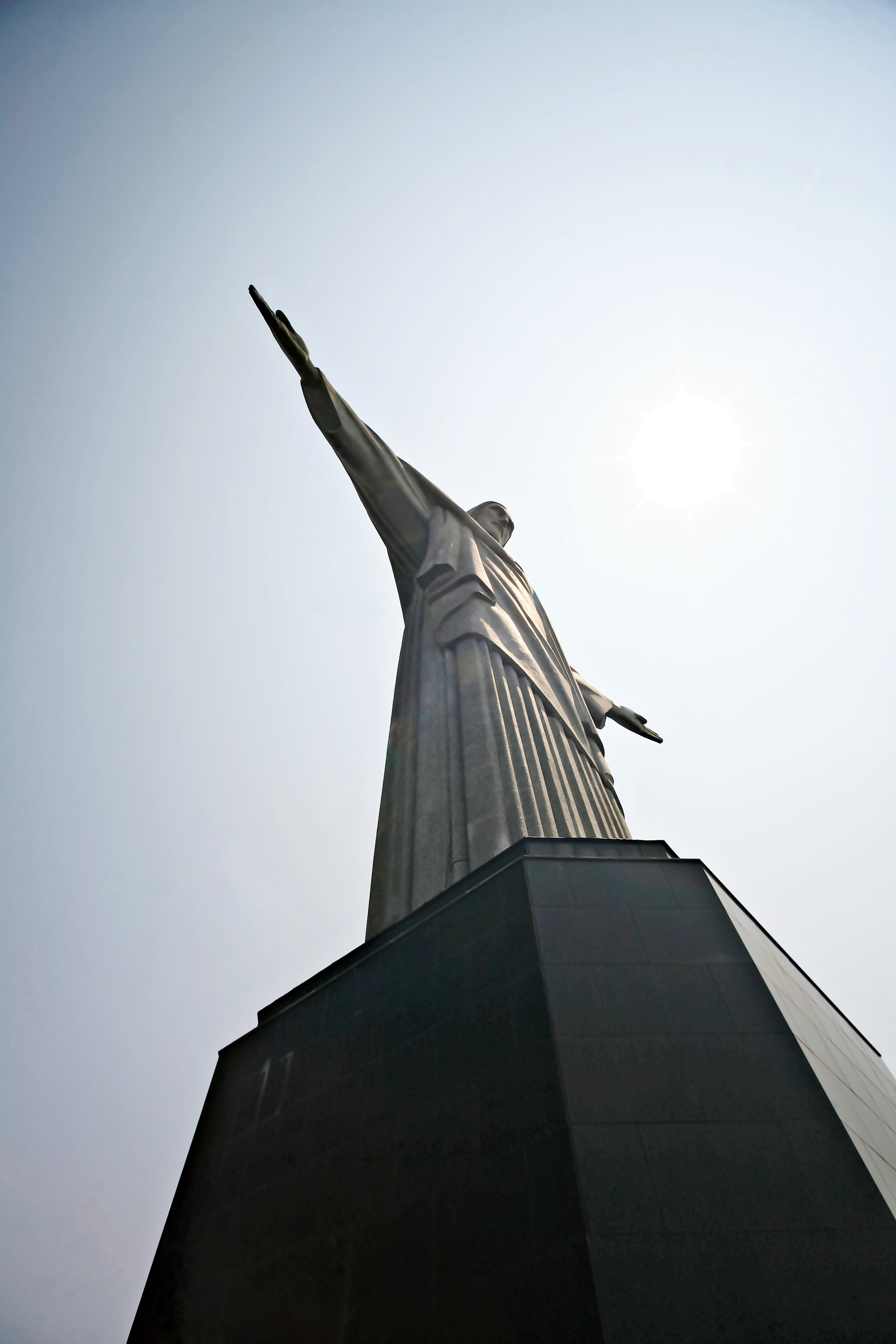
Wiki-image by Laszlo Ilyes of Christ the Redeemer statue is used according to the Creative Commons Attribution 2.0 license. Wiki-image of Resurrection Angel by Plasmoid is used according to the Creative Commons Attribution ShareAlike 3.0 license.

Sunday, October 18, 2009

Sunday word, 18 Oct 2009

29th Sunday of the Year (18 Oct 2009)
Is 53. 10-11; Ps 33; Hb 4. 14-16; Mk 10. 35-45
Homily of Fr. Paul Panaretos, S.J.
Toward Living More Faithfully

The church wants us to think differently; to think “outside the box,” as the current phrase has it. The early Christians did that more easily than we do. Our inquiring minds prefer one-to-one matches: the first among you will be the slave of all. Jesus was human. Jesus is divine.

The first example, the first among you will be the slave of all, is very difficult for us to own, so we make it an ideal rather than a practice, or we reject it altogether. To first [I must] be the slave of all we say, “I can’t do that.” Yet, that is certainly a different way of thinking.

It doesn’t get easier thinking about Jesus. It is not that Jesus has no one-to-one match, but that we can better appreciate Jesus with one match after another! Jesus was human. Jesus is divine. Jesus is our high priest. Jesus, Son of God, sympathizes with our weakness. Our Messiah was crushed with infirmity, the way he shall justify many.

The word priest to describe Jesus is not isolated in scripture’s Letter to the Hebrews. Jesus as priest seeped early into Christian vocabulary and Christian imagination. Yet it didn’t stop one early Christian pastor from describing a deacon’s task as imitating Jesus. /1/ Nor did it stop another early Christian pastor from calling Jesus the first deacon! Of course, both of them would have called Jesus priest as well.

Serving others describes well what Jesus did. Jesus’ service sought to improve, to develop the life of people. It worked this way: Jesus began what people continued. Jesus healed some and they followed Jesus, providing for him and his disciples from their means. Jesus called others to continue his work, a call that was a discreet moment yet echoed through the lives of those called and beyond them. Jesus gave new hope, new energy, new purpose to people, and with that new hope, new energy and new purpose people reoriented their lives. Jesus began, people continued; and, Jesus sustained what people continued.

This Year of the Priest includes every Catholic. It would be impossible to celebrate otherwise. It helps us think differently, more broadly, to be precise, about priests. The Second Vatican Council noted priests have three functions: to “preach the gospel and shepherd the faithful and to celebrate divine worship.”/2/ This year of priests invites Catholics to appreciate not only what they routinely see and enact with priests, mass and other liturgies. It reminds us that priests are to renew the priority they allow scripture to have on them so that their ministry will be a relationship of caring service. Caring service shapes our relationships with one another, no matter one’s particular vocation. Even the pope is called the “servant of the servants of God!”/3/

Plus, the pope is called the first missionary of the church, remembered each Mission Sunday. Christian mission is less about what any Christian controls and more about feeling in the control of, that is, enveloped and steered by something greater than self. That something is the power the earliest Christians experienced and to which they witnessed by their lives. It remains ever new, which is one reason it will always feel like it doesn’t fit and challenge us to think outside the narrow confines of our experience and imagination.

My visits to missions in Brazil, Sri Lanka and India remind me how narrow my experience and imagination is, and how others allow their lives to be guided and steered by the power of our crucified and risen Messiah. Priesthood, missionary, slave of all offer us the power of more supple imagination and bolder experience. To think differently this way is to think and to live more faithfully.

In your daily 15 minutes with Jesus this week, refresh yourself in the presence of our Triune God. Ask your patron saint to present you to Jesus. In your words thank Jesus for the many avenues to serve in his name Gesu offers you. Ask Jesus for the grace to renew your exercise of pastoral care in one ministry and so deepen your friendship with him. Close by saying slowly the Lord’s Prayer to remind us to think differently, that is, to consider ourselves and others with the mind and attitude of Jesus./4/


____________
1. Ignatius of Antioch: “Let the bishop preside in God’s place and presbyters take the place of the apostolic council and let the deacons...be entrusted with the ministry of Jesus Christ” (Letter to the Magnesians, ch 6); Also, Ignatius of Antioch: “In like manner let everyone respect the deacons as they would respect Jesus Christ, and just as they respect the bishop as a type of the Father, and the presbyters [priests] as the council of God and college of Apostles. Without these, it cannot be called a Church” (Letter to the Trallians, ch 2; quoted in Catechism of the Catholic Church, 1554).
2. Dogmatic Constitution on the Church (Lumen gentium), 28.
3. Paul VI restored this 6th Century appellation, first used by Gregory the Great.
4. See St. Paul’ Letter to the Philippians, ch. 2-3.
____________________________________________
Wiki-image of San Biblia church doors by Giovanni Dall'Orto, who gives permission for its use. Wiki-image of Jesus washing his disciples' feet is in the public domain.

Thursday, October 15, 2009

Synopsis of Bishops' Statement on Military Force in Afghanistan

The U.S. Bishops via their Committee on International Justice and Peace. It sent its appeal [the full text] to General James Jones, the U.S. National Security Advisor.

He wrote the letter to offer guidelines and suggestions while the country's administration reviews its strategy in Afghanistan.

"While we are pastors and teachers and not military experts," [Bishop Howard Hubbard of Albany] stated on behalf of the entire conference, "we can share Catholic teaching and experience which may help inform various policy choices."

Bishop Hubbard also noted "that the situation in Afghanistan and neighboring Pakistan is at a critical juncture. Should these states fail, particularly with Pakistan possessing nuclear weapons, there are grave implications for regional and international security."

The full text of their appeal includes three principles and recommends five actions.

Wednesday, October 14, 2009

And Counting

Zenit.com has listed key words at the Second Special Synod for Africa still in progress in Rome this month. The list also includes the numbers of times the words have been used. It provides a snapshot of the orientation of the synod.

The Vatican website offers more detailed information, including the preparation documents and Reflection of Pope Benedict during the synod's first general congregation (on 05 October). The proceedings synods and more in Rome are aids to learning the world and its situations beyond those in North America.

Sunday, October 11, 2009

Sunday word, 11 Oct 2009

28th Sunday of the Year (11 Oct 2009)
Homily of Fr. Paul Panaretos, S.J.
Releasing the Gospel

On his way with his disciples to Jerusalem and his cross, Jesus encountered the rich man who eagerly sought Jesus’ counsel, was disappointed and provoked the disciples to ask Jesus, “Who can be saved?” As was his custom, Jesus made the occasion a lesson for his disciples—and us.

The question of the rich man, “Good teacher, what must I do to inherit eternal life?” may seem to have a narrow focus, yet it touched convictions about God, convictions Jesus laid bare in his reply to the rich man: “Why do you call me good? No one is good but God alone.” Jesus’ answer confuses us because we confuse doing good with the Source of all that is good. God’s goodness exceeds, even excludes human claims we are good, as well as human needs to impress on others our real or artificial goodness. Jesus began his answer to the rich man—and to us today—that God is the source of goodness.

By doing whatever is good we join ourselves, ally ourselves with the God of Abraham, Moses and Jesus. By doing whatever is good we put ourselves on God’s side; we don’t manipulate God to our sides. We place ourselves on God’s side when we respond to the commands God gave us to inherit God’s life. Jesus replied to the rich man’s question by rehearsing all the commandments having to do with human relations with one another. You and I inherit God’s life by how we live with one another!

As challenging as that is for us, I think we get that like the rich man did. It’s the rest of Jesus’ answer that comes less easily: exchange treasure of earth for treasure of heaven. The matter is not simply one of having nothing; rather it is drawing closer and closer to the Source of goodness, life, love and generosity. By coming nearer and absorbing with heart and mind what flows from God—in daily practice, goodness, life, love and generosity—we follow Jesus, we become his disciples daily. Yet, to follow Jesus, to be his disciples, does not make us good. Oh, that it were that easy; but it’s not.

In practice possessions are risks to promoting goodness, life, love and generosity when possessions grip us and manage us. Jesus said we are to manage possessions not be managed by them. To the rich man Jesus put it this way: “Go, sell what you have, and give to the poor and you will have treasure in heaven; then come, follow me.”

To follow Jesus, to be his disciple, does not make us good. Being disciples challenges us to join Jesus in his move down not up: downward mobility not upward mobility, to use modern language for accepting the cross. This lesson to surrender wealth is a hard blessing for us.

Surrender of wealth does not mean throwing our wealth on the junk heap. Surrender of wealth by love, generosity, concern for others and care for them gradually yet really discloses God’s power: all things, including our entering God’s realm of life, are possible with God!

Two verses, early and late in this gospel selection, are key. Read together, they make sharing God’s life nothing short of miraculous, and they tame human ambition instead of the gospel Jesus proclaimed. The verses give us access to God’s mercy toward us: “Good teacher, what must I do to inherit eternal life? ...For human beings it is impossible, but not for God. All things are possible for God!”

When we pray with those two verses, as we keep them together in mind and heart, they don’t suffocate the wonder of creation around us and of people in our lives. As we pray with those verses, as we keep them together in our minds and hearts, they help us not overreach ourselves or substitute our ambition for God’s merciful power. They help us release the gospel into our lives and the world and not tame it or try to fashion it to our liking.

In your daily 15 minutes with Jesus this week, praise the Trinity for creating you and giving you creation to make a return of love to our God more easily. Ask the disciples, who listened often to Jesus, to present you to him. In your words praise and thank Jesus for his gospel and ask Jesus to help you continue to be his disciple more in fact than in name. Close by saying slowly the prayer Jesus taught us. It teaches us to show to others the mercy Jesus works in us.
______________________________________________
Wiki-image of Jesus and the rich man is in the public domain . Wiki-image by Sengkang of Fountain of Wealth: the author has allowed its use in any form.

Monday, October 05, 2009

Synod for Africa


The Synod for Africa opened in Rome Sunday. The word "synod" comes from two Greek words meaning "together" + "way;" thus, synods seek to help all in the church to progress together in the Christian life. Synods are almost as old as the church!

After the Second Vatican Council Pope Paul VI invited the world's bishops to come together around a specific theme of importance to the church at any given time. His successors have continued that practice. Pope Benedict explained the operation of synods before Sunday's Midday Angelus:
Synods always constitute an intense ecclesial experience, an experience of pastoral collegial responsibility in regard to a specific aspect of the life of the Church, or rather, as in this case, of a part of the Christian people determined on the basis of a geographic area. The Pope and his closest coworkers join together with the designated members of the assembly, with the experts and auditors, to reflect on the chosen theme. It is important to emphasize that it is not a matter of a study group, nor a programmatic assembly. Communications and speeches are heard in the hall, there is discussion in groups, but we all know that we are not the protagonists: it is the Lord, his Holy Spirit, who guides the Church. The most important thing, for everyone, is listening: listening to each other and, everyone, listening to what the Lord wants to tell us. Thus the Synod takes place in a climate of faith and prayer, in religious obedience to the Word of God. It is the place of the Successor of Peter to convoke and guide the synodal assembly, gather together what emerges from the work and then offer the opportune pastoral instructions. [Zenit translation]
The pope reminds that synods are guided by Jesus' Spirit, whom he gave to his church to be with it always. Synod members read the signs of the times; they prepare well in advance in order to exercise their "pastoral collegial responsibility in regard to a specific aspect of the life of the Church, or...a part of the Christian people determined on the basis of a geographic area."

[After reciting the Angelus with the people gathered in St. Peter's Square, Pope Benedict also remembered to God the Asian nations and peoples suffering from the recent typhoons, earthquakes and tsunami, before making other remarks.]
____________________________________________
Wiki-image of Pope Benedict is in the public domain.

Sunday, October 04, 2009

Sunday word, 04 Oct 2009

27th Sunday of the Year (04 Oct 2009)
Gn 2. 18-24; Ps 128; Hb 2. 9-11; Mk 10. 2-16
Homily of Fr. Paul Panaretos, S.J.
Heart at Home

This Sunday throws into bold relief our respect for life. The church throughout the United States asks those who assemble around the tables of divine word and eucharist to allow respect for life to be a lens through which our vision of divine word and eucharist might be sharpened.

Our eucharist is both source and summit./1/ Something lays between. If the eucharist is Jesus’ self-gift to us to guide us on our pilgrim way to [the] kingdom/2/ he proclaimed, then our prayer—our relationship with Jesus—our self-gift to Jesus rests between both source and summit and realigns our direction as we journey.

One metaphor of our self-gift to Jesus has a venerable place in the church. It is consecrating our hearts and homes to the Sacred Heart of Jesus. This is what Fr. Snow, Br. Denis, a team of planners and I invite parishioners to do for a year beginning this month. It is a great help to respect life.

While the word “heart” refers to a specific organ of the human body, you and I use the word “heart” more often to mean the whole person. “Put your heart in it!” is such a way. We know we mean self, body and soul. In the same way, to consecrate, that is, to join our hearts to Jesus means we pray to put our lives in the service of Jesus, his gospel and the life he invites us to live by the power of his Spirit.

God became flesh and blood in Jesus by their Spirit. God inhabited our world, our humanity. We humans receive the world through our senses. By becoming human Jesus made our senses, already good because he created them, Jesus made our senses holy. In liturgy the church exploits our senses with water, oil, fire, bread, wine, silence, words and song. Using our senses, we consecrate ourselves to Jesus and his Sacred Heart in a home liturgy.

It is called an Enthronement of the Icon of the Sacred Heart of Jesus. A member of each household will receive this icon to take home inside this liturgy of Enthronement of the Sacred Heart of Jesus for Gesu Parish. The first sense we employ is our sight. What catches your eye? What do you notice? Much is present to notice many times over: Jesus’ face; his hands; his eyes; a scroll he holds; his heart; and more.

Before families enthrone the icon of the Sacred Heart in their homes, people consider their hearts. The Sacraments of Reconciliation, the Eucharist along with one’s prayer style, members of one’s family, the walls of the house itself can help our hearts become more alert, more supple and more grateful for the many gifts we have received. When a family chooses a date this month to consecrate themselves and their home to Jesus’ Sacred Heart, they will find its liturgy here.

Fr. Snow, Br. Denis and I ask that to keep alert to Jesus and to the ways Jesus blesses you and calls you to glorify his name with your lives, you begin to do the Daily Examen together. The Daily Examen was St. Ignatius’ favored way of praying. On the reverse of the icon is an adaptation of it you can introduce before you begin supper or at another time when everyone is together. One way I’ve introduced people to the Daily Examen is to do one of is steps daily for a week. The next week add to the first step the second step, and the next the third step and so on. Take one week at supper or whenever your family is together and ask Jesus to join you; then share: for what moment today I am most grateful? for what moment am I least grateful?

Each one or together you may begin your day with the Daily Offering Prayer to unite yourselves with "Jesus...who continues to offer himself in the eucharist for the salvation of you and of the world.”/3/ In your daily 15 minutes with Jesus this week ask the Trinity to brighten your home with grace. Ask Mary to present your household to Jesus. Speak with Jesus, asking him to deepen your desire for his life in your home and to help you resolve to dedicate your home “in response to Jesus’ great love for [you].”/4/ Close by saying slowly the Lord’s Prayer, which Jesus gave us to guide our steps in his love and to model it for each other beginning at home. The Enthronement of the Sacred Heart of Jesus in your home will help you feel more deeply with all your senses his love and how to radiate it to others inside and outside your home.


_____________
1. Decree on the Liturgy, 10, 14; Second Vatican Council.
2. Prayer after Communion, Order of Christian Funerals, 410A.
3. Daily Offering Prayer, adapted on the reverese of the Icon of the Sacred Heart of Jesus given to Gesu Parishioners this weekend.
4. Introduction of Enthronement of the Sacred Heart of Jesus for Gesu Parish.
__________________________________________________________
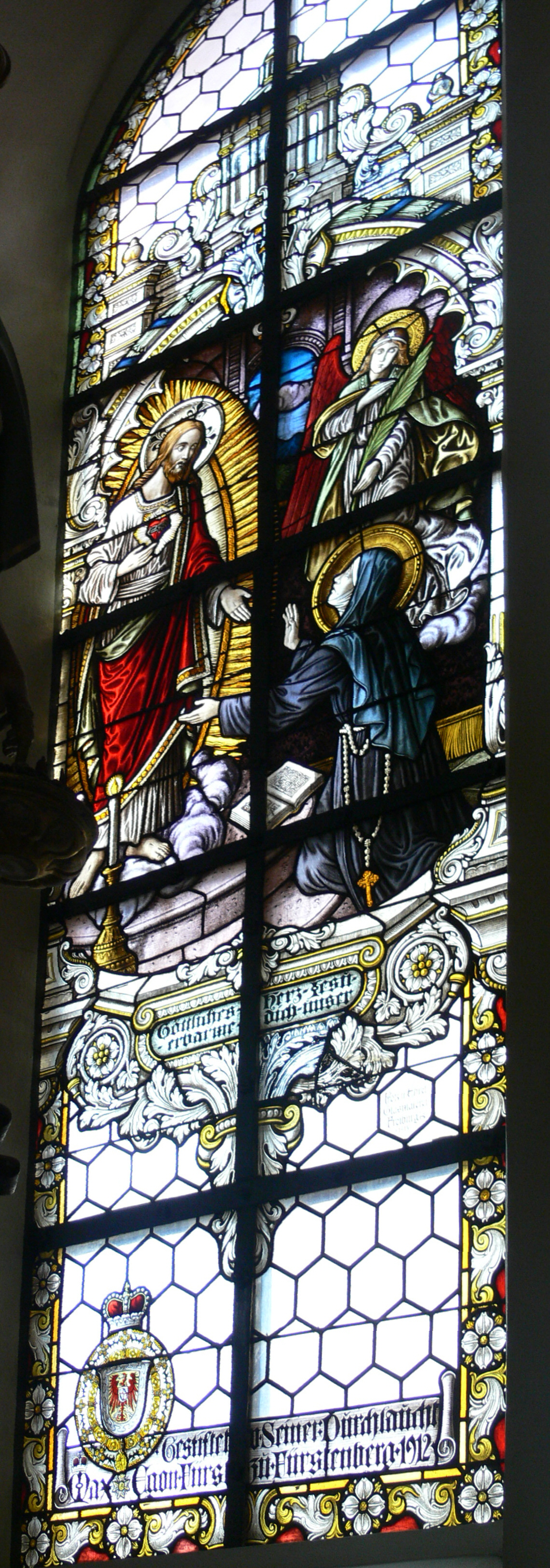
Wiki-image by AndreasPraefcke of a heart of Jesus window is used according to the Creative Commons Attribution 3.0 Unported license. Wiki-image of Claude dela Colombiere, S.J., spiritual director of St. Margaret Mary Alacoque, is in the public domain.

Saturday, October 03, 2009

Saturday word, 03 Oct 2009

Gentry Lee Cooper Jr. funeral (03 Oct 2009)
Eccl 3. 1-14; Ps 23; Rm 5.5-11; Jn 5. 24-29
Homily of Fr. Paul Panaretos, S.J.
Faith and Promise

On behalf of Gesu Parish, I extend our prayers and heartfelt sympathy to you, Clarence at the death of your brother; and to Ellis, Gentry, Donna, Derrick and Celeste at the death of your father. Your children grieve, too, for their grandfather. Be more courageous than your grief is sharp. Your confidence in our risen Messiah will help your children grieve well. Evan, Ariane, Sawana and Craig, you will help your parents to experience your grandfather’s presence in real and new ways. All of Gentry’s family will experience his presence in real and new ways.

Today the Catholic church bids farewell to one of hers. I offer a few words to console and strengthen you in your grief; to help you appreciate God’s astounding compassion by noticing Jesus’ victorious dying and rising were present in Gentry Lee Cooper Jr./1/

We are grateful, Donna, for your remembrance of your dad. Her spoken words and Celeste’s written words all of us have in the worship aid help us connect your brother, father and grandfather with the mystery of Jesus dying and rising we celebrate at his funeral mass.

I am grateful to Donna and Celeste for confirming what I observed about your father and your grandfather in the few years I have been at his longtime parish. “Man of faith” and “man of promise” are how their words and the words of scripture shape my remarks.

While some of you know, everyone else who follows the line along which my finger points will know where Gentry sat at each 10:30 Sunday mass here at Gesu. Quietly engaged with the community at the Lord’s table and with our Messiah and his, Gentry brought his week to Jesus and asked Jesus to guide him in his week to come.

His fidelity allowed him to be generous and, together with your mother, to shape his family to be good and generous. Gentry encountered Jesus in a personal way through your mother, for whom he became Catholic and with whom he lived his faith in Jesus.

His relationship with Jesus expressed itself in his patient goodness. His goodness practiced reassures us that your father and grandfather, brother and uncle and friend, felt God’s power in his life. Holy Spirit is the name we give to God’s power. We heard St. Paul remind us, hope does not disappoint, because the love of God has been poured out into our hearts through the holy Spirit that has been given to us.

Human words cannot exhaust the meaning of God love, the way that our words, “I love you,” never fully express what we mean with them. Yet that does not mean that speaker and hearer do not know love. Gentry Lee Cooper Jr. knew what words can only point to: God loved him and was loyal to him.

This was not easy. Gentry struggled with four cancers yet knew God’s loyalty and presence. You, his family and friends, and I face this time under the heavens. God has not changed God’s fidelity to Gentry. Gentry’s life is changed not ended./2/ That conviction of our faith challenges us to let go of him--he is not available to you, his family and friends, as he was. Still, our desire is to have him with us; and the assurance of our faith promises that we shall be reunited when Jesus returns in glory with salvation for his people./3/ It is while we await Jesus’ return, the resurrection of the dead and our reunion with them that we need to remember that promise and live from it as your father and grandfather, brother and uncle did.

The man who provided for you, his children, who put first his wife and his family, made the promise of life real for you. As Celeste and Donna put it, speaking for you all: “We knew our [parents’] love; we grew up seeing their love, and they knew our love.” Their love for you and for your children embodied our Triune God’s for you. Without having to know about the mystery we name the Incarnation, you have known it! You will see your father and grandfather again and know his love in ways none of us can imagine.

Your father also modeled how to hold on to the promise of our faith. Donna told me that the Saturday your mother was buried she saw your Dad at her grave, speaking softly. Later, Donna asked Gentry what he said. He said he promised to visit Gwen’s grave every week. For 13 years, with a yellow rose in hand, Gentry fulfilled his promise. Hold on to that memory: his memory and his promise kept!

Memories and dreams—both waking dreams and sleeping dreams—play roles in accepting death and in grieving. Memories and dreams also play roles in our faith lives. In his final days, Gentry dreamed of your mother, calling out, “Gwen, Gwen! The pickles!” While we cannot know now his dream, it is safe to guess the scene may well have been one of those many family gatherings at which Gentry hosted, entertained and BBQed for you. Surely God is hosting and entertaining Gentry with divine life and love that exceeds what any of us can imagine!

Jesus reminded us in the gospel, Amen, amen, I say to you, whoever hears my word and believes in the one who sent me has eternal life and...has passed from death to life. Hear Jesus’ words as his promise to your father. Thank Jesus for the gift of your father and your mother; thank Jesus for their love, which made Jesus real to you. Remember they passed the faith to you. As they made its promise real for you, honor them by keeping the promise alive for one another and for everyone you meet.


___________________
1. Cf. Order of Christian Funerals, 27.
2. Preface for Christian Death I,
Roman Missal.
3. Penitential Rite (C,ii),
Roman Missal.
_______________________________________________________________
Wiki-image by Elucidate of a yellow rose is used according to the Creative Commons Attribution 3.0 Unported license. Wiki-image of the Resurrection is in the public domain.

Monday, September 28, 2009

Birds of the September Sky

Avian constellations in the September sky boast a triangle of stars--and more. Jupiter and Venus are featured planets, too.


_____________________________________________________
Wiki-image by Blueshade of the lighting during the equinox is used according to Creative Commons Attribution ShareAlike 2.0 license.

Sunday, September 27, 2009

Sunday word, 27 Sep 2009

26th Sunday of the Year (27 Sep 2009)
Nu 11. 25-29; Ps 19; Jms 5. 1-6; Mk 9. 38-43, 45, 47-48
Homily of Fr. Paul Panaretos, S.J.
Our Mission: Our Messiah’s Mission

Each one’s vocation is to be disciples of our Messiah Jesus. Misunderstanding our messiah leads to misunderstanding discipleship. The first disciples misunderstood Messiah Jesus while he was with them. He said he would be handed over to others, who would kill him then rise on the third day, but they did not understand the saying, and they were afraid to question him. Jesus taught them that God’s messiah came to serve with his life./1/

Today we heard they misunderstood that God’s messiah came to serve all without distinction. John spoke on behalf of the disciples, whom Jesus sent to do his work of healing and evangelizing: “Teacher, we saw someone driving out demons in your name, and we tried to prevent him because he does not follow us.” We easily, too, make the distinction between us and them. It’s part of our human condition and always has been. It challenged Moses, early in the history of God’s people. So, when a young man quickly told Moses, that two men he did not appoint were prophesying in the camp,” Joshua...who from his youth had been Moses’ aide, said, “Moses, my lord, stop them,” Moses’ response speaks to us and our vocation today: Would that all the people of the Lord were prophets!

You and I are prophets. We were baptized into Jesus our Priest, Prophet and King./2/ Jesus, too, sends us to do his work; to give voice to his gospel by our deeds; to grow as people free to do and to be without need of honors; to do and to be with openness and understanding Jesus modeled for everyone, particularly people in need of reconciliation.

That singular voice in the New Testament, the Letter of James, is a companion to the gospel message. The Letter of James shares Jesus’ desire for his church that all people are equal and deserve equal rights and opportunities. Equality does not ignore or erase differences. Equality among humans means that each person has inestimable value.

The scathing censure of the rich, who withheld from others so they might enjoy luxury and pleasure, hurts our ears. The result of hoarding—You have condemned; you have murdered the righteous one—wounds our hearts. As ear-hurting and heart-rending as these words and much of the Letter of James is, James reminds us that we are people of morals not manners.

Morals are about right and wrong and about choosing to do the lesser wrong and the more right action. Manners are about habits, customs, practices and the ways we put things to use. If we operated only from manners, we would do the lesser wrong and the more right by chance. Human habits, customs and practices are often shaped by our penchant to distinguish, as the disciple John and Moses’ aide, Joshua, did: between us and them.

Morals, as James, Jesus, indeed our Catholic tradition with its social teaching remind us, shapes our choices to do some things and not others. Jesus clothes our choosing with his Spirit, who makes us prophets, people whose deeds and lives give voice to Jesus here and now. Morals, not manners, make our actions authentic, give our actions authority. Authority as Jesus understood and practiced it and reflecting on Jesus and his gospel, the church understands that authority functions as service and ministry to all in need of God’s mercy. As Gesu Parish knows better and better, placing God’s mercy to us in service of others, shapes us as more faithful, prophetic servants of our Messiah’s mission.

In your daily 15 minutes with Jesus this week, become freshly aware of the Trinity anointing you to continue Jesus’ priestly, prophetic and royal work. Ask Moses, who desired all God’s people to be prophets, to present you to Jesus. Praise Jesus for his goodness to you and ask Jesus, “Help me be your authentic disciple and your prophetic voice in deed and word.” Close saying slowly the Lord’s Prayer. Jesus gave us his prayer to shape us as servants of God’s mercy and help our gospel-actions deepen the union of heaven and earth and of human minds, hearts and lives.


_____________
1. Mark 9.30-37, last Sunday’s gospel selection, which immediately precedes today’s gospel selection.
2. RCIA [228, U.S. Edition]; RBC 125; 151.
____________________________________________
Wiki-images of Moses with children of Israel and the headpiece to the Letter of James are in the public domain.


Saturday, September 26, 2009

Saturday word, 26 Sep 2009

25th Saturday of the Year (26 Sep 2009)
Zech 2. 5-9, 14-15a; Resp: Jer 31; Lk 9. 43b-45
Homily of Fr. Paul Panaretos, S.J.
A New Way

In Luke’s gospel angelic and human voices resound earlier prophecy. The angel Gabriel focused Zechariah’s prophecy of God, “I am coming to dwell among you, says the Lord,” in the annunciation to Mary. Whatever hope the prophecy first offered, the incarnation of God in Jesus by the power their Spirit exceeded its first offer; it surpassed how humans could imagine God’s nearness.

Luke demonstrated that when Jesus told his disciples that he would be handed over: ...they did not understand this saying; its meaning was hidden from them so that they should not understand it, and they were afraid to ask him about it.

For all our sophistication, intelligence and technological talents some of God’s meaning is and will remain hidden from our ability. That means God announcing to us, revealing God’s desires to us, is God’s prerogative, and that God desires us to be bold in asking God to help us be alert to how God reveals God’s desire.

“How can this be?” Mary asked the angel, who announced she would be the Mother of God. That the truth was conveyed in a conversation—Gabriel and Mary—does not mean some instantaneous understanding was Mary’s. Rather she accepted the message she received, May it be done to me as you say./1/

What Mary did next tells me that hers was not instantaneous understanding. She journeyed/2/ to minister to her cousin Elizabeth, also pregnant and more than unexpectedly because she had been barren all her life! What went on in Mary’s heart and mind as she journeyed to her cousin? As with us when we’re alone with our thoughts, we weigh and sift, we accept or deny, we rejoice or rue our decisions. When she reached Elizabeth Mary extolled, “My soul proclaims the greatness of the Lord!” and she did not know all that would unfold!

Our community has been stunned by tragic deaths which deeply affected the Gesu Parish; the Gesu School; the St. Ignatius High School; the Beaumont High School; and the John Carroll University communities. No one expected any of the deaths, yet so many responded in ways to incarnate God’s desire, especially in difficulties, to dwell among us. Any meaning in the deaths is hidden from us. Lack of meaning did not stop people from imagining God’s nearness or demonstrating it.

If we wonder what the prophecy, “I am coming to dwell among you, says the Lord,” includes, we know in a new way that it involves us: how we choose; how we respond; and how we receive God in and through others.


_______________
1. The annunciation to Mary is in Luke 1.28-38.
2. Luke 1.39-56.
_____________________________________________
Wiki-image of the Galilee is used according to Creative Commons Attribution 2.5 license.

Monday, September 21, 2009

"Green Pope" Following Tradition Not Fad

Pope Benedict is very open to the concerns facing the environment. His predecessor, Pope John Paul II, had said that ecology was not opposed to theology. The Greek Orthodox Patriarch, Bartholomew I, has also advocated for the environment. None of these leaders is following fads; nor are they limited to scientific concerns, real as they are. Instead, they are rooted in the Christian theological tradition, which appreciates all created things as gifts of the Creator.

We can expect Pope Benedict to continue to include the care creation in his remarks. "Indeed, the pronouncements on the protection of the environment, on the safeguarding of creation, are more frequent and -- we can say -- almost continuous," commented Jesuit Father Federico Lombardi, director of the Holy See's press office.

In that same commentary Father Lombardi mentioned Benedict's most recent encyclical, Caritas in veritate. Its Chapter Four is entitled: "The Development of Peoples; Rights and Duties; The Environment." The pope relates these three. At paragraph 48 of his fourth chapter, the pope introduces his remarks concerning the environment, situating them in the Christian theological tradition:
48. Today the subject of development is also closely related to the duties arising from our relationship to the natural environment. The environment is God's gift to everyone, and in our use of it we have a responsibility towards the poor, towards future generations and towards humanity as a whole. When nature, including the human being, is viewed as the result of mere chance or evolutionary determinism, our sense of responsibility wanes. In nature, the believer recognizes the wonderful result of God's creative activity, which we may use responsibly to satisfy our legitimate needs, material or otherwise, while respecting the intrinsic balance of creation. If this vision is lost, we end up either considering nature an untouchable taboo or, on the contrary, abusing it. Neither attitude is consonant with the Christian vision of nature as the fruit of God's creation.

[Hear and watch Fr. E. J. Tyler read both paragraphs 48 and 49.]
Given this "Christian vision of nature," Pope Benedict's "pronouncements on the protection of the environment, on the safeguarding of creation," will continue with frequency. Christian theology and catechesis, of course, grows out of Christian worship of lavishly generous and constantly creating Triune God.
________________________________________________
Wiki-image of Clear green globe is used according to the GNU Lesser General Public License.

Sunday, September 20, 2009

Sunday word, 20 Sep 2009

25th Sunday of the Year (20 Sep 2009)
Wis 2. 12, 17-20; Ps 54; Jms 3. 16-4.3; Mk 9. 30-37
Homily of Fr. Paul Panaretos, S.J.
Hosting God

We seek to grow in our Christian lives of faith and action. That is each one’s vocation. The church in the United States recognizes our common vocation on Catechetical Sunday, the third one each September. “Catechesis and the Proclamation of the Word” is the name of this year’s focus. I want to highlight our hearing and receiving the Word, the second half of its proclamation. As St. Paul noted, Faith comes through hearing, that is, receiving the word.

St. James has been sounding these past weeks that the word received leads to action, summarized today as full of mercy and good fruits. Receiving the word—the word of the gospel, the promptings of Jesus’ Spirit or another human’s word—receiving the word demands more than the mechanics of hearing. Receiving the word—particularly the word of the gospel and the promptings of Jesus’ Spirit—involves welcoming it, yielding to it, giving it center-stage rather than me and my needs.

In gospel language giving the word and the promptings of Jesus’ Spirit center-stage for a dedicated amount of time rather than me and my needs involves humility and service. “Whoever wishes to be first shall be the last of all and the servant of all.” These words of Jesus were his teaching on the mystery of the cross. We know that; yet I think we fear learning what that may mean for us. Our fear is not my idea but inspired by the gospel. Consider the scene.

Jesus one more time was teaching and telling his disciples about the cross as his destiny. Notice their reaction after Jesus had told them one more time: they did not understand the saying, and they were afraid to question him. Did their fear rise because they did not understand? It could have. I know I’m at least anxious when I don’t understand. Did the disciples fear because they realized some implications of the mysterious thing Jesus had said? That could also have been the case. Surely they did not understand how Jesus once dead could be alive: three days after his death the Son of Man will rise. Even we who believe it do not understand it! Hearing Jesus would rise, I can appreciate the disciples feeling if things would be more than right again with their Messiah, they’d think about their future and how great they’d be, which is what they did behind Jesus’ back: They had been discussing among themselves on the way who was the greatest.

Jesus taught his disciples that the cross is about humble service and being host or hostess to God. Welcoming the visible Jesus welcomes the invisible sender of Jesus: “Whoever receives one child...in my name, receives me; and whoever receives me, receives not me but the One who sent me.”

Jesus chose a child because children are open and take in everything. As we mature we run the risk of being less open and willing, and we often justify our narrowness saying, “I’m being selective.” From being selective we easily rule out the demanding aspects of the gospel, in particular the mystery of the cross. To welcome Jesus is to welcome the cross, and we shun the cross because of how people will think of us or how people will treat us.

Jesus recommends how to treat one another as we welcome the mystery of the cross in our lives. Jesus didn’t censure his disciples for not understand or for arguing. He patiently, gently showed them the meaning of the cross: humble service of and respect for others. The cross no longer is an event in the past, it is a mystery imparting divine power to us as we welcome the cross and its true meaning into our lives.

In your daily 15 minutes with Jesus this week, bask in the Trinity’s love for you. Ask the disciples to present you to Jesus as you are. Speak to Jesus: in your words tell Jesus the many ways you welcome him in others; also tell Jesus what holds you back from welcoming him. Trace the sign of cross on yourself as you tell Jesus. Tracing the cross on ourselves is prayer. Close, saying slowly the Lord’s Prayer. Jesus gave it to us to help us to live the mystery of his cross which challenges us to give forgiveness as much as we ask for it.
_____________________________________________
Wiki-image of stained glass window is used according to the Creative Commons Attribution ShareAlike 3.0 license.

Wednesday, September 16, 2009

Migration Through a Theological Lens

Holy Cross Fr. Daniel G. Groody wrote an essay, which lays a foundation for further exploring migration from a theological perspective. His essay appeared Monday. In Fr. Groody's words
Hotly debated, much has been written about the social, political, economic and cultural dimensions of immigration, but surprisingly very little has been written from a theological perspective, even less from the vantage point of immigrants themselves.

Yet the theme of migration is at the heart of the Judeo-Christian scriptures.
After listing several current facts, He offered his "four foundations of such a theology: the Imago Dei, crossing the problem-person divide; the Verbum Dei, crossing the divine-human divide; the Missio Dei, crossing the human-human divide; and the Visio Dei, crossing the country-Kingdom divide."

His essay demonstrates both a knowledge of the Catholic theological tradition and the humans who are migrants and refugees.
_____________
Wiki-image of earth is in the public domain.

Sunday, September 13, 2009

Sunday word, 13 Sep 2009

24th Sunday of the Year (13 Sep 2009)
Homily of Fr. Paul Panaretos, S.J.
Gospel As Personal Story

The location of today’s gospel selection within the whole of Mark’s Gospel makes it a hinge in this portrait of Jesus. The setting of the passage, along the way, is the first of many times that Jesus will speak to others on his way to suffer, die and rise in Jerusalem.

Earlier in Mark’s Gospel the disciples had wondered who Jesus was. When Jesus stilled the wind and waves and saved their lives, the disciples, filled with great awe [wondered] to one another, “Who then is this whom even wind and sea obey?”/1/ Their ability to identify Jesus as God’s messiah was gradual. Their knowledge of his identity, however, did not allow them to follow in his way immediately.

The disciples portrayed by Mark learned Jesus slowly, often taking two steps back for their steps forward in learning him. Unlike us the disciples did not know the end of the story of Jesus. Yet their two steps back for each one forward is not different from us when it comes to learning Jesus.

Learning Jesus includes unlearning weighing everything from a strictly human point of view. Peter’s rebuke of Jesus when Jesus began to teach [his disciples] that the Son of Man must suffer greatly and be rejected by the elders, the chief priests, and the scribes, and be killed, and rise after three days, was no mere wish things would be different; Peter rejected what God revealed to Peter; the human struggled against the divine.

The word rebuke, in Peter...began to rebuke Jesus, is the same word that described Jesus confronting the wind and sea, and moreover, the unclean spirits. After calling his first disciples to follow him, Jesus taught in a synagogue, where he healed a man with an unclean spirit: Jesus rebuked him, saying, “Quiet! Come out of him!” What followed next is even more vivid: when the unclean spirit had torn him, and cried with a loud voice, he came out of the man./2/

What we take for granted, Jesus is our crucified Messiah, tore Peter, ripped through his mind and heart and emotions. Put yourself in Peter’s skin: to have a helpless savior or to have a flawed hero or to have a limited liberator or to have a puny protector—those offend us; to Peter all the more offensive was a crucified Messiah.

How often we function the same way! We rebuke God and don’t allow God to grace our limited humanity. We continue to live the struggle between God’s desire and plan for our salvation and our limited logic and urge to be in control at all costs. We echo Peter, who “expressed human wisdom at it’s most convincing.”/3/

This hinge in Mark’s gospel is also a hinge in Christian living: our struggle to trust in Jesus, not just the miracle worker but the crucified Messiah, is demanding. Perhaps its sharpest demand is coming to admit that not thinking in the ways of Jesus is folly and that thinking in the ways of Jesus and his Father is true wisdom.

Two things I find revealing and encouraging in this struggle: first, Jesus did not intimidate Peter or debate him. Jesus disclosed the deception Peter allowed to control him: “You are thinking not as God does, but as human beings do.” Jesus had confidence in Peter, as limited as his learning was. Next, Jesus immediately summoned the crowd with his disciples and continued to make God’s case that the cross yields life. Together both tell me that entering the gospel as my personal story is two steps forward for each one back, those moments when I allow the deception to control me.

In your daily 15 minutes with Jesus, become aware that the Trinity is confident in you. Ask Peter to present you to Jesus because Peter knows how you are attracted to Jesus and ready to rebuke Jesus. Tell Jesus how you are attracted to him and tell Jesus what moves you to rebuke him, to think your ways are better than his ways. Ask Jesus to help you accept Jesus as our crucified Messiah, who turns much of our human wisdom on its head. Close by saying slowly the Lord’s Prayer, which Jesus gave us to grace our human knowing and learn Jesus better and to allow his story to become our story.


____________
1. Mark 4.41.
2. Mark 1.25.
3. Paul S. Minear,
The God of the Gospels: A Theological Workbook, Atlanta, John Knox Press, 1988, p. 40.
_____________________________________________________________________________________
Wiki-image of a gospel page depicting Jesus saving Peter before Jesus rebuked wind and sea is in the public domain.

Friday, September 11, 2009

Friday word, 11 Sep 2009

Anna Mae Schager funeral (11 Sep 2009)
Wis 3. 1-9; Ps 23; 1Co 12.31-13.8; Mt 5. 1-12a
Homily of Fr. Paul Panaretos, S.J.
Shaped Anew

On behalf of Gesu Parish, I extend our prayers and heartfelt sympathy to you, Susann, Patricia and Nancy at the death of your mother, Anna Mae. Your children grieve, too. I noted that you requested gifts be made to the Little Sisters of the Poor and the Hospice of the Western Reserve. Your mom required that kind of care, and your dad did in a more prolonged way. I know what that’s like because my sister informed me while I was living in Asia that Alzheimer’s began to manifest itself in our mom. When I returned in eight months I was able to help my sister, who had been doing the lion’s share of being with our mom and getting her good care.

Although my mom is still alive and profits from full care—not yet hospice-care—I grieve often as she lives her long good bye, as Alzheimer’s is aptly called. I pray that you be more courageous than your grief is sharp. Your confidence in our risen Messiah will help you grieve well and come to experience your mom’s presence in real and new ways.

Today the Catholic church bids farewell to one of hers. I offer a few words to console and strengthen you in your grief; to help you appreciate God’s astounding compassion by noticing Jesus’ victorious dying and rising were present in Anna Mae./1/

We are grateful for the words of remembrance Patty offered. They helped us connect your mom and her passing with the mystery of Jesus’ death and resurrection. I am grateful to Susann for selecting the scriptures proclaimed at Anna Mae’s funeral mass. They shape my brief reflection with you.

I did not have the privilege to meet Anna Mae or Arthur because she had moved and Arthur had died before I came to Gesu Parish over three years ago. I would like to reflect with you on the challenge to let go of our loved ones.

All of us can name challenging times in our lives when people accompanied us through a challenge. All of us can recall how important their presence was, although they could not change our circumstances. Parents and grandparents accompany us in most significant ways. We accompany Anna Mea to church for the last time.

Of course, Anna Mae’s life is changed not ended./2/ That conviction of our faith challenges us to let go of Anna Mae—she is not available to you, her family and friends, as she was—even though our desire is to have her with us; and the assurance of our faith promises that we shall be reunited when Jesus returns in glory with salvation for his people./3/ It is during the interval while we await Jesus’ return, the resurrection of the dead and our reunion with them that we need graced companionship. That’s why we come here. We pray for ourselves as much as, or even more, than for Anna Mae.

The Book of Wisdom reminded us that Anna Mae’s hope [was] full of immortality. I hope your prayers for your mother and grandmother will also deepen your hope to continue to share God’s life now and completely one day. That’s what immortality is, God’s life.

Graced companionship is not only for church. God works in every moment of our lives. At each moment our triune God creates us. When people enjoy clarity, people enjoy God’s companionship. When we experience anew our connection with God, we enjoy God’s com-panionship. Jesus embodied this graced companionship and modeled it for us. We name it Christian love.

Christian love is not an emotion, it’s an action with many aspects as St. Paul reminded us. Perhaps now is the time to remember that Christian love bears all things; believes all things; hopes all things; endures all things.

“Now” because grieving is heavy yet we can move through it as you already have with your dad and your maternal aunt. Moving through grief not only challenges our belief and hope, it shapes them.

Memories and dreams—both waking dreams and sleeping dreams—play roles in grieving. Memories and dreams also play roles in our faith lives. The memory of Jesus in the early church lives in our worship and in our Christian loving each day. More than challenging our Christian faith, hope and love, grieving, that is, letting go of those who go before us filled with the hope of immortality, allow us to exercise our Christian faith, hope and love in more authentic ways.

Without knowing your mom or your dad, your grandmother or your grandfather, I’ve learned their prayerful desire and their prayerful desire for each of you was to live authentic Christian lives. Active Christian loving allows God and others into our lives. Allowing others is active; it doesn’t seem so because we are not in control.

The Beatitudes challenge us precisely to welcome God’s loving kindness each day so that, like Anna Mae, we will one day be able to rest in God’s merciful loving and enjoy new life, life more vibrant than we can imagine.

Until we enjoy God’s life in an unveiled way and see our God as [God is],/4/ graced companionship in its many forms, especially as human accompaniment, is that still more excellent way, which is our surest guide to live authentically the Christian life your parents and your grandparents, in their own ways, have bequeathed to you. Their legacy puts you in contact with the Source of all life, whose Holy Spirit renews your life and is your power to accompany others as your parents and grandparents accompanied you with their lives.

___________________
1. Cf. Order of Christian Funerals, 27.
2. Preface for Christian Death I, Roman Missal.
3. Penitential Rite (C,ii), Roman Missal.
4. Eucharistic Prayer III, Roman Missal.
______________________________________________
Wiki-images of the Resurrection is in the public domain and of the mother of all virtues is used according to the Creative Commons Attribution ShareAlike 3.0 license .


Tuesday, September 08, 2009

Diocesan Reminder about Communion and H1N1 virus

The Diocese of Cleveland, like other dioceses, is working in tandem with the United States Conference of Catholic Bishops [USCCB] and the Center for Disease Control [CDC] to help people avoid the H1N1 flu virus. This virus has arrived before seasonal flus arrive in the United States.

The diocesan website as released its information and guidelines about receiving communion to help people stay healthy.

Monday, September 07, 2009

Monday word, 07 Sep 2009

Blessing of Human Labor (07 Sep 2009)
Col 1. 24-2.3; Ps 62; Lk 6. 6-11
Homily of Fr. Paul Panaretos, S.J.
Sharing With the Worker of All

Like some of our other holidays, the originator of today’s is not known. We do know the Central Labor Union, the organization in Brooklyn, New York, and New Jersey, which predated the AFL-CIO and its various locals, adopted a Labor Day proposal and appointed a committee to plan a demonstration and picnic. So that’s why we picnic on this day. Yet there’s more than that.

In the mid-1880s municipalities declared Labor Day holiday observances. Then states began to proclaim the holiday. By June of 1893 the federal government proclaimed today as a national holiday in honor of workers. Still later, I learned recently, the American Federation of Labor convention of 1909 resolved that the Sunday preceding Labor Day was adopted as Labor Sunday and dedicated to the spiritual and educational aspects of the labor movement./1/

Churches and synagogues are free to fashion ways to focus on the spiritual aspects of human labor. We celebrate a mass on Labor Day “For the Blessing of Human Labor.” I want to remark on St. Paul and today’s difficult times.

St. Paul worked with his hands during his evangelizing ministry./2/ As he wrote on of his churches:
You know well that these very hands have served my needs and my companions. In every way I have shown you that by hard work...we must help the weak, and keep in mind the words of the Lord Jesus who himself said, “It is more blessed to give than to receive.”
Manual labor and the "work of God," one of the names for liturgy, are not opposed and they do not exclude the other. Yet St. Paul said long before me that what any of us may work is to use time and created things well, that is, our work gives glory to the Worker of All, the Creator of the universe. The church has always asked us to consider if we use time and created things well, even if no paycheck accompanies our stewardship.

In these difficult times for workers—worrying if they will keep their jobs and worrying if they can find new employment—we do well to pray that people won’t feel burdened by unrealistic guilt if they have lost their jobs. It is easy for responsible people to feel they were at fault, especially when earning a wage is so important to supporting self and family.

Rather, these difficult times for workers renew our opportunity to praise and thank God for giving us stewardship of creation and of the gospel (the riches of the glory of [God’s] mystery among us, we heard St. Paul name it) and to ask God in ways that are more genuine to bless our efforts as privileged stewards and to bless our approach to creation so that at every turn we may know more clearly and live more compassionately what Jesus perceived and practiced: that to save life rather than to destroy it includes the obvious meaning and inspires us to appreciate the true effect human labor has for dignity, solidarity and humane participation in society.

* * *
Today is appropriate to make available the faith-based job link and The Plain Dealer Top Jobs link.
____________
1. See the Department of Labor website.
2. 1 Corinthians 4.12; 1 Thessalonians 4.11; 2 Thessalonians 3.7-9 and counseled others to do the same in
1 Thessalonians 4.11. Paul was likely a tentmaker (Acts 18.3), which allowed him to be self-sufficient (Philippians
4.11) and able to share with others (Acts 20.34-35).


____________________________________________
Wiki-image of an 1882 New York Labor Day parade is in the public domain.

Friday, September 04, 2009

Pope's Remark on Italy's 'Green' Day

On 01 September, Italy observed a national Day for the Protection of Creation. Pope Benedict welcomed it and remarked on its significance.
It is a significant event, even of ecumenical importance "that has as its theme this year 'air,' an indispensable element for life. ...

I call everyone to a greater commitment to the safeguarding of creation, gift of God.
His last sentence repeated his last sentence from his earlier Wednesday general audience.Greek Orthodox Patriarch Bartholomew I has been in the forefront of safeguarding the environment. People around the world are taking notice. The Worldwatch Institute, with its Vision for a Sustainable World, is spreading the word.